Comparative PIE phoneme inventory an IE sound law system digitised. Reading some Hieroglyphic Luwian while introducing improvements on PIE. Tweets @JounaPyysalo
Hittite Mountain God Statue electrum (a gold-silver alloy): The iconography mixes elements of portrayals of the Storm-Gods, and so one can interpret it also as Tarhunza/Teshub, but the scales making the long kilt definitely point to a Mountain-God:
Now Available: CHDS 6.Unpublished Bo-Fragments in Transliteration V (Bo 1398–Bo 6002). This volume continues the systematic edition of the unpublished Bo-texts deposited in the Museum of Ancient Anatolian Civilizations in Ankara. As in previous volumes, the tablet fragments are
Ancient artists really said “details matter”. 🏺✨
At Museum of Troy, terracotta figurines discovered in Assos reveal a world shaped by rituals, storytelling, and artistic expression. Dancing women, animal forms, and mythological scenes bring imagination into fired clay.
Centuries later, they still feel surprisingly alive. Pick your favorite figure and tell us why! 💬
(Museum of Troy, Çanakkale)
#Türkiye #TurkishMuseums
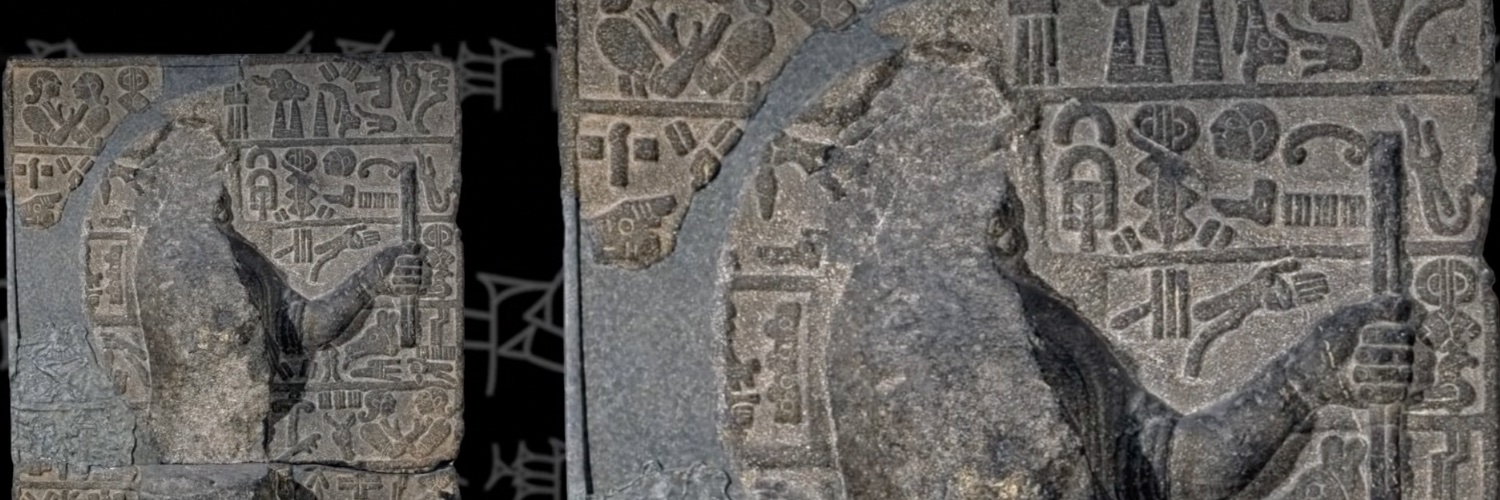
Kurunti, MAGNUS.REX HEROS, muwa-tà-[li] MAGNUS.REX HEROS MANUS.VIR2 ‘Kurunta, the Great King, Hero, Muwattalli (II)’s, Great King’s, Hero’s, son.
The Hieroglyphic Luwian HATIP inscription of Great King Kurunta in a drawing of Ehringhaus (the MAGNUS signs were actually erased):
Eflatun Pınar / Eflatunpınar, late 13th century BC.
This Hittite spring sanctuary near Beyşehir, Konya, turned flowing water into sacred architecture.
The monument combines a spring-fed basin, carved stone blocks, divine figures, winged sun disks, mountain gods, and water symbolism.
At the center are figures often identified as the Storm God and the Sun Goddess, two major powers in Hittite religion.
A 4,000-year-old cuneiform tablet from Kultepe Kanesh-Karum, preserved inside a mud envelope, is on display at Kayseri Archaeology Museum after researchers read its contents without breaking the seal.
https://t.co/k3Ol6V7BGi
Our #ObjectoftheWeek is a cuneiform tablet recording the peace treaty between Ramesses II and Ḫattušili III—popularly known as the Treaty of Kadesh—ca. 1259 BCE. Displayed in the Istanbul Airport Museum. Photo credit: Jessica Nitschke.
#Archaeology#Egyptian#Hittite
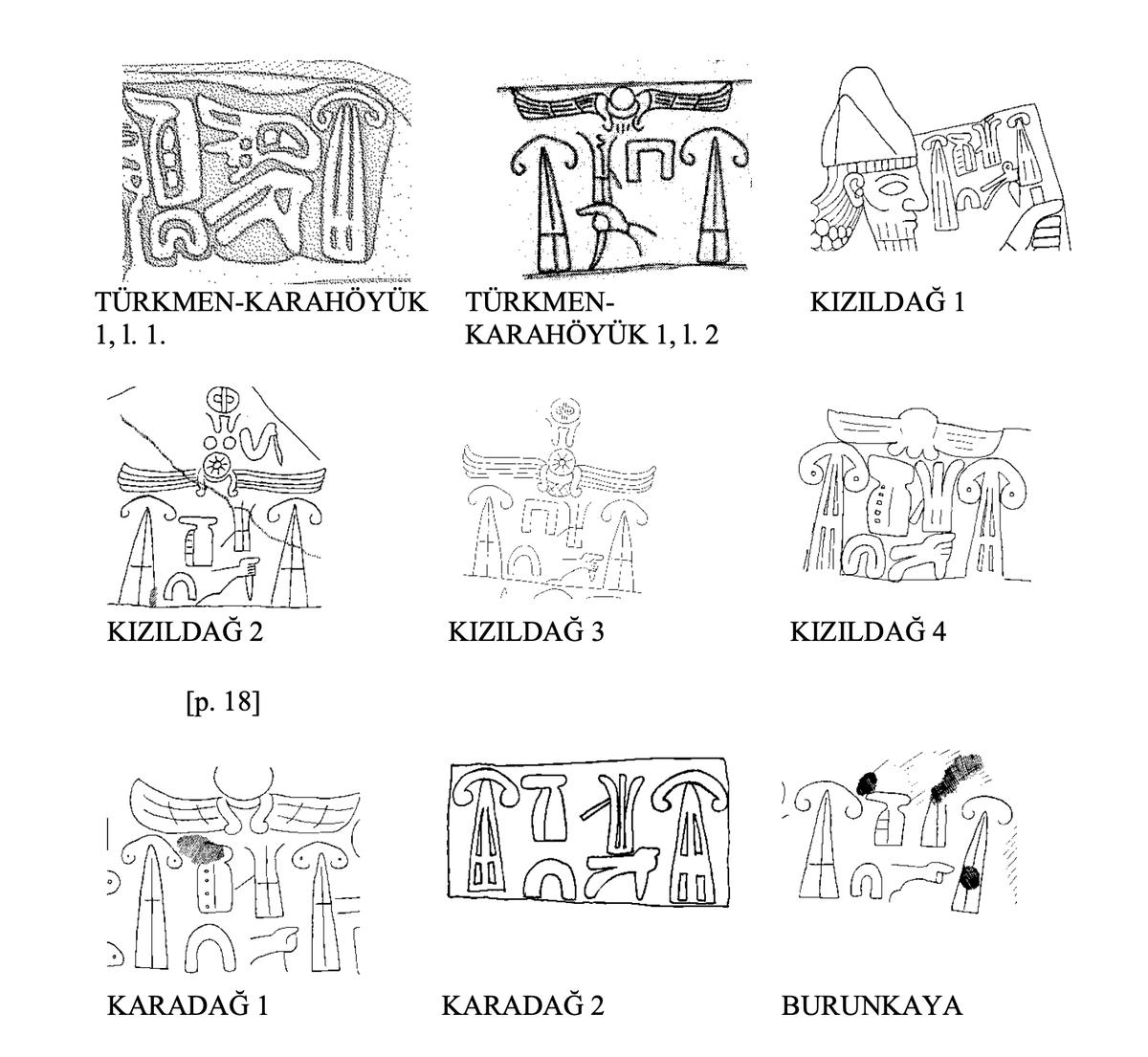
KIZILDAĞ 1 portrays Great King Hartapu sitting on his throne: A tiny inscription offering his (flanking) royal cartouche: HLu. MAGNUS.REX há+ra-tá-pu-sa MAGNUS.REX: He is wearing a crown and holding a sceptre (staff) on his left hand (in his right hand he holds an offering bowl):
A larger photo of Great King Suppiluliuma, portrayed as a protection god opposite the SÜDBURG inscription (BOĞAZKÖY 20). As it has text (a cartouche) it could also be designated as SÜDBURG 2 (or BOĞAZKÖY 20B). He is the guardian of the (DEUS)VIA.TERRA mentioned in the text.
@LevantineEpi Hackers have attacked HPM, so you can’t reach their links just now, but many festival texts are linked by HFR (Hethitische Festrituale) so join them below and be patient: When HPM (Hethitologie-Portal Mainz) is back online the HFR links to texts also work https://t.co/Z5TZFeT0ki
More than 10,000 cuneiform tablets discovered in the archives of the Bronze Age city of Hattusha in Anatolia contain detailed instructions on how to properly conduct over 100 different festivals honoring the gods.
https://t.co/c2Eucm5xL7
The gear of the Great King Šuppiluliuma (his divine identity was a protection god) tells really something about him – and the Hittites: It is exceptional how the king is portrayed with spear, bow and sword not unlike an ordinary warrior – Only the crown really tells his position
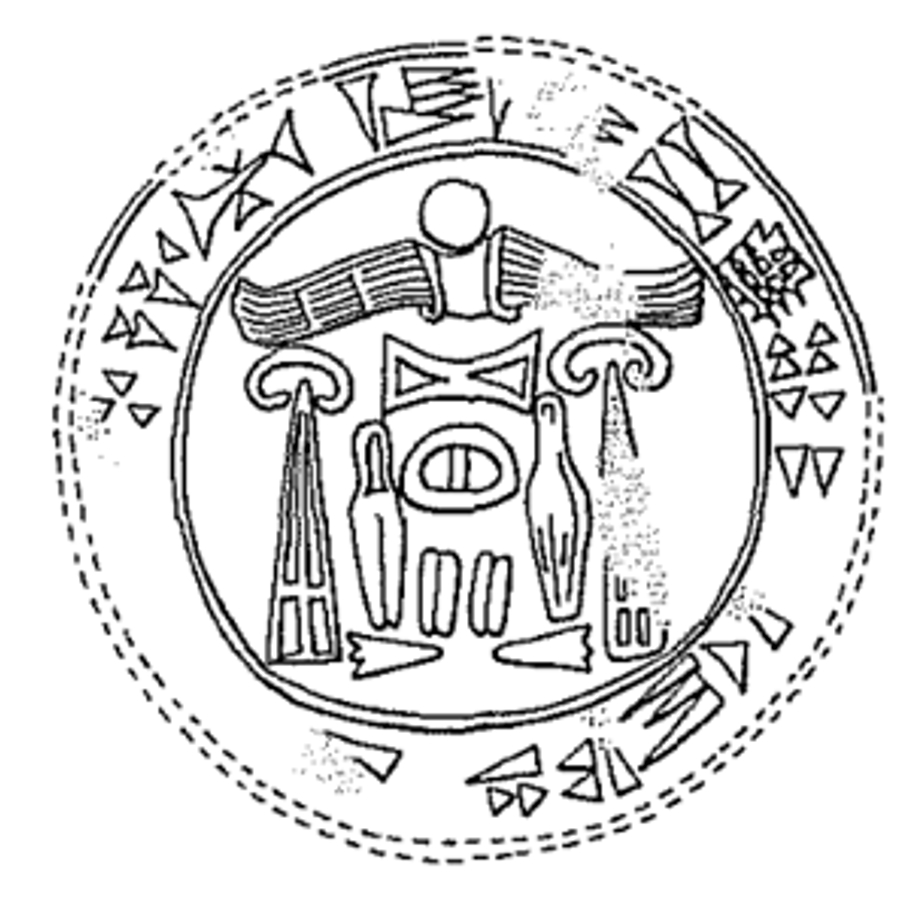
The bulla of Šuppiluliuma II Labarna, Great King, After him there are no Great Kings in Ḫattuša, i.e. he was to be the last king of the Hittites before they put the capital to the torch and left: Their destination remains unknown...
Kurunti, MAGNUS.REX HEROS, muwa-tà-[li] MAGNUS.REX HEROS MANUS.VIR2 ‘Kurunta, the Great King, Hero, Muwattalli (II)’s, Great King’s, Hero’s, son.
The Hieroglyphic Luwian HATIP inscription of Great King Kurunta in a drawing of Ehringhaus (the MAGNUS signs were actually erased):
ČESKÁ REPUBLIKA — 2025
Part of the "Czech Footprints in the World" series, the stamp commemorates Bedřich Hrozný (1879-1952), orientalist and linguist who contributed to the decipherment of the Hittite language and identified it as an Indo-European language. #LinguistsOnStamps
The İvriz relief in Konya, Türkiye dates to the 8th century BC, centuries after the Bronze Age Hittite Empire.
It shows Warpalawa of Tuwana and the Luwian weather god Tarhunzas.
The deity on the back wall of the Chamber 2 of Südburg complex in Ḫattuša has been perplexing me for five years, but finally I feel there is a parallel.
The God has the winged-sun-disc above his head and he holds the sign VITA ‘life’ (Egyptian Ankh) in his hand as you can see:




![PIELexicon's tweet photo. Kurunti, MAGNUS.REX HEROS, muwa-tà-[li] MAGNUS.REX HEROS MANUS.VIR2 ‘Kurunta, the Great King, Hero, Muwattalli (II)’s, Great King’s, Hero’s, son.
The Hieroglyphic Luwian HATIP inscription of Great King Kurunta in a drawing of Ehringhaus (the MAGNUS signs were actually erased): https://t.co/o1H08GiOIh](https://pbs.twimg.com/media/HJ4U1jaX0AAkxKB.jpg)