Here is the thread of the books I explored, along with standard books
#MedTwitter#MBBS
Some are fun to read, some give beautiful insight into a topic, and some might help with an exam or a quiz 🧵
Esmolol, a short acting cardio-selective Beta-1 adrenergic antagonist, is one the common drugs used for:
-rate control in SVTs
-hypertensive emergencies
-aortic dissection
-thyrotoxicosis
and in the Perioperative period as a hypotensive agent.
It is given as boluses/ continuous infusions, at well defined rates of 150-1000mcg/kg/min.
One needs to understand that Esmolol is hydrolysed by RBC and Plasma non-specific esterases, into acid metabolites (1/1500 times potent as esmolol) and METHANOL. Both the products are excreted by renal routes.
The methanol produced is barely closer to toxicity thresholds. But, on prolonged continuous infusions, accumulation of methanol can result in toxidrome of it's own.
It isn't very common occurrence and only anecdotes are all we have now, but, unexplained metabolic acidosis with High anion and Osmolal gaps in a patient on continuous infusion of ESMOLOL should probe you to think of its metabolite: METHANOL.
Sources:
1.https://t.co/gMuusvIcJ2
2.https://t.co/1oLxnvKkPo
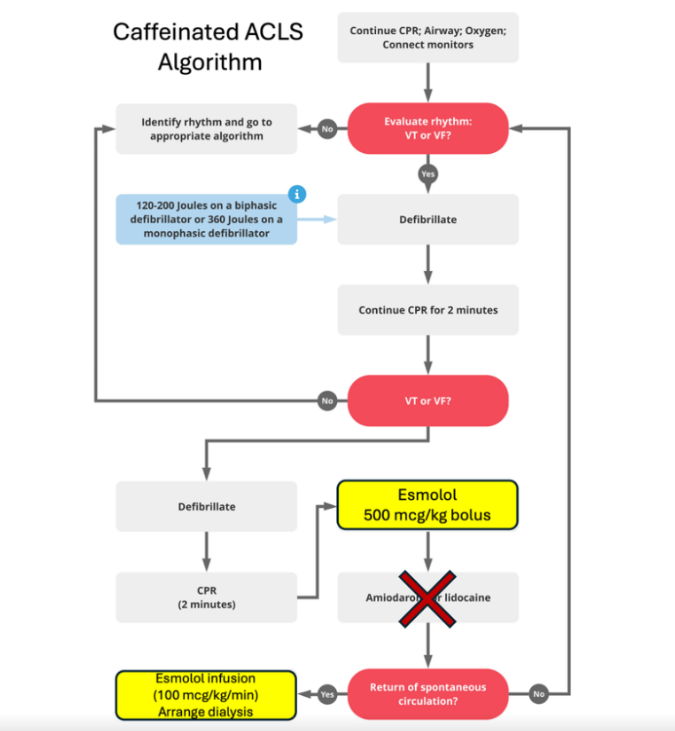
Esmolol bolus n infusion for rate control in caffeine induced myocardial irritability.
Theophylline and Caffeine induced arrythmias require you to think out of ACLS guidelines.
https://t.co/RMwzeoKwEa
(I'm finding it weirdly uncomfortable sharing substack links on X lol, that's some crossover)
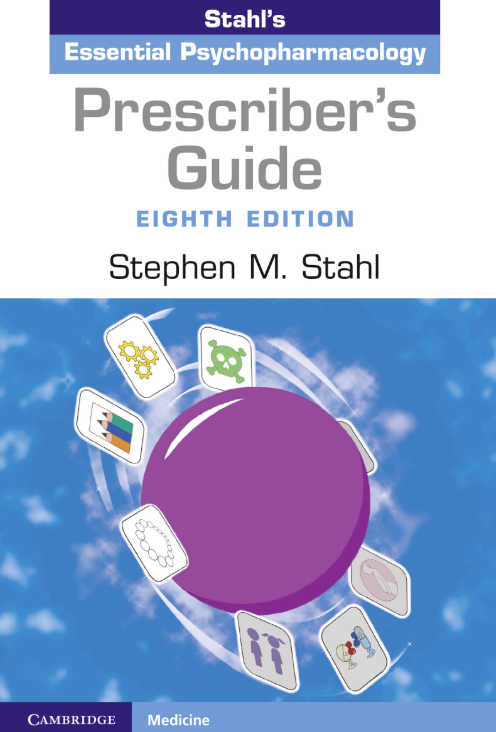
SR in psychiatry shared this book with me -
Stahl's Essential Psychopharmacology Prescriber's Guide
This has answers from A to Z for all questions about psych drugs, well organised...
Dosing tips
Side effects
What to monitor
Art of Switching
A perfect reference to use!
A lot of people preparing for NEET PG have issues remembering which disease is autosomal recessive, what is dominant.
While ofcourse - at the end of the day it is a little bit of rote memorisation - there is a certain logic to it.
Remember- enzymes- pretty much of all them in our body are more than what’s required.
So, even a 50% enzyme activity suffices for majority.
Hence, unless enzymes are fully zero - disease won’t manifest.
So, any enzyme deficiency- will be AR - both genes have to be mutated/absent.
PKU
Galactosemia
Glycogen storage disorders
Congenital adrenal hyperplasia
Alpha 1 anti trypsin
Wilson
Even 1/2 Hb causes mild anemia - so even That/Sickle cell are AR.
Contrast this with neuromuscular damage in general.
Anything that causes damage to nerves and Muscle- even 50% damage would result in disease.
If you look at AD diseases - most are have some issues either with nerves or muscles or cytoskeleton.
Huntington
Myotonic dystrophy
Achondroplasia
Marfan
Hypertrophic cardiomyopathy.
Most neurocutaneous syndromes. (tuberous sclerosis/neurofibromatosis)
Ofcourse this is not hard and fast.
But serves to improve your memory and understanding.
X linked is genuinely just rote memorization. Those genes just happened to be on X chromosome.
1C means :1 part in 99 parts of water
Similarly, commonly used 30C in homeopathy means: 1 part in one million billion billion billion billion billion Billion parts of water
A pill containing one atom of the ingredient would need a diameter equal to the Earth–Sun distance🤣