Our Associate Director, and @PLMRLtd Group head of NI @RogerGreerRG1 recently sat down with @uuponline Leader and NI Minister for Health @mikenesbittni for a conversation about reform in the Health Service, challenges to delivery, and NI political stability.
Check it out ⬇️⬇️⬇️
A few weeks ago, I sat down with Leader of the @uuponline and Minister for Health in NI, @mikenesbittni.
We touched on leadership in healthcare and politics, reform of the health system, and tackling blockers to progress.
Watch full interview via link:
https://t.co/3UecWEUi8R
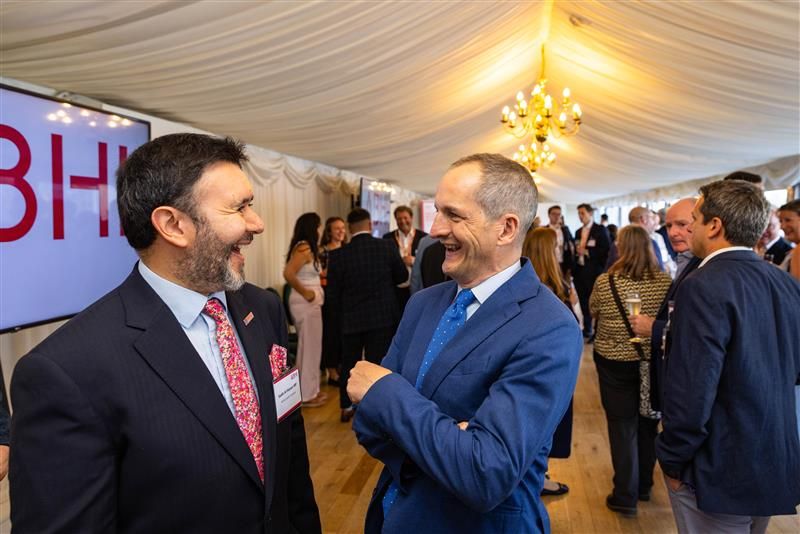
It was great to host the Association of British Health-tech Industries (ABHI) in Westminster to hear how health technology is enhancing care across the United Kingdom 🔬
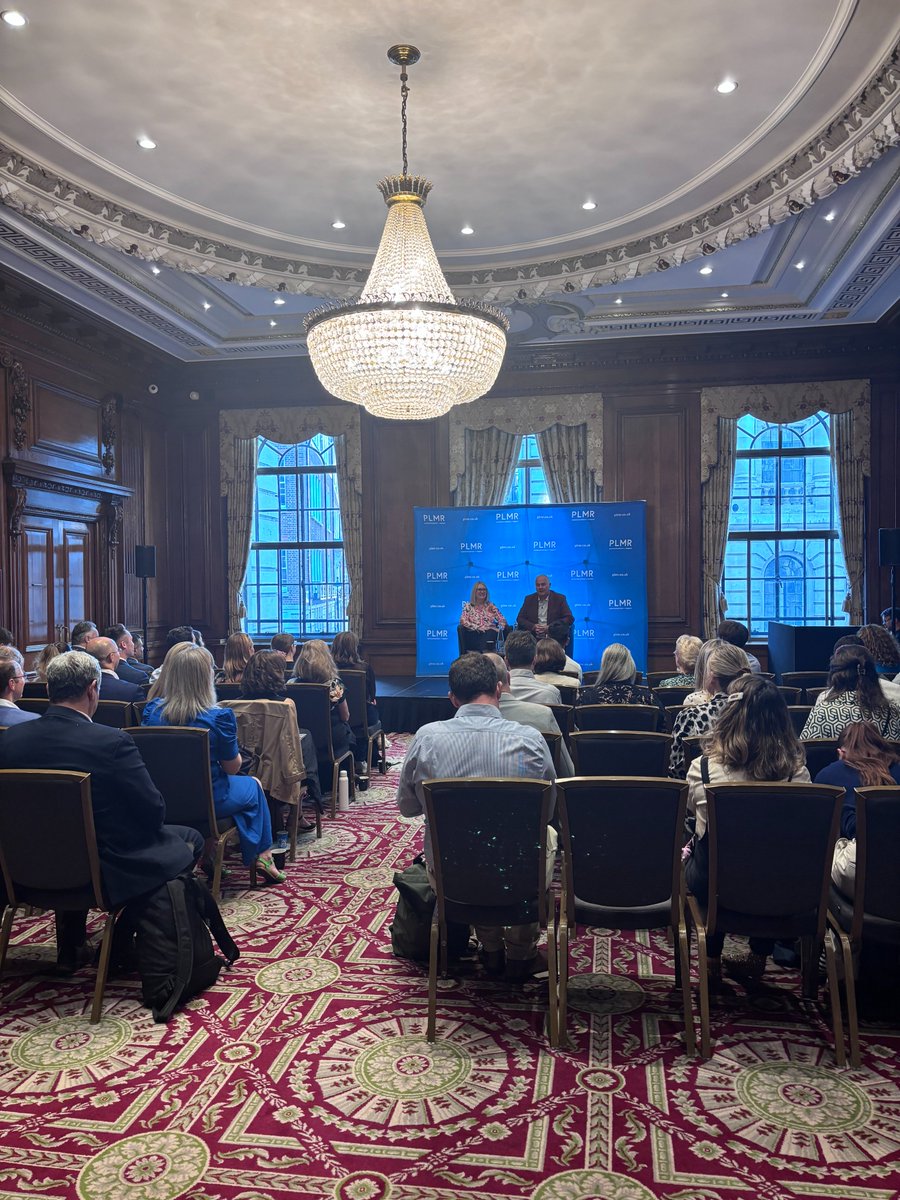
🎓 A huge thank you to the Skills Minister, Baroness Jacqui Smith, for joining us this morning as our guest speaker at PLMR’s latest Education Insights Event.
We’re also incredibly grateful to Iain Dale for so expertly hosting the discussion, and for sharing his insights.
It was a pleasure to hear Baroness Smith discuss her priorities for higher education, further education and skills, and to gain valuable insight into how the government is driving forward its mission for growth across these key sectors.
👉 Find out how our expert Education Practice can support your organisation with strategic communications: https://t.co/5F9sX8dh49
#Education #Skills #FurtherEducation #HigherEducation #Policy #PLMRInsights
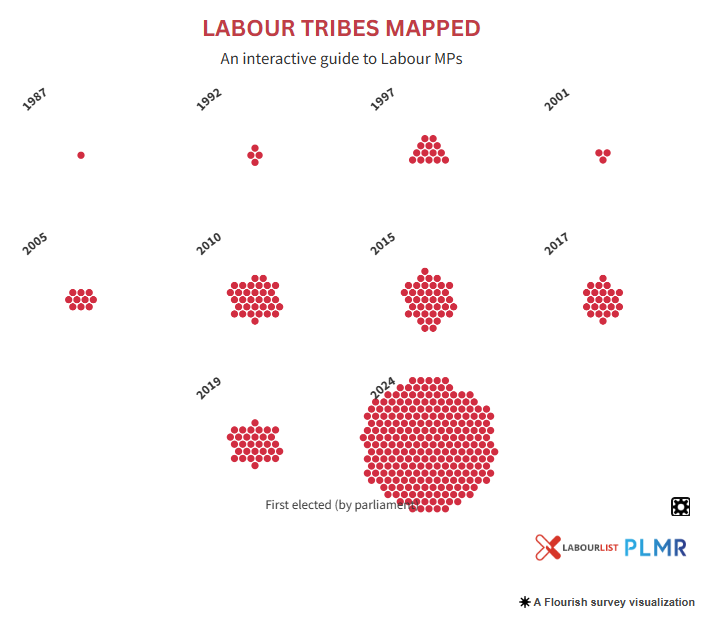
Across Merseyside, many historically Labour constituencies are at risk of turning turquoise. Our polling shows Reform UK at 35.6% across the region, edging ahead of Labour at 33.4%. With four years ahead of us until the next General Election, do you think Labour can stay dominant in Liverpool? #UKPolitics #politics #news
🏛️🤝 For the first time in years, in this Parliament we have cross-sectional representation, with all parties who take their seats in Westminster now being represented - this should be a strength for Northern Ireland.
@UUPWestminster@uuponline
What a treat when both sides of my job at @PLMRLtd come together nicely.
No better example than my conversation with @RobinSwann_MP about his priorities as an NI MP, and his two tenures as Minister for Health.
Listen to the full conversation here - https://t.co/HMnnFRRGEG
PLMR's Head of Northern Ireland @RogerGreerRG1 sat down with South Antrim MP, and former Northern Ireland Health Minister @RobinSwann_MP for a conversation on life as a new MP, and how to deliver on transformation of health services in NI.
Listen here: https://t.co/SaiCayCnw8
To illustrate just how nonsensically these tariffs were calculated, take the example of Lesotho, one of the poorest countries in Africa with just $2.4 billion in annual GDP, which is being struck with a 50% tariff rate under the Trump plan, the highest rate among all countries on the list.
Why? Does Lesotho apply extortionate tariffs on U.S. products and the U.S. is merely being "reciprocal" here? Not at all, despite what Trump is saying, it's NOT the way these tariffs are defined.
As a matter of fact Lesotho, as a member of the Southern African Customs Union (SACU), applies the common external tariff structure established by this regional trade bloc.
Which means it applies the same tariffs on U.S. products as South Africa does, as well as the 3 other members of the bloc: Namibia, Eswatini and Botswana.
So since the tariffs charged by these 5 countries on U.S. products are exactly the same, they must all be struck with a 50% tariff rate by the U.S., right? Not at all: South Africa is getting 30%, Namibia 21%, Botswana 37% and Eswatini just 10%, the lowest rate possible among all countries.
So what gives? Again, the way these tariffs are calculated has absolutely zero relationship with actual tariffs imposed by these countries on U.S. products. Instead, they appear to be simply derived from trade deficit calculations.
Looking at Lesotho specifically, every year the U.S. imports approximately $236 million in goods from Lesotho (primarily diamonds, textiles and apparel) while exporting only about $7 million worth of goods to Lesotho (https://t.co/uHvem6nH2o).
Why do they export so little? Again this is an extremely poor country where 56.2% of the population lives with less than $3.65 a day (https://t.co/GEho8xFjAp), i.e. $1,300 a year. They simply can't afford U.S. products, no-one is going to buy an iPhone or a Tesla on that sort of income...
The way the tariffs are ACTUALLY calculated appears to be based on a simplistic and economically senseless formula: you take the trade deficit the U.S. has with a country, divide it by that country's exports to the U.S and declare this - falsely - "the tariff they charge on the U.S."
And then as Trump did in his speech last night, you magnanimously declare that you'll only "reciprocate" by charging half that "tariff" on them.
As such, for Lesotho, the calculation goes like this: ($236M - $7M)/$235M = 97%. That's the "tariff" Lesotho is deemed to charge this U.S. and half of that, i.e. roughly 50% is what the U.S. "reciprocates" with.
It's extremely easy to see why this makes no sense at all.
First of all, there's nothing Lesotho can do about it: they can't change tariffs they allegedly charge the U.S. to reduce the tariff rate the U.S. "reciprocates" with because, again, it's NOT based on any tariff that they charge.
Similarly they can't do much about reducing the trade deficit they have with the U.S. because, again, they simply don't have enough money to buy U.S. products.
Also the main rational Trump gave for the tariffs is to get production back to the U.S., to "bring manufacturing back". 47.3% of Lesotho's exports are diamonds: how do you bring the "manufacturing" of that "back to the U.S."? Anyone can see it makes just about zero sense.
The Lesotho example exposes the fundamental economic incoherence of these tariffs. Rather than addressing actual trade barriers, they punish countries based on trade deficits that arise from structural economic realities. All the more countries like Lesotho which pose zero competitive threat to American industry.
Worse yet, these tariffs will likely make these structural realities even worse: the U.S. is Lesotho's second most important export destination so it's a fair bet that applying 50% tariffs on their products will make people in Lesotho even poorer, and therefore even LESS able to afford U.S. products.
But perhaps the most unfair and detrimental aspect of all this is that these tariffs represent a complete reversal of longstanding U.S. development policy, and therefore a betrayal of countries - like Lesotho - who chose to follow U.S. advice in the past.
For decades the U.S. has used preferential trade access to encourage economic development in the world's poorest nations, recognizing that trade, not just aid, could get them out of poverty and ultimately put them in a position where they too could afford iPhones or Tesla.
They're now effectively penalizing countries for following previous U.S. policy, a lesson which I bet they won't forget anytime soon.
So all in all the irony is painful: in the name of fighting unfair trade, America has just demonstrated what truly unfair trade looks like.
This isn't something designed to address genuine trade issues, but simply a mechanism based on arbitrary math to punish countries for the affront of selling more to the United States than they buy.
Lots of people enjoying the @PLMRHealthcomms @PLMRLtd Quiz - ‘Which Health Secretary of State are you most like’? @ABPI_UK conference.
Want to know who you are? You can take the quiz here.
Apparently I’m Wes Streeting…😐 https://t.co/udfMXlatFU
CEO and Founder @KevinCraigUK gave his expert view on the Government’s Planning and Infrastructure Bill last night with @Jacob_Rees_Mogg on @GBNEWS
"This Bill is offering a long-awaited shake up to the Planning Systems and offers opportunities to those wanting their first home, landowners, farmers, builders and infrastructure providers alike. I chaired a major planning committee for years. The planning system is woefully out of date." - @KevinCraigUK
Incredibly thankful to be named in @prweekuknews Power Book 2025 🙏 This recognition belongs to everyone I have worked with at PLMR since its founding: thank you for your drive and talent, and for helping to shape the business over the last 19 years. This wouldn’t be possible without you.
📰 https://t.co/TsPIxrsYZx
@plmrltd @adventpr @genesispruk@plmrhealthcomms
Ever tried...ever failed.
In my comment piece for @prweekuknews, I link my failure in this year's dry January (after only 7 days 😳) to the challenges in communicating and delivering in Government.
Have a read below.
https://t.co/mX2WSGdgN8