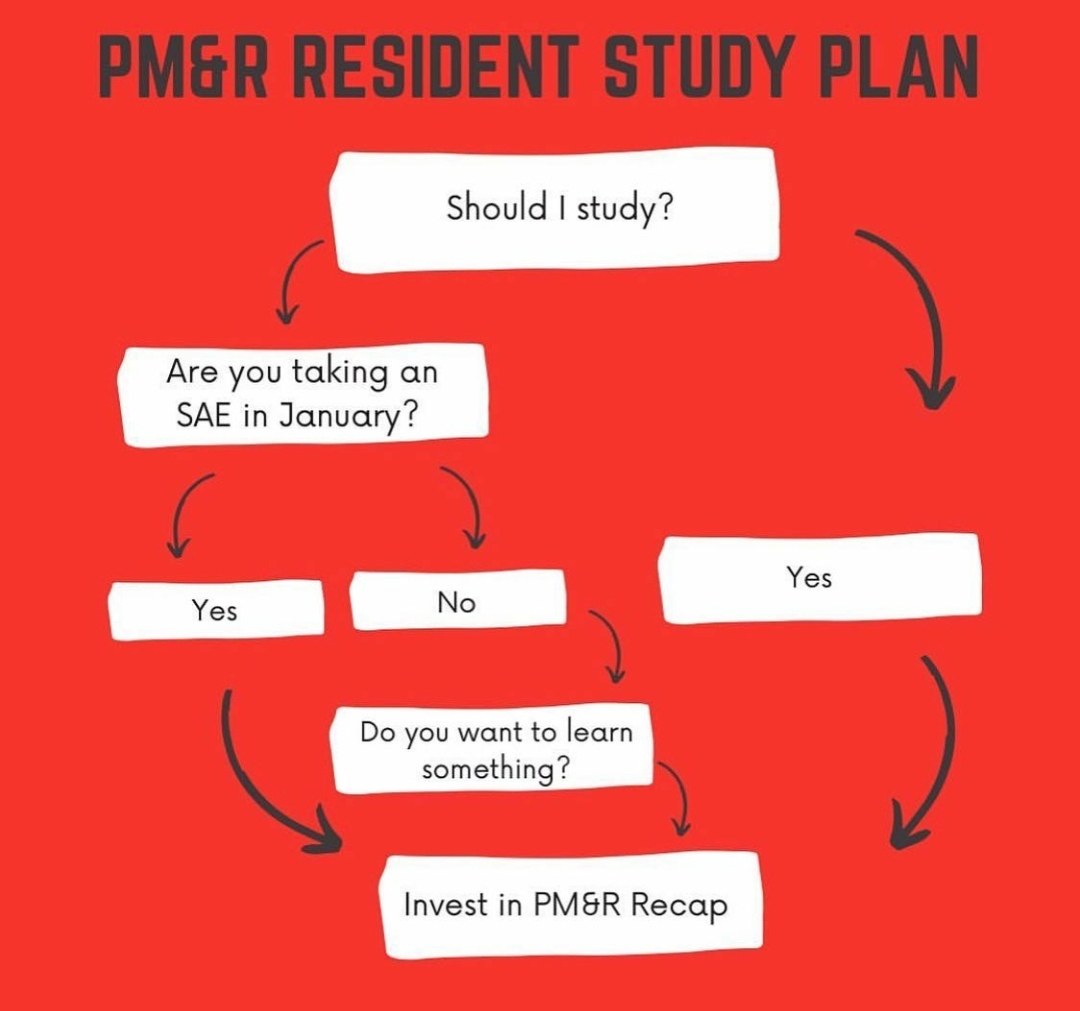
PM&R Recap is the premier board review and #MedEd platform for the next generation of PM&R physicians. It is designed specifically to remove the bulky, unguided nature of learning PM&R exclusively from textbooks and enjoy high-yield board-relevant video lectures #physiatry
Ask your friends about PM&R Recap! Better yet, find out for yourself what all the hype is about! Check us out at: https://t.co/K3StEtRHup #Physiatry#ABPMR
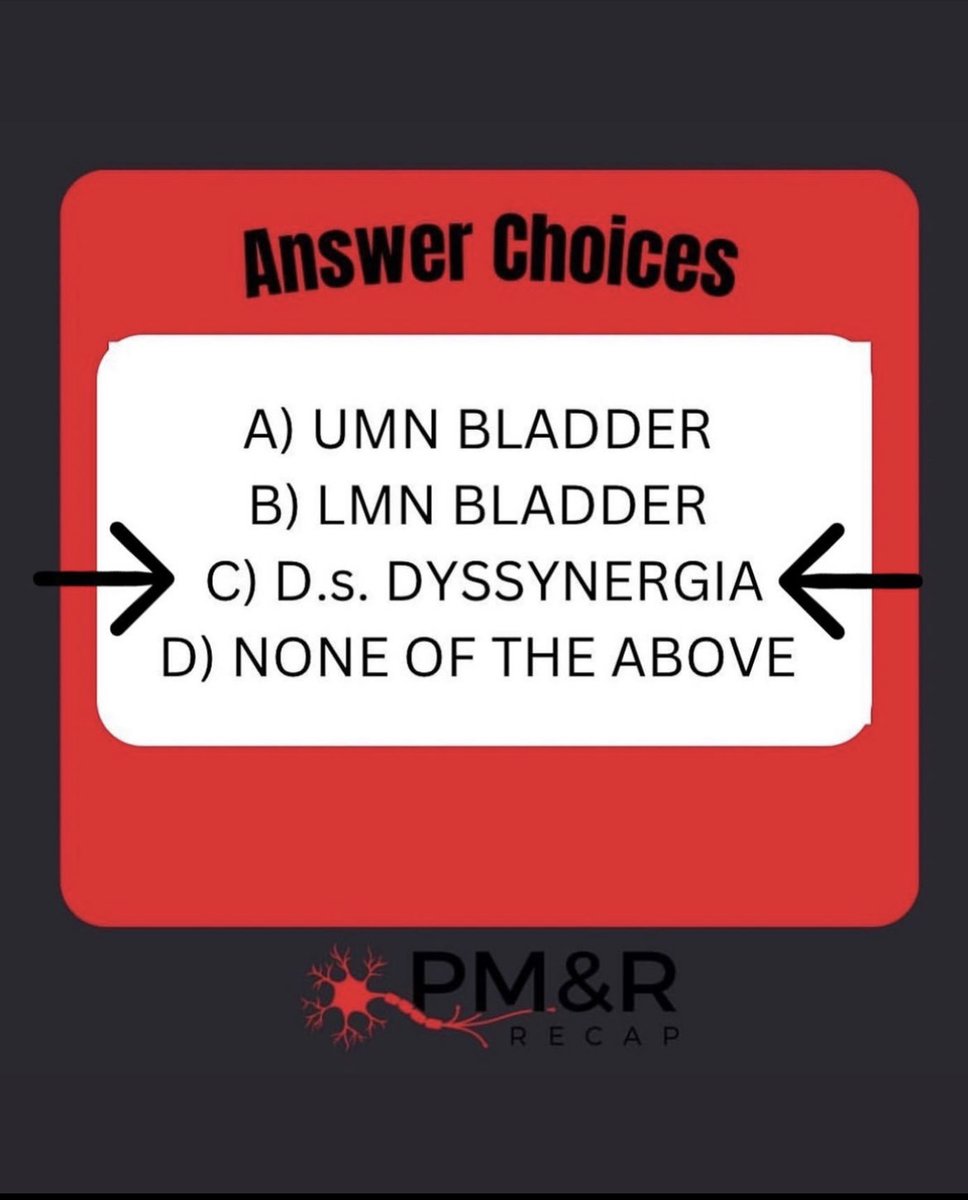
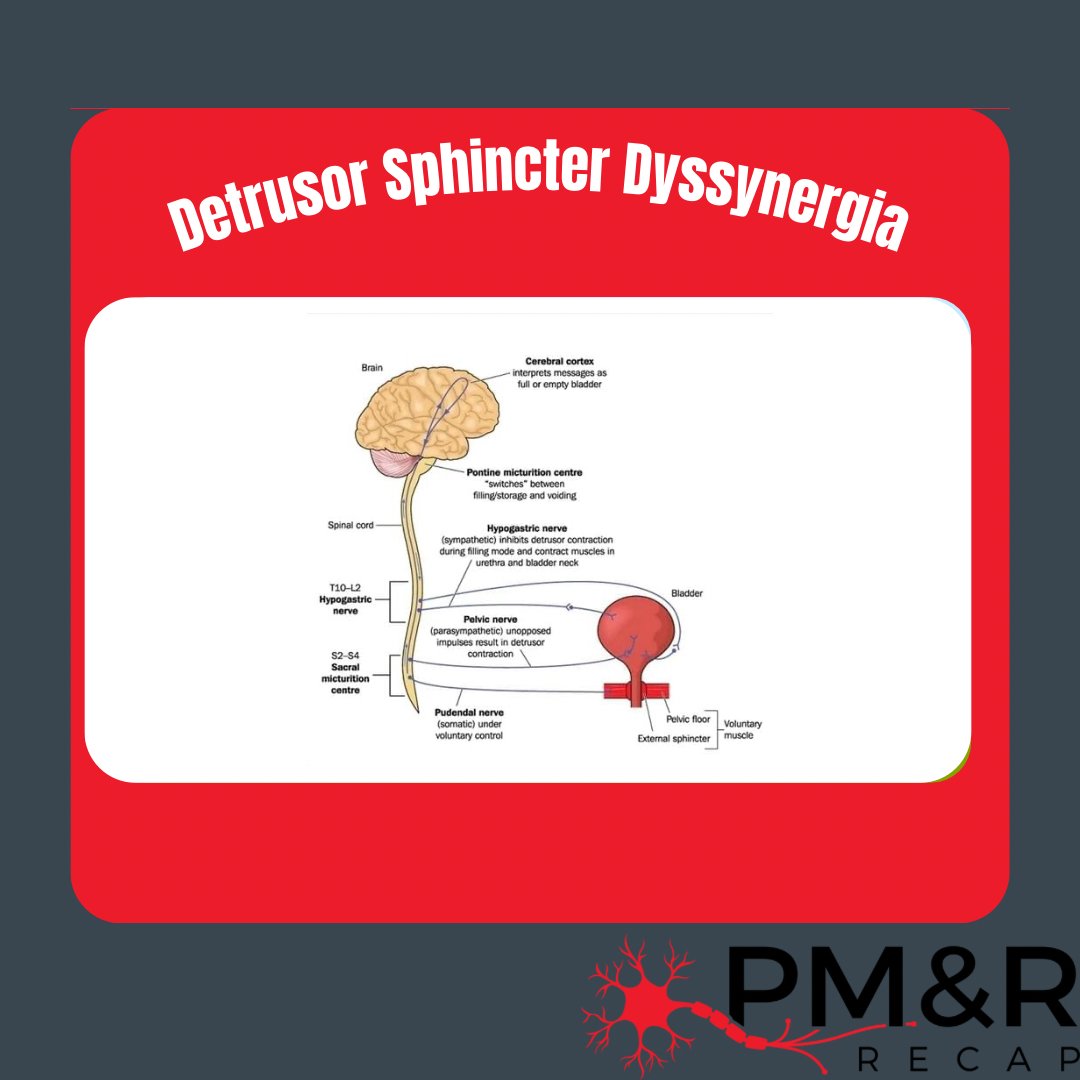
Detrusor-sphincter dyssynergia (DSD): A lesion between the brain and bladder that causes the most common bladder pathology in SCI patients. This is essentially a spastic bladder (UMN bladder) in combination w/ impaired coordination of bladder contraction with sphincter action.
Test yourself with a an #SCI bladder question! Question and answer choices are in the thread below. The answer and explanation will be available in two days, so make sure to check back! #Physiatry#Neurology#MedEd
1/2
This is a great opportunity for students interested in PM&R to learn more sports medical management and quick assessments during game play!Featuring @UCSFSportsMed very own Michael Mayes, MS, ATC. Be sure to save the date 🗓️ February 7th 9PM EST. Sign up with the 🔗 in the bio
Test yourself with a #SCI question! Question and answer choices are in the thread below. The answer and explanation will be available in two days, so make sure to check back! #Physiatry#Neurology#MedEd
1/2
A 43 y/o male is admitted to the ICU with a TBI. Neurosurgery placed an intraventricular ICP catheter to monitor intracranial pressure. ICP is noted at 30 mmHg, despite elevating the head of the bed, forced hyperventilation, and hypothermia protocols. What is the next best step?
Ask your friends about PM&R Recap! Better yet, find out for yourself what all the hype is about! Check us out at: https://t.co/K3StEtR9ER #Physiatry#ABPMR#MedEd
We have got you covered with topic videos, a question bank, and high-yield clinical vignettes! Head on over to our website to check out a sample video of our available content! https://t.co/K3StEtR9ER #physiatry#ABPMR#MedEd
The answer to this week’s question is A! Dexamethasone.
Explanation: Steroids such as dexamethasone are prescribed following whole-brain irradiation in order to reduce the expected brain swelling that occurs as a result of the radiation.
#MedEd#MedTwitter#physiatry
A 75 year-old female presents with several months of progressive headaches and weakness. Contrast MRI of the brain reveals glioblastoma multiforme. The patient undergoes whole-brain radiation and begins a chemotherapy regimen. #physiatry#MedEd#MedTwitter
1/2
However, she has begun to complain of worsening, unrelenting headaches since beginning this treatment. What is the most reasonable intervention that could have been taken to prevent this problem? Choose from the answers below - Answer and explanation in 2 days! #physiatry
2/2