On face value the dual-axis chart invites the wrong conclusion. Eskom still produces most of the country’s electricity. The deeper story remains a case of financial and technical failure. The rot shows up in who is leaving. Electricity costs for smelters have risen more than 900% since 2008. Only a fraction of ferrochrome furnaces stayed open; others were mothballed or cut output because they could not compete. Special tariffs, cut to around 62c/kWh, were needed just to stop further closures and job losses. Industrial sales have fallen sharply.
Eskom now has surplus power it cannot sell to the heavy industry that once took it, and is courting data centres, Amazon, Microsoft, Google, and even crypto loads to fill the gap. Better plant availability and more than 500 days without loadshedding are real, but they arrived after the customer base had already been hollowed out.
Smelters exiting and data centres being chased for offtake are signs of an economy in serious trouble, not of a utility that has been turned around.
On face value the dual-axis chart invites the wrong conclusion. Eskom still produces most of the country’s electricity. The deeper story remains a case of financial and technical failure.
The rot shows up in who is leaving. Electricity costs for smelters have risen more than 900% since 2008. Only a fraction of ferrochrome furnaces stayed open; others were mothballed or cut output because they could not compete. Special tariffs, cut to around 62c/kWh, were needed just to stop further closures and job losses. Industrial sales have fallen sharply.
Eskom now has surplus power it cannot sell to the heavy industry that once took it, and is courting data centres, Amazon, Microsoft, Google, and even crypto loads to fill the gap. Better plant availability and more than 500 days without loadshedding are real, but they arrived after the customer base had already been hollowed out.
Smelters exiting and data centres being chased for offtake are signs of an economy in serious trouble, not of a utility that has been turned around.
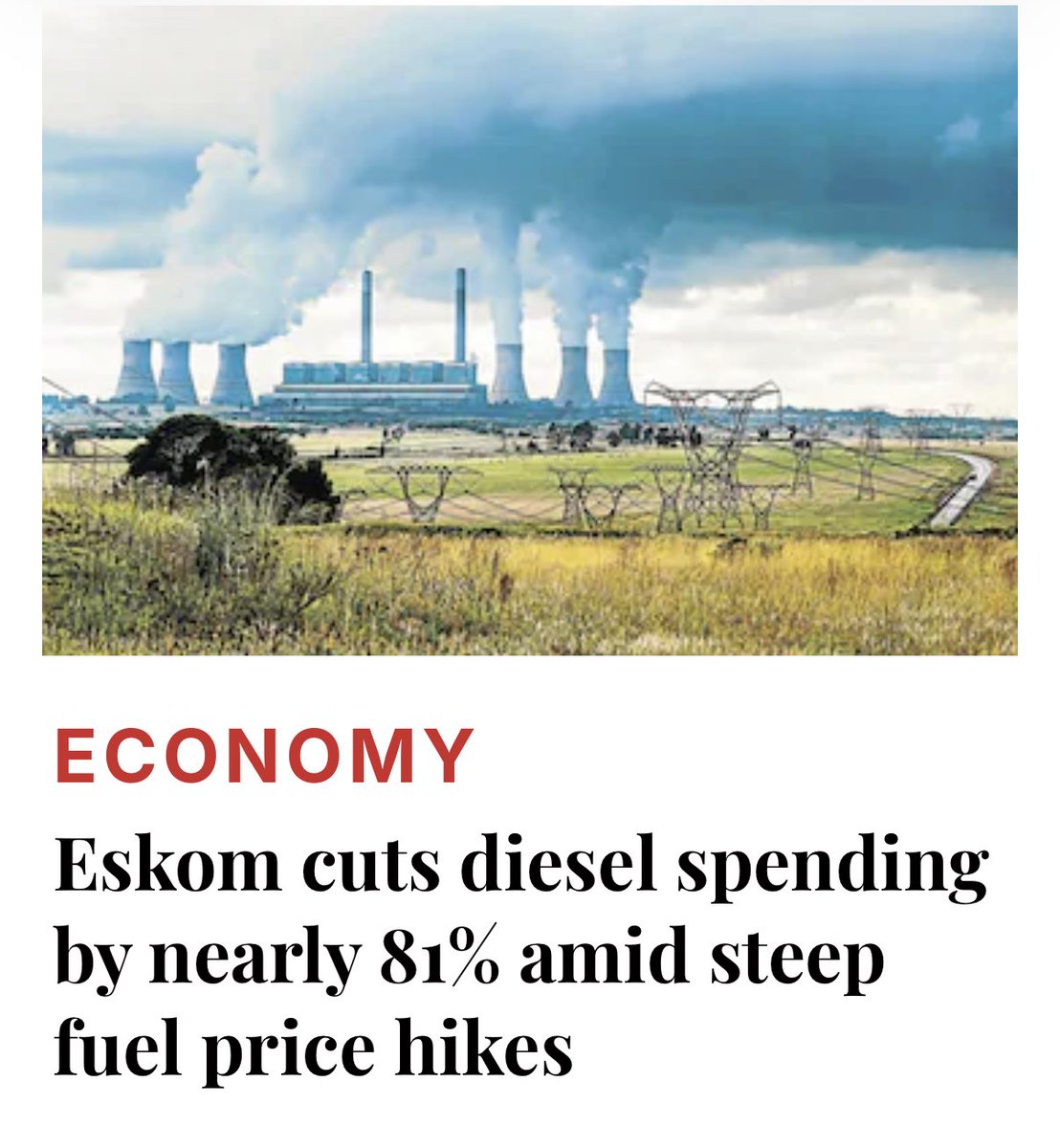
I must say. I find this headline rather confusing. “Eskom cuts diesel spend by 81% amid steep fuel price hikes”. Surely it should read “Eskom cuts diesel spend by 81% due to no need for diesel spend on OCGT, because of excess power availability from coal fired plants, now that load shedding is over”
Today I visited AfriForum’s headquarters to see firsthand its community safety operations and neighborhood and farm-watch programs. They are doing a terrific job.
But they need help. Our ask was for the South African government to designate rural crime a priority and back up their words with resources. AfriForum asked for support from the South African government – and the United States offered to help financially. This was ignored.
President Trump has been clear, this does not bode well for U.S.-South Africa relations.
@LiebenbergCarl Rates are a blunt tool for administered price and imported energy inflation and that the real fixes sit with energy reform, fuel levy policy and supply side bottlenecks.
@talkcentss Rates are a blunt tool for administered price and imported energy inflation and that the real fixes sit with energy reform, fuel levy policy and supply side bottlenecks.