I read this Matt Desmond article and... I don't know. I appreciate his argument about exploitation (of workers, and of poor people) as a cause of poverty. But the article starts out by first implying that our safety net in the US is just fine, and... no! 🧵https://t.co/Vqb9gRQypB
Want to work with me & A2J meta-boffin Hugh McDonald temporarily blinding folk with dazzling empirical A2J research? And hopefully help make justice more accessible along the way?!
Yeah you do!
https://t.co/02E1gIZEjM
Please share widely - I'm genuinely fabulous to work with!
@jtashea 'Judges also lack resources to solve the social problems they confront'. People have problems that can blur lines between legal/non-legal. Solving the legal issue alone does not always result in large positive impacts for families. This is another part of the equation to solve.
@jordan_law21 @StephenMayson@ACarpenterProf This accurately and sadly sums up my pro bono experience in DC Family Court, despite some well-intentioned judges and court staff. It's a systematic failure for poor and other vulnerable people.
For those of us that work with economists all day long some interesting insight on the field. And possible some lessons for linking economics and law to support better policy for #accesstojustice@NigelJBalmer
https://t.co/PDabfjd6hZ
My #Tinychat on measuring court accessibility & related legal needsy stuff with @ZachZarnow & @dehirsch1 was everything I dreamt of!
Included ignominy of a fast-forwarding while talking methods & being subjected to the world's most inept star wipe @ 5:58!
https://t.co/C89Dx7ZYSb
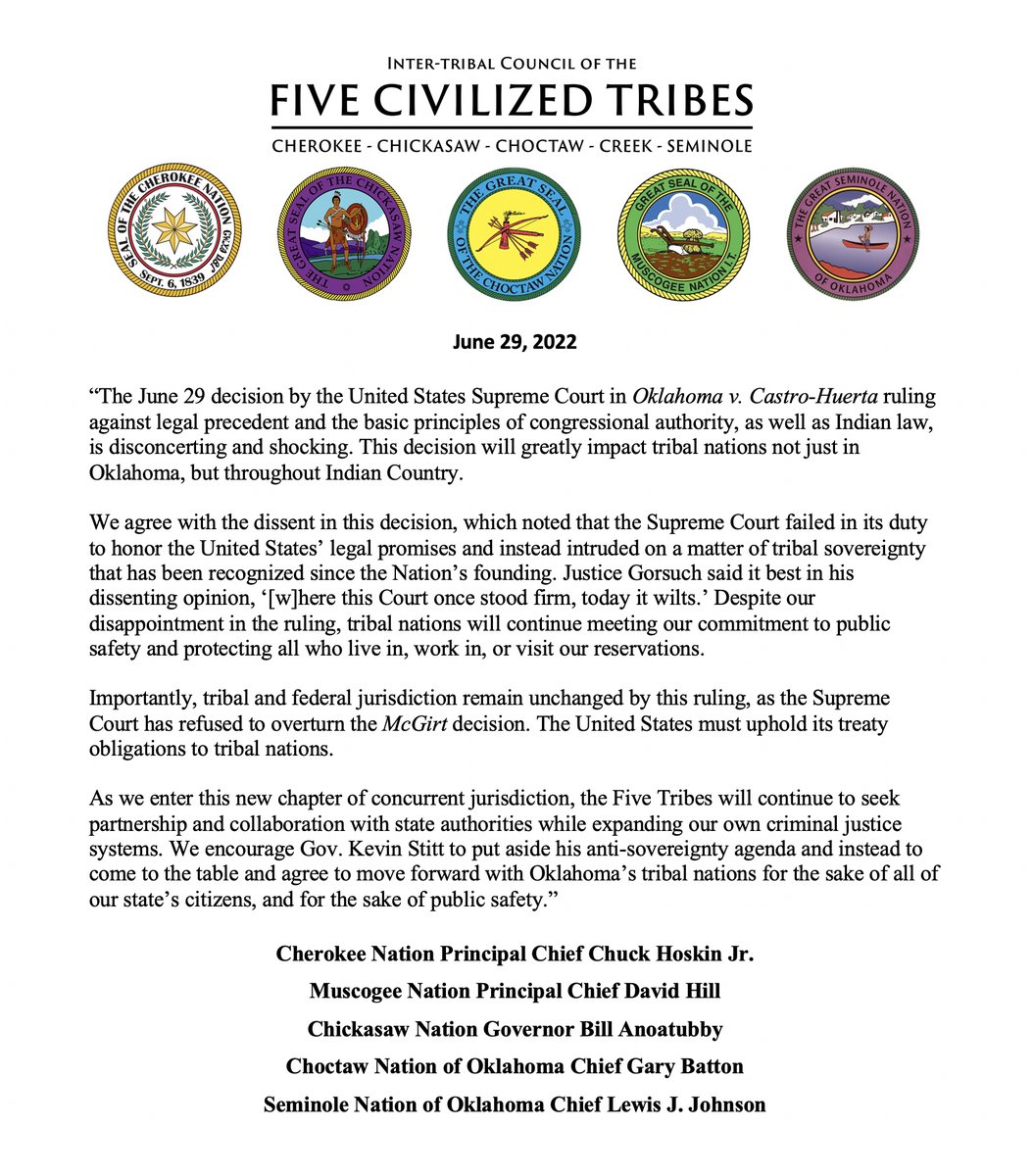
Following today’s U.S. Supreme Court decision in Oklahoma v. Castro Huerta, leaders of the Inter-Tribal Council of the Five Civilized Tribes issued the following joint statement:
@margarethagan@mjburnett@ABFResearch Would be interesting to know how they are moving towards these goals. Especially multi sectoral teams that I think are even more important for low income and vulnerable persons.