The American Bar Assocation (ABA) is hosting a new webinar about the MLB antitrust exemption. Learn more about how to attend here.
https://t.co/eTMh4rjxlV
The International Association of the Philosophy of Sport (IAPS) is coming to University Park campus.
The 49th annual IAPS meeting will be held from August 14 - 17 and will include several Penn State faculty.
More information can be found below.
🔗: https://t.co/44TYe5ulO8
Today the Supreme Court will hear the NCAA v Alston case. Check out a moot court on the topic hosted by Penn State Law and the center
https://t.co/pdMtG251IK
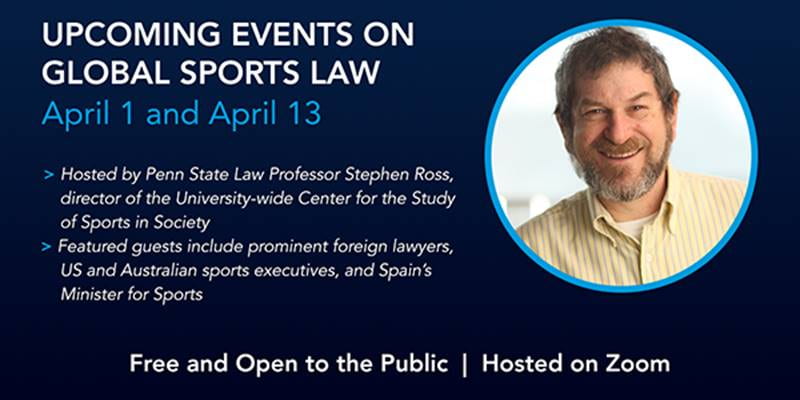
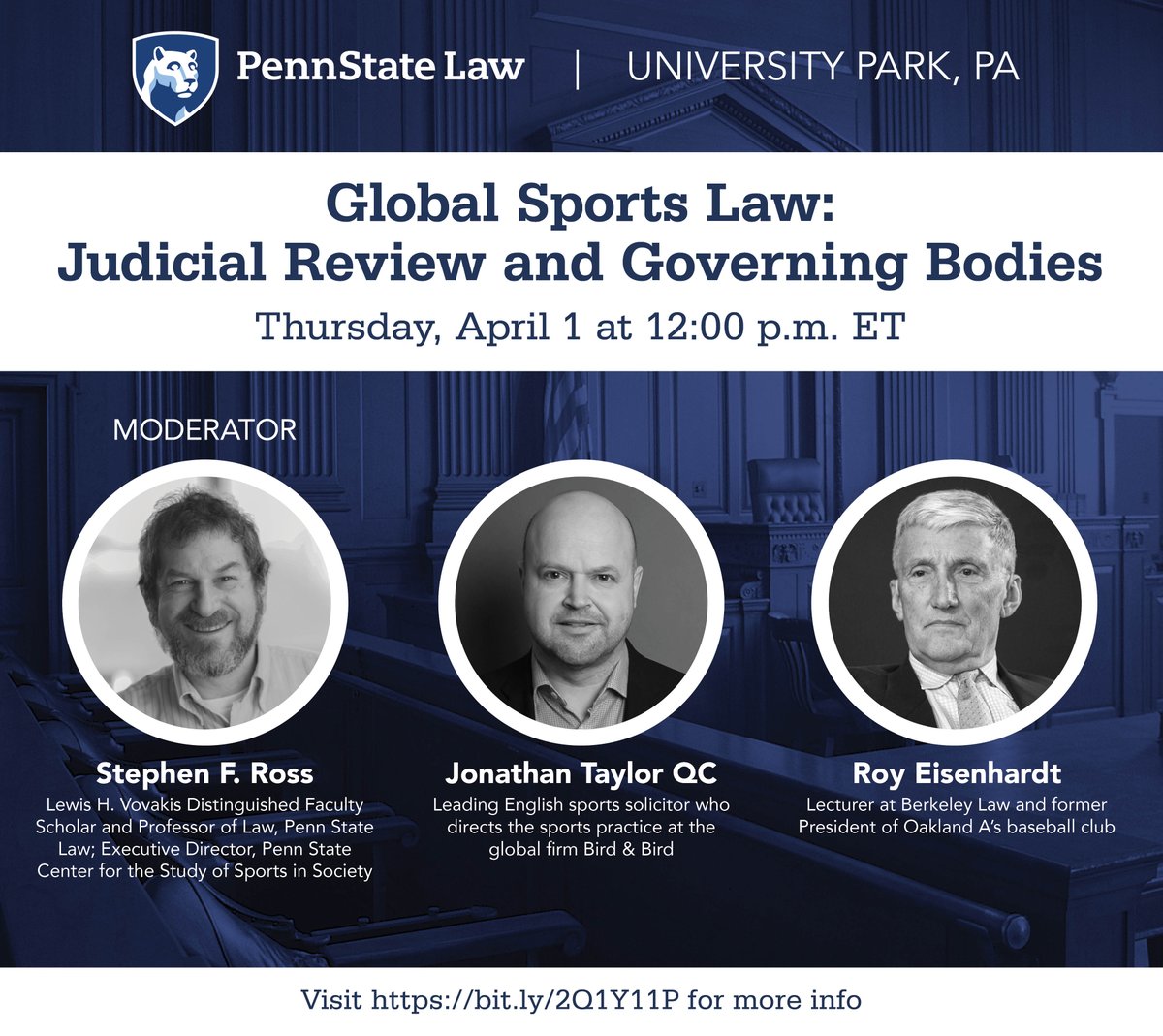
Join us Thursday for the first of two Global Sports Law discussions. Information on how to register can be found on our website
https://t.co/bOIMrhXiCa
Professor Mitten says that the district court ruling here will encourage litigation and challenges to NCAA decisions and asks the Court to reverse the ruling.
In his rebuttal, Professor Mitten says that there has been no finding that any of the NCAA's 17 challenged rules had a substantial anticompetitive effect.
Professor Ross, in conclusion, says that sports executives always decry changes to the status quo.
Ultimately, he says that college sports will benefit, as professional leagues have, from greater commercialization
Professor Ross disagrees with Mr. Mitten's assertion that the NCAA is in a better position to draw the line of compensation.
He says that the NCAA is driven primarily by the commercialization of sports like football and basketball, not by the protection of amateurism.
Professor Ross says it does not matter what the Court or NCAA President Mark Emmert think of amateurism in the anti-trust context, but what consumers think of it.
He defines consumers as those who buy tickets, purchase merchandise, and watch games on TV.
Professor Ross says the repeated refusal of the NCAA to allow individual conferences to set their own eligibility limits demonstrates that their concerns are pretextual.
Professor Ross says that determining whether restraints on trade are "reasonably necessary" should be done at the trial court level.
He goes on to say that a complete ban on pay is not necessary to differentiate between college and professional athletics.
Mr. Mitten responds by stating that it is an important socio-economic issue that cannot be addressed by anti-trust law.
He also states that a decision that limits the NCAA's power could inhibit their ability to promote both racial and gender equity.
Chief Justice Hamilton asks how race plays into the NCAA's position on athlete compensation.
He says that coaches, who are predominantly white, make millions of dollars and are among the highest-paid public employees while players are going unpaid.
Mr. Mitten says that the district court in this case redefined what the meaning of amateurism is to "not receiving unlimited cash payments."
Mr. Mitten argues that this makes college athletics a de-facto professional organization.