When Joe Cole went out celebrating Chelsea’s FA Cup win over Huddersfield in January 2006, he ended up at the Embassy Club in London with John Terry and a few of the West Ham lads.
Anton Ferdinand and Bobby Zamora were there, along with glamour model Keeley Hazell and some of her friends.
By the early hours, Cole had become separated from the others and was so drunk he could barely stand.
Keeley offered to help him get home, but getting an address out of him was proving difficult.
The only word he could muster up was:
“ParttttttyYYYYY.”
Cole had also lost his wallet, and every time Keeley asked where he lived, she got the same answer.
“ENGERLANDDD!”
With the World Cup coming up that summer, Keeley did not want to leave an England international wandering around Mayfair in that state.
“I couldn’t leave a valuable player stumbling around the streets of Mayfair.”
So she took him back to her parents’ house on a council estate in Grove Park.
Keeley helped him out of the taxi, made him drink plenty of water in the hallway and took him upstairs to her bedroom.
She removed his coat and shoes, put him into bed and rang her friend Patsy to tell her what had happened.
Patsy came round, and the two of them went upstairs to have a look at the Chelsea midfielder sleeping in Keeley’s bed.
“We peered through my bedroom door at JC like he was some sort of exotic zoo animal.”
They were both still drunk and laughing about the situation when Keeley’s phone rang.
It was her boyfriend Theo.
He had left his car keys at the house and wanted to come round to collect them.
Keeley immediately realised she had a problem.
“What am I going to say about Joe being in my bed?”
Patsy had a suggestion.
“Don’t tell him.”
When he arrived, Keeley kissed him hello and tried to act normally.
But as they started talking about her night out, she began worrying about what would happen if Cole suddenly woke up and came downstairs.
So she told him what had happened at the nightclub and that Joe Cole was asleep upstairs.
Theo went upstairs to see for himself, leaving Keeley and Patsy downstairs.
A few moments later, they heard a loud bang.
When the two women rushed upstairs, Theo was on top of Cole, repeatedly punching him in the head.
Cole had been woken from his sleep and was desperately trying to push him away.
“Joe was curled into a ball, his hands shielding his head.”
By now, Cole’s shirt had been ripped off and he was covered in cuts and bruises.
The pair struggled around the bedroom before Cole managed to break free and run past Keeley and Patsy.
He was out of the house so quickly that neither of them initially knew where he had gone.
Keeley turned to Theo and demanded to know why he had attacked somebody who was simply sleeping in her bed.
“Man needs to learn a lesson.”
“You don’t sleep in my girl’s bed. Simple as.”
Cole had escaped through an open window and was running through Grove Park wearing only his trousers.
He had no shoes, shirt, wallet or phone.
Eventually he reached the Far and Near minicab office, where the drivers were confronted by a bloodied man asking for somebody to take him home.
Despite being one of Chelsea’s biggest names, nobody initially realised who he was.
“No one recognised him at first.”
“He looked more like a yobbo.”
The drivers were reluctant to take him because he had no money, but one eventually agreed after Cole promised his dad would pay the fare when they arrived.
Within days, pictures of Cole’s battered face were appearing in the newspapers.
He returned to Chelsea training, but the incident had left him badly shaken.
“I was in the wrong place at the wrong time and the fella could have killed me.”
“Thinking about it now, I worry that anything could have happened.”
“But the only thing going through my head was I had to get out of there.”
“I was just lucky the window was open, so I could escape.”
#football
When Graeme Souness joined Liverpool from Middlesbrough in January 1978, he was preparing for his debut against West Brom when he realised something unusual: nobody had actually explained what was expected of him on the pitch.
Liverpool had paid a club-record £352,000 to sign him, and after a week of training, Souness felt someone should have told him how they wanted him to fit into the team.
With around 15 minutes to kick-off, he decided to approach assistant manager Joe Fagan for a quiet word.
Fagan was widely regarded as one of the gentlest personalities at Liverpool.
“Joe spoke in a quiet voice. I think he did it on purpose, so you had to really concentrate on what he was saying to you.”
However, Souness also knew that Fagan had a fiery side.
“When he blew his top he certainly did, he didn’t hold anything back.”
So, leaning towards him to make sure nobody else could hear, Souness explained his concern.
“Joe, I’ve been here a week and no one has told me how I should be playing.”
Fagan leaned closer too.
But instead of offering some tactical advice, he suddenly shouted:
“F*** off.”
“We’ve spent all this money on you and you’re asking me how to play football?”
He then walked away, shaking his head, leaving Souness completely bewildered.
“That was the one and only time in my seven years as a player at Liverpool that I asked how they wanted me to play.”
That perfectly summed up Liverpool's approach at the time. They signed talented footballers and trusted them to understand the game without constantly being told where to position themselves or what to do.
Tactical discussions were rare, and conversations about the opposition were even rarer.
“In my playing days at Liverpool we never talked about the opposition for more than two minutes.”
“It was all about what we were going to do.”
“We never had team meetings.”
By 1984, Fagan had taken over from Bob Paisley as Liverpool manager, and the club were preparing for a European Cup final against Roma.
The game was taking place in Rome, at Roma's own stadium, but Liverpool's preparations remained remarkably relaxed.
The players were given time to unwind before the final. On the morning of the match, they went for a walk before returning to the hotel for lunch.
After everyone had finished eating, Fagan suddenly stood up and tapped a spoon against his glass.
It was something the players had never really seen him do before. With the biggest game of the season just hours away, they assumed he was about to give them a detailed team talk about Roma.
Everyone went quiet and listened.
“Big game tonight boys and they must be a good team.”
“But they can’t be as good as us, they just can’t be.”
Then, after a short pause, Fagan delivered his final instruction:
“Now the bus leaves at 5.30 so make sure no one is late.”
And that was it. No lengthy tactical instructions, no detailed analysis of Roma. Just a few words of confidence and a reminder not to miss the bus.
Liverpool went on to draw 1-1 with Roma before winning on penalties to lift the European Cup for the fourth time.
Despite their memorable first encounter, Souness held Fagan in enormous affection and respect.
“When Joe spoke everyone shut up.”
“He was a lovely gentle man in every sense of the word.”
But one thing remained unforgettable: the response he received when he made the mistake of asking how he was supposed to play football.
“F*** off.”
It’s 33 years to the day since David Seaman’s one and only career red card.
Here the score is 0-0 at Upton Park with just 5 mins to go, when Seaman saves a point for Arsenal with the most blatant foul imaginable on Trevor Morley.
Thou shalt not pass…
⚽ JOGOS HISTÓRICOS
Lazio 4x4 Milan
🏆 Serie A 1999/00 - 5ª rodada
🏟️ Estádio Olímpico, Roma
📅 03/10/1999
Oito gols, uma virada espetacular e uma revanche que terminou sem vencedor.
Poucos meses depois de perder o título italiano para o Milan por apenas um ponto, a Lazio reencontrava seu algoz no Campeonato Italiano. As duas equipes chegavam invictas à quinta rodada, em um confronto entre o atual campeão e um dos principais candidatos ao Scudetto.
Comandada por Sven-Göran Eriksson, a Lazio reunia nomes como Nesta, Verón, Simeone e Salas. O Milan de Alberto Zaccheroni contava com Maldini, Weah e o recém-contratado Andriy Shevchenko, que começava a construir sua história no futebol italiano.
O primeiro tempo foi uma sucessão de reviravoltas. Verón abriu o placar aos 18 minutos, mas Mihajlovic marcou contra após uma defesa de Marchegiani. A resposta da Lazio veio imediatamente: Abbiati falhou em um escanteio e também marcou contra, antes de Salas ampliar para 3 a 1. Aos 43 minutos, Shevchenko diminuiu para o Milan.
Na segunda etapa, Sheva assumiu o protagonismo. Aos 63 minutos, converteu um pênalti e empatou a partida. Cinco minutos depois, marcou novamente, completou seu hat-trick e virou o placar para 4 a 3. O Milan havia transformado uma desvantagem de dois gols em uma vitória que parecia encaminhada.
Mas a Lazio ainda tinha uma resposta. Aos 72 minutos, Salas marcou seu segundo gol e decretou o empate em 4 a 4. Depois de tantas mudanças no rumo da partida, nenhum dos dois gigantes conseguiu sair vencedor.
Aquele empate foi apenas um capítulo de uma temporada que terminaria com a Lazio campeã italiana, encerrando um jejum de 26 anos. Shevchenko, por sua vez, encerraria sua primeira temporada na Serie A como artilheiro, com 24 gols.
Em Roma, a Lazio não conseguiu a revanche que buscava, mas deu mais uma demonstração de sua força. O Milan não saiu vencedor, mas viu nascer uma de suas futuras lendas. Entre os gols de Salas e a explosão de Sheva, ficou um dos confrontos mais memoráveis daquela temporada italiana.
Em 1998, Perugia e Torino terminaram a Série B italiana empatados com 62 pontos e precisaram disputar um jogo desempate valendo o acesso à Série A. 🇮🇹🔥
A partida terminou em 1 a 1, e o Perugia garantiu a promoção nos pênaltis.
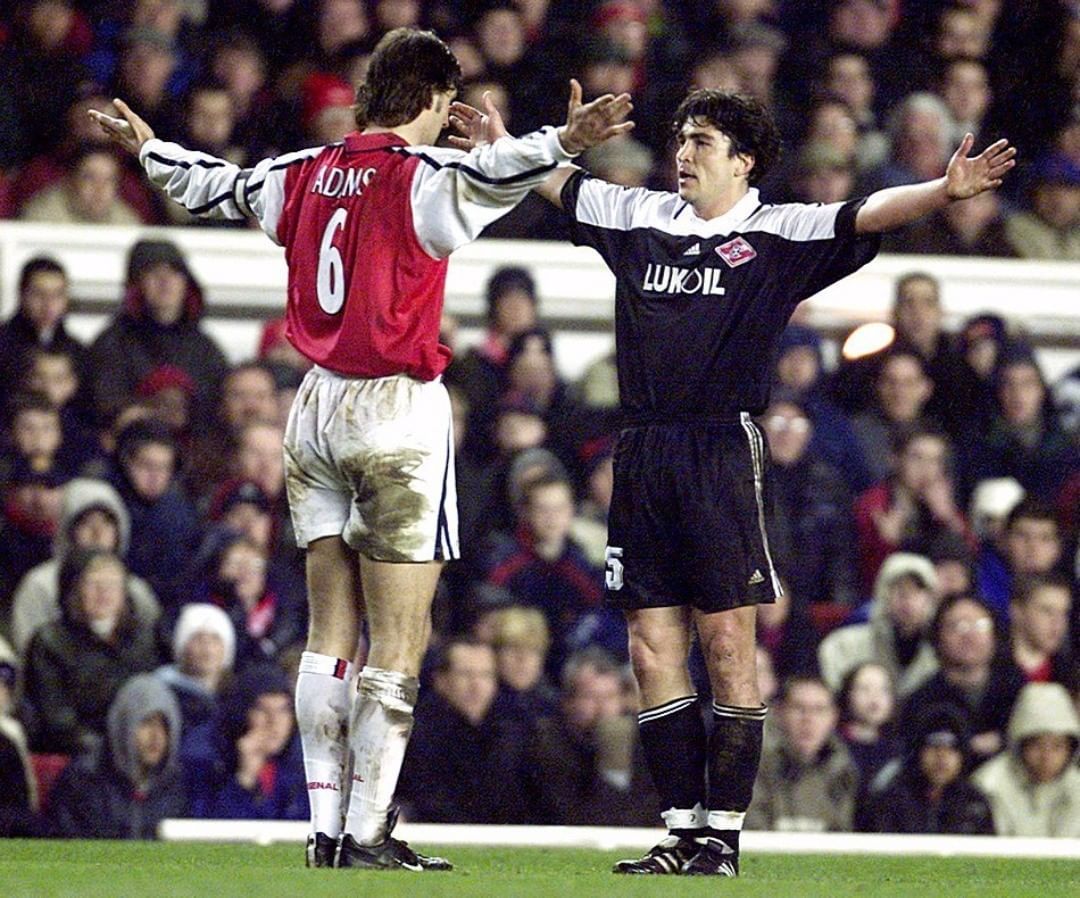
Mas o destaque ficou para os capitães Marco Materazzi e Gianluigi Lentini, que pareciam ser GRANDES AMIGOS durante o confronto! 🤣👊
Nostálgico!
On August 4, 1998 Chelsea visited the Gelredome in Arnhem for a pre-season tournament hosted by Vitesse. Chelsea, the Cup Winners’ Cup holders, lost their semi-final 4-0 to Atlético Madrid, who scored twice in two minutes just before half-time.
Gianluca Vialli was in his first summer as player-manager. The next day Chelsea beat Flamengo 5-0 in the third-place match, and Gus Poyet scored one of the goals.
Twenty-four days later they were in Monaco for the UEFA Super Cup against Real Madrid, who had won the Champions League in Amsterdam that May. Poyet started on the bench and came on in the 63rd minute for Roberto Di Matteo.
Late in the game, Gianfranco Zola found him. Poyet hit it right-footed from the edge of the box, past Bodo Illgner and into the corner. It was the only goal of the match, and he was named man of the match.
Years later, Poyet put the night in context. “Beating the European champions and scoring myself was unforgettable. Chelsea wasn’t yet the club it is today, and that victory was the result of great preparation.”
Today Poyet turns 59.
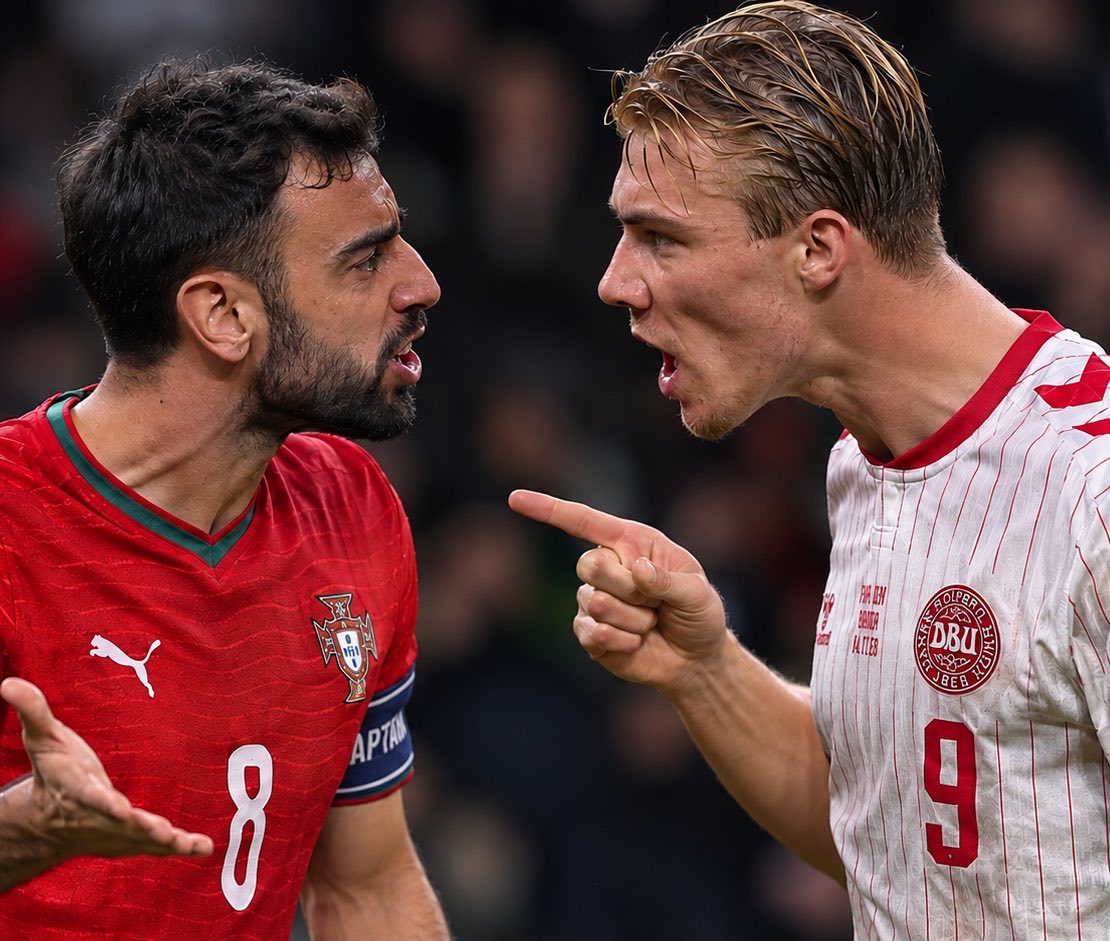
🚨Rasmus Højlund on his heated conversation with Bruno Fernandes after the match vs Portugal
Reporter 🗣️: Rasmus, cameras caught you refusing to shake Bruno Fernandes’ hand after the final whistle. What happened?
Højlund 🎙️: Bruno walked towards me, congratulating me on my performance and the two goals I scored. But I wasn’t interested in shaking his hand.
I told him he was a betrayer.
We played together at Manchester United. We shared a dressing room. We both knew what Cristiano meant to that club.
And now, when Cristiano needed people to stand beside him, Bruno wasn’t there. He watched Jorge Mendes push him towards retirement without saying anything.
Reporter 🗣️: Bruno apparently disagreed with you. What was his response?
Højlund 🎙️: He looked at me and said, “How exactly am I supposed to do that? Did Cristiano even win the World Cup for us?”
I was surprised.
I told him, “No, he didn’t. But does that mean everything he has done for Portugal suddenly means nothing?”
Reporter 🗣️: What happened next?
Højlund 🎙️: Bruno wasn’t finished. He said, “Ronaldo isn’t Messi, Rasmus. And thank God he’s not here anymore. He would have made everyone feel bad about today’s defeat and somehow painted himself as the hero.”
I just looked at him.
Honestly, I couldn’t believe Bruno was talking about someone he once shared a dressing room with.
Reporter 🗣️: Do you think Bruno has lost respect for Ronaldo?
Højlund 🎙️: I don’t know what he feels privately, but his actions speak loudly.
You don’t have to agree with everything Cristiano does. You don’t even have to defend him every time.
But there’s a difference between disagreeing with someone and allowing people to write the final chapter of his career as if he contributed nothing.
That’s what disappointed me.
It’s 27 years today since TEN yellow cards were shown at Hampden Park, as England beat Scotland 2-0.
Here’s a selection of fouls from the feisty encounter, plus a dreadful Don Hutchison tackle which goes unpunished.
A proper old school Battle Of Britain.
When John Hartson was playing for Wimbledon in August 2000, Rangers agreed a £6 million deal to bring him to Ibrox, where Dick Advocaat was preparing his side for the Champions League.
Wimbledon had just been relegated, and Hartson was away with Wales when manager Mark Hughes told him Rangers wanted to sign him.
Chairman David Murray had even arranged for his private jet to collect him from Cardiff.
Hartson immediately phoned his dad.
“I’m joining Glasgow Rangers.”
He had no allegiance to either side of the Old Firm and was delighted with the move.
“Listen, I would have signed for Rangers without question.”
His dad joined him on the plane, and around 40 minutes later they landed in Scotland.
“I arrived in Glasgow Airport, it was like Michael Jackson was arriving.”
“There was press everywhere.”
Hartson was driven straight to Ibrox, where Rangers were unveiling Ronald de Boer, who had just arrived from Barcelona.
The Dutchman was standing on the pitch having his photographs taken when Hartson spotted him.
“Ronald, give me two minutes, I’ll do it with you.”
De Boer laughed and welcomed him.
Hartson had already agreed a five-year contract worth around £15,000 a week, with bonuses for goals and European appearances.
But Hartson had undergone knee surgery the previous season, which had already caused a proposed move to Tottenham to collapse.
He was confident the injury was behind him.
At Ross Hall Hospital, doctors scanned his ankle, knee and back before sending him back to Ibrox.
Hartson was expecting to sign his contract when Dick Advocaat walked into the room looking concerned.
“John, I’m sorry, we can’t proceed with the deal.”
Hartson was stunned.
“Why, what’s happened?”
Advocaat explained that the medical had revealed a problem with his knee.
“They saw my knee on a scan.”
“They decided not to go ahead with the deal.”
After arriving on the chairman’s private jet, agreeing his wages and meeting his new teammates, Hartson was being sent home without a contract.
“They waved a contract under my nose, took me to Ibrox where I was pictured, and then whipped it away again.”
He returned to Wimbledon, and in February 2001 joined Coventry City, where Gordon Strachan gave him another chance.
Hartson scored six goals in 12 Premier League appearances, although Coventry were relegated.
That summer, he was away at pre-season training when Strachan told him somebody wanted to speak to him on the phone.
It was Celtic manager Martin O’Neill.
“Look, John, I know all about your medical history.”
“We’re delighted that you failed that medical across the road.”
And O’Neill was determined there would be no repeat of the Rangers situation.
“I’m going to come up on Friday.”
“I’ll have a contract in my hand and you’re going to sign it.”
“Unless you have a hole in your heart, I’m buying you.”
Hartson signed for Celtic in August 2001 for around £6 million.
He formed a formidable attacking partnership with Henrik Larsson and Chris Sutton, winning three league titles, two Scottish Cups and a League Cup.
He scored against Rangers at Ibrox, helped Celtic reach the 2003 UEFA Cup final and was named Scotland’s Player of the Year in 2005.
By the time he left Celtic in 2006, he had scored more than 100 goals for the club and become a favourite with the supporters.
Years later, Hartson was asked about the medical that had stopped him joining Rangers.
“I failed four medicals in my career and that was the best one.”
“Their mistake.”
#football #celtic