A place to share and collect analogies that are helpful for patient education in the clinic. I do not claim to have created all of these. Please share your own.
Unpleasant feelings or emotions weigh more heavily on the mind than pleasant ones. When asked, a patient may comment on constant, 24 hours/day, 7 days/week pain. Like the cherry among the cockroaches, the few painfree moments get lost among the frequent episodes of pain.
Pain is like the #hulk - it gets your attention, packs a punch, can make a mess, but is often misunderstood. He’s a good guy, a protector, he’s on our side. Kylie Perry explains her Avengers spin on pain in #Smithon#Tasmania#PainRevolution
...and in order for a risk factor to be actionable and relevant we have to be able to avoid it. So, if we advocate that people must lift with a neutral spine we might as well tell them that they must stop breathing to prevent shoulder pain. It is not something anyone does /end
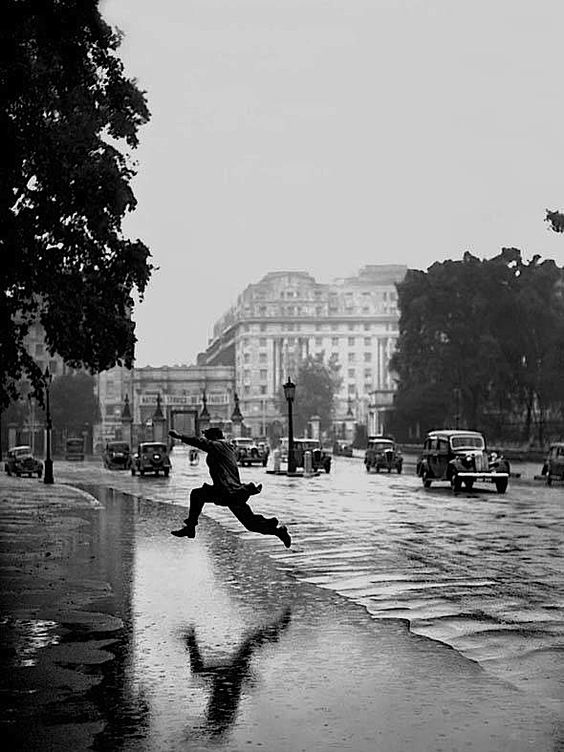
Dosing exercise intensity is like jumping over a puddle. You would rather overjump to make sure you clear the puddle because it beats the alternative of coming up short. #TrainToFailure Great video and topic from @scotmorrsn. #SloptimalLoading https://t.co/RxhS1uamHq
When patients tell me they are scared to lift weights because they think they will look like a pro bodybuilder...
I tell them that’s like being scared to drive because they think they will become a nascar driver.
#exerciseismedicine#docswholift
The Twin Peaks Model from the @noigroup is an excellent resource to discuss the difference between pain and tissue injury. It also can help us to understand how an injury can cause sensitization and change tissue tolerance levels.
https://t.co/BCBBONvL9f
A child learns to run thru countless attempts and failures until they find a method that is safe and efficient for them. Yet when an adult learns a new task, we demand perfection prior to execution?
Allow variability, avoid constant feedback, and promote independent learning.
“You wouldn’t give your patient a bag of pills and say ‘take some of these and see what works to improve your heart condition’... exercise needs to be prescribed just as we prescribe medications” - Anne Swisher, PT. @NicoleStoutPT#APTACSM
Education is an intervention, probably our most important intervention. Like an exercise based intervention, we need to dose based on patient capacity, build according to patient response, and allow time for gradual change to occur.
Not all patient education must occur during the evaluation visit! The best patient educators stick to 1 to 2 main points, confirm patient understanding, allow for questions, and expand on these in the following visits.
Treating people in pain can make us feel like the other animals in this story of the fire. And like the hummingbird, we may not be successful at first, but if we continue to do 'what we can', little by little we make a positive impact to improve the lives of our clients in pain.
I often think of this remarkable analogy when patients describe their pain.
We can never compare one's pain with another's. Regardless of the chronicity, etiology, numeric pain rating, co-morbidities, etc, when someone's pain causes suffering, for them, it is all-consuming.
Core strengthening to prevent back pain is like using a water cup in a game of beer pong. It's definitely not going to solve the whole problem, but it still seems better than doing nothing.
"Exercise in combination with education is likely to reduce..."
https://t.co/rPbKR7Ret2
No one expects our left and right hands to be #symmetrical. So why in physical therapy do we get enthralled with asymmetrical spines, asymmetrical scapula, asymmetrical pelvis, asymmetrical L on R counter-torsion of sacrum on iliumblahblahblah. #AsymmetryIsNormal
You dont clean your bedroom unless it's dirty. Likewise, your muscles dont rebuild if they arent broken down. Helpful #analogy to help patients to understand they have to work to fatigue when trying to #strengthen a muscle group.
#Muscles act on #swelling like your hand squeezing on a tube of toothpaste. With compression, fluid can be moved. One of the many reasons that active range of motion within pain tolerance is important after an acute or swollen injury. #PhysicalTherapy#Analogy