I failed IIT twice. Took loans I couldn't afford. Started as a Quality Engineer while my friends climbed faster. 25 years later, here's the timeline:
2000: Decided to become an Engineer from IIT
2004: Failed to get into IIT
2005: Failed to get into IIT a second time—reluctantly took admission in another engineering school
2006: Started preparing for grad school in US
2008: Ran around trying to get a loan to go to grad school.
2009: Graduated with an engineering degree in India
2009: Moved to the US for grad school at UPenn, started from scratch in a new country
2010: Struggled landing an internship, while all my friends had one.
2010: Clock was ticking on student loan installments
2010: Finally got an internship at a tiny startup
2011: Finally landed a job at the same startup
2012: Struggled through tech career beginnings as a QA engineer
2013: Doubted if I belonged, took a leap into customer-facing engineering
2014: Really felt like I'd arrived in my happy place—solving new business problems every day with engineering
2017: Google found me!
2019: Found this role called DevRel, found my love for learning out loud
2020: Launched some cool zero-to-one products
2021: Became a published best selling author
2023: Led Developer Advocacy for North America at Google Cloud
2024: Microsoft found me to lead Developer Strategy for GTM!
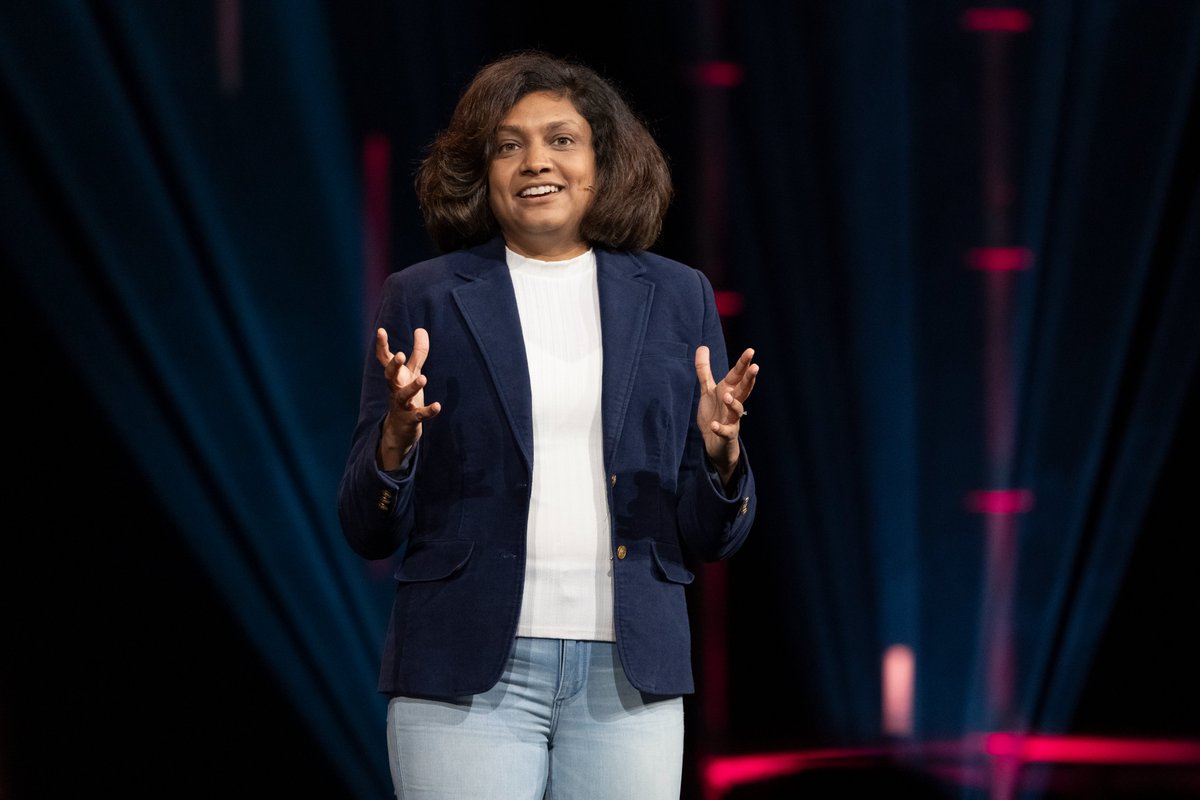
2025: Earned Wharton MBA, launched another best selling book, took the TED stage while building and leading a team with multi-billion dollar impact.
Story goes on...
The entire time, one truth kept me going: I had to believe in myself before anyone else would.
Failing IIT twice felt like the end of the world. But it wasn't my destination—it was just the beginning.
From a "Not-IIT" engineering school to leading developer strategy at the
world's biggest tech companies wasn't about being the smartest person in the room.
It was about showing up consistently, learning relentlessly, and never letting failure or fear make my decisions.
Don't give up on yourself. Your timeline is your own. Dream!
Dream big! You can only achieve what you can imagine..so don't hold back.
#hustle
AI is an excited intern full of energy and no judgment
It takes a patient, sharp operator (boss) to steer it toward any meaningful outcome.
Which means: people who aren't strong leaders, who can't break a job into clear steps and train someone through it, won't be able to get the most out of AI either.
GitHub is the only bottleneck! 100%
@harjotsgill and I discussed this in my recent discussion with him.
Check out the full discussion: https://t.co/ymAnDO2Thc
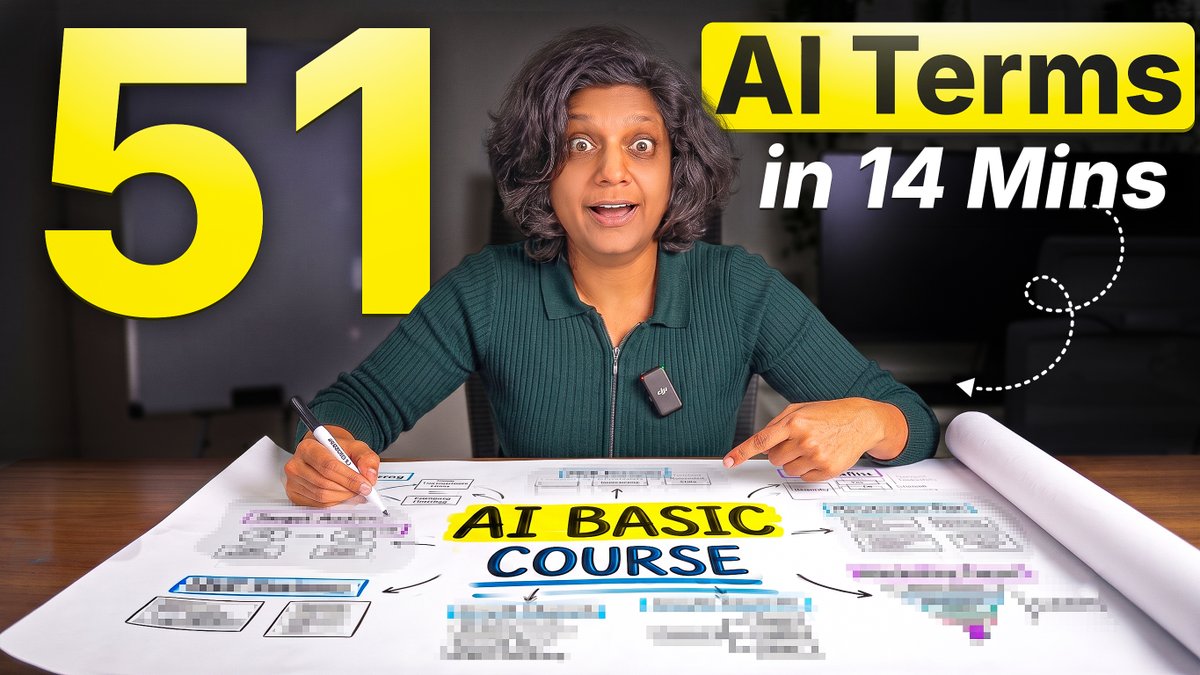
🚀 51 AI Terms explained in 14 minutes: Let's play the game together! Video in comments, let me know how you like this format, I had a lot of fun recording it!
▶️ Artificial Intelligence (AI)
▶️ Machine Learning (ML)
▶️ Deep Learning
▶️ Large Language Model (LLM)
▶️ Small Language Model (SLM)
▶️ Neural Network
▶️ Parameters
▶️ Tokenization
▶️ Vector
▶️ Embedding
▶️ Vector Space
▶️ Attention Mechanism
▶️ Self-Attention
▶️ Transformer
▶️ Context Window
▶️ Positional Encoding
▶️ Training
▶️ Pretraining
▶️ Self-Supervised Learning
▶️ Supervised Learning
▶️ Fine-Tuning
▶️ Reinforcement Learning
▶️ RLHF
▶️ Alignment
▶️ Prompt Engineering
▶️ Zero-Shot Prompting
▶️ Few-Shot Prompting
▶️ Chain of Thought
▶️ System Prompt
▶️ Context Engineering
▶️ RAG (Retrieval-Augmented Generation)
▶️ Vector Database
▶️ Semantic Search
▶️ Cosine Similarity
▶️ Knowledge Graph
▶️ Grounding
▶️ Function Calling
▶️ Tool Use
▶️ MCP (Model Context Protocol)
▶️ AI Agent
▶️ Agentic AI
▶️ Multi-Agent
▶️ System Orchestration
▶️ Multimodal Model
▶️ Diffusion Model
▶️ Reasoning Model
▶️ Mixture of Experts (MoE)
▶️ Distillation
▶️ Quantization
▶️ Hallucination
▶️ Temperature
▶️ Latency
Video link: https://t.co/DIn3cEXDal
#learnai #AIAgents #AIVocabulary #AITerms
For years I was the engineer in the room nobody listened to. The code was good but story was missing.
Here's the timeline of how I learned to tell one 👇
𝟮𝟬𝟭𝟮: QA engineer, writing meticulous bug reports nobody read.
→ 𝗟𝗲𝘀𝘀𝗼𝗻: Complete isn't the same as compelling.
𝟮𝟬𝟭𝟯: Moved into customer-facing engineering.
→ 𝗟𝗲𝘀𝘀𝗼𝗻: The story doesn't start with your solution. It starts with their problem.
𝟮𝟬𝟭𝟰: Noticed the customers who understood me became the customers who trusted me.
→ 𝗟𝗲𝘀𝘀𝗼𝗻: Clarity isn't a soft skill. It's how trust gets built.
𝟮𝟬𝟭𝟳: Google. Rooms full of people smarter than me.
→ 𝗟𝗲𝘀𝘀𝗼𝗻: You can't out-smart the room. You can out-explain it.
𝟮𝟬𝟭𝟵: Found DevRel. Started learning out loud.
→ 𝗟𝗲𝘀𝘀𝗼𝗻: Sharing what you're figuring out beats performing what you've mastered.
𝟮𝟬𝟭𝟵: Words weren't landing, so I drew a concept on an iPad instead.
→ 𝗟𝗲𝘀𝘀𝗼𝗻: When people don't get it, change the format, not the volume.
𝟮𝟬𝟮𝟭: Those sketches became a book.
→ 𝗟𝗲𝘀𝘀𝗼𝗻: One story told consistently becomes a body of work.
𝟮𝟬𝟮𝟯: Led developer advocacy for North America.
→ 𝗟𝗲𝘀𝘀𝗼𝗻: At some point your job stops being telling the story and starts being teaching others to tell theirs.
𝟮𝟬𝟮4: Microsoft, Built outcomes based FDE team, when FDE was not even a term
→ 𝗟𝗲𝘀𝘀𝗼𝗻: Story of revenue moves the needle!
𝟮𝟬𝟮𝟱: TED Talk.
→ 𝗟𝗲𝘀𝘀𝗼𝗻: I still can't believe I landed one of the biggest storytelling stages on the planet!
🔹 𝗧𝗵𝗲 𝟯 𝗣𝗵𝗮𝘀𝗲𝘀 𝗢𝗳 𝗧𝗲𝗰𝗵𝗻𝗶𝗰𝗮𝗹 𝗦𝘁𝗼𝗿𝘆𝘁𝗲𝗹𝗹𝗶𝗻𝗴
𝗣𝗵𝗮𝘀𝗲 𝟭: 𝗧𝗵𝗲 𝗗𝘂𝗺𝗽
"Let me show you everything I know."
Complexity as proof you belong. Nobody remembers a thing.
𝗣𝗵𝗮𝘀𝗲 𝟮: 𝗧𝗵𝗲 𝗧𝗿𝗮𝗻𝘀𝗹𝗮𝘁𝗶𝗼𝗻
"Let me explain this so you get it."
Jargon out, analogy in. They nod — but you're still talking at them.
𝗣𝗵𝗮𝘀𝗲 𝟯: 𝗧𝗵𝗲 𝗖𝗼𝗻𝗻𝗲𝗰𝘁𝗶𝗼𝗻
"Let me start with what you're stuck on."
Their problem first. Now people quote you in rooms you're not in.
🔹 𝗧𝗵𝗲 𝗦𝘄𝗮𝗽𝘀 𝗧𝗵𝗮𝘁 𝗖𝗵𝗮𝗻𝗴𝗲𝗱 𝗠𝘆 𝗖𝗮𝗿𝗲𝗲𝗿
𝗜𝗻𝘀𝘁𝗲𝗮𝗱 𝗼𝗳: "Here's how it works" 𝗧𝗿𝘆: "Here's the problem it solves"
𝗜𝗻𝘀𝘁𝗲𝗮𝗱 𝗼𝗳: Adding one more slide 𝗧𝗿𝘆: Cutting to one idea they'll repeat tomorrow
𝗜𝗻𝘀𝘁𝗲𝗮𝗱 𝗼𝗳: Sounding impressive 𝗧𝗿𝘆: Sounding clear (clear IS impressive)
𝗜𝗻𝘀𝘁𝗲𝗮𝗱 𝗼𝗳: A wall of text 𝗧𝗿𝘆: One drawing. I built a career on this one.
🔹 𝗧𝗵𝗲 𝟴𝟬/𝟮𝟬 𝗢𝗳 𝗕𝗲𝗶𝗻𝗴 𝗛𝗲𝗮𝗿𝗱
𝟴𝟬% 𝗼𝗳 𝘆𝗼𝘂𝗿 𝗶𝗻𝗳𝗹𝘂𝗲𝗻𝗰𝗲: → Knowing who you're talking to → Leading with the "so what" → One idea, repeated well → Making the complex feel simple
𝟮𝟬%: → Technical depth → Comprehensive documentation → Precise terminology → Being right
𝗧𝗼 𝗲𝘃𝗲𝗿𝘆 𝗲𝗻𝗴𝗶𝗻𝗲𝗲𝗿 𝘄𝗵𝗼 𝗳𝗲𝗲𝗹𝘀 𝗶𝗻𝘃𝗶𝘀𝗶𝗯𝗹𝗲: I spent years believing the work would speak for itself. It doesn't. It never did. Someone has to speak for it and it should be YOU. No one can tell YOUR story better than YOU
♻️ Share this with the developer on your team nobody listens to 💚 💬 Which phase are you in right now?
#TechnicalStorytelling #storytelling #TechCareer #Communication #Engineering #PersonalGrowth
I have a @JeffDean story to share.
I was this very early in career devrel at Google trying to find my voice and I saw Jeff liking some of my work on social media and following me.
He has no idea but for me that meant so much validation I cant express in words.
Congrats on the amazing run Jeff!
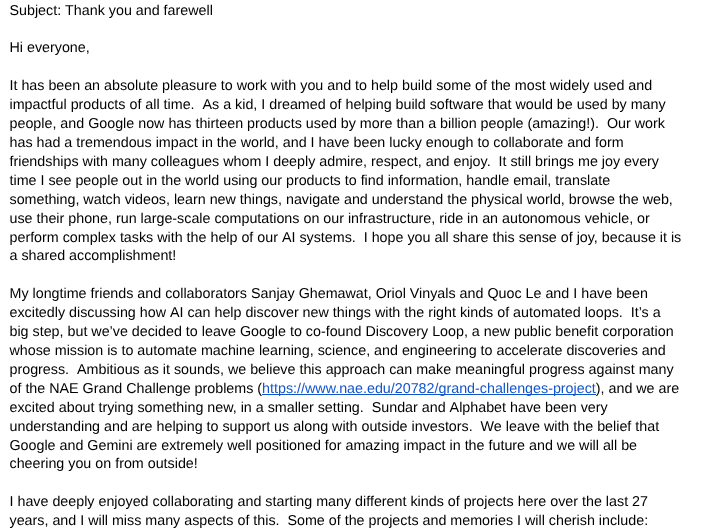
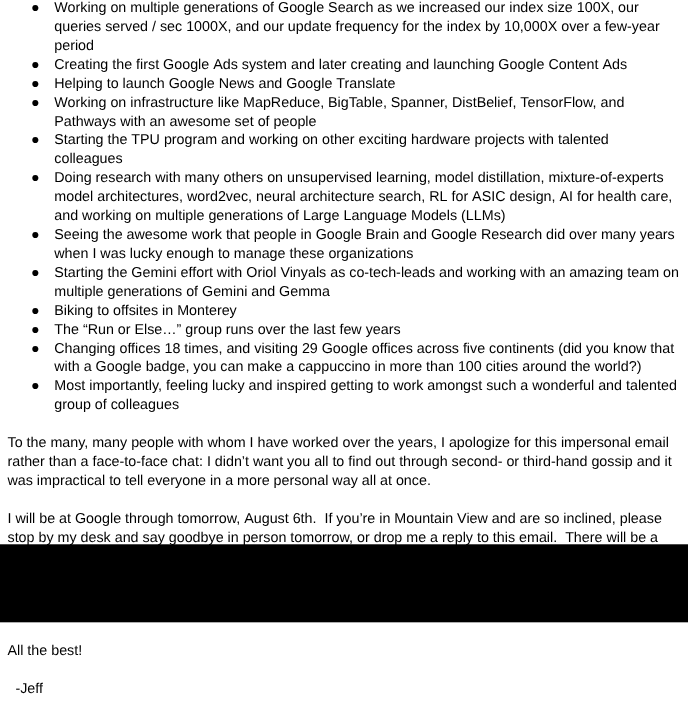
Tomorrow will be my last day at Google after 27 years, and watching it grow from 25 people to 190,000+ has been an amazing journey. Below is a note I shared with many people internally at Google today. An excerpt is:
It has been an absolute pleasure to work with you and to help build some of the most widely used and impactful products of all time. As a kid, I dreamed of helping build software that would be used by many people, and Google now has thirteen products used by more than a billion people (amazing!). Our work has had a tremendous impact in the world, and I have been lucky enough to collaborate and form friendships with many colleagues that I deeply admire, respect, and enjoy. It still brings me joy every time I see people out in the world using our products to find information, handle email, translate documents, watch videos, learn new things, navigate and understand the physical world, browse the web, use their phone, run large-scale computations on our infrastructure, ride in an autonomous vehicle, or perform complex tasks with the help of our AI systems. I hope you all share this sense of joy, because it is a shared accomplishment! Thank you to all of my colleagues at Google over many years!
Now I'm excited to go start @DiscoLoopAI with my longtime friends and colleagues @Sanjay_Ghemawat, @OriolVinyalsML, and @quocleix.
(Updated post: slightly redacted to not have some personal info)
@skipper4848@webflow When you have a website with company context in different places you manage your website in tools like Webflow, this MCP connectors are pretty much your best bets to make data come from different tools into a web experience.
I just built a full website in @webflow without ever leaving my claude. I played around with the new Webflow MCP + Claude integration and I have to say, it's wild!
Normally "building a real site" means bouncing between a dozen tabs: your notes, your CMS, your design tool, Webflow itself. This time I just stayed in my flow, in Claude, and talked.
Prompt 1: describe the site: layout, tone, accessibility requirements.
Prompt 2: give it structure: CMS fields, content types, the works.
That was it. A live, editorial, CMS-powered site built without a single context switch.
This is the part of the AI-tools conversation that doesn't get talked about enough. It's not just "AI can write code." It's that the tools and integrations now lives where your thinking already happens, so the idea-to-live-site gap disappears.
Have you tried Webflow MCP + Claude integration yet? Check out here:
https://t.co/0Mcv8SMSVN
#webflow #aicoding #aiwebdesign #SponsoredPost
@Muhilan20047884 Rebrand + a high focus on getting to AI ROI by helping the customers pick the right projects and getting them to value/production/Revenue faster!!
Want to become FDE? Read this!!
Recently a CTO told me: "We need faster deployments."
The FDE in the room jumped straight to tooling. I watched the deal die in slow motion.
Not because the FDE was bad at code. Because they skipped the most important part of the job.
After 10+ years building customer facing outcomes based engineering teams at Google and Microsoft, I distilled what the best ones actually do into 5 steps.
My storytelling framework for FDEs: SCOPE Method
S: Study
Research the customer's business before you ever speak to them. Walk in informed, not blank.
C: Connect
Push for the executive conversation. Anything below gives you a pre-filtered problem and you'll build the wrong thing.
O: Observe
Walk the customer's process end to end. That CTO who wanted "faster deployments"? The real bottleneck was regression testing eating 40% of cycle time. CI/CD was never the answer.
P: People
Read the room. The skeptical CTO. The threatened engineer. The VP with the impossible timeline. Same project. Three completely different conversations.
E: Execute
Scope projects tied to measurable outcomes. Hand off clean. Leave something the customer can own.
This is what hiring managers at OpenAI, Anthropic, and Google are actually screening for. On top of your AI stack!
On Sep 27, I'm running a full-day live workshop teaching exactly this real discovery reps, live walkthroughs, enterprise scenarios.
If FDE is a role you're moving toward, this is the workshop for you!
Link in comments: https://t.co/FfSmv3fztT
Code EARLYBIRD200 takes $200 off.
Save and share with a friend wanting to become FDE!
@carlosrayortiz So true!! this rebrand is finally working...we have both been in customer facing roles and can validate that this skill is truly hard to hire for. I am here for it!