In 2004, I picked @SwamiSivasubram as my intern. It was probably one of the best decisions I have made as Amazon's CTO. He learned early that you can only test a system properly in a high-fidelity copy of the environment it will actually run in. AWS Emulator, launched today and written and tested entirely by agents, gives you that kind of environment for more than 200 AWS services. Read Swami's guest post on what the engineer's job becomes when agents write the code: https://t.co/yv8zVjkQnE
I just published a manifesto for all the developers out there who use an AI coding tool, but feel like they're not shipping much faster
I wrote 10 principles for changing how you build software with AI, based on what I've seen work for teams across Amazon
https://t.co/smq7Rt5QkZ
Since launch I've been spending time with Kiro Crew, and its memory system is what holds my attention. What it keeps, what it compresses, what it lets go. Our engineers started from pure engineering constraints and landed where evolution did long ago: the brain. https://t.co/IfYTq13ZRt
Today we're launching one of the most exciting ground up innovations in the agent landscape: Kiro Crew! What started as a side project inside @amazon (known as Meshclaw) grew into something tens of thousands of builders across the company relied on daily. It's now open source for everyone.
@kirodotdev Crew is a persistent, self-evolving workspace that keeps work moving, online or off. It's built for engineering work that goes beyond a single chat session, and spans repos, tools, and days. Kiro Crew remembers your project context and history across sessions, turns your corrections into durable lessons and reusable skills, and keeps recurring jobs running on schedules you set. Devs can run several efforts in parallel or hand work to subagents that report back, so nothing waits in line.
Hundreds of contributors shared feedback with us, helping make this launch possible. See how you can build your crew: https://t.co/YCZTTXZLAA
Zak van der Merwe has spent 14 years building control planes at AWS. His blog is a candid look at what happens when your bookkeeping layer has to keep up with the scale of the cloud, and why some of the most interesting problems in distributed systems often hide in the most "boring" parts. https://t.co/VIs0r6BDed
I sat down with Thomas Betts on the @InfoQ podcast to talk about what it takes to go from demo to production agent:
- why more if statements make your agent worse
- how to achieve high accuracy and low cost with small models and just-in-time guidance
- what observability means when every hop is inside the agent
https://t.co/aRStZ6cVgo
We're hiring a Research Engineer at @Arsenal ⚽🔴⚪ to work directly with our Men's First Team!
We're building state-of-the-art AI models for the football domain. This role will focus on building the application layer for our research to advance coaching and analysis workflows.
I am not a big fan of doing this client-side, for a whole slew of reasons, but this is impressive engineering by the @Zalando team. I like the "lessons learned" they conclude with. https://t.co/5kZkLsT2ro
Two-pizza culture was never about feeding hungry engineers. It was about ownership, speed, and not being bogged down by bureaucracy. Working backwards from the customer and putting pen to paper have always been our way of forcing clarity of thought. But the industry is changing, and it’s time to reconsider how we bring products to live. Read more: https://t.co/TIfpLLWRNQ
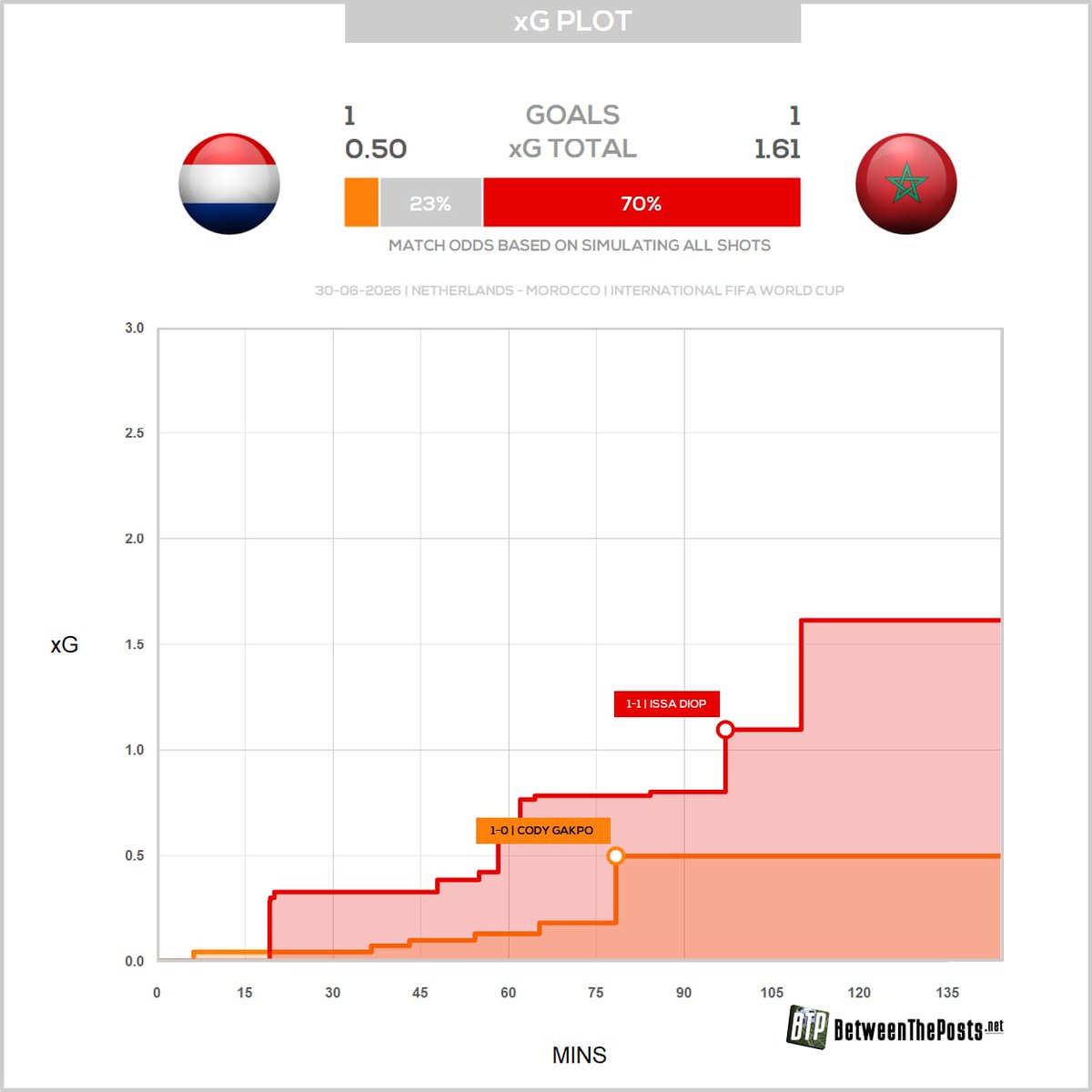
It was a disgrace. Morocco deserved to win, as the Dutch played not to lose. With a depleted midfield, there was no feeding of the forwards. If you have 9 Premier League players in the starting 11 you would expect they could handle a physical playing opponent better. No guts, no glory...
20 years ago, Dr. Werner Vogels almost hung up on Amazon.
"It's just a bookstore. How hard can it be?"
He went anyway. And realized AWS engineers were solving—in *production*—problems academia was still debating on whiteboards.
That culture never changed. 🧵
A hypervisor bottleneck? Gone.
Time sync in distributed systems? A problem the field said was unsolvable. Now it's invisible infrastructure millions rely on.
Today? AI. How do you build trust into an agent that actually does what you expect?
The hardest problems are always the ones no one sees being solved.
Read more stories from Dr. Vogels: https://t.co/sYkFPx3qij