"Latin elements had been adapted into the Greek rite, which, while the Greeks differ from the Latins in ceremony, results not only in an offense to God but also in scandal and the turning away of schismatics from the Union."
- Bishop Jakiv Susha
“It could be worse…” and “At least it’s not…” are not adequate responses to “This should be better” and “This is unworthy of the Church of Christ and of his saints.”
Uma nobre japonesa católica aprendeu português e leu o livro “A Imitação de Cristo” 🇯🇵🇻🇦🇵🇹
Hosokawa Gracia era filha do general Akechi Mitsuhide, o homem que assassinou Oda Nobunaga, o unificador do Japão, em 1582. Ela viveu no centro das turbulências políticas e se casou aos 16 anos com o daimyo Hosokawa Tadaoki, teve 5 ou 6 filhos e, apesar das reviravoltas em sua vida, encontrou na fé católica o verdadeiro caminho.
Após a traição do pai, Gracia foi escondida pelo marido nas montanhas da península de Tango (atual Kyoto) entre 1582 e 1584 para escapar de represálias. Em 1584, o novo senhor da guerra permitiu que ela voltasse a Osaka, mas manteve-a sob vigilância no palácio dos Hosokawa. Foi nesse período de confinamento que a jovem nobre entrou em contato com o catolicismo. Sua dama de companhia, Kiyohara Kayo, era católica, e conversas sobre o catolicismo despertaram em Gracia um profundo interesse.
Em 1587, ao saber do edito de Hideyoshi que expulsava os missionários jesuítas do Japão, Gracia decidiu agir imediatamente. Como não podia sair de casa, foi batizada em segredo e recebeu o nome cristão Garasha (Gracia). A partir daí, mergulhou nos estudos: aprendeu latim e português e leu o livro “A Imitação de Cristo”, tornando-se uma católica fervorosa.
Sua fé seria posta à prova máxima em 1600, durante a crise que antecedeu a Batalha de Sekigahara. Com a morte de Hideyoshi em 1598, o Japão dividiu-se entre as forças de Tokugawa Ieyasu (leste) e Ishida Mitsunari (oeste). O marido de Gracia, Tadaoki, marchou com Ieyasu. Mitsunari, para enfraquecer o adversário, decidiu tomar a esposa como refém no castelo de Osaka.
Gracia, fiel ao ensinamento católico que condena o ato de tirar a própria vida como pecado grave, recusou-se a cometer s3puku. O relato jesuíta original, escrito pouco depois de sua morte, diz que Tadaoki ordenou aos servos de sua casa que matassem Gracia se sua honra estivesse em perigo. Os servos viram a tentativa de sequestro como tal e agiram de acordo com a ordem. Os jesuítas recolheram seus restos mortais e sepultaram-na no cemitério de Sakai.
Relatos jesuítas da época elogiaram sua devoção, apresentando-a como modelo de convertida. Gracia ainda não foi beatificada, mas ela é reverenciada por muitos como serva de Deus e “mártir leiga” por ter se recusado a tirar a própria vida e ter preferido morrer a quebrar seu voto matrimonial e sua fé católica.
“To eliminate suffering entirely would mean, in the end, extinguishing love and desire as well. Those who love and desire cannot avoid passing through trial and suffering; and over the years, we carry within us lessons that leave their mark like scars, the memories of a journey shaped by freedom and failure, dreams and disappointments.
It is only thanks to the interplay of these elements that the wonders of the soul occur within us, allowing us to sense the richness of our humanity.
To renounce this adventure, both tragic and splendid, in the name of a presumed transcendence of all limits, could mean many things, but it would no longer be human.”
Pope Leo XIV, Magnifica Humanitas (par. 120) (May 15, 2026)
I think we need to build this.
I designed this below image, representing Lewis and Clark on the Mississippi in the style of Argonath.
At $1 Billion or more, I think it can be done.
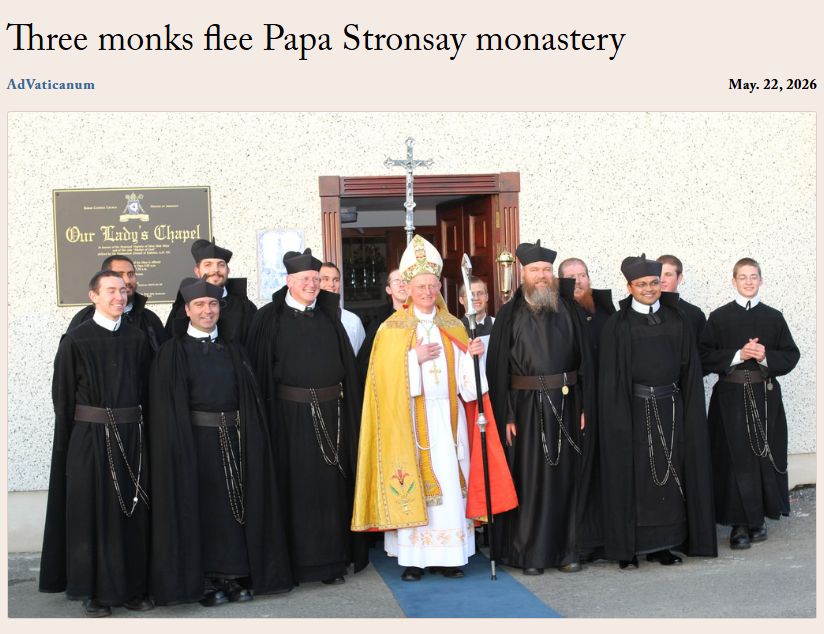
Three monks secretly left the Transalpine Redemptorists’ monastery on Papa Stronsay by boat after allegedly arranging their departure with the Diocese of Aberdeen without informing superiors
Read full article here: https://t.co/Km8dUy47EN
@dioscoros_@Brendan29129230@percy_gryce Comparisons to Muhammadans & Arians is crazy.
Both of us have anathematized Eutychis and venerate St. Cyril.
It is equally incorrect to call OO's Momophysites just as it is to call Chancedonians Nestorians.
Pope Leo XIV announced the inclusion of St. Nerses the Gracious, a saint of the Armenian Church, in the Martyrologium Romanum (Roman Martyrology), the Church’s compilation of saints.
“Nerses Shnorhali (1102—August 13, 1173), Catholicos of Armenia from 1166 to 1173, is recognized and venerated by the Armenian tradition as one of its greatest saints,” the Dicastery for Promoting Christian Unity said in a statement. “Remembered as a pastor, theologian, poet, hymn writer, and forerunner of modern ecumenism, he received the title ‘Shnorhali’ from his contemporaries for the irenic nature of his writings.”
“During his ministry as bishop and Catholicos, he worked for reconciliation among the Churches, especially between the Armenian Church and the Byzantine Orthodox Church,” the dicastery continued. “His hymns are part of the Armenian liturgy—both Apostolic and Catholic—and numerous churches are dedicated to him.”
“It is hoped that the inclusion in the Roman Martyrology of Nerses Shnorhali, a witness to the precious Christian spiritual heritage of the Armenian tradition, will contribute to the rediscovery of his teaching and to the unity of all Christ’s disciples,” the dicastery said.
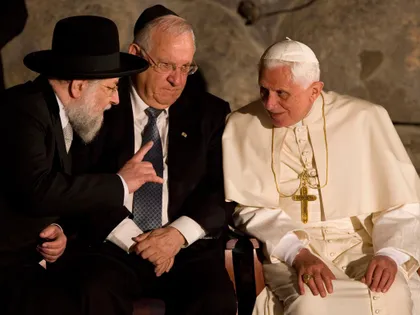
Joseph Ratzinger (later Pope Benedict XVI) explains that the true purpose of interreligious dialogue must be to bring others to the truth of the Catholic Church:
"Does this mean that missionary activity must cease and be replaced by dialogue, in which we do not speak of truth, but help one another be better Christians, Jews, Moslems, Hindus, and Buddhists? My answer is no. For this would be yet another form of the complete lack of belief. Under the pretext of fostering the best in another, we would fail to take both ourselves and the other seriously and would end up renouncing truth. The answer, I think, is that mission and dialogue must no longer be antitheses, but must penetrate each other. Dialogue is not random conversation, but aims at persuasion, at discovering the truth. Otherwise it is worthless." - From his article "Interreligious Dialogue and Jewish Christian Relations," page 39 https://t.co/dAkQKyoWM3