Vía nuestra web hermana: Airbus Helicopters entregó el primer H145M al Reino de Bélgica. El lote forma parte de un pedido total que se extendió a 20 aeronaves destinadas tanto a sus Fuerzas Armadas como a la Policía Federal.
https://t.co/876Iq6h0tn
La FACh, la Armada de Chile y ENAER firmaron el contrato para el Estudio Básico de Inversión e Ingeniería (EBI) de un futuro avión turbohélice multipropósito de fabricación nacional. https://t.co/6nc4xCgtNd
Fuerzas Especiales de la República Argentina y de los Estados Unidos llevaron a cabo el Ejercicio Conjunto Combinado «Daga Atlántica 2026»
https://t.co/PXcRSsURRK
Un dron ruso presumiblemente del tipo Shaheed/Geran impactó un edificio residencial en la ciudad de Galați al este de Rumania. Se ha informado de al menos dos personas lesionadas.
🇨🇱 Chile comienza a proyectar el reemplazo de sus F-5: Ministro Barros confirma renovación de la aviación de combate Magallánica en el Mediano - Corto plazo
https://t.co/lRUJTXHKHa
Suecia prepara una histórica donación de cazas JAS 39 Gripen C/D a Ucrania. Además, el gobierno sueco iniciará negociaciones para la venta de la moderna variante Gripen E, financiada mediante un préstamo de la Unión Europea. Más detalles en la nota.
https://t.co/kzSdrF5g5Y
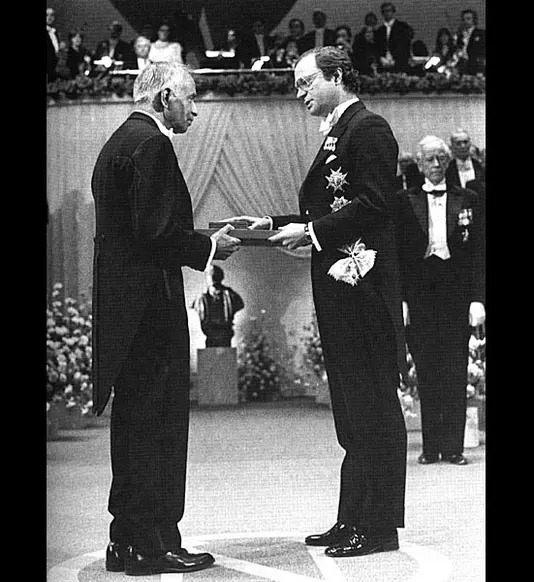
Subrahmanyan Chandrasekhar was only a young physicist when he calculated something terrifying about stars.
Using quantum mechanics and relativity, he showed that a white dwarf star could only support itself up to a certain mass.
Beyond that limit, electron pressure would fail.
Gravity would win.
The star would have to collapse.
That mass limit is now called the Chandrasekhar limit.
Arthur Eddington, one of the most respected astrophysicists in the world, rejected Chandrasekhar’s result.
To Eddington, the idea that nature would allow a star to collapse beyond ordinary understanding seemed absurd.
He trusted his physical taste over the young man’s mathematics.
Eddington’s public criticism hurt Chandrasekhar deeply and slowed acceptance of the idea.
The conflict became one of the most painful episodes in astrophysics: an older scientific authority standing in the way of a younger physicist whose equations were pointing toward the violent death of stars.
Chandrasekhar was right.
His work became central to modern stellar evolution, white dwarfs, supernovae, neutron stars, and the later understanding of compact objects.
He received the 1983 Nobel Prize in Physics for his theoretical studies of stellar structure and evolution.
Aviones F-16M de la Fuerza Aérea de Portugal fueron enviados desde la base Ämari en Estonia para identificar y escoltar un Su-35 Flanker-E y un An-12 Cub rusos
Al menos una decena de aviones de reabastecimiento aéreo se encuentran sobrevolando zonas de Medio Oriente cercanas a Irán, con algunos KC-135 que despegaron desde Tel-Aviv
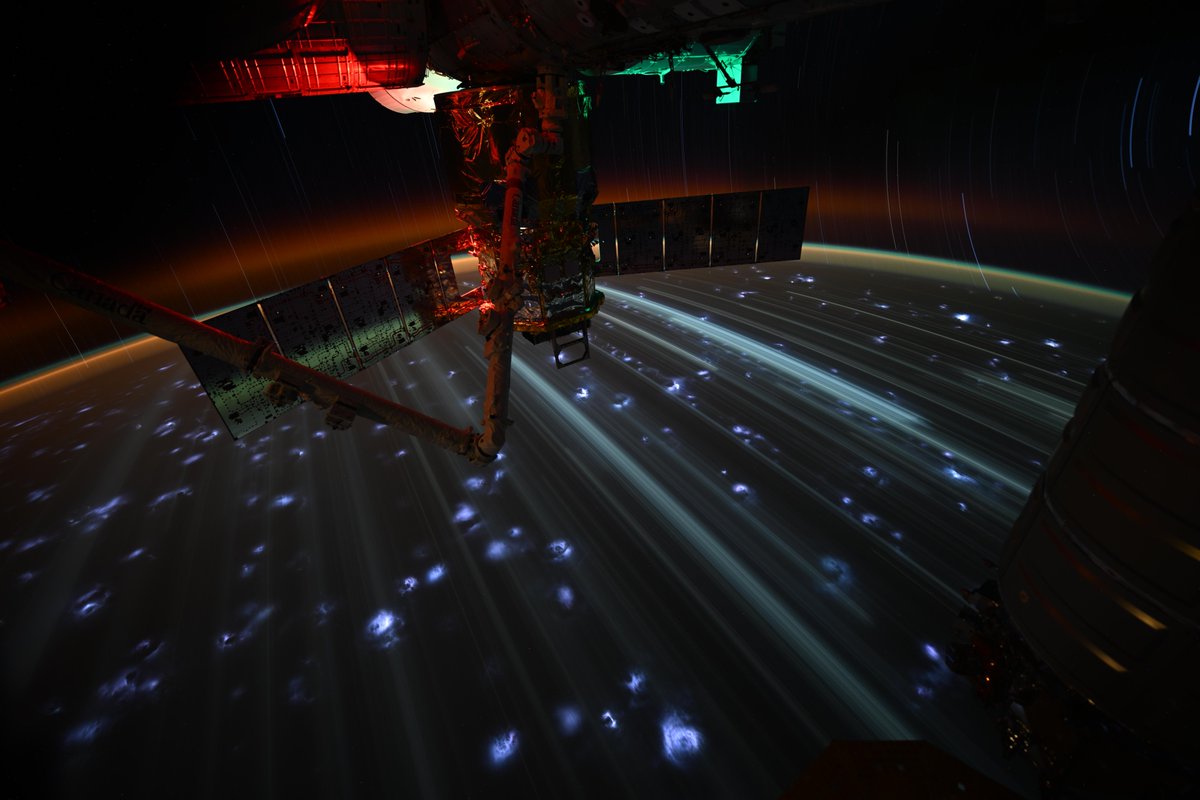
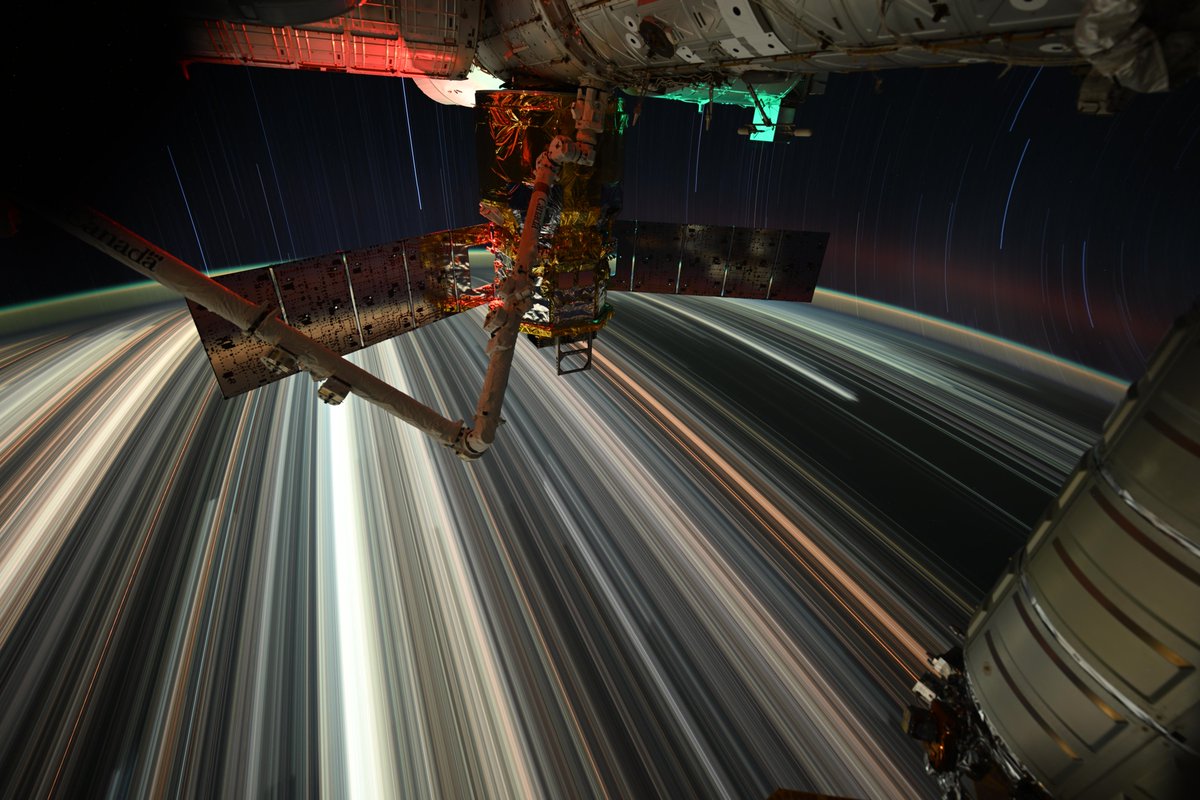
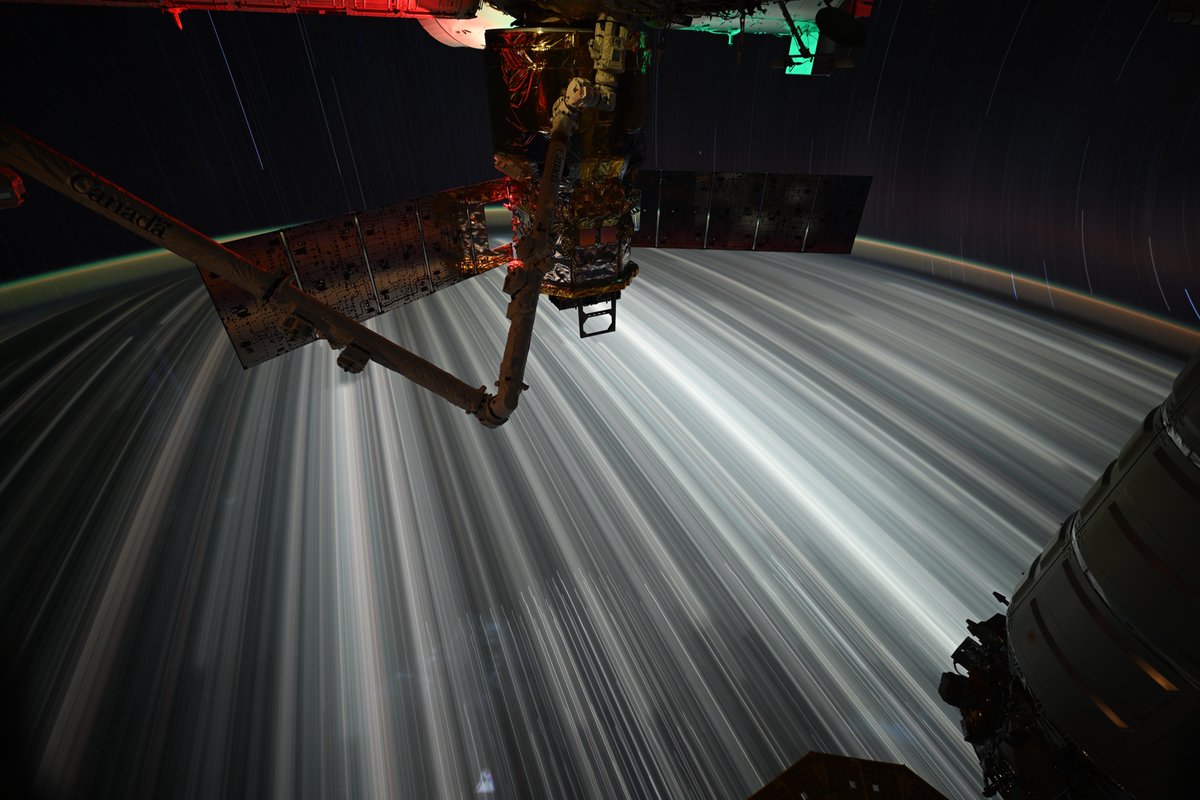
I have been playing around with some long exposure shots that show some beautiful effects with our orbital motion. City lights are turned into streaks across the earth, and lightning storms form a speckled pattern during these several-minute exposures.
Did you know that the Milky Way is even milkier when viewed from the Southern Hemisphere? This is because from the southern side of our planet, we get a clearer, more direct view of the dense galactic core.
Here’s a look at the Milky Way starting over the Southern Ocean (between Australia and Antarctica) from our @SpaceX Dragon window, complete with some aurora (Southern Lights) and fleeting Starlink satellites. Enjoy the view!
El Niño Update April 27, 2026
Sea surface temperatures continue to warm at a quick rate as a downwelling oceanic Kelvin wave continues to progress eastward. Now, what's more impressive is the subsurface warmth between 75-150m with some anomalies now approaching or exceeding 7-8 °C, a hallmark for developing El Niños. But what's even cooler is you can literally see the warm water slosh eastward in the last 60 days. The 4 gifs below show strong evidence of the Kelvin wave. Because of this there is nearly a 100% chance El Niño will develop by mid-summer 2026.
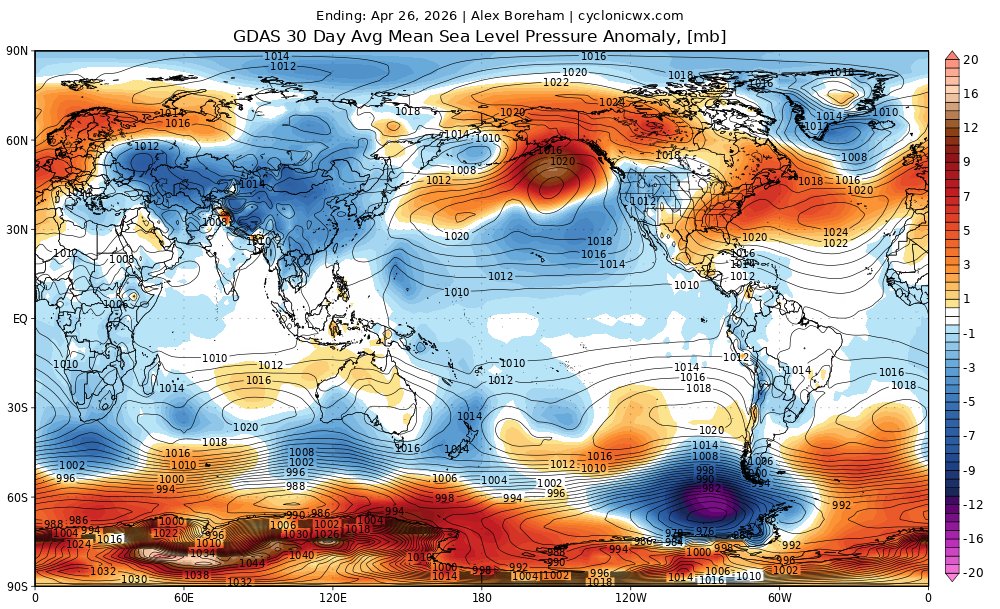
So what about the atmosphere?
Right now, there's not really a very clear signal of the atmosphere coupling strongly yet to the recent warming of SSTs in the CPAC & EPAC. This is seen in the 30-day average 200 mb zonal wind anomaly chart that still shows westerlies at the 200mb level from 150E-80W, but much weaker than about 3 months ago. Therefore, ENSO neutral conditions are in progress despite the 850mb wind anomalies that have been westerly in the WPAC & CPAC over the last 30 days.
Rheinmetall y Destinus anuncian la creación de "Rheinmetall Destinus Strike Systems" 🚀🇪🇺
El gigante alemán y la tecnológica neerlandesa firman una Joint Venture para fabricar misiles de crucero y artillería balística a escala industrial. https://t.co/9hnULgDkUQ