Qué estupenda novela es “La muerte en Venecia”, de Thomas Mann. Lean esto:
“Nada hay más extraño ni más delicado que la relación entre personas que sólo se conocen de vista, que se encuentran y se observan cada día, a todas horas, y, no obstante, se ven obligadas, ya sea por convencionalismo social o por capricho propio, a fingir una indiferente extrañeza y a no intercambiar saludo ni palabra alguna. Entre ellas va surgiendo una curiosidad sobreexcitada e inquieta, la histeria resultante de una necesidad de conocimiento y comunicacion insatisfecha y anormalmente reprimida, y, sobre todo, una especie de tenso respeto.”
Según la neurocientífica Anne-Laure Le Cunff, leer libros no solo entretiene o educa la mente, sino que produce cambios fisiológicos reales que ayudan a regular el sistema nervioso, pasando del estado de estrés al estado de descanso y recuperación.
La lectura aprovecha circuitos cerebrales muy antiguos que nuestros ancestros usaban para interpretar el entorno natural, como huellas, nubes o sonidos. Aunque la lectura de textos escritos solo tiene unos 5.000 años, el cerebro reutiliza esas mismas redes neuronales para procesar palabras, lo que se conoce como la hipótesis del reciclaje neuronal (de Stanislas Dehaene).
.
Cuando leemos, especialmente ficción, el cerebro activa muchas de las mismas áreas que se usarían si estuviéramos viviendo las experiencias descritas. Esto genera una inmersión que ralentiza el ritmo cardíaco, profundiza y regulariza la respiración, reduce la tensión muscular y desplaza el sistema nervioso autónomo del modo “lucha o huida” al modo “descanso y digestión”. A diferencia de las redes sociales, que fragmentan la atención, la lectura requiere un foco sostenido, lo que la convierte en una actividad especialmente restauradora.
Además, leer ficción funciona como un ensayo a bajo riesgo de situaciones reales de la vida, ayudando a practicar empatía y respuestas emocionales. En un mundo hiperestimulado y lleno de distracciones, la lectura se convierte en una de las herramientas más accesibles y efectivas para calmar el cuerpo y la mente al mismo tiempo.
Para aprovechar mejor estos beneficios, es recomendable leer una mezcla de ficción y no ficción, elegir bien el momento (especialmente antes de dormir), crear rituales de lectura, adaptar el tipo de libro al estado emocional del momento y, sobre todo, seguir la propia curiosidad para lograr una inmersión completa.
En resumen, leer un buen libro no es solo un placer intelectual sino que es una forma natural y poderosa de regular el sistema nervioso y recuperar el equilibrio en una época de constante sobreestimulación.
Me llama la atención una cosa, como corrector. De un tiempo para acá, la invasión «neurogramatical» del inglés es terrible y se nota en una simplificación de los tiempos verbales: a la porra el subjuntivo, el pluscuamperfecto, también pasiva por doquier... Pero, a la vez →
A Harvard professor who has written 9 books and spent 40 years studying how language works inside the human brain just gave the most important writing masterclass I've ever seen.
Here's what he said that broke my entire understanding of writing.
Steven Pinker, the professor, opened with a single question: why is so much writing terrible? Not just academic writing, but corporate writing, government writing, and even most blog posts.
His answer had nothing to do with effort or intelligence.
He called it the Curse of Knowledge. The moment you understand something deeply, you lose the ability to remember what it felt like not to know it. You stop seeing your own blind spots because the blind spots feel like common ground.
He watched a brilliant molecular biologist destroy a room of 400 people at a TED event. The man launched straight into jargon without ever explaining the problem he was solving or why anyone should care. The biologist had no idea it was happening. That's the curse.
Then he said something I haven't stopped thinking about.
Bad writing is not a character flaw. It's a failure of empathy. You cannot get inside your reader's head by trying harder. You have to actually find a real human being and watch them read your words in real time.
He showed his drafts to his mother. Not because she was unsophisticated, but because she wasn't a cognitive psychologist. She was smart, well-read, and completely outside his world. When she lost the thread, he knew something was wrong.
The second thing he said changed how I think about every sentence I write.
Language is a delivery system, not the destination. What your reader actually understands is not the words. It is the image, the sensation, the concrete thing those words are supposed to summon. If your reader cannot picture it, they have not understood it.
He asked: what is a paradigm? What does a framework look like? What color is a concept?
Nobody could answer. Because abstractions produce nothing in the mind's eye.
The writers from two centuries ago who still feel alive today were forced to think visually because they had no abstractions to hide behind. They had to say the spirit of the hawk tore into our flesh instead of aggression. The image did the work that the jargon could not.
The third thing he said was the one most people ignore completely.
Brevity is not about word count. It is about removing every word that makes the reader work harder without rewarding them for it. He quoted a line he had memorized for 40 years: omit needless words. Three words. An instruction that is also an example of itself.
He said the best thing that ever happened to his writing was editors who gave him an 800-word limit and wouldn't budge. The constraint always improved the piece. Always.
The curse of knowledge is real. The fix is simple and most people never do it.
Find one person outside your world. Show them what you wrote. Watch their face, not the page.
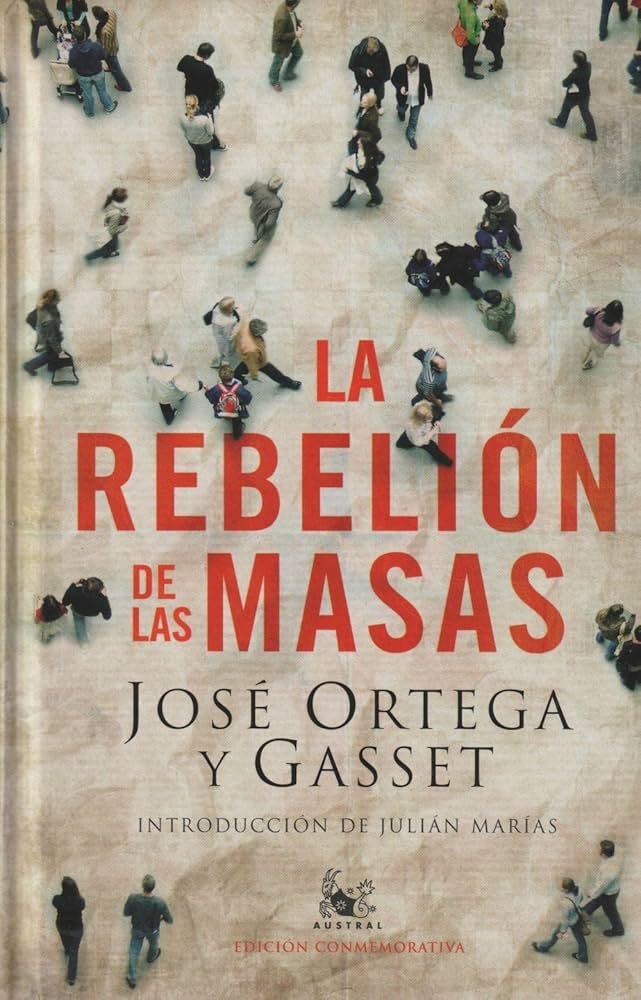
Frente al optimismo teleológico de Francis Fukuyama, el siglo XXI se revela como el triunfo del hombre-masa orteguiano: aquel que, desvinculado de la conciencia histórica y ajeno a toda exigencia de perfeccionamiento, se instala en la soberanía de lo mediocre.
Una cosa que he notado últimamente es ese jalabo...por conveniencia, se ha vuelto moda.
La amistad, las relaciones, los negocios están basados en como adulas, lo he vivido y lo he visto.
No se que es peor, quien lo acepta o quien lo hace.