Estoy super orgulloso de empezar mi blog con este breve artículo: Vinilos que cantan, relojes de cuarzo y procesadores de silicio: tres trucos de magia tecnológica que usas cada día sin darte cuenta.
En 🇪🇸Español,🇬🇧Inglés y 🧜🏻♀️Galego.
https://t.co/rmKBaKLaZp
Let me explain exactly why Apple still uses drag-to-install in 2026, because the joke here accidentally proves Apple right.
A macOS .app is a single self-contained folder disguised as a file. Every dependency, every framework, every resource lives inside it. Drag it to Applications, it works. Drag it to Trash, it's gone. No registry entries. No leftover DLLs. No uninstaller that misses half the files.
Windows installers scatter fragments across Program Files, AppData, the registry, system32, and a dozen temp directories. Uninstalling a Windows app is an archaeological dig. Five years later you're still finding config files from software you forgot you owned.
Linux is worse. Dependency hell is so common they named it. Entire package managers exist to solve the problem of "I installed something and now nothing else works." Flatpak and Snap were invented specifically to copy what macOS bundles already did natively.
The macOS bundle architecture came from NeXTSTEP in 1989. Steve Jobs brought it to OS X in 2001. The core design hasn't changed because the core design was correct. An app is a folder. Installation is a copy. Removal is a delete. Three operations that map perfectly to how humans already think about files.
The drag-to-install window with the arrow isn't lazy UX. It's the entire thesis of the system made visible. You are literally just moving a folder. There is no "installation" step because there's nothing to install. The app is already complete.
Every other OS eventually tried to get here. Windows got MSIX. Linux got Flatpak. Mobile figured it out from day one because phones shipped after Apple proved the model. The pattern everyone else converged toward is the pattern this tweet is calling outdated.
The funniest part: the app being dragged in that screenshot is Claude. An AI that can write code, analyze documents, and reason about complex systems. And the most advanced step in getting it onto your machine is holding down a mouse button and moving your wrist two inches to the right.
That's not a design failure. That's a 37-year-old architecture so good that the most sophisticated software on earth still ships inside it.
Basically how I thought it’d preform 😭
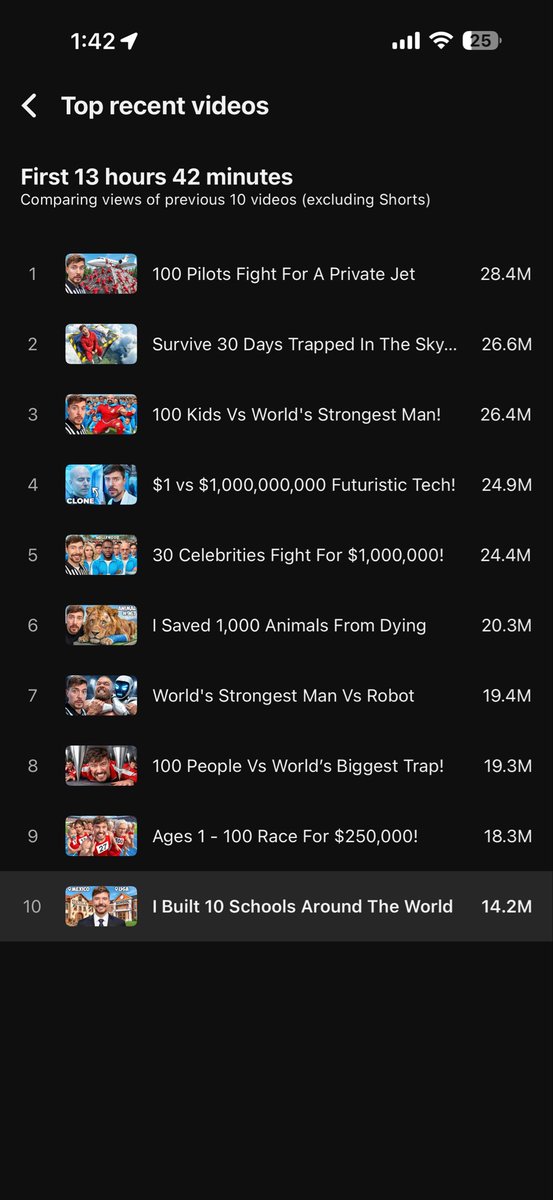
Doesn’t matter though, I freaken love this video and honestly one of my favorite to make. Feels weird filming videos I know will preform long term 70% worse than others but idc if it gets 0 views I just want to help people in need.
Hello @AppleTV. Plur1bus, episode 7, has the audio in Latin Spanish, both in Spanish of Spain and Latin Spanish. There’s no Spanish from Spain audiotrack. It’s been like this for days. In Spain. Please, we want to watch the episode.
¡He creado este juego! ¿Puedes diferenciar entre imágenes reales y hechas con IA? NanoBanana es increíble generando imágenes y es todo un reto diferenciarlas. ¿Podrás conseguirlo?
https://t.co/MLI778bVAs