Most organizations misunderstand the AI transformation journey. They imagine it as a linear progression from experimentation to scale, or from one maturity level to the next. But the real journey is much less tidy, following a more 'squiggly' path. It does not move cleanly from human-led operations to AI-led operations. It passes through a long, difficult middle phase in which humans and AI must operate together and where neither humans nor AI are really in charge. We called that phase Hands Ready after the experience we’ve all had with our cars on their own journey to autonomy.
That autonomous journey involves three phases. Hands On, where the car provides supportive features like braking or lane alerts, but the human remains fully in control. Hands Ready, where the car drives autonomously in most cases but the human must remain vigilant and ready to intervene instantly, and where control and responsibility are therefore shared. Hands Off, where the car manages operational control while the human’s job is obviously to determine the desired destination and journey objectives (stops along the way to pick up family members, groceries etc.) and to decide how they want to spend their newly freed up time.
The enterprise AI transformation journey is far more complex but the three phases remain the same. In previous articles we introduced the organizational work that needs to be done in the Hands Ready phase in terms of 7Rs: Reskill, Redeploy, Redesign, Reclaim, Recalibrate, Restructure and Remandate. These describe how the human organization must adapt as more operational control begins to move from people to AI - this is about relational transformation. But there is another side to the same squiggly line, a technological workstream running in parallel to the 7Rs. This is the work of helping agents become progressively more capable, more reliable, more integrated, more governable and more autonomous over time.
https://t.co/JgFB14HvXZ
For my first post, I’m sharing a letter @NVIDIA signed on why open models matter.
AI will transform every industry, power every company, and be built by every country.
Open models strengthen safety and cybersecurity, accelerate innovation and diffusion, and enable sovereignty.
The world needs both frontier closed models and frontier open models.
https://t.co/AUKzoQ5Ikb
estamos en una época donde, como nunca antes en la historia, estamos leyendo más que nunca. procesamos texto en cada mensaje, en cada pantalla, en cada interacción digital. estamos permanentemente imbuidos en el lenguaje. por eso es mentira decir que esta no es una época de lectura. al contrario, nunca antes en la historia se leyó tanto.
y aún más: la literatura que ofrece la inteligencia artificial para educarnos es extraordinaria. en una hora de interacción se puede absorber lo que antes llevaba semanas o meses de estudio. esto lo noto particularmente como programador: de repente puedo producir y entender a un nivel que antes me habría llevado años. hoy es más relevante para mí leer lo que la inteligencia artificial me propone que intentar escribir el código desde cero. en esa lectura voy aprendiendo, incorporando formas más rigurosas de pensar y estructurar lo que hago.
es realmente un salto exponencial en la cognición humana. no entenderlo es simplemente no verlo.
totalmente, hay una correlación entre quienes saben aprovechar la ia y quienes pueden profundizar en libros, pero creo que el punto clave es que la ia está bajando la barrera de entrada al conocimiento. antes, para meterte en un tema, tenías que pasar por un proceso largo de lectura y síntesis. hoy, la ia puede darte un andamiaje inicial que acelera esa comprensión, permitiendo que más personas lleguen más rápido a niveles de profundidad que antes estaban reservados para unos pocos. la diferencia es que ahora no necesitás empezar desde cero, sino desde una base mucho más rica.
entiendo el punto y no niego que la capacidad de leer textos largos es importante, pero quizás lo que está cambiando no es solo el hábito de lectura, sino la forma en que procesamos y estructuramos el conocimiento. la idea de que ‘leer libros enteros’ es el marcador definitivo de comprensión puede estar quedándose corta frente a una realidad donde la información es más fragmentaria, interactiva y generativa.
la ia no reemplaza la profundidad, pero sí desafía la linealidad del aprendizaje tradicional. el problema no es que la gente lea menos libros, sino que tal vez estamos midiendo la comprensión con una métrica que ya no captura del todo cómo se aprende hoy.
At MIT, class 2.737 (Mechatronics) is proving that the most powerful design tool isn’t a computer, it’s a pen and paper. Prof. David Trumper teaches students to think across disciplines, blending mechanics and electronics to create groundbreaking designs. https://t.co/unQGHP03OH
Inglés, estadística, programación, escribir bien, hablar en público, Linux, Excel, AI.
Para mi estos son los skills básicos para triunfar en la vida, hacer mucho dinero y que ninguna disrupción tecnológica afecte tu carrera.
¿Me falta alguno?
#LoÚltimo | La cobertura de conectividad móvil 5G en Colombia avanza lentamente. Claro lidera con un 4,1 %, seguido de Tigo y Movistar, ambas con 1,1 %. Según un informe de la Comisión de Regulación de Comunicaciones, el 5G, que comenzó en febrero de 2024, cuenta con 1.167 estaciones activas en 22 ciudades.
La compra de Millicom a la nación de su participación en Movistar Colombia y del 50% de Tigo, se podría ver afectado por una noticia que se conoció esta semana.
#CódigoCaracol
So much progress made in AI and Robotics this week.
As usual, I summarized everything announced by OpenAI, Google DeepMind, Genesis, Figure, Stanford, Apptronik, Nvidia, and more.
Here's everything you need to know and how to make sense out of it:
Microsoft might be investing in Anthropic's new round at $59B.
Microsoft wants to have Claude in their pocket to push back against OpenAI who is increasingly rambunctious with Microsoft.
Very uncomfortable partnership between the two.
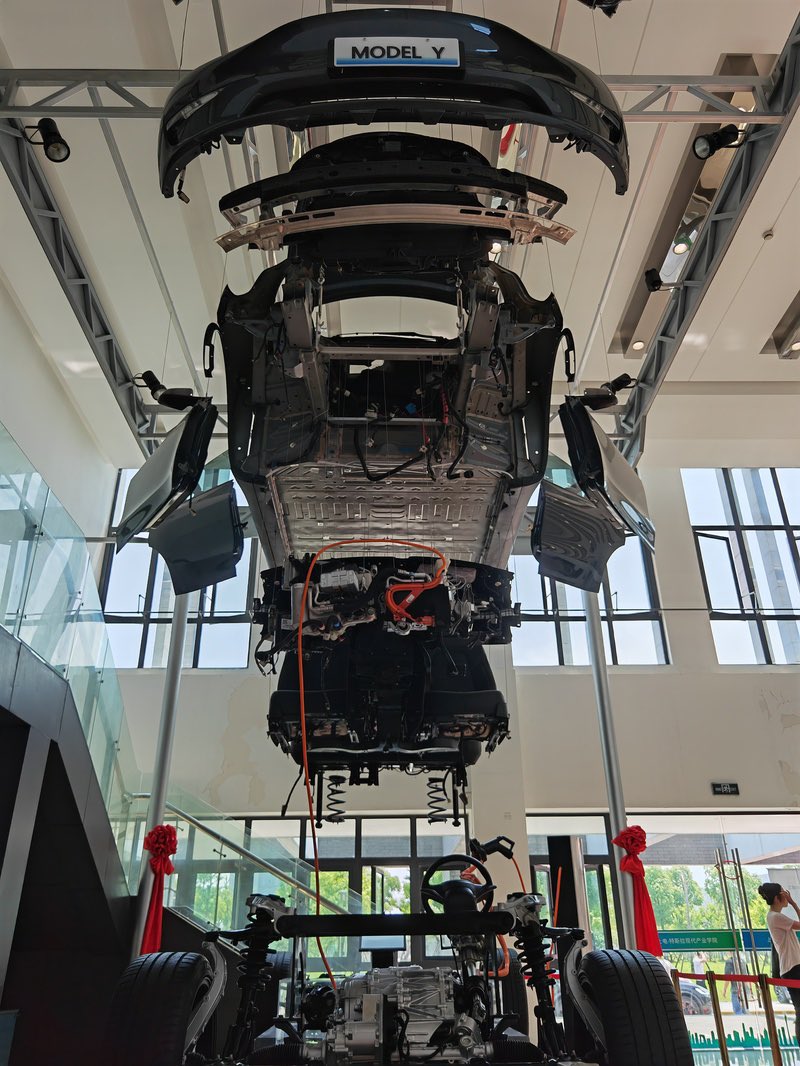
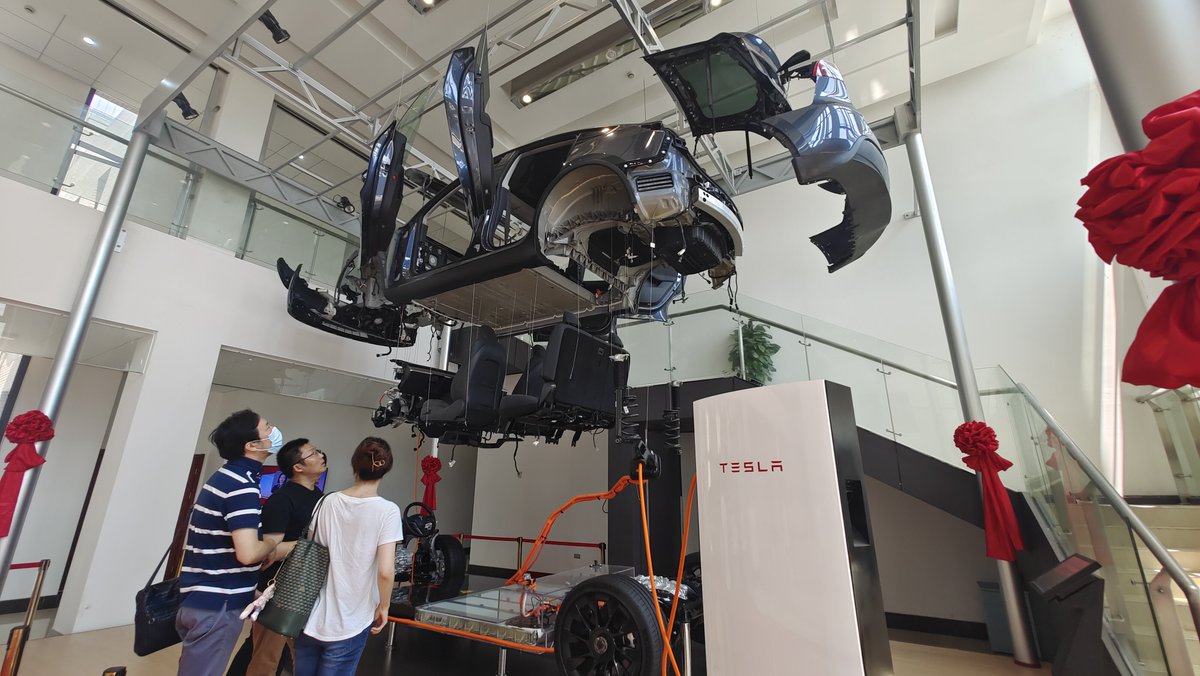
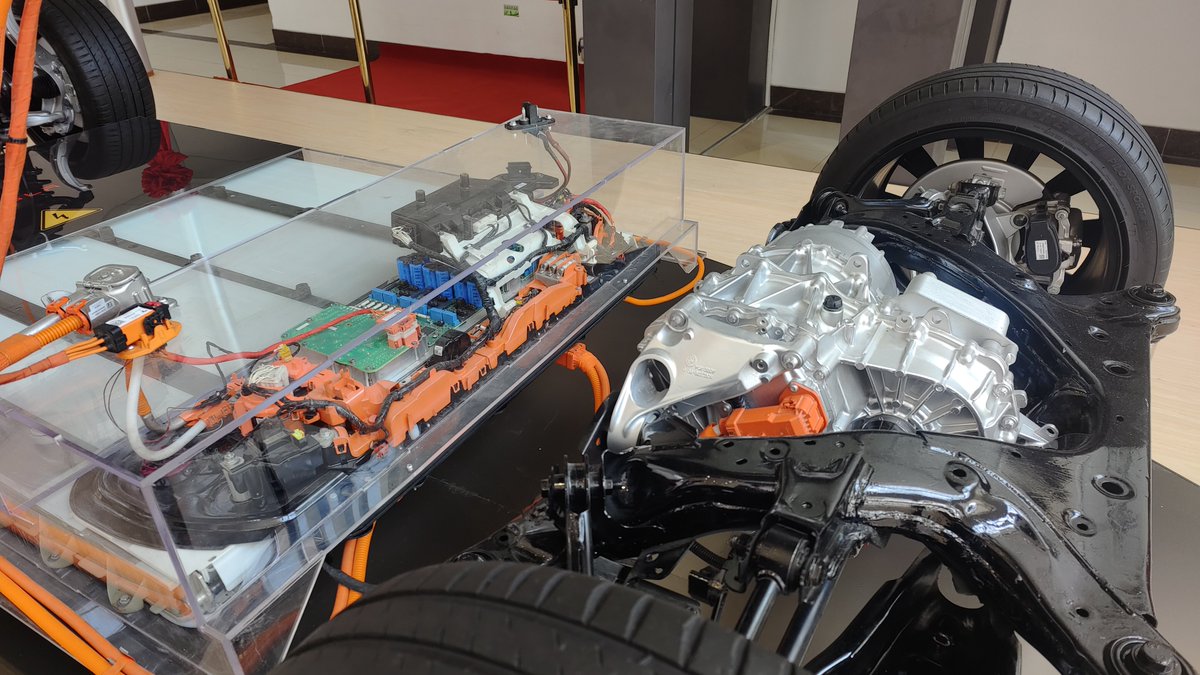
We collaborated with Shanghai University of Electric Power Lingang campus and brought a Model Y 3D deconstruction teaching platform to the classroom for the first time🏫
This teaching platform helps students better explore the complex internal structure of Tesla vehicles🔍