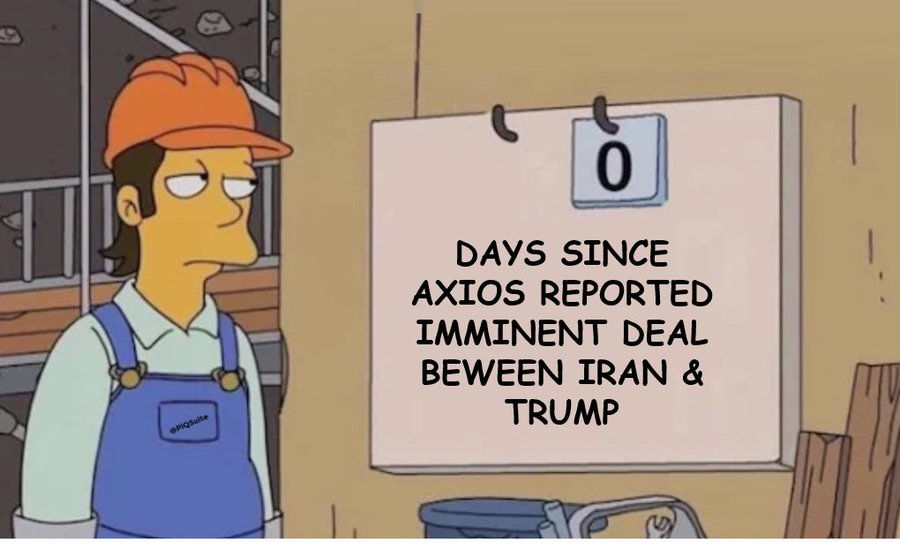
The fear over AI is palpable.
So, it's time for my optimistic take ....
Why the AI doom-and-gloom story is missing the bigger picture
A lot of people hear “AI” and immediately think one of two things: it’s just Google search on steroids, or it’s a magic machine coming for everyone’s job. Both miss the bigger picture.
A job is not one single task; it’s a bundle of tasks supported by a massive, fragmented software stack. Email, spreadsheets, presentations, Slack, CRM platforms, and, in finance, a Bloomberg Terminal, FactSet, and market data feeds. For millions of jobs, the cost of software to provide basic tools for these tasks can run to $1,000 a month, and more for complicated roles.
Much of the modern workday is consumed by the friction of this stack: moving data between systems, cleaning spreadsheets, searching for files, and summarizing meetings.
AI is emerging as the new interface for enterprise software. Think about the iPhone. It collapsed cameras, GPS devices, and music players into one simple, powerful device. AI is doing something similar for workplace software, turning 10 clunky programs that don't talk to each other into a single conversational prompt.
Just as we stopped buying standalone cameras and tape recorders once the smartphone came around, companies will happily pay for an AI layer. It will be far cheaper and eliminate the bloated costs of that fragmented software stack that requires you to perform endless, mundane tasks because these programs do not talk to each other.
The immediate fear is that if AI lets three people do the work of five, companies will fire two people. But that ignores economic history.
When the electronic spreadsheet was invented, the cost of calculations plummeted. But accounting jobs didn't vanish; demand for complex financial modeling exploded. Accounting clerks became financial analysts, a more in-demand role.
Jevons Paradox suggests that making a resource more efficient actually increases total demand for it. By absorbing the drudgery, AI allows the employee to focus on judgment and strategy—making the human element more valuable, not less. In this framework, demand for high-output workers doesn't shrink; it explodes.
Does this justify the mind-numbing capital expenditure currently pouring into AI infrastructure? If AI fulfills this promise of enterprise-wide productivity, the investment isn't just justified—it’s a bargain. That said, we are clearly near the peak of a hype cycle, just like the internet was in 1999.
But remember: the dot-com crash did not mean the internet was a bust. It simply meant the hype outpaced the infrastructure. After the wreckage cleared, the optimistic predictions about connectivity and productivity were not only fulfilled—they were exceeded.
The same path can lie ahead for AI. And instead of the fear that AI will replace workers, it's the joy of replacing soulless busywork, making jobs more fulfilling... and more profitable for employers.
When the U.S. launched Project Freedom about two weeks ago and sent destroyers into the Strait of Hormuz (protected by ~100 planes at a cost of $50–100 million in just two days), Iran hit Gulf neighbors in retaliation. The media reported that some Gulf states were furious — partly because senior U.S. officers had downplayed their defense as a low priority.
Restated: the U.S. military already had its hands full. We don’t have an effective shield against mass, the cheap drones and missiles fired against a large area, like an entire Gulf country (see Ukraine, they do). The Gulf states got so nervous that they suspended U.S. use of their air bases, making them justifiable targets. So the operation was paused after two days.
Yesterday, Trump just told them we were about to strike again. They raised the same concern, “Iran will drown us in drones,” and we still don’t have a good defensive answer. They pushed back hard. Trump backed down.
By the way, this is classic 21st-century war.
Decentralized. Highly mobile attack groups. Mass quantities of cheap, attritable, unmanned weapons designed to overwhelm defenses. Rapidly iterative (like software updates every few weeks).
20th-century war was the opposite: a handful of exquisite, insanely expensive platforms (carriers, F-35s, tanks) that take years to upgrade.
The 21st century is about cost-benefit: make attacking so expensive and difficult that even superpowers get frustrated. The U.S. is learning this the hard way right now — and so is everyone else.
France & UK gave up on the Bab-el-Mandeb vs. the Houthis.
Russia is stuck in Ukraine.
Israel is struggling in southern Lebanon (now that they have FPV drones).
Even China may hesitate on Taiwan because of its “porcupine” defense (which is getting assistance from Ukraine).
21st-century warfare has found the formula to challenge every major military power on earth.
Trump is VERY transparent. That post perfectly expresses his utter frustration.
Opening the Strait of Hormuz is not just a matter of will. We don’t have a sustainable military answer right now because we don't have a defensive shield against asymmetric warfare (cheap drones and missiles), as Ukraine has against Russia.
When the U.S. launched Project Freedom roughly two weeks ago, three guided-missile destroyers were sent through the Strait to escort commercial shipping.
The Navy came under a sustained barrage of Iranian drones and missiles and intercepted 100% of the attacks.
Yet the defensive effort after just two days was extraordinarily resource-intensive. It nearly depleted the missile magazines of two Guided-Missile Destroyers and required support from more than 100 aircraft (F-35 fighters and attack helicopters). It costs an estimated $50–100 million to get just two commercial ships through safely over two days.
This model is completely unsustainable beyond a brief demonstration. The U.S. cannot realistically guarantee a perfect interception record against repeated sustained barrages.
All it would take is one drone or missile getting through, and the images of a burning American warship would be a major political disaster.
Below, Trump isn’t raging at the media alone. He’s raging because we don't have a cost-effective Military solution (money and lives at risk) to opening the Strait.
Com esses 3 pontos iremos moralizar o judiciário no Brasil e acabar com essa farra dos intocáveis. Assiste até o final e compartilhe se você apoia essas ideias.
Argentinos estão comendo carne de burro por causa da crise do Milei!!!
Sim, essa é a nova mentira da esquerda.
A realidade: um açougue em uma cidade vendeu. Como um experimento. E os donos falaram que tem ZERO a ver com a economia.
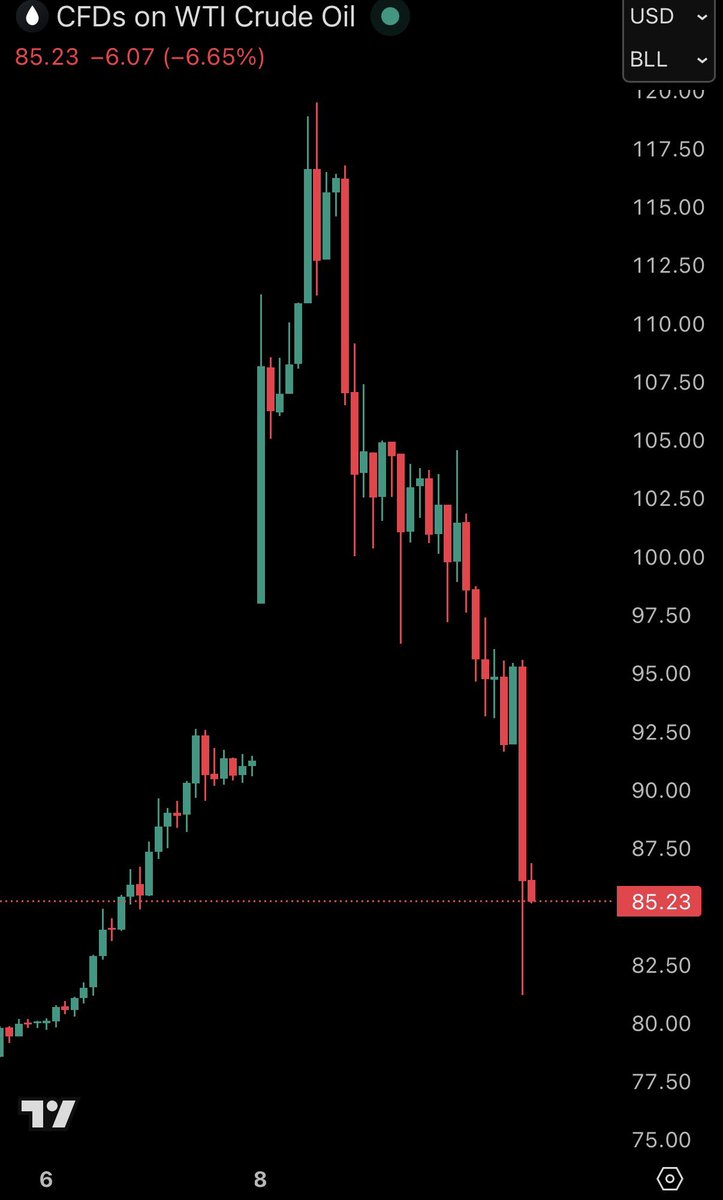
Before the war, the world was producing about 100M barrels of oil a day, and consuming about 100M barrels of oil a day.
Now the world is producing somewhere between 85M and 90M barrels of oil a day. That means somebody has to stop consuming 10M to 15M barrels of oil a day. Economists call this demand destruction.
The market has a very efficient way to get to this reduced level of demand, it raises the price forcing marginal buyers to stop consuming oil.
But if government subsidize the current high price of oil, the demand does not change and the market price has to go higher in order to get that demand destruction.
I’m all in favor of lower oil prices like everybody else, but we’ve got a supply demand imbalance that needs to be brought into equilibrium.
So either open the Strait so we can get back to 100M of oil a day, or figure out another way to tell the equivalent of 10m to 15M barrels of oil a day that they cannot go to the gas station to fill up their car.
I am not a military analyst. I'm a financial analyst focused on macroeconomic risk.
That different lens might explain why I see something most military strategists and investors are missing.
---
The New Rules of Warfare—And Why We Can't Opt Out
For nearly a century, warfare belonged to whoever controlled the biggest defense budget. Aircraft carriers. Stealth bombers. Multibillion-dollar weapons systems.
That model is changing in ways many aren't appreciating.
Ukraine and Iran are showing the West what 21st-century conflict actually looks like: decentralized, highly iterative, fast-changing, unmanned, and cheap. Neither the US nor Russia—beginning in 2022—appears prepared.
We might now have no choice but to show we can fight and win such a war.
The Ukraine Approach
Faced with a small defense budget, a much smaller population, and a vastly outnumbered army, Ukraine had to get creative. They couldn't match Russia's industrial capacity or spending. So they abandoned that playbook entirely.
They developed an entirely new way to fight, highly decentralized, iterative, and most importantly, cheap.
They also created Brave1—a completely new way to conduct war.
Frontline commanders log into an iPad and bypass central command entirely. They spend digital points to purchase equipment directly from hundreds of (Ukrainian) manufacturers. When they encounter a new threat, they message the manufacturer directly and work with the engineers to find a solution, even if that means they visit to the front. The result is hardware or software upgrades that once took months now take days.
Here's the crucial part: hundreds of manufacturers compete fiercely for these dollars by offering the best possible product as fast as possible. This isn't centralized procurement. It's a market. Competition drives innovation at scale. Weapons evolve as the enemy evolves in real time.
Units are also awarded points for confirmed kills, uploaded from drone video—a powerfully eloquent way to grade effectiveness.
But the real innovation might be how they decentralized manufacturing itself. Instead of building weapons in massive, centralized factories that make perfect targets for Russian bombing, Ukraine distributed production across hundreds of small manufacturers—workshops, machine shops, garages, and yes, kitchens. Each produces components or complete systems. This approach serves two purposes: speed and survival.
You can bomb a tank factory. You destroy production for months. You cannot bomb ten thousand kitchens. If one workshop gets hit, ninety-nine others keep producing. The network regenerates faster than Russia can destroy it. This is why the manufacturing process includes actual kitchens—it's not a metaphor. It's a strategy.
The Metric That Defines a New Era
The result is staggering: at least 70% of battlefield casualties now come from drones. This is the first time in over a century that the primary cause of combat death is neither a bullet nor an artillery shell. Since World War I, industrial warfare meant industrial killing. Ukraine has broken that equation entirely.
As a result, Russia is now controlling less territory than at any point since 2022 and going backward. In March, Ukraine made gains while Russia recorded no gains for the first time in two and a half years, and Drone-led offensives recaptured 470 square kilometers while paralyzing 40% of Russian oil exports.
Ukraine has lowered the "cost per kill" to less than $1,000 per casualty—a 99.98% reduction from the millions of dollars that were common in the post-9/11 wars. This isn't an incremental improvement. This is a complete inversion of modern military economics.
Yet the Western defense establishment is not learning from this.
Rheinmetall CEO Armin Papperger mocked Ukraine's entire approach. In The Atlantic, he called Ukrainian manufacturers "housewives with 3D printers," dismissing their work as "playing with Legos." They are not studying this revolution. They are mocking it.
And the "housewives with 3D printers" are beating the Russian army!
Ukraine Is Now in the Middle East
The US Military and Gulf states face an eerily similar problem. Iran's Shahed drones threaten shipping in the Strait of Hormuz—a chokepoint that funnels 21% of global oil. They cannot fend off Iran by firing a $4 million Patriot missiles at $20,000 drones.
They need what Ukraine has discovered: a decentralized, rapidly adaptive defense network that doesn't require centralized industrial capacity.
That's why Ukraine just signed historic 10-year defense deals with Saudi Arabia, Qatar, and the UAE.
Over 220 Ukrainian specialists are now on the front lines of the Persian Gulf—exporting not just weapons, but a completely new doctrine of how to fight.
The precedent is set. The model works. Everyone is watching.
Mosaic
On April 1st, Trump threatened to bomb Iran "back to the stone ages" if they don't reopen the Strait within weeks.
It's the classic 20th-century playbook: overwhelming offense force, massive bombardment, industrial-scale destruction.
The problem? That playbook doesn't work against distributed, cheap, rapid-iteration systems—especially when your enemy is organized under a mosaic structure.
Iran's "Mosaic Defense" doctrine is a decentralized command system where authority and capability are distributed across multiple geographic and organizational nodes.
Each region operates semi-autonomously with overlapping chains of command and pre-planned contingencies. It's designed so that when you destroy the center, the edges keep fighting. You cannot decapitate a system with no head. You cannot out-bomb your way to victory when your enemy is not centralized; this was the solution for 20th-century industrial warfare.
Defense Wins Championships
21st-century asymmetrical threats require defensive shields, not aggressive offenses. Ukraine has built exactly that: rapid-iteration defenses, decentralized manufacturing, commanders empowered to buy solutions in real time and rewarded for success.
That same defensive model may hold the key to opening the Strait of Hormuz. Not through massive offense, but through the ability to adapt and defend quickly.
Why We're Stuck
Whether you viewed this as a war of choice or not, it has now become a war to keep global trade open. And that makes it inescapable.
This is precisely why the US cannot declare victory and walk away from the Strait of Hormuz— or TACO.
Every adversary on the planet will interpret American withdrawal as confirmation that cheap asymmetric systems work against powerful centralized platforms.
And these adversaries might have sent us a message last month. In mid-March 2026, an unauthorized drone swarm penetrated Barksdale Air Force Base in Louisiana, home to the U.S. Air Force's Global Strike Command.
The fact that this happened not overseas but in the United States, and that these tests occurred just weeks ago, underscores how close this threat is now.
They didn't attack. They announced their presence. Every adversary watching learned that cheap drone networks can reach into the US.
The Global Supply Chain Risk
If the US abandons the Gulf while Iran holds the Strait contested, markets will price this as validation that cheap systems can hold global trade hostage. The current market disruptions will become permanent.
Supply chains will have to pivot from "just-in-time" efficiency back to "just-in-case" redundancy. Inflation returns as safety costs money. Trade routes diversify away from vulnerable chokepoints. The global friction tax becomes permanent.
The Unavoidable Truth
Once you prove that cheap, asymmetric systems can hold global trade hostage, that knowledge spreads globally and irreversibly. Every adversary learns the same lesson: you don't need a $2 trillion Navy—you need $20 million in drones and the will to use them.
Withdrawing while the Strait remains contested would permanently validate this model. Supply chains shift to "just-in-case" redundancy. Insurance costs rise. The friction tax becomes structural—baked into every global transaction for decades.
The cost of staying is measured in months. The cost of leaving is measured in decades of economic drag.
We cannot leave unfinished business.
Please explain why, having this technology, you would focus on Bitcoin?
Why not Fedwire, and take trillions from the banking industry?
Do hackers really think this small?
Iranian oil has been sanctioned for many years. The 140 million barrels he is referring to are part of the "dark fleet" that has been shipping Iranian oil to Asia (mainly China) for years. Iran gets money for oil, and China buys it at a discount.
So, this oil already exists in the world market. It doesn't matter who buys it, or under what scheme (sanctioned through a dark fleet or legitimate open market sale), as a barrel sold anywhere, for whatever reason, adds to world supply.
To emphasize, these barrels are already part of the world supply. These barrels are not randomly floating in a tanker on some ocean (for years?), waiting for sanctions to be lifted before they can be sold and offloaded.
By allowing oil to be unsanctioned, all Bessent is doing is allowing Iranian oil to be sold to places like Japan or South Korea. In other words, all he did was raise the price of Iranian oil because they now have more bidders.
He just made Iran wealthier and did nothing for the price of crude oil.
Remember that just yesterday, Tehran was reportedly floating a completely different condition: cargo paid in yuan. Today, it’s “any country except the U.S. and Israel can pass.” That is not a reopening. It is evidence the rules are being improvised in real time.
And two days ago, on March 12, Iran tried to pose as reasonable by saying ships must coordinate with its navy to transit. Reuters also reported other selective assurances for passage, including a vessel changing its signaling to “China-owner” to get through.
We’ve seen this before. During the Red Sea crisis in 2024, the Houthis offered similarly selective assurances in Bab el-Mandeb. In practice, it was confusing, chaotic, and did little to restore the normal flow of ships. Reuters reported that many vessels caught up in those attacks had no Israeli connection, and UNCTAD said Suez Canal transits fell 42% from peak levels.
Shipping does not normalize because of slogans. It normalizes when passage is clear, verifiable, insurable, and durable. Right now, it is none of those things.
So this is not Iran loosening its grip on the Strait of Hormuz. It’s PR spin designed to sound reasonable.
Until owners, crews, charterers, and insurers can move without ad hoc political tests or special permission, the Strait remains squeezed.
Iran X California
What I still can’t connect the dots on is this: Iran hasn’t attacked a single U.S. Navy ship that’s only 750 km from its coast, well within range of at least three anti-ship missiles.
The truth is that during few occasions, the US aircraft carrier was as close as 350 km to the Iranian coast.
At similar distances in Yemen, there were daily swarms, which even launched Sayyad and Quds Z-0 missiles with an 800 km range, and this has been confirmed in reports.
Iran probably didn’t because it knows that sinking an American warship would trigger massive public outrage in the U.S. and dramatically increase support for war.
If Iran didn’t dare attack ships just 750 km away, why on earth would it attack California, which is 12,000 km away?
In a war that the US is who is under insane pressure from Arab countries and the financial markets?
At the risk of jeopardizing my thus-far successful track record of predicting war commencements (regretfully, I am three for three so far), I will venture into much harder territory: predicting war terminations.
This war likely ends within two weeks, perhaps as soon as next week
É possível ser contra um regime ditatorial que assassina seus próprios cidadãos e ao mesmo tempo se opor a uma guerra de consequências imprevisíveis e potencialmente catastróficas para a região e o mundo todo.
Só não sejam ingênuos em achar que o objetivo é libertar o povo iraniano.
Torço para que os iranianos alcancem a liberdade e que essa guerra acabe logo.
1/4
I fear this is spot on.
@CryptoNobler's thread unpacks $BTC's "synthetic supply" problem. ETFs, structured notes (@CryptoHayes), futures, options, swaps, lending—all flood the system with "paper" BTC.
When it swamps real demand, price crashes.
https://t.co/zWfyxNlvrh
This “fictional” explanation seems relevant to the ongoing conversation on the northern flank, Greenland, and US military presence in the Arctic.
From The Diplomat (season 2, episode 6) - Netflix
Se Trump quiser auditar o Fed como queria Ron Paul, ótimo, apoio.
Se quer apenas intimidar para ter um Fed subserviente, não apoio.
Se quiser, também como queria Ron Paul, acabar com o Fed, aí apoio mais ainda. Mas não creio que seja essa sua intenção.