Xi Jinping, General Secretary of the Communist Party of China Central Committee and Chinese President, and his wife Peng Liyuan watched an artistic performance in Pyongyang, the capital of the Democratic People's Republic of Korea (DPRK), on the evening of June 8.
Xi Jinping, general secretary of the Communist Party of China Central Committee and Chinese president, and his wife Peng Liyuan watched an artistic performance in Pyongyang, the capital of the Democratic People's Republic of Korea (DPRK), on the evening of June 8. #Xijinping #ChinesePresident
Xi Jinping, General Secretary of the Communist Party of China Central Committee and Chinese President, was warmly welcomed in Pyongyang on June 8 as he arrived for a state visit to the #DPRK.
Xi Jinping, general secretary of the Communist Party of China Central Committee and Chinese president, was warmly welcomed in Pyongyang on Monday as he arrived for a state visit to the DPRK.
Yin Xiaotian, a Chinese actor, dances the traditional Chaoxian ethnic dance to the viral hit song Yingshanhong (Azalea) while wearing classic Han ethnic attire.
In 2026, a viral cultural trend in China features this ethnic dance on social media platforms.
Many Chinese actors and influencers have joined the challenge, making it a cultural phenomenon.
This cultural trend has swept across Chinese social media, racking up 10.7 billion views on Douyin and over 15 billion views across all platforms. It beautifully blends traditional ethnic culture with modern pop music, bringing the charm of Chaoxian dance — a precious intangible cultural heritage — to audiences worldwide.
#EthnicDance #Yingshanhong
Xi Jinping, General Secretary of the Communist Party of China (CPC) Central Committee and Chinese President, will pay a state visit to the Democratic People's Republic of Korea (DPRK) from June 8 to 9 at the invitation of Kim Jong Un, General Secretary of the Workers' Party of Korea and President of the State Affairs of the #DPRK.
Xi Jinping, general secretary of the Communist Party of China (CPC) Central Committee and Chinese president, will pay a state visit to the Democratic People's Republic of Korea (DPRK) from June 8 to 9 at the invitation of Kim Jong Un, general secretary of the Workers' Party of Korea and president of the State Affairs of the DPRK, a spokesperson for the International Department of the CPC Central Committee announced on Friday: Xinhua
"I'm very impressed with Chinese investments in soft power instruments and multilateralism, especially on multilateralism. I wish that America's strategy would be closer to the Chinese strategy," Michael McFaul, Former U.S. Ambassador to Russia and Stanford professor, said.
Vladimir Berezhnykh, editor-in-chief of Russia and China magazine:
It is obvious that neither China, nor Russia, nor North Korea have ever planned to attack Japanese territory.
Then why is Japan rearming? Why is it trying to arm Taiwan? Taiwan is Chinese territory. Why are you interfering there?
What do you want — for Taiwan to become Japanese again? But that will never happen. That period already existed in history, and it is over now.
Japan is moving down a very mistaken historical path.
Hyping up external threats for military expansion and war preparations are tactics habitually used by Japanese militarism, Chinese Foreign Ministry spokesperson Mao Ning said on June 2.
Mao made the remarks at a daily press briefing, in response to the recent statements by Japanese Prime Minister Sanae Takaichi and U.S. Defense Secretary Pete Hegseth regarding the Japanese government's revision of the "three principles on transfer of defense equipment and technology."
Hyping up external threats for military expansion and war preparations are tactics habitually used by Japanese militarism, Chinese Foreign Ministry spokesperson Mao Ning said on June 2.
Mao made the remarks at a daily press briefing, in response to the recent statements by Japanese Prime Minister Sanae Takaichi and U.S. Defense Secretary Pete Hegseth regarding the Japanese government's revision of the "three principles on transfer of defense equipment and technology."
In recent months, Beijing has emerged as one of the world's busiest diplomatic destinations. Within a span of just a few months, China hosted the leaders of the other four permanent members of the UN Security Council, alongside more than 20 foreign leaders from Europe, Asia and beyond. Such a concentration of high-level visits is rare and reflects China's growing international appeal.
Part of that attraction lies in economics. China's foreign trade reached a record high in the first quarter of 2026, with both exports and imports posting strong double-digit growth despite a sluggish global economy. As one of the world's largest manufacturing bases and consumer markets, China continues to provide stability for global supply chains and opportunities for international business.
But economics alone cannot explain the trend. Against a backdrop of ongoing conflicts, geopolitical tensions and global uncertainty, many countries are seeking reliable partners and predictable policies. China's emphasis on peace, development, dialogue and multilateral cooperation has made it an increasingly important actor in global affairs.
As the international landscape undergoes profound changes, China's consistency has become one of its greatest strengths. In a world searching for certainty, Beijing is increasingly seen as a place where countries can pursue cooperation, manage differences and explore common solutions to shared challenges.
https://t.co/8JhS2JFFmD
Wang Yi meets with UK Foreign Secretary Yvette Cooper
Chinese Foreign Minister Wang Yi, also a member of the Political Bureau of the Communist Party of China Central Committee, met with British Foreign Secretary Yvette Cooper in Beijing on Tuesday.
"I don't understand why anyone would choose to be a little brother of the U.S. As we always say, all countries are equal. If one willingly sees itself as a little brother, it is degrading itself."
On May 31, former Chinese ambassador to the US Cui Tiankai responded to a question at the Shangri-La Dialogue about the recent Japan-Philippines defense cooperation. "I don't understand why anyone would choose to be a little brother of the US. As we always say, all countries are equal. If one willingly sees itself as a little brother, it is degrading itself. There is no need to do that. If one does not even have that sense, how can it expect others to take its interests into consideration?" Cui asked.
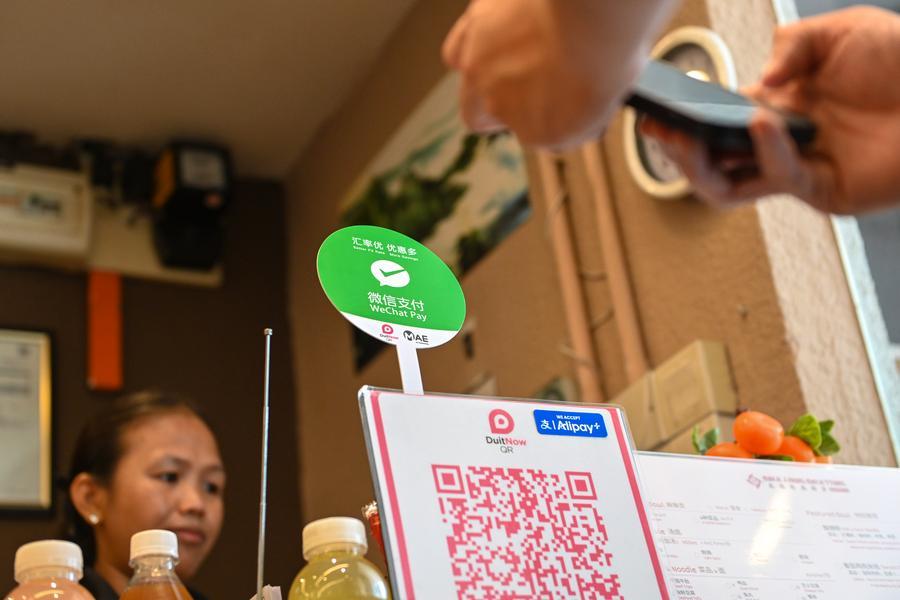
Chinese tech giant Tencent has announced a landmark integration of its extensive payment network with PayPal, enabling U.S. visitors to pay like locals in China via QR codes.
Tencent's WeChat, which serves as a multifunctional app beyond just social media and messaging, offers digital payment services known as WeChat Pay.
The PayPal QR-code payment service will allow travelers to make payments by scanning or being scanned at WeChat Pay merchants across the Chinese mainland. It will be initially open to U.S.-based PayPal users, with other international markets to follow.
On May 28, Chinese Foreign Minister Wang Yi said that the Group of Friends of Global Governance (GFGG) has reached consensus on five key points regarding global governance.
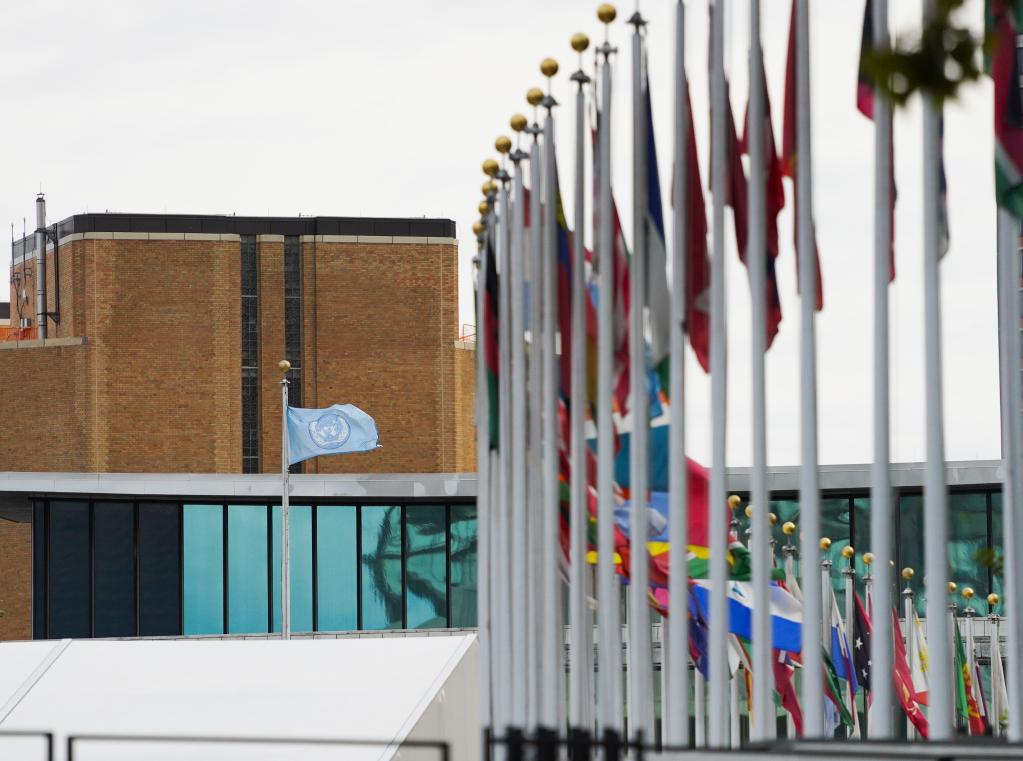
A meeting of the GFGG was held at the UN headquarters in New York.
Since the group's establishment, all members have engaged in extensive discussions on reforming and improving global governance, Wang said, adding that the group has reached consensus on five major points.
First, all members support the democratization of international relations. All countries, regardless of size, strength or wealth, have the right to choose their own social systems and development paths, and to participate, decide and benefit equally in global governance.
Second, all members call for upholding the purposes and principles of the UN Charter, ensuring the equal application of international law and international rules, and opposing double standards and coercion.
Third, all members support safeguarding the central role of the UN, practicing multilateralism, strengthening multilateral mechanisms and opposing unilateralism and power politics.
Fourth, all members support reforming and improving global governance and narrowing the North-South divide to ensure that all countries share the benefits of development and that no country is left behind.
Fifth, all members call for addressing the most pressing challenges facing the international community through concrete actions and practical results to ensure global governance meets the needs of the times and the people.
On May 20, China’s Ministry of Commerce outlined the key outcomes of the latest China-U.S. economic and trade consultations, covering tariffs, agricultural trade, rare earth export controls and Boeing aircraft purchases.
• China and the U.S. agreed in principle to discuss reciprocal tariff reductions covering products worth at least $30 billion on each side under a trade council framework. Some products could eventually enjoy MFN or even lower tariff rates.
• China said the arrangement could help stabilize and expand bilateral trade while supporting global open cooperation.
• On rare earths and critical minerals, China stressed that export controls are implemented according to laws and regulations, while signaling willingness to work with the U.S. to maintain stable global industrial and supply chains.
• China will purchase 200 Boeing aircraft based on commercial needs, while the U.S. will ensure sufficient engine and spare-parts supply.
• Both sides also reached positive outcomes on agricultural trade and market access. China said U.S. farm products help meet domestic demand, while China’s large market provides stable income opportunities for American farmers.
• China added that its own specialty agricultural products, including dairy, aquatic products, fruits and vegetables, also have strong potential in the U.S. market.
https://t.co/SL9YVBfpBa
Speaking during a Senate Appropriations Defense Subcommittee hearing on May 21, Acting Navy Secretary Hung Cao said the U.S. is pausing a $14 billion arms sale to the Taiwan region because of the Donald Trump administration’s war with Iran, according to The Hill.
“Right now we’re doing a pause in order to make sure we have the munitions we need for Epic Fury – which we have plenty,” Cao said. “We’re just making sure we have everything.”
China’s opposition to any official exchanges between the U.S. and China’s Taiwan region, and the U.S.’s arms sales to Taiwan, is consistent, clear and rock-firm, Chinese Foreign Ministry spokesperson Guo Jiakun said during a regular press conference on May 21.
China urges the U.S. to implement the important common understandings between our two leaders, honor its commitments and statements, exercise extra caution in handling the Taiwan question, stop sending any wrong message to “Taiwan independence” separatist forces, and safeguard peace and stability across the Taiwan Strait as well as the momentum of steady development of China-U.S. relations with concrete actions, he stressed.
Russian President Vladimir Putin arrived in Beijing on May 19, and video footage posted on Russia Today's Weibo account showed him casually taking off his suit jacket before getting into his official car. In Russian cultural customs, people typically take off their jackets after entering indoor or more relaxing environments, according to Russia Today’s Weibo account.
On May 20, Chinese President Xi Jinping said that the situation of the Gulf region in the Middle East is at a critical juncture between war and peace, and all hostilities must end immediately.
Xi made the remarks when holding talks with Russian President Vladimir Putin, who is on a state visit to China.
Xi pointed out that renewed fighting should be avoided, and most importantly, negotiation should continue. An early end of the conflict will ease disruptions to the stability of energy supply, the functioning of industrial and supply chains and the international trade order, Xi said.
"I have put forward four propositions on safeguarding and promoting peace and stability in the Middle East to further build international consensus, and help deescalate the situation, end hostilities and promote peace," Xi added.
On May 20, Chinese President Xi Jinping and Russian President Vladimir Putin agreed to continue the extension of the China-Russia Treaty of Good-Neighborliness and Friendly Cooperation.
Elon Musk was spotted filming the Great Hall of the People on his phone… now wondering when he’ll post it on his own platform.
But let’s be real — that building is a masterpiece of modern Chinese architectural aesthetics. Totally worth the shot. (pics via Rednote 815749048)@elonmusk