“Solange uns noch Zeit bleibt, wollen wir allen Menschen Gutes tun, vor allem aber denen, die mit uns an Jesus Christus glauben.”
Galater 6:10 Hfa
https://t.co/RxggtuGfgS
#GesundeErnährung
Warum du Kaffe vielleicht NICHT wärend deines Frühstücks trinken solltest:
Kaffee enthält Polyphenole. Diese können zeitweise die Eisen Aufnahme stark hemmen!
Deswegen Kaffee entweder auf später verschieben oder nimm Vitamin C durch Lebensmittel zu dir.
Hey @jackmallers,
I listened to one of your recent episodes yesterday, where you argued that Germany (where I do live) has benefited enormously from the euro. From an Austrian Economics perspective, I think that argument fundamentally misunderstands what creates prosperity.
Germany was one of the most productive economies in Europe, with a historically strong currency and relatively greater fiscal discipline. By joining the euro, Germany gave up its monetary independence and became part of a system in which countries with vastly different levels of productivity and fiscal discipline share the same monetary policy.
That creates enormous moral hazard. Excessive government borrowing, credit expansion, sovereign debt bailouts, and monetary intervention can shift risks and costs across the entire currency union.
And the argument that Germany benefits from a weaker currency because it helps German exporters completely misses the point.
Exports are not the goal of an economy. Prosperity is.
A weaker currency may make German products more competitive abroad, but it also reduces the purchasing power of German consumers and makes imports more expensive.
More importantly, artificially favorable monetary conditions can keep industries and business models alive that might otherwise have to adapt or disappear. Capital and labor remain tied to existing structures instead of moving toward potentially more productive uses.
That’s an opportunity cost that rarely appears in the export statistics.
A stronger currency would have forced German companies to become more productive, innovate, or reallocate resources. It would also have allowed German consumers to purchase more goods and services from abroad with the same amount of money.
Just look at Switzerland. The Swiss franc has remained one of the strongest currencies in the world, yet Switzerland has maintained a highly competitive economy and a substantially higher level of prosperity than Germany.
Of course, monetary strength isn’t the only reason for that difference. Economic freedom, capital accumulation, property rights, and institutional quality matter enormously. But Switzerland demonstrates that a strong currency is perfectly compatible with international competitiveness and prosperity.
The fundamental mistake is confusing the success of German exporters with the prosperity of German citizens.
The question isn’t whether the euro helped Germany export more. The question is whether Germans are wealthier today than they would have been under a harder currency, with less monetary distortion and stronger fiscal discipline.
And I see very little reason to assume that they are.
They blew up the twin towers, faked a pandemic, admitted that they eat babies, and everyone is still out here talking about voting our way out of it...
Dont forget there is a "reason" why they moved GTA6 from March until November... Can only speculate what these evil satanic fucks have planned for the world. A brand new game mode called Call Of Duty Warzone came out just one single day prior to Covid Lockdowns in 2020...
Wieso können alle Tiere so scheissen, dass sie kein Klopapier brauchen, aber der Mensch als angebliche Spitze der Evolution muss sich den @rsch sauber machen und Geld für Toilettenpapier ausgeben?
Tschechien und Polen sind geil. Gute Preise, alles sauber, keine Raketenwissenschaftler und Hirnchirurgen. Die Kassiererin nennt mich schwul, wenn ich einen Iced Latte bestelle.
Die Gehaltsvorstellungen im deutschen Arbeitsmarkt rauschen gerade in den Keller.
Wer früher auf 100.000 Euro Jahresgehalt gehofft hatte, gibt sich heute bereits mit 80.000 Euro zufrieden.
Wer nach dem Master mit 60.000 Euro irgendwo einsteigen wollte, orientiert sich heute eher an 49.000 Euro.
Eine logische Entwicklung. Und doch ist sie heftig. Denn die Lebenshaltungskosten sind nicht gesunken. Ganz im Gegenteil.
Egal ob Elterngeld, Krankenversicherung, Pflegeversicherung oder Einkommensteuer.
Sämtliche sogenannte "Reformen" der Regierung weisen folgende Charakteristika auf:
> Bei Leuten, die arbeiten, werden Leistungen gekürzt bzw. Abgaben erhöht
> Für Leute, die nicht arbeiten, ändert sich nichts
Das kann nicht lange gutgehen.
🙈 🤯
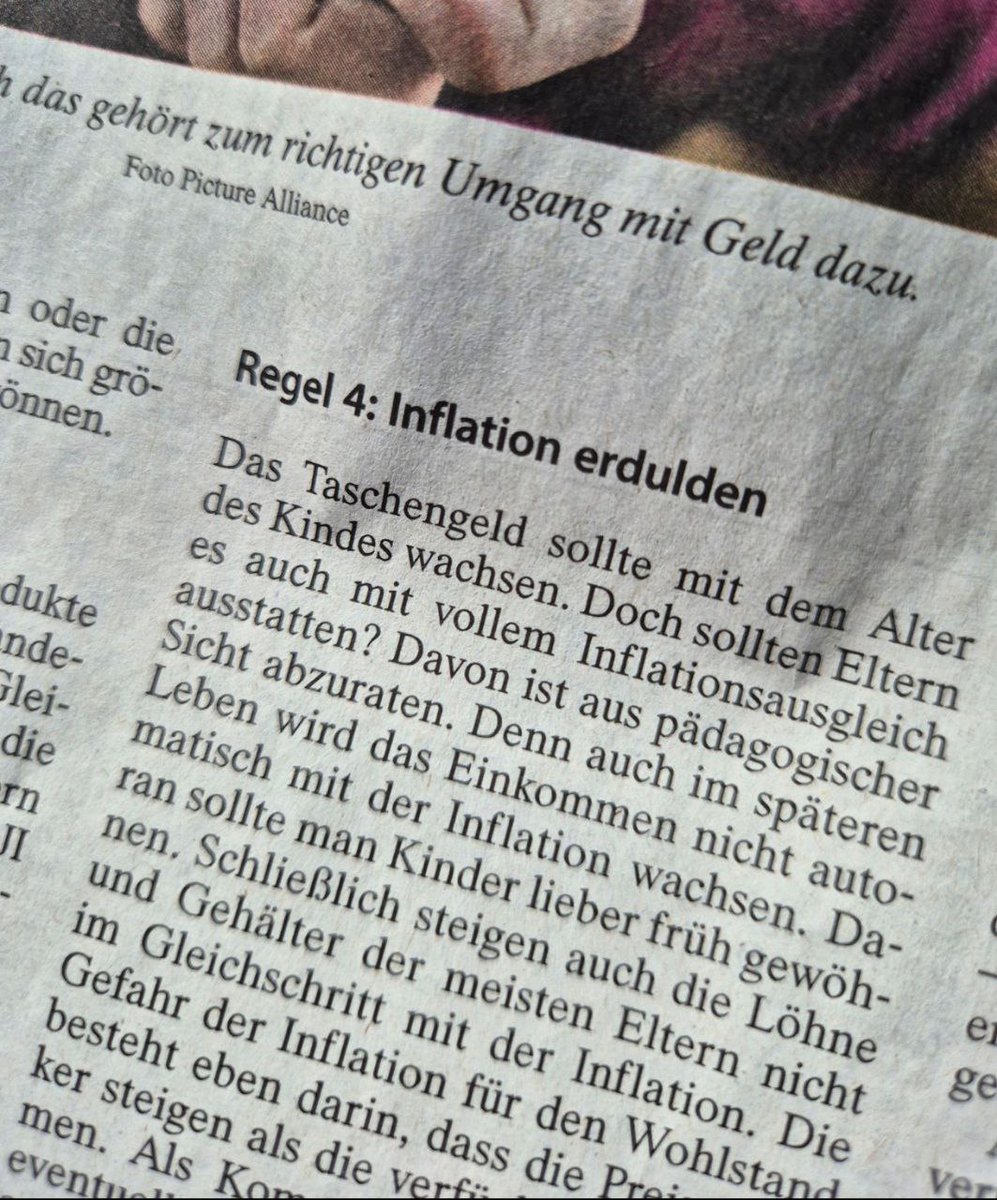
"Das Taschengeld sollte mit dem Alter des Kindes wachsen. Doch sollten Eltern es auch mit vollem Inflationsausgleich ausstatten? Davon ist aus pädagogischer Sicht abzuraten. Denn auch im späteren Leben wird das Einkommen nicht automatisch mit der Inflation wachsen."
> Sprit bei 2,40 Euro
> Bauzinsen bei 4,6%
> Gaspreise hoch
> Düngemittelpreise hoch
> Chinesische Autos fluten Europa
> Babyboomer werden von Einzahlern in die Sozialsysteme zu Leistungsbeziehern
> Ukraine-Krieg vor weiterer Eskalation
> Zinslast explodiert perspektivisch auf 100 Mrd Euro pro Jahr
Die Deutschen haben (noch) keine Ahnung, was da auf sie zukommt.
Und keinen Plan damit umzugehen.
@MooreDividends@grok Das ist sehr gut, dadurch erhalten Käufer eine höhere Rendite und durch das höhere Kapital kann ein Wirtschaftsaufschwung entstehen.