@OpenAI
On November 6, OpenAI closed the first tranche of its latest round, raising roughly $11 billion at a $1.25 trillion valuation. The funds have been wired. Investors include Coatue, SoftBank, Sequoia, and others. The valuation is lower than earlier targets amid a cooler AI market.
@AnthropicAI
On November 10, Anthropic set its IPO price range at $70–$78 per share. It plans to offer about 825 million shares, implying a fully diluted valuation of up to roughly $1.4 trillion. Trading is expected to begin on Nasdaq under the ticker ANT around November 19.
@Polymarket
On November 10, Polymarket said its annualized revenue has surpassed $1.8 billion, accelerating after the launch of its U.S. regulated exchange.
Revolut
On November 4, Revolut completed a secondary share sale that valued the company at $115 billion, up about 53% from a year earlier.
@stripe
Secondary market pricing has been hovering around $185–195 billion, as the company continues to provide liquidity through employee and investor share sales.
@databricks
The latest valuation is around $190 billion, with secondary market quotes remaining in that range. The company continues to scale its AI data platform.
💡 Overall, AI giants are seeing more tempered valuations, while payments and data infrastructure names remain actively priced in the secondary market. These shifts continue to shape expectations around pre-IPO liquidity.
#PreIPO #RWA #PaimonFinance #OnchainWallStreet
🔐 When buying tokenized assets, first check whether the issuer can move your tokens.
The tokenized stock market is growing fast, and security issues need more attention.
Bitquery’s on-chain review on Nov 4 examined 7 issuers. 4 of them hold keys that can transfer or burn tokens from any wallet within minutes, covering about $750M. Compliance freezes and recovery are necessary, but without multisig, timelocks, and public disclosure, they become single-point risks. ⚠️
This is something Paimon considered carefully in its design. We use a dual-token structure:
· Tradable x-series tokens can only be minted or burned by the bridge contract, while users transfer freely between each other
· Compliance-related forced actions are limited to p-series tokens, controlled by an operations multisig, with upgrades behind a timelock, and all actions emit events for audit 🔒
Before buying, ask yourself these 3 questions:
✅ Does the issuer have single-key authority to transfer or burn your tokens directly?
✅ Are there multisig and timelock protections?
✅ Are the permissions and risks publicly disclosed?
Permission design matters more than the narrative. This is the standard we’ve stuck to while building On-chain Wall Street. 🏛️
#RWA #TokenizedStocks #PaimonFinance #OnchainWallStreet
🚀 METR Bombshell: Anthropic’s model capabilities are improving nearly 2x faster than before — is AI starting to accelerate itself?
A new report from METR shows Anthropic’s progress on well-specified tasks has been roughly 1.9x faster compared with the March 2024–October 2025 period. The main driver? AI itself is helping with R&D. Some are calling this early evidence of AI accelerating its own development.
Interestingly, CEO @DarioAmodei publicly urged the industry in September to slow the pace of capability gains so safety measures could catch up. METR’s findings create a notable contrast with that stance.
Anthropic co-founder Sam McCandlish said the company will soon release its own analysis of its development speed and how it’s tracking against its Responsible Scaling Policy.
#Anthropic #Claude #AISafety #METR
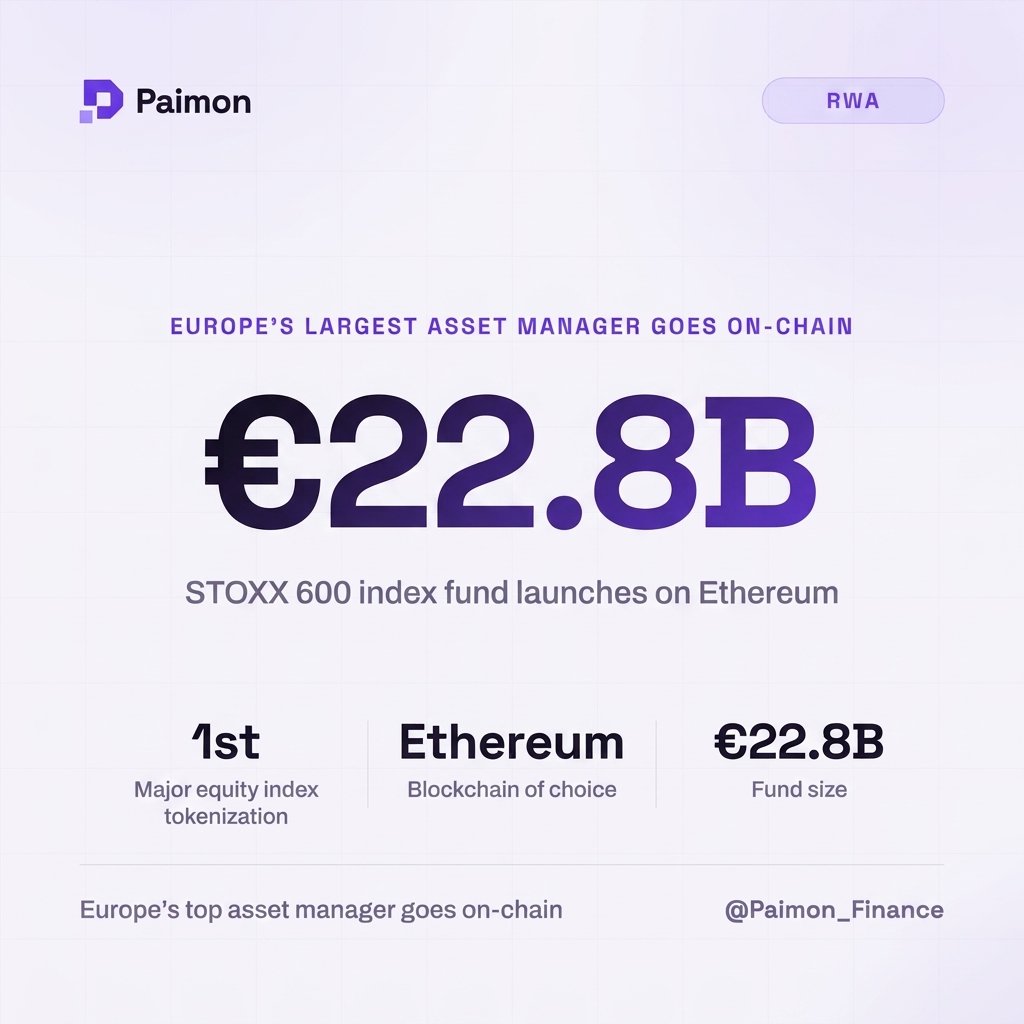
🌍 Europe’s largest asset manager goes on-chain:
€22.8B STOXX 600 index fund launches on EthereumAmundi and CACEIS have issued a tokenized share class.
Investors receive units of the existing fund, and traditional channels remain open.
After money-market funds, equity index products are now on-chain.
#RWA #Tokenization #Amundi
@Polymarket’s @shayne_coplan reflected after the midterms that election night is always special — watching people experience market-based forecasts for the first time!Simple, direct, and once it clicks, it clicks.
Prediction markets are now routinely hours ahead of TV networks📺. While networks wait for absolute certainty, users can see probabilities move in real time (e.g. Democrats taking the House was priced at ~92%).
He sees this as the core value: putting a price on the future so people can read the trend earlier💡.
On-chain, $pPOLY (a Pre-Access structured note issued by @Paimon_Finance tracking Polymarket Series B preferred shares) can be traded on @PancakeSwap on @BNBCHAIN .
Last night was special.
Election days just never get old for us at Polymarket. Watching regular people experience the beauty of market based forecasts as the results come in. How practically useful it is. How simple it is to interpret. When it clicks, it clicks.
It’s now routinely hours between when prediction markets call it versus the TV networks. The networks hold out until absolute certainty, and the suspense keeps it entertaining all night. No knock to them, but now there’s Polymarket, and many people are realizing they want to know what's happening in real time.
I know the industry has gained a mixed rap for a variety of reasons, many of which are criticisms with real merit. But I think I speak for both myself and my peers when I say we got into this because we really love the idea of markets being able to place a price on the future (e.g. Democrats had a 92% chance to take the House on Polymarket), and how that can help people better understand what's likely to happen and make decisions accordingly.
Our mission is to make sure we deliver on the promise of prediction markets, which was on full display last night. In the midst of so much noise around what we do, the American people get to see what Polymarket is really all about. Feels like one step closer to the dream. Onwards.
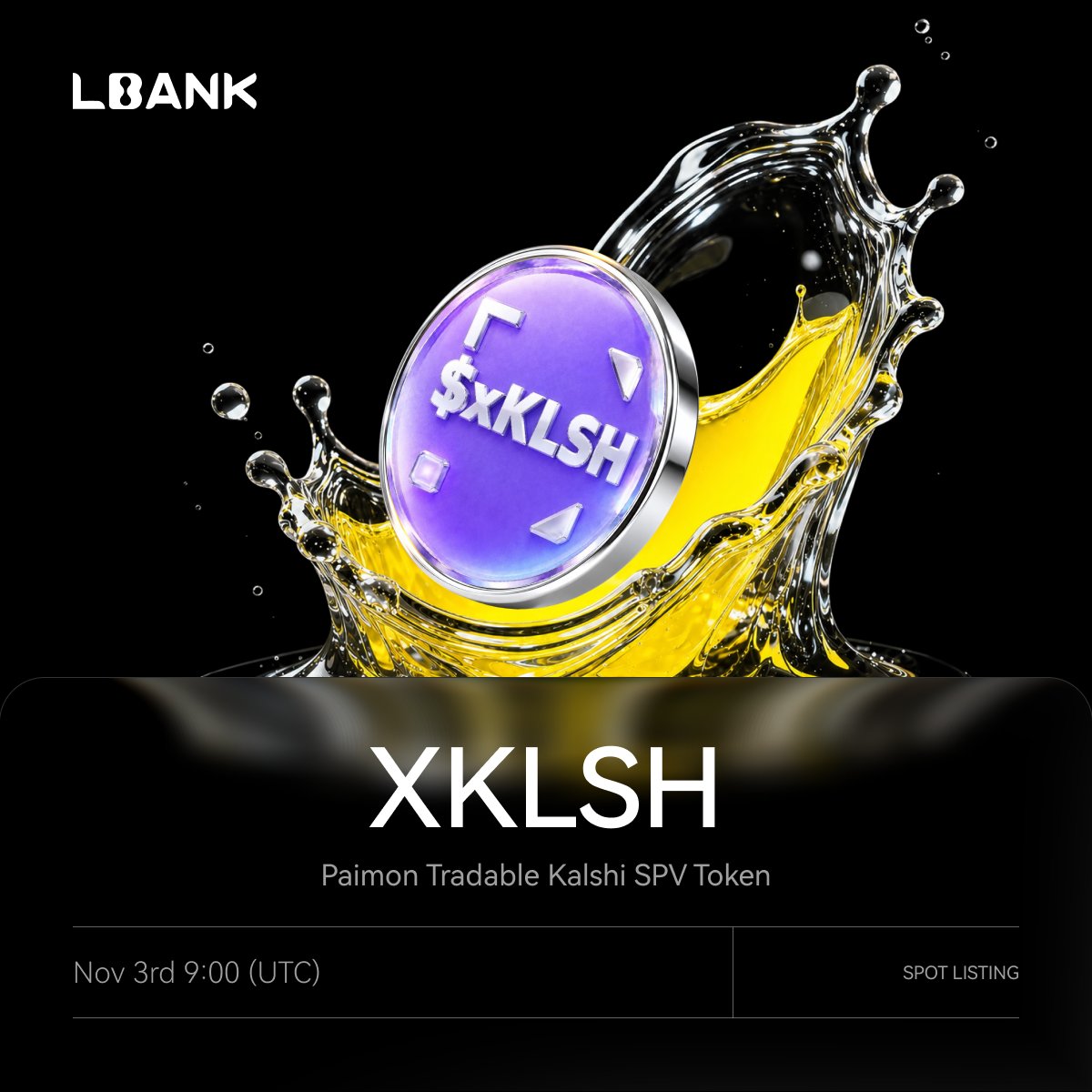
🔥 World Premiere #listing
🌠 $xKLSH (Paimon Tradable Kalshi SPV Token) will be listed on LBank!
Paimon Tradable Kalshi SPV Token (xKLSH) is a tokenized product providing economic exposure related to Kalshi’s pre-IPO assets through Paimon.
❤️ Details: https://t.co/jyToatHITp
7/ For Polymarket to prove it’s undervalued, two things need to happen:
1. Sustainably close the volume gap with Kalshi
2. Convert that volume into higher, more stable revenue and profit
Otherwise, the valuation gap will likely persist.
Data moves fast. Upcoming funding rounds and actual revenue numbers will give a clearer answer.
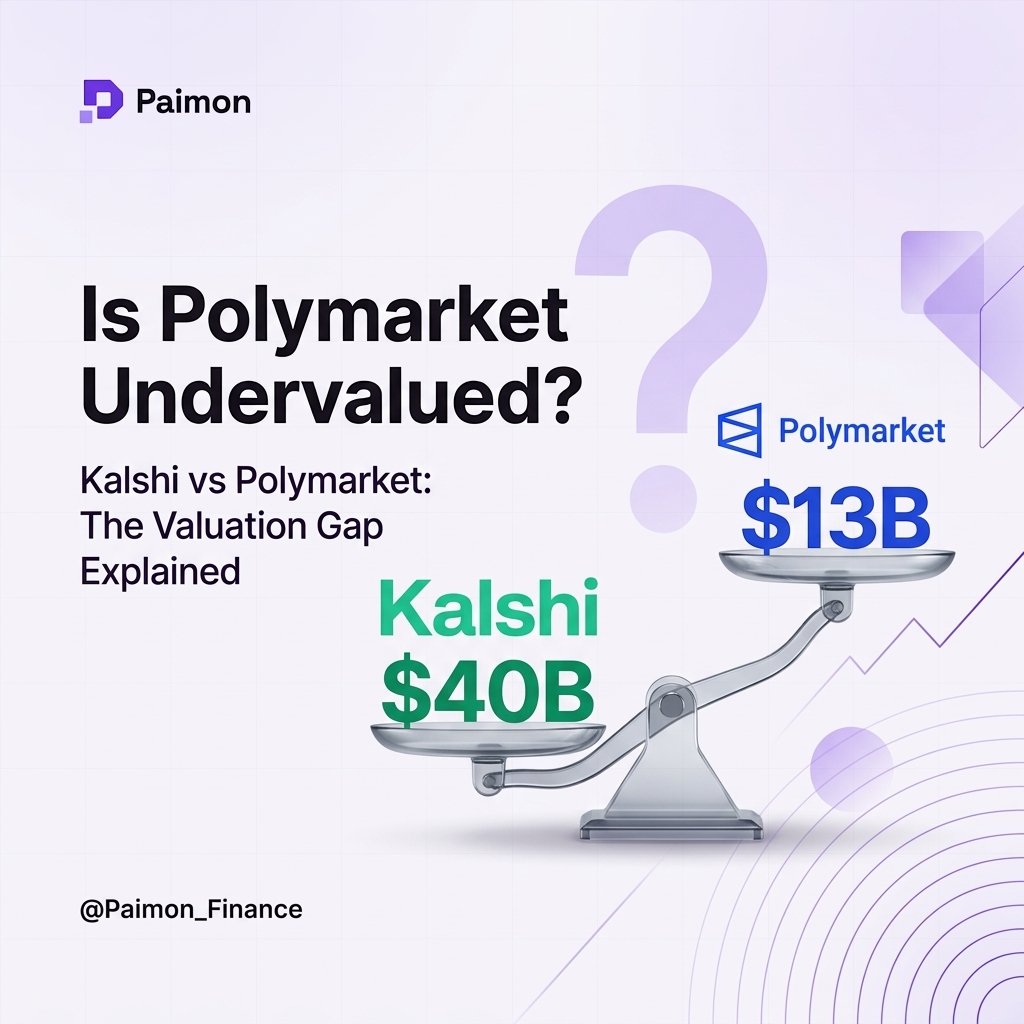
1/ Kalshi raised $1B at a $40B post-money valuation in its Series G on Oct 29, 2026 (co-led by Wellington & Sequoia).
Polymarket’s secondary market mark is ~$13–14B as of early Nov 2026, with reports of talks for a ~$20–21B round.
That’s roughly a 3x gap.
Is Polymarket undervalued, or is Kalshi simply stronger?
Sources: https://t.co/O1gnTStte2 https://t.co/PNYe3irncS https://t.co/vM53im7O3s (as of Nov 1, 2026)
6/ So, is Polymarket undervalued?
On current volume and monetization (as of late Oct / early Nov 2026), the gap between Kalshi at $40B and Polymarket at $13–21B looks directionally justified.
It mainly reflects scale and U.S. market dominance rather than an obvious bubble.
Polymarket’s value sits more in its global brand and growth optionality than in undervalued current fundamentals.