Finance Minister Discusses Tokenization of Sovereign Bonds in Meeting with PVARA Chairman
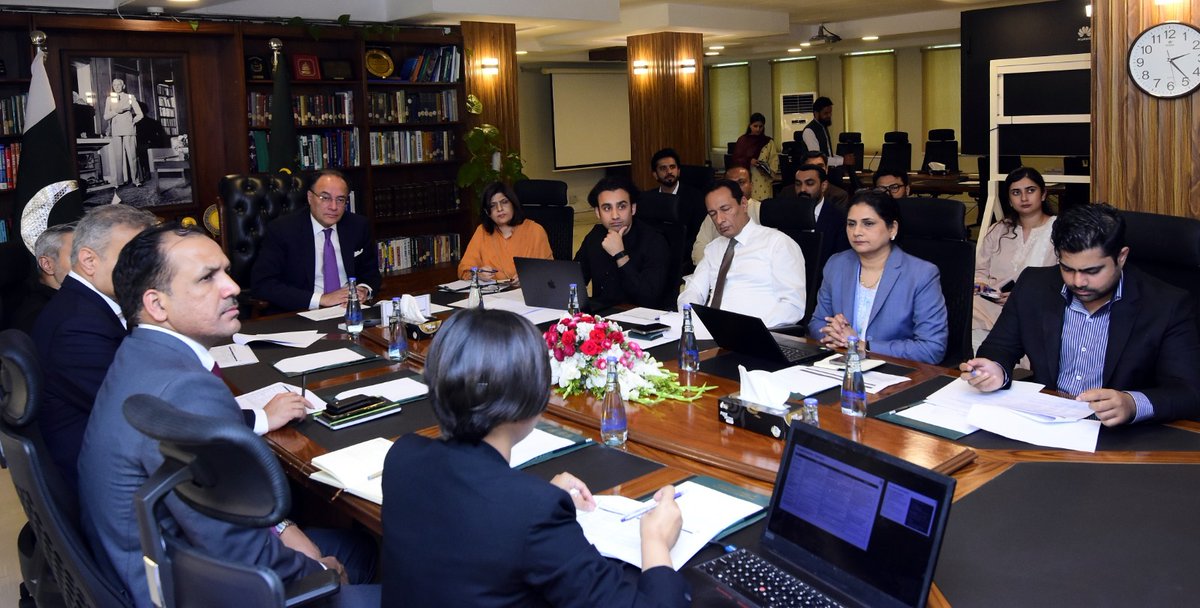
Federal Minister for Finance and Revenue Senator Muhammad Aurangzeb today held a meeting with Bilal Bin Saqib, Minister of State and Chairman of the Pakistan Virtual Assets Regulatory Authority (PVARA), and the Advisor on Debt Management to the Finance Minister, Omer Khan, to discuss the tokenization of sovereign debt instruments, and Naya Pakistan Certificates.
The meeting marked one of the first high-level governmental discussions in Pakistan focused specifically on sovereign asset tokenization and the role blockchain infrastructure can play in modernising capital markets, expanding investor access, and enabling Pakistan to participate in the financial infrastructure of the new economy.
Discussions focused on potential structures, implementation pathways, regulatory considerations, and next steps required to explore tokenized sovereign instruments within Pakistan’s evolving financial ecosystem.
A central element of the discussion focused on the international precedent for sovereign and quasi-sovereign debt tokenization, and how Pakistan can adopt a structure aligned with established global market infrastructure. The model under consideration, often referred to as a Digitally Native Note issued through a regulated financial market infrastructure, allows a sovereign bond to be created on a regulated blockchain platform at the moment of issuance, with same-day settlement, before integrating with the conventional international clearing and settlement systems that already serve Pakistan’s existing Eurobond programme. The bond’s coupon payments, secondary trading, and final repayment continue through the established global infrastructure, ensuring full interoperability with the institutional investor base that participates in Pakistan’s conventional sovereign issuances.
The tokenization of Naya Pakistan Certificates to potentially enable broader retail participation, improve accessibility for overseas Pakistanis, and create more seamless digital investment rails connected to global markets was also discussed.
Furthermore, it was highlighted that the Roshan Digital Account has attracted close to USD 13 billion in cumulative inflows from overseas Pakistanis and international investors since its launch in 2020, with the majority of that capital deployed within Pakistan’s economy. It was further noted that the proposed digital distribution agenda is intended to extend this investment channel to a broader base of eligible global investors under full regulatory supervision.
The meeting also explored how blockchain-powered financial infrastructure could help take Pakistan to the world by connecting local financial products and sovereign instruments with a wider international investor base through programmable and digitally native markets.
Finance Minister Senator Muhammad Aurangzeb stated: “Pakistan remains committed to exploring forward-looking financial technologies that can support economic modernization, deepen investor participation, and strengthen financial accessibility. Discussions around tokenized sovereign instruments represent an important exploratory step toward understanding how emerging infrastructure can support the future evolution of Pakistan’s capital markets.”
Speaking following the meeting, Bilal Bin Saqib, Chairman PVARA, stated:
“The financial system of the next century will not run on paper, manual processes, or fragmented rails. It will run on programmable infrastructure, real-time settlement, and borderless digital networks. Pakistan has an opportunity to leapfrog legacy systems and position itself among the countries building the financial architecture of the future. The tokenization of sovereign assets is not simply a technology shift, it is a strategic national opportunity to bring Pakistan into the next era of global finance, unlock wider participation in our economy, and connect our markets to the emerging digital capital networks of the world.”
It was agreed that PVARA, Ministry of Finance and Sate Bank of Pakistan will continue to coordinate on the design, governance and phased development of the agenda. Further announcements will follow as the work progresses through the appropriate approvals.
Both sides agreed to continue technical discussions and institutional coordination on potential frameworks, international benchmarking, regulatory considerations, and pilot structures related to sovereign asset tokenization initiatives. The engagement reflects Pakistan’s broader push toward modernising financial infrastructure, strengthening digital asset regulation, and positioning the country as an emerging hub for responsible blockchain innovation.
🇵🇰 Pakistan takes another step toward digital finance.
The government is exploring tokenization of sovereign debt and Naya Pakistan Certificates, signaling growing interest in blockchain-powered financial infrastructure.
Sovereign debt tokenization is now on the table in Pakistan.
Federal Finance Minister Senator Muhammad Aurangzeb met today with PVARA Chairman Bilal Bin Saqib to discuss the tokenization of Pakistan's sovereign debt instruments and Naya Pakistan Certificates.
Speaking after the meeting, Chairman @BilalBinSaqib said:
"The financial system of the next century will not run on paper, manual processes, or fragmented rails. It will run on programmable infrastructure, real-time settlement, and borderless digital networks. Pakistan has an opportunity to leapfrog legacy systems and position itself among the countries building the financial architecture of the future."
PVARA, the Ministry of Finance, and the State Bank of Pakistan will continue technical and institutional coordination on frameworks, benchmarking, and pilot design.
The physical layer exists. The ownership layer doesn't.
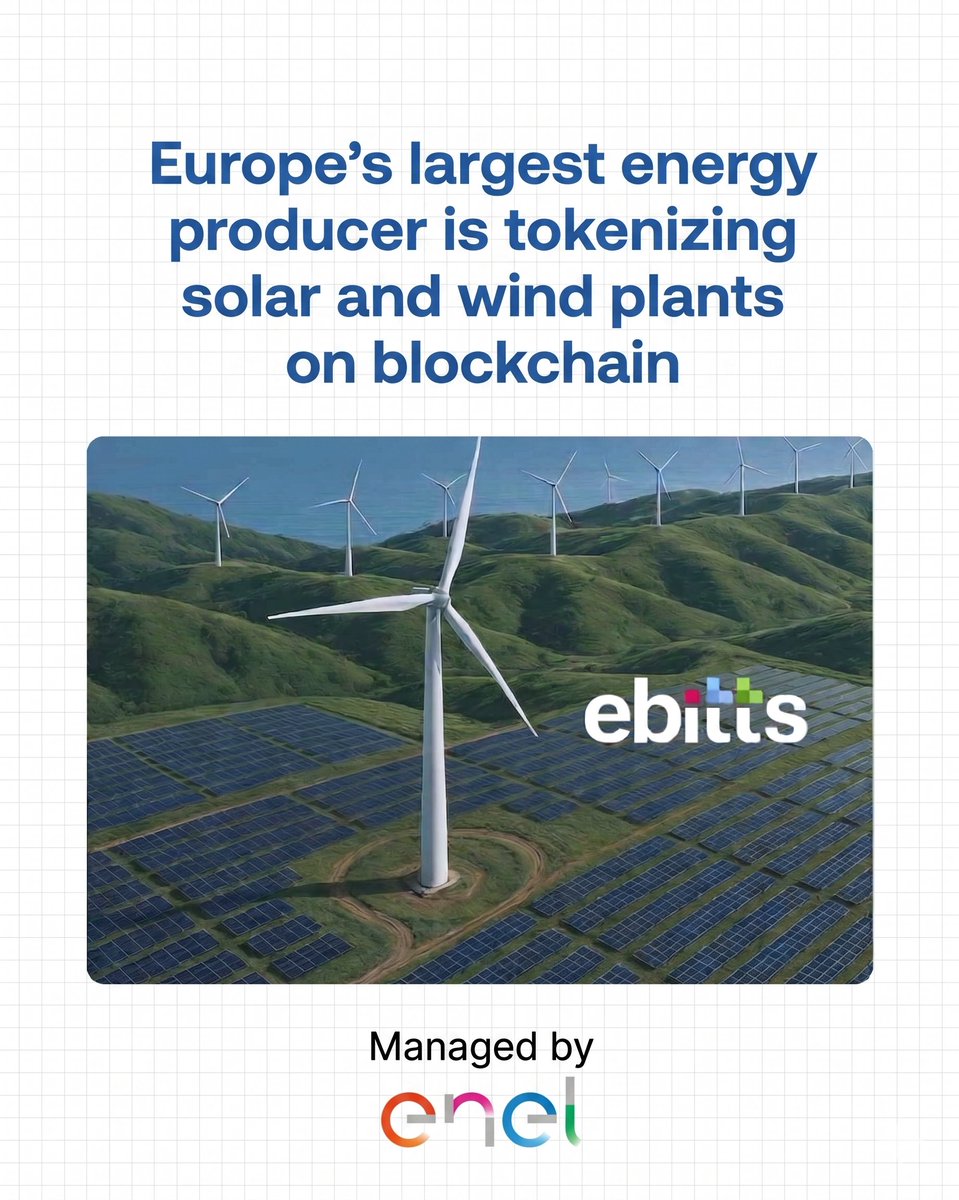
I also came across an interesting model just went live in Italy worth watching. Enel, Europe's largest energy company, tokenized their utility-scale solar farms and wind turbines on the blockchain. Italian citizens can now buy fractional shares of real power plants through a regulated app. Two tokens: one tracks ownership in the physical plant, one tracks the electricity your share produces in real time. Enel deducts that production directly from your electricity bill. No installation required. Launched January 2025. Fully regulated under MiCA.
The mechanics work cleanly on both sides. Token holders get entry at whatever size fits their budget, tied to real electricity being generated. Enel raises capital from its existing customer base and retains full operational control.
Pakistan is already one of the highest-ranked countries globally for grassroots digital assets adoption. That wasn't a government programme either. It was millions of people independently making the same economic calculation.
The solar transition followed the same pattern. So did crypto adoption. Both happened faster than anyone anticipated, driven by economics mainly.
Tokenisation is the infrastructure that finally lets that instinct translate into ownership rather than just usage.
Which crypto wallet do you use the most in Pakistan? 🇵🇰
Trust Wallet, Binance Wallet, Exodus, Ledger… or something else? 👀
Drop your go-to wallet below 👇
#CryptoPakistan#Bitcoin#Web3
🇵🇰 Big moment for Pakistan’s digital asset ecosystem.
PVARA officially stepping in as crypto licensing authority is a major step toward regulatory clarity, investor confidence, innovation virtual asset space
The industry is entering a new phase✨
@PakistanVARA@Bilalbinsaqib
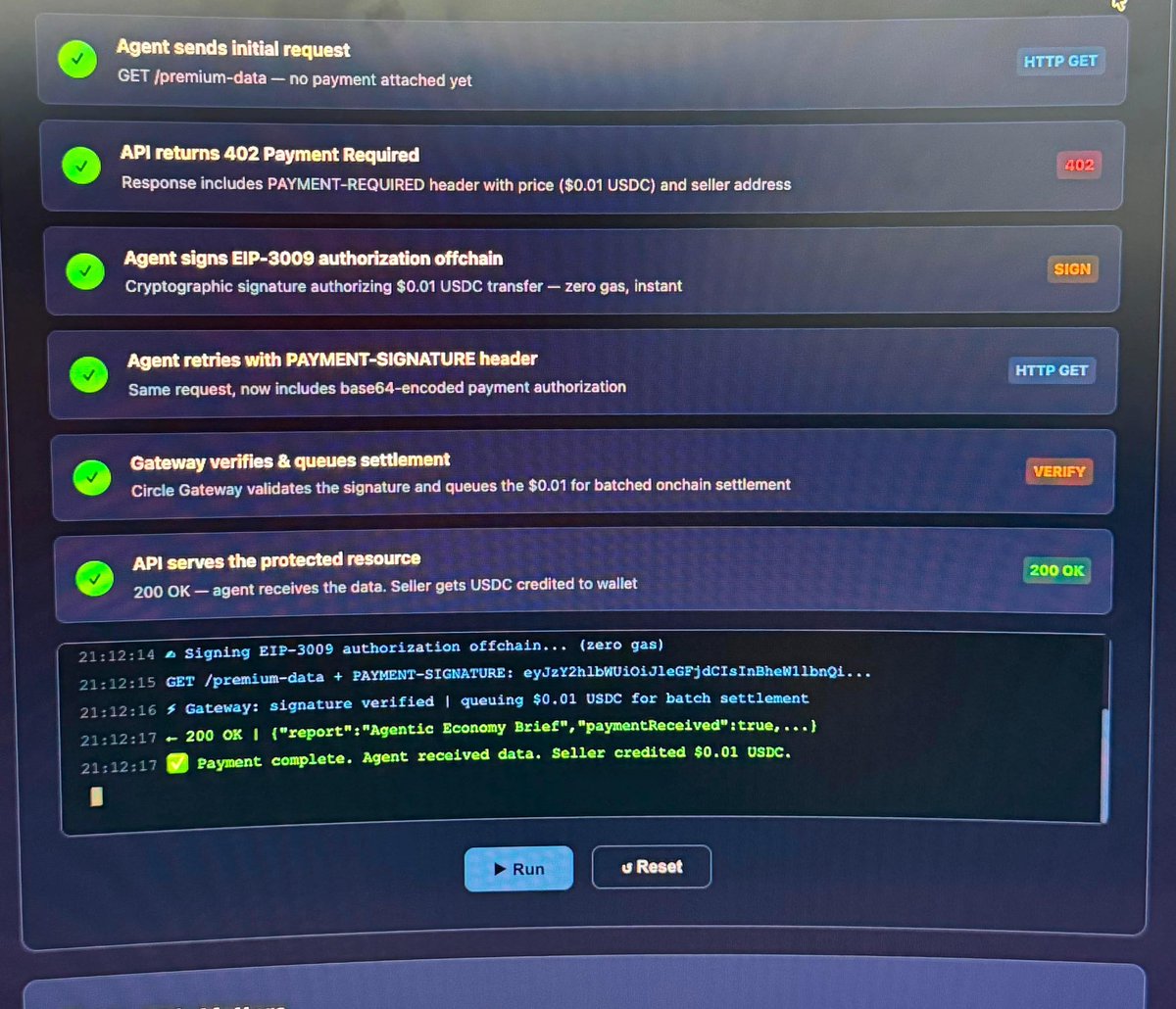
I just watched a machine pay another machine.
No human in the loop.
No bank.
No card. $0.01 in USDC, settled in 4 seconds, across the open internet.
If you are still debating whether crypto has utility, you are debating the wrong decade.
The agentic economy is not coming. It is transacting.
Three things just became inevitable:
> Every API becomes a marketplace.
> Every stablecoin becomes infrastructure.
> Every compliance framework gets rewritten because the customer is no longer human!!!
The rails are being laid in real time.
The only question is who is laying them, and who is being routed around.
🇵🇰 Pakistan is moving closer to crypto regulation.
The government is preparing an official crypto framework, with major policy discussions now actively underway.
Big step for adoption and clarity
@PakistanVARA
🇵🇰 BREAKING
Pakistan and @dfinity Foundation have officially launched the first “Pakistan Cloud Engine” under their sovereign cloud partnership.
A major move toward digital sovereignty and local cloud infrastructure.
@Bilalbinsaqib 👏👏
Seven of the largest financial institutions on earth are actively hiring for crypto and digital asset roles right now.
For years the reason Wall Street kept its distance wasn't ideological - it was regulatory. You don't build permanent infrastructure on unsettled legal ground. That calculus has changed.
Every major financial innovation follows the same cycle. Dismissed. Studied. Regulated. Then institutionalised at a scale the original builders didn't anticipate.
The talent flowing into these roles will build the settlement rails, tokenization engines, and digital asset platforms that institutional capital runs on for the next decade.
Trillions of dollars are sitting on the sidelines waiting for clear regulation.
If the U.S. CLARITY Act gets approved, it could unlock massive institutional inflows into crypto.
This could be a game changer for Bitcoin & the entire market. 🔥