For people who do not have borewells, govt supply is the only source of water. It is our right to get clean water. In 2026, after more than 75 years of independence of we still have to fight for clean water then what is the future?
@btiurban_AAP 1. Water supply is not regular. Somedays we do not get fresh supply of water for 2-3 days.
2. The water supply is usually dirty water. It is never clear.
3. From last 3 days we are getting extremely smelly water. It is very difficult to use that.
We are overstimulated and we don't even notice. Netflix while eating. Reels in the bathroom. Music while cooking. Podcasts on walks. We consume by default, not by intention. You keep filling every gap, then wonder why you feel foggy and unmotivated. Boredom and silence are the real growth drivers. They give you space to think and create. That's when solutions show up for problems that have been stuck for months. Leave some room.
COVID-19 might have been 6 years ago, but it took a toll on us. Nobody remained the same. Time feels faster. The energy feels off. People are colder & more detached. Careers paused, some lost their identity. some are still stuck. The world we knew never really came back.
I am fully convinced that 2019 was the last normal year we ever had. Ever since then, it feels like everything’s broken. Everyone is constantly anxious, time moves too fast, and nothing actually feels real anymore. The world as we knew it is just gone
Dear Indians being evacuated from war-torn regions,
Once you land safely in India, let’s not reduce a humanitarian rescue operation to complaints like window seat nahi mili, biscuit nahi mila, or koi airport se ghar drop karne nahi gaya, etc.
We have seen this pattern during previous evacuations, and it undermines the seriousness of the effort.
Be grateful that your country is bringing its citizens back from conflict zones, even when you ignored the earlier advisories.
Sitting in India right now, watching the world burn in real time. US & Israel striking Iran. Iran retaliating across the Gulf. Russia-Ukraine still raging. Pakistan-Afghanistan tensions simmering.
Missiles flying over Tehran, Bahrain, Abu Dhabi, Qatar.
And here I am, safe at home on a Saturday evening, in a democratic, peaceful country, worrying about none of this at my doorstep.
We don't say this enough - we are incredibly lucky. Not perfect, not without problems. But at peace. That's not a small thing in 2026.
Last one on this topic, and I have been holding this in myself for a while.
For centuries, class divides kept the labor of the poor invisible to the rich. Factory workers toiled behind walls, farmers in distant fields, domestic help in backrooms. The wealthy consumed the fruits of that labor without ever seeing the faces or the fatigue behind it. No direct encounter, no personal guilt.
The gig economy shattered that invisibility, at unprecedented scale.
Suddenly, the poor aren't hidden away. They're at your doorstep: the delivery partner handing over your ₹1000+ biryani, late-night groceries, or quick-commerce essentials. You see them in the rain, heat, traffic, often on borrowed bikes, working 8–10 hours for earnings that give them sustenance. You see their exhaustion, their polite smile masking frustration with life in general.
This is the first time in history at this scale that the working class and consuming class interact face-to-face, transaction after transaction. And that discomfort with our own selves is why we are uncomfortable about the gig economy. We want these people to look our part, so that the guilt we feel while taking orders from them feels less.
We aren't just debating economics. We are confronting guilt. That ₹800 order might equal their entire day's earnings after fuel, bike rent, and app cuts. We tip awkwardly, or avoid eye contact, because the inequality is no longer abstract. It's personal.
Pre-gig era, the rich could enjoy luxury without moral discomfort. Labor was out of sight. Now, every doorbell ring is a reminder of systemic inequality. That's why debates explode. It's not just policy. It's emotional reckoning. Some defend the system (“they choose it”), others demand change (“this isn't progress, its exploitation”).
And here’s the uncomfortable twist: the unsaid ask of clumsy ‘solutions’ isn’t dignity. It is about returning to invisibility.
Ban gig work and you don’t solve inequality. You remove livelihoods. These jobs don’t magically reappear as formal, protected employment the next day. They disappear, or they get pushed back into the informal economy where there are even fewer protections and even less accountability. Over-regulate it until the model breaks, and you achieve the same outcome through paperwork instead of slogans: the work evaporates, prices rise, demand collapses, and the people we claim to protect are the first to lose income.
And then what happens?
The rich get their old comfort back. Convenience returns without faces. Guilt dissolves. We go back to clean abstractions and moral posturing from a distance. The poor don’t become safer, they become invisible again: back in cash economies, back in backrooms, back in shadows where regulation rarely reaches and dignity isn’t even debated.
The gig economy just exposed the reality of inequality to the people who previously had the luxury of not seeing it. The doorbell is not the problem. The question is what we do after opening the door.
Visibility is the price of progress. We can either use this discomfort to build something better (which we keep doing continuously as delivery partners are our backbone), or we can ban and over-regulate our way back into ignorance. One of those choices improves lives. The other simply helps the consuming class feel virtuous in the dark.
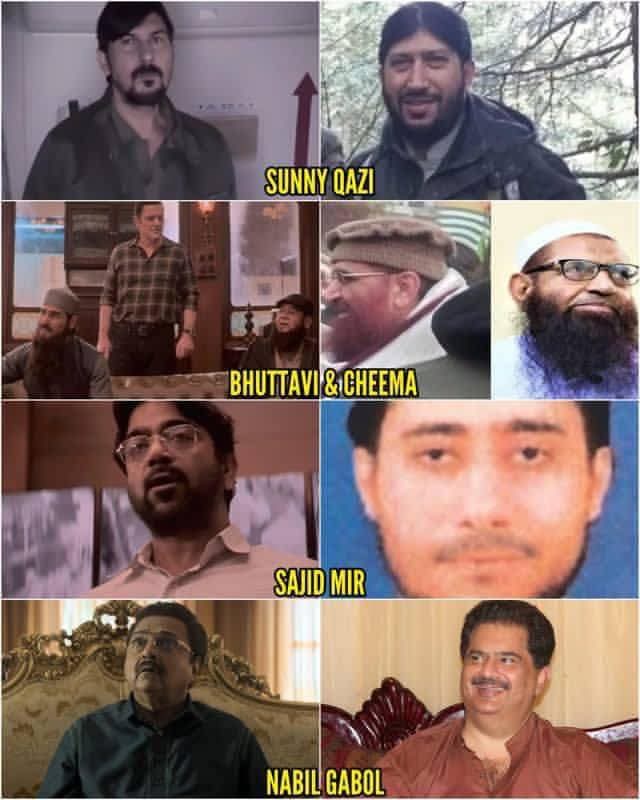
Everyone I know has watched Dhurandhar, which correlates with its 1000 cr+ Box office collection.
OTOH, nobody I know watched Jawaan or Pathaan, but somehow, they also collected as much as Dhurandhar, if not more.
That is one mystery that I will never be able to solve.
India is perhaps the only country where real stories of Kashmiri Pandit genocide by Islamist terrorists in The Kashmir Files and IC814 hijacking, Mumbai 26/12 attack & Parliament Attack by Pakistani Jaish/Lashkar terrorists in Dhurandhar are called “propaganda” & “political”.
Major Mohit Sharma has been in news over #Dhurandhar
Our hearts swell with gratitude & pride when we hear of these bravehearts
But we fail to see the darkness their own parents are forced to live in after their death
Next of Kin policies need to change for Married Soldiers
@Swiggy@PizzaHutIN I placed an order to hear for the n^th time that they don't have cold drink, bread etc. The pizza hut outlet at Food court, bathinda frequently does this. Pls look .
Aaj Tak is using AI to generate visuals of the crash, and shockingly, they've even created an animated video of Vijay Rupani, who died in the crash.
No empathy, no dignity. Just a race for TRP, even if it means turning real human tragedy into digital drama.
Terrifying final moments of Air India Flight AI 171 crashing into a residential area in Ahmedabad today. Clearly catastrophic loss of lift. Details awaited.
No language can be learned by force.
A prime example of this is Gujarat.
People here don’t force you to learn the local language or adopt the local culture. Even in rural villages of Gujarat, many people don’t know Hindi, yet if you speak to them in Hindi, they’ll still try to communicate with you in their broken Hindi. They never make you feel like an outsider.
There are nearly a million Kannadigas living in Gujarat, and I bet none of them has ever faced language-based discrimination.
The magic is, Gujarati as a language is still thriving. Migrants are learning Gujarati and adopting the culture willingly. They take part in Garba during Navratri and even prepare Gujarati dishes at home.
When you give love and respect to the people who come to your state and contribute to your economy, they will naturally adopt your language and culture.
But if you try to force it upon them, it only spreads hatred.