So delighted with this paper - it was the original focus of my PhD before I was distracted by other questions 😄 Thanks @IvanKassal and team for finalising the work! 🌞📚✨
Our latest work on the transport of partially delocalised charges/excitons, esp. in organic semiconductors: even a little delocalisation can massively boost mobilities!
Great work by Daniel Balzer, @PaleBlueSam, @ThijsSmolders, and David Blyth.
Read it at https://t.co/ZG8waSXOoz
What a fantastic day of talks celebrating 10 years of the mighty @lonepair research group. Brilliant to meet up with so many talented, creative colleagues old and new!
day one of tweeting about Wild Futures until we hit 100 science-based frontier tech idea applications and I can pair up the best and brightest Aus/NZ talent with the best mentors I can find in @blackbirdvc's network
Apply: https://t.co/NgK7DfpsLG
More: https://t.co/kZO4hYDmaU
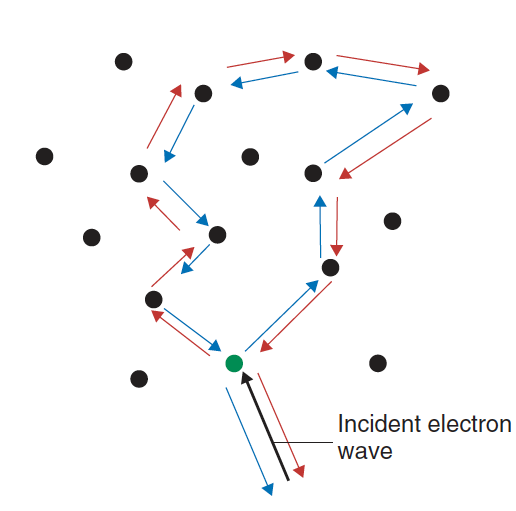
1/ A metal is a very quantum-mechanical object. Just about all its properties arise from the quantum mechanics of a dense collection of free electrons.
So how can we see its quantumness in the electrical resistance?
This is a thread about the phenomenon of "weak localization"
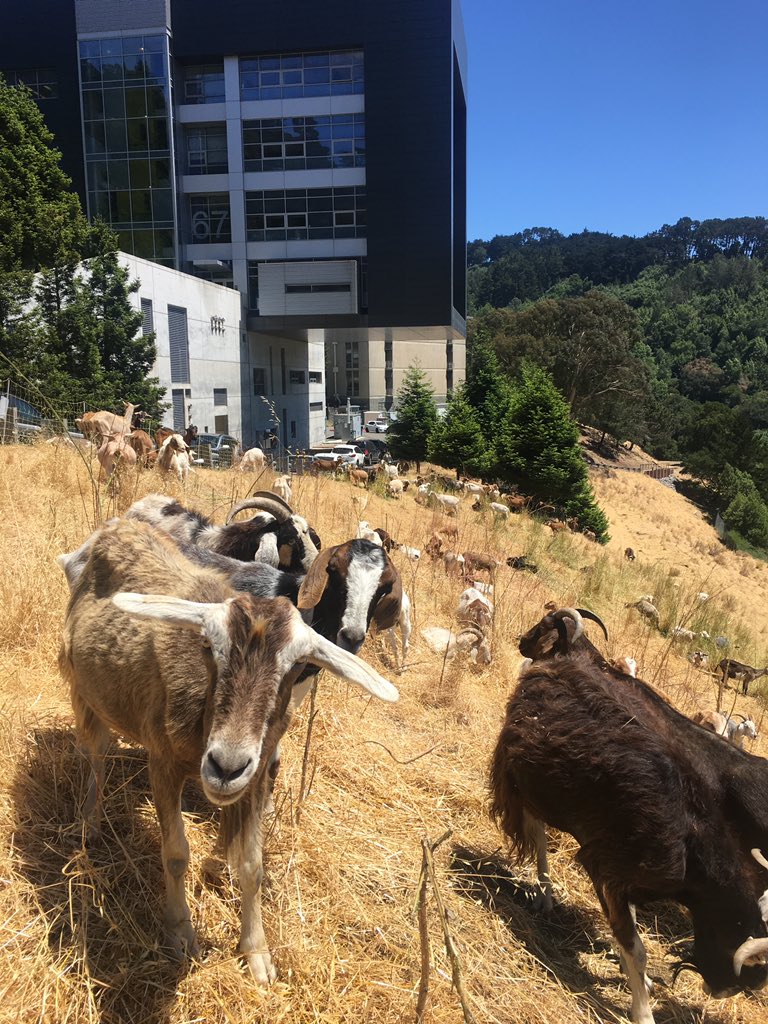
Postdoc positions available in my group @BerkeleyLab on quantum materials, dark matter and materials for quantum computing! Formal application instructions coming soon be reach out if you’re interested. You’ll be sitting in this building #bestviewfromthelab
Hey hey! So proud to see @Wikipedia ranked as one of the technology projects having the most positive impact on society. After all, that’s exactly what it is here to do.
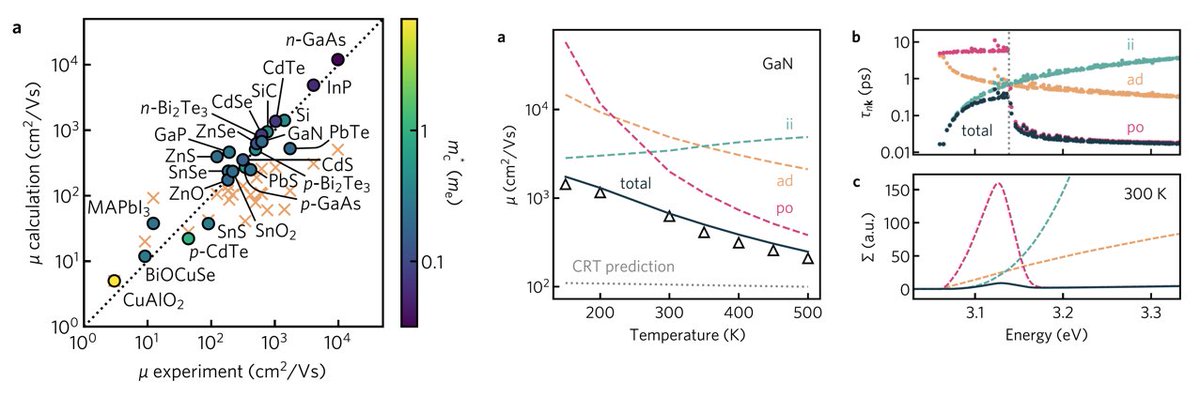
AMSET is a new theoretical method + code to calculate electronic properties of materials from first principles. Mobility, Seebeck, electronic thermal conductivity (w/lifetimes) at ~1/500th the computing cost of DFPT+Wannier.
@alexganose et al., Nat Comm
https://t.co/lR5u9ANOjB