Hezbollah Military Media publishes a photo of a new loitering glider that is controlled through Artificial Intelligence (AI) with no need to press any button
EVERYBODY! needs to follow and support the brother, he is a fellow Palestinian follower of Ahlulbeit who needs all of the support he can get. Imam Ali A.S says “Telling the truth has left me with no friends”. Today so many Palestinians are curious but only a few are gifted like the brother @raedatshan with the ability to research and brave enough to not only go public but to be vocal about the Haq of Amir Il Momineen A.S and the pure Imams A.S.
🙏
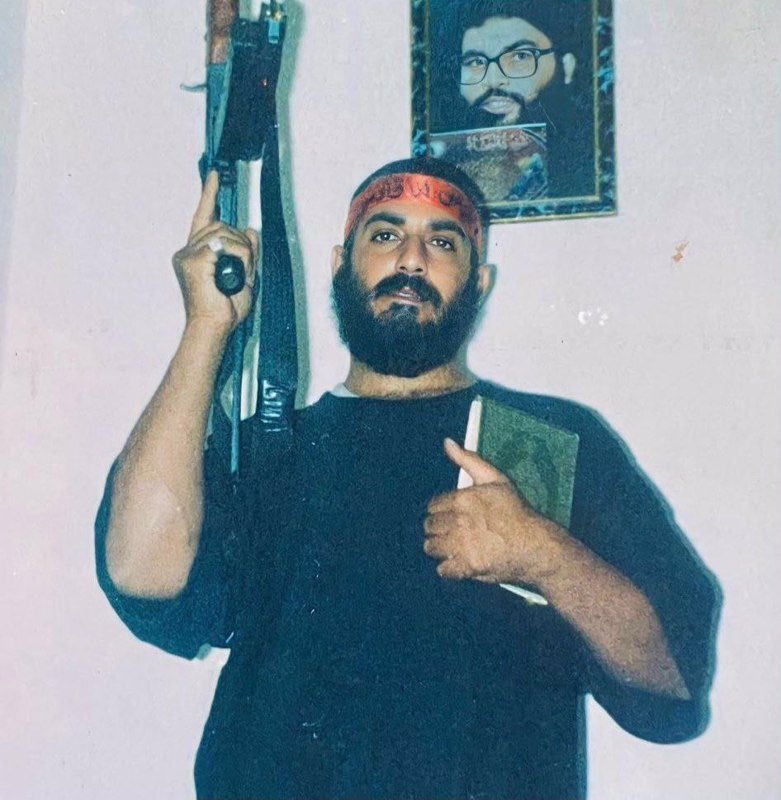
Mohammed Shehadeh was one of the Palestinian resistance commanders whose life reflected the deepening ties between Palestinian fighters and the Lebanese resistance axis in the 2000s. After being exiled from Palestine with roughly 300 others, he was received in Lebanon in Marj Il Zuhour with Other martyred leaders Abdel Aziz al-Rantisi, Mahmoud al-Zahar, and Saleh al-Arouri they were hosted and protected by Hezbollah.
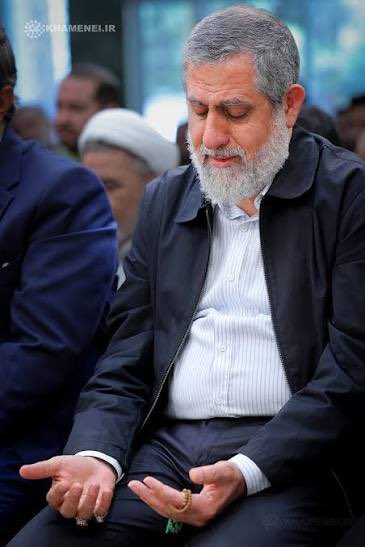
That exile was not simply displacement. Under the direct supervision of Martyr Mohammed Said Izadi also known as “Hajj Ramadan” a commander in the Iranian Al-Quds brigades. it became a period of political, ideological, and operational consolidation shaping a generation that understood resistance as discipline, not impulse.
From this experience, Shehadeh went on to found the Martyr Imad Mughniyeh Armed Resistance Group in Palestine, drawing inspiration from Hezbollah’s model and from its military leader Imad Mughniyeh. The group’s first major operation resulted in the killing of eight Israeli soldiers, marking a turning point in its emergence.
After the 2006 thirty-three-day war, Hezbollah’s standing in the occupied West Bank rose sharply. For many Palestinians, including Shehadeh, it was proof that disciplined resistance could shift the balance of power, even against overwhelming force.
In early 2008, both Hajj ImadMughniyeh and Shehadeh were assassinated within weeks of one another—Hajj Mughniyeh in Kafar Sousah, Syria, and Shehadeh shortly after. Shehadeh’s martyrdom came during a retaliatory operation in response to the assassination of Hajj Imad, in northern occupied Palestine tying his final act directly to the cycle of resistance and reprisal that defined that period.
At Shehadeh’s funeral in Bethlehem on March 12, 2008, mourners chanted, “Hezbollah is coming,” reflecting how closely his legacy had become bound to a wider resistance axis linking Palestine, Lebanon, and Iran.
His final request was to be buried in the flag Of Hizballah.
Mohammed Shehadeh was one of the Palestinian resistance commanders whose life reflected the deepening ties between Palestinian fighters and the Lebanese resistance axis in the 2000s. After being exiled from Palestine with roughly 300 others, he was received in Lebanon in Marj Il Zuhour with Other martyred leaders Abdel Aziz al-Rantisi, Mahmoud al-Zahar, and Saleh al-Arouri they were hosted and protected by Hezbollah.
That exile was not simply displacement. Under the direct supervision of Martyr Mohammed Said Izadi also known as “Hajj Ramadan” a commander in the Iranian Al-Quds brigades. it became a period of political, ideological, and operational consolidation shaping a generation that understood resistance as discipline, not impulse.
From this experience, Shehadeh went on to found the Martyr Imad Mughniyeh Armed Resistance Group in Palestine, drawing inspiration from Hezbollah’s model and from its military leader Imad Mughniyeh. The group’s first major operation resulted in the killing of eight Israeli soldiers, marking a turning point in its emergence.
After the 2006 thirty-three-day war, Hezbollah’s standing in the occupied West Bank rose sharply. For many Palestinians, including Shehadeh, it was proof that disciplined resistance could shift the balance of power, even against overwhelming force.
In early 2008, both Hajj ImadMughniyeh and Shehadeh were assassinated within weeks of one another—Hajj Mughniyeh in Kafar Sousah, Syria, and Shehadeh shortly after. Shehadeh’s martyrdom came during a retaliatory operation in response to the assassination of Hajj Imad, in northern occupied Palestine tying his final act directly to the cycle of resistance and reprisal that defined that period.
At Shehadeh’s funeral in Bethlehem on March 12, 2008, mourners chanted, “Hezbollah is coming,” reflecting how closely his legacy had become bound to a wider resistance axis linking Palestine, Lebanon, and Iran.
His final request was to be buried in the flag Of Hizballah.
There is a detail people often miss when they speak about the martyred General Mohammad Said Izadi, known as Hajj Ramadan. Long before Marj al-Zuhur, long before exile became a headline, he understood something basic, resistance begins with closeness, not slogans.
When he learned Arabic, he did not learn it the way officials do, formal, neutral, and distant. He chose to learn it the way Palestinians speak it. He leaned into the Gaza dialect: the short sentences, the dry humor, the words shaped by siege and daily pressure. That choice was not about style. It was respect. To speak in a people’s dialect is to say their struggle is real to you, not an idea or a file.
His life followed the same path. Shahid Hajj Ramadan worked quietly within the Quds Force for decades, focused mainly on Palestine and Lebanon. He was not chasing attention or public praise. He did not need a stage. His role was protection and connection, making sure people were not left alone, that movements did not break under pressure, and that resistance was treated as a long road, not a single moment.
That is why, when Palestinians were expelled to Marj al-Zuhur, they were not abandoned. Camps do not organize themselves. Discipline does not appear by chance. The space around Marj al-Zuhur was protected, not taken over; guided, not controlled. Exile became a place of strength because the groundwork had already been laid. year by year, relationship by relationship.
Hajj Ramadan was later martyred, without drama or spectacle. He left no monuments, and he did not need them. His legacy was not his name, but his method. dignity before force, patience before reaction, closeness before command. Some people want to be remembered. Others are remembered because what they protected continued after them.
His martyrdom was felt and honored by all of the Palestinian factions.
VIDEO | Hezbollah releases footage, dated 1 June, showing a night reconnaissance thermal imaging flyover by an Ababil attack drone over the historic Beaufort Castle (Qalaat al-Shaqif) and its surroundings in southern Lebanon.
The video includes text in Hebrew and Arabic reading: "Share it so that [the Golani Brigade] sees it. We came and did not find you."