Access is not a footnote to recovery.
In Gaza, it is the difference between a funded priority and a functioning service people can rely on.
If access remains exceptional, recovery remains exceptional.
More in PALiNVEST’s first Brief:
https://t.co/ObMXQNBvS3
Recovery architecture cannot be designed only after conditions open.
Gaza is no exception.
When the first phase begins, authority, access, financing, institutions and restored services all have to connect — under pressure, no margin to improvise.
https://t.co/nEk5I40aU7
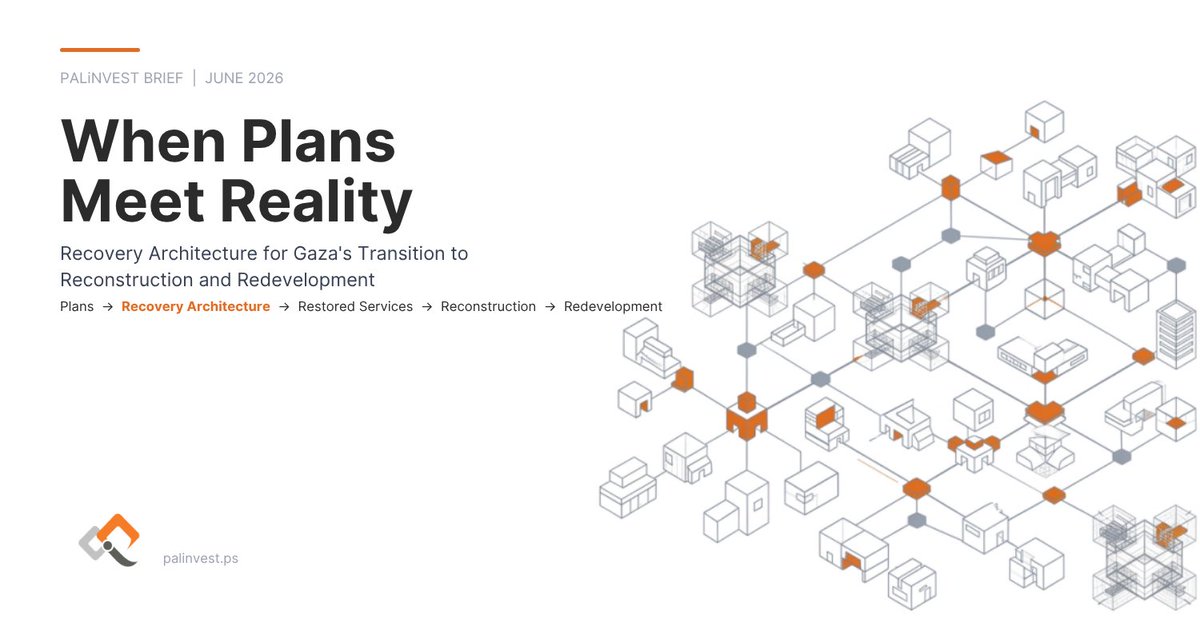
PALiNVEST’s first Brief is now published.
Gaza has a substantial planning landscape. The practical question is how plans connect to authority, access, financing, institutions and restored civilian services under real constraints.
Full Brief:
https://t.co/ObMXQNBvS3
In recovery under constraint, the unit of progress is not the announcement.
It is the civilian function restored: a clinic working, water moving, a school reopening, a market operating, or a local team carrying responsibility.
Gaza. Syria. Lebanon. Yemen. Sudan.
Different politics, same operating challenge: recovery begins before conditions are ready.
Civilian functions must return: water, health, energy, shelter, education, markets, local services.
Insight:
https://t.co/3OAsk5Vfj7
PALiNVEST works on recovery under constraint.
Our focus is the practical layer between plans and functioning systems: service continuity, local capacity, and verified results.
Recovery is not reconstruction. It begins when civilian life starts to function again.