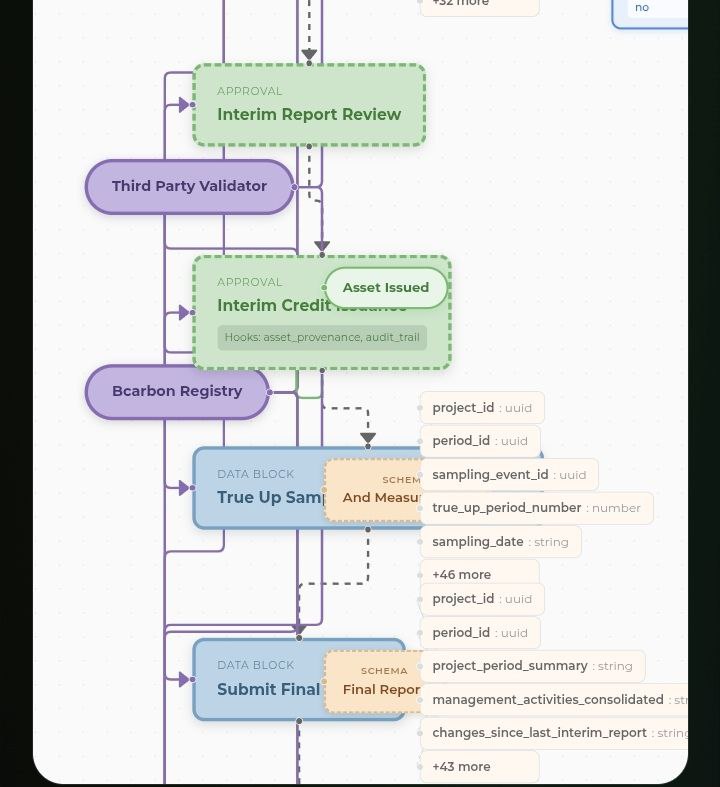
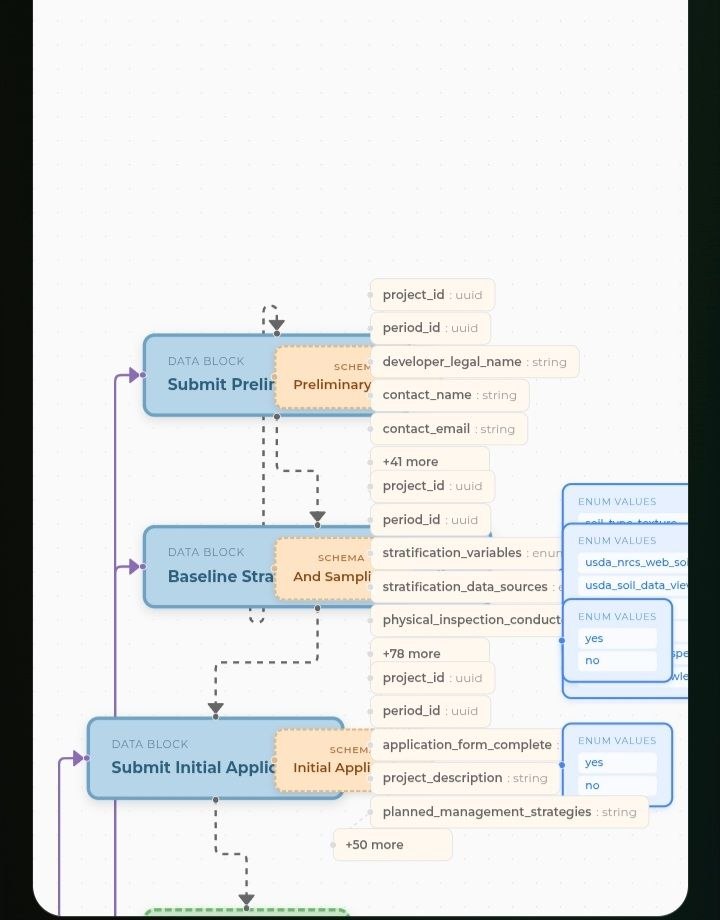
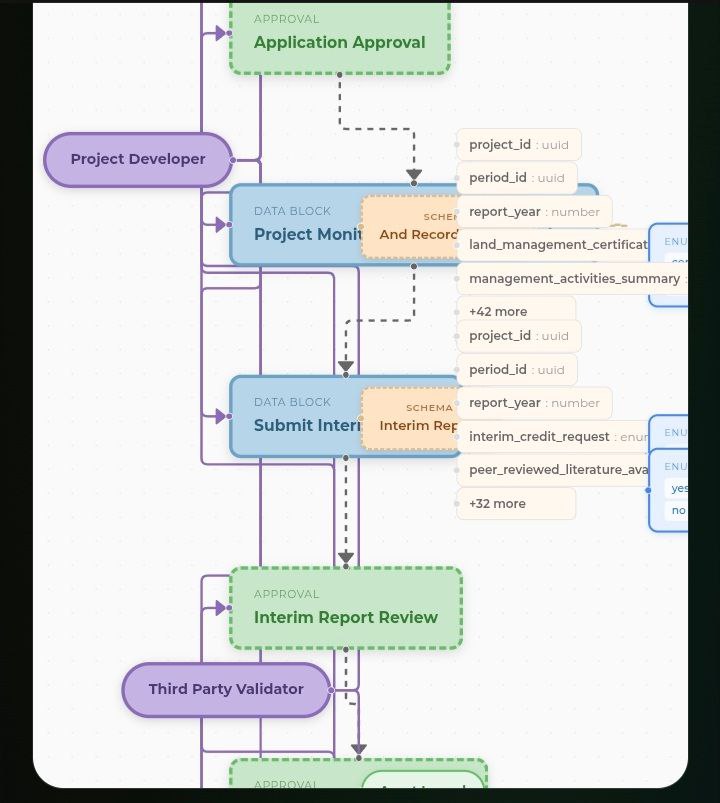
the flow is actually straightforward once you see it:
project submits data → independent verifier checks it → DOVU logs it all on-chain → credit gets minted → buyer purchases with full history attached
no middlemen hiding behind spreadsheets. the whole chain is visible.
okay so I've been thinking about the whole "AI agents doing stuff autonomously" thing and the obvious question nobody talks about enough is, how do you actually prove what happened?
like when something goes wrong, who's accountable? the agent? the company?
The real problem is trust.
Who measured the carbon?
Who verified the project?
Did the methodology change?
DOVU’s mission is simple, turn environmental actions into verifiable, queryable proof.
Because climate markets don’t scale without trust.
Bolivia has one of the highest deforestation rates relative to its forest area.
Much of the loss is concentrated in Santa Cruz, where agriculture and cattle expansion continue to push into forest frontiers.
Farmers often clear land because it’s the only viable economic option.
What happens to your car when it reaches the end of its life?
Instead of rusting in a field or being scrapped informally, the ELV Program turns old vehicles into measurable environmental impact.
Each vehicle is properly dismantled, recycled, and documented.
The long-term vision of DOVU is much bigger than carbon credits.
At its core, DOVU is building a Trust Operating System; infrastructure that allows real-world environmental actions to be:
• Defined clearly
• Verified transparently
• Logged immutably
• Monetized fairly
DOVU now sits on one of the most established global exchanges @krakenfx!
More visibility.
More liquidity.
More eyes on real-world utility.
When infrastructure becomes easier to access,
adoption has fewer excuses.
$DOVU just stepped onto a bigger stage!
DOVU AI works by reasoning over structured sustainability data, not scraping random sources or guessing.
First, a project’s process is defined clearly i.e who does what, in which order. As actions happen, they’re captured as structured, timestamped records.
In Bolivia’s Amazon, the Vaca Diez Agroforestry project proves forests are more valuable standing than cut down.
87,000+ tonnes of CO₂ sequestered.
$1M+ in verified carbon credits generated.
Protect the rainforest. Strengthen local economies. Win-win.
What happens when rigorous soil science meets global carbon markets?
@bcarboninc verification + independent scientific review + full documentation for EU, UK, Asia & North America.
High-integrity credits built for international standards.
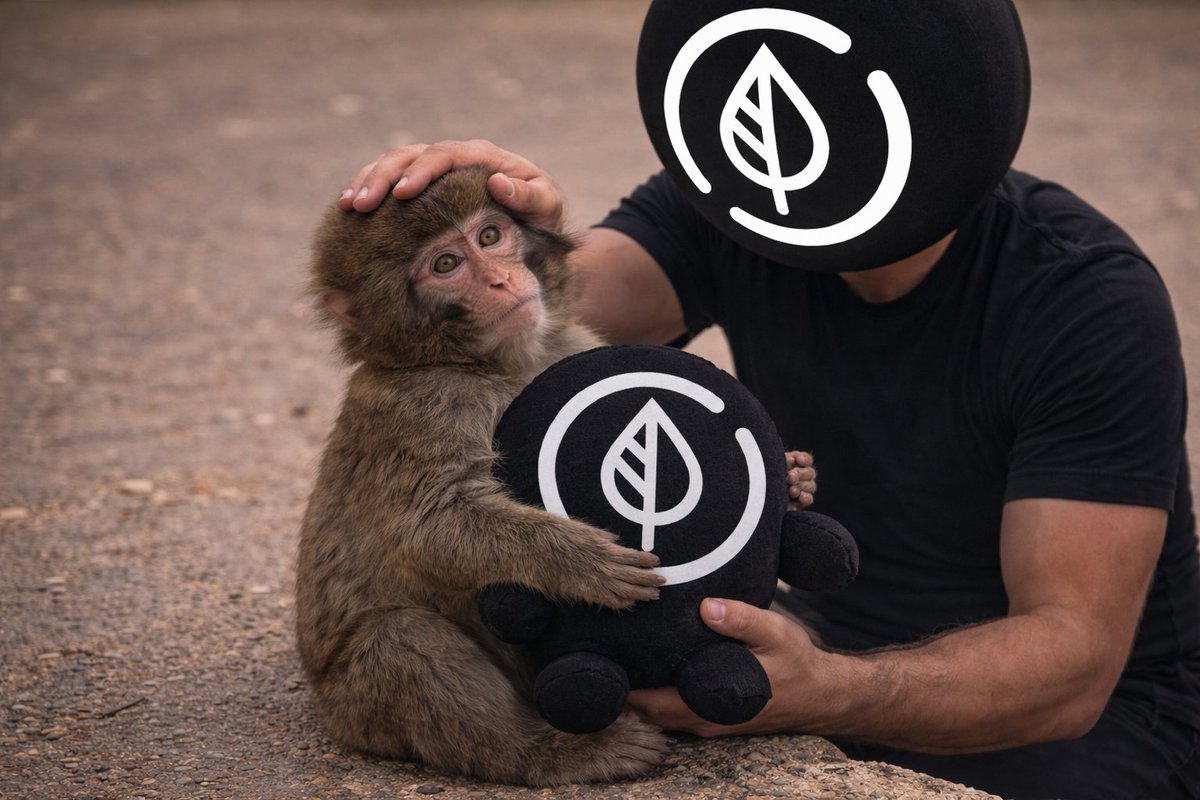
What a cute little monkey!
Forests like those in Bolivia are being restored through agroforestry systems that blend trees with farming increasing crop yields while rebuilding wildlife habitat.
When forests become economically valuable to protect, Punch won't lose his home🥺