Είχα την τιμή να συντονίσω την παρουσίαση του νέου εξαιρετικού βιβλίου του συγγραφέα Πάνου Μυρμιγγίδη,«Μπλε σκούρο 05» (εκδόσεις: Άνεμος), στην αίθουσα «Γεώργιος Καράντζας» στην #εσηεα
Gospel of the Day (Luke 4,31-37)
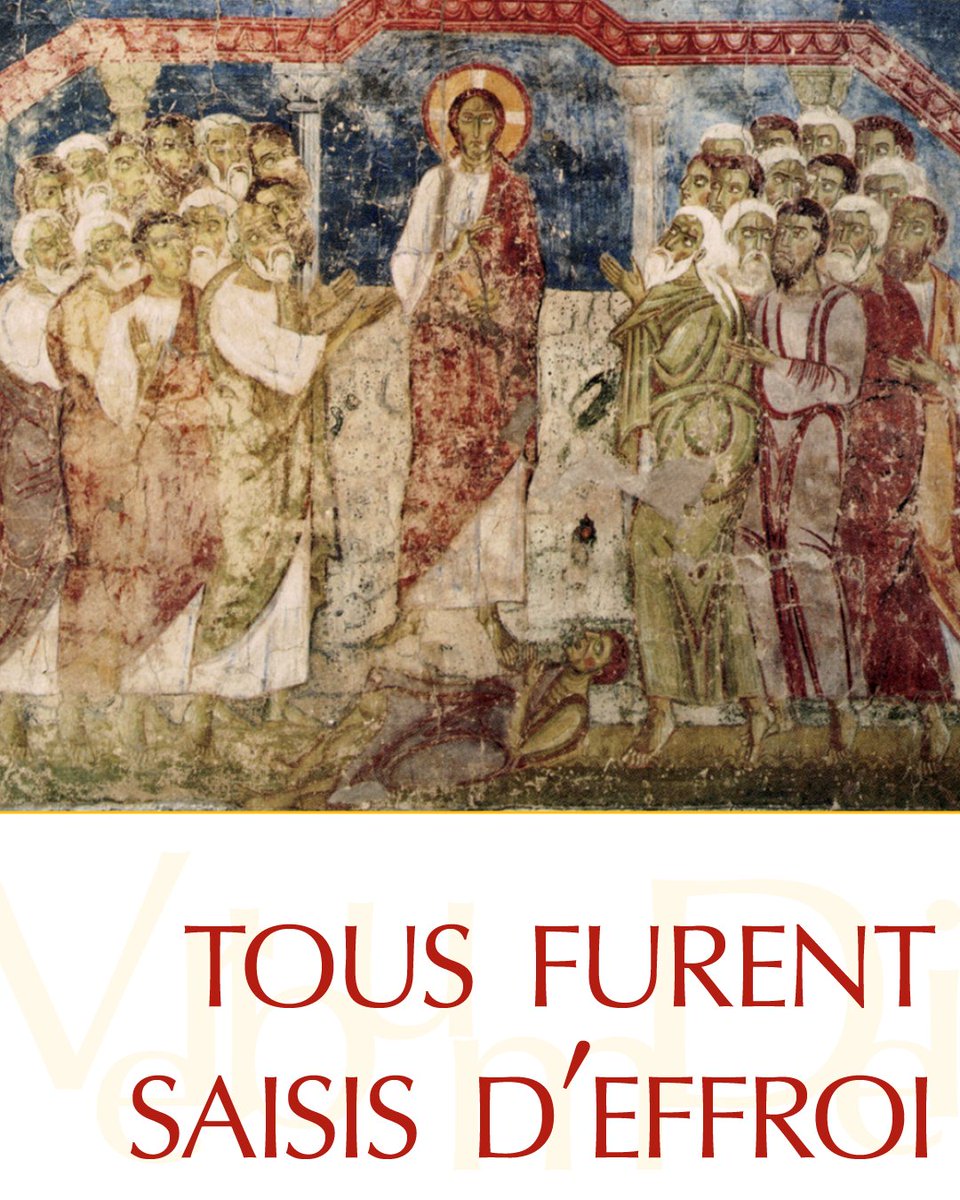
Jesus then went down to Capernaum, a town of Galilee. He taught them on the sabbath, and they were astonished at his teaching because he spoke with authority. In the synagogue there was a man with the spirit of an unclean demon, and he cried out in a loud voice, Ha! What have you to do with us, Jesus of Nazareth? Have you come to destroy us? I know who you are--the Holy One of God!
Jesus rebuked him and said, "Be quiet! Come out of him!" Then the demon threw the man down in front of them and came out of him without doing him any harm. They were all amazed and said to one another, "What is there about his word? For with authority and power he commands the unclean spirits, and they come out." And news of him spread everywhere in the surrounding region.
https://t.co/lCYyPWbtVz
In our Catholic tradition, the month of September is dedicated to Our Lady of Sorrows focusing on the profound suffering of the Blessed Virgin Mary, particularly during the Passion and Death of her Son, our Lord Jesus Christ. This devotion, rooted in Scripture and tradition, highlights the Virgin Mary’s role as a co-sufferer with Christ, often depicted with seven swords piercing her heart, symbolizing her seven sorrows.
The feast of Our Lady of Sorrows is celebrated on September 15, following the Feast of the Exaltation of the Holy Cross on September 14, emphasizing the connection between Christ’s suffering and that of His Mother.
These are the key events in the Virgin Mary’s life that are meditated upon in this devotion, as supported by Scripture and Catholic tradition:
1. The Prophecy of Simeon (Luke 2:34-35): Simeon foretells that a sword will pierce Mary’s soul due to Jesus being a sign of contradiction.
2. The Flight into Egypt (Matthew 2:13-15): Mary and Joseph flee to protect Jesus from Herod’s threat, enduring fear and exile.
3. The Loss of the Child Jesus in the Temple (Luke 2:41-51): Mary experiences anguish when Jesus is missing for three days.
4. Mary Meets Jesus on the Way to Calvary (Luke 23:27, John 19:25 context): Mary encounters her Son carrying the cross.
5. The Crucifixion and Death of Jesus (John 19:25-27): Mary stands at the foot of the cross, witnessing her Son’s suffering and death.
6. The Descent from the Cross (John 19:38): Mary receives Jesus’ body, holding him in her arms (often depicted as the Pietà).
7. The Burial of Jesus (John 19:39-42): Mary accompanies her Son’s body to the tomb, facing the finality of his death.
Devotion to Our Lady of Sorrows began in the 12th century, gaining prominence through the efforts of saints like St. Anselm and St. Bernard, and later the Cistercians and Servite Order (founded in the 13th century), who promoted meditation on Mary’s sorrows. The feast was formalized in 1423 by a provincial synod in Cologne and extended to the universal Church in 1817 by Pope Pius VII, who attributed his release from exile to Mary’s intercession. In 1913, Pope St. Pius X set the feast date as September 15.
Gospel of the Day (Luke 4,16-30)
Rolling up the scroll, he handed it back to the attendant and sat down, and the eyes of all in the synagogue looked intently at him. He said to them, "Today this scripture passage is fulfilled in your hearing." And all spoke highly of him and were amazed at the gracious words that came from his mouth.
https://t.co/kjZ78vJ7uu
Gospel of the Day (Matthew 16,21-27)
"Whoever wishes to come after me must deny himself, take up his cross, and follow me. For whoever wishes to save his life will lose it, but whoever loses his life for my sake will find it. What profit would there be for one to gain the whole world and forfeit his life? Or what can one give in exchange for his life? For the Son of Man will come with his angels in his Father's glory, and then he will repay everyone according to his conduct."
https://t.co/cxZWfERjSH
📜 Évangile du jour | Dimanche 30 août (Mt 16, 21-27)
«Jésus commença à montrer à ses disciples qu’il lui fallait partir pour Jérusalem, souffrir beaucoup (...) être tué, et le troisième jour ressusciter.»
→ https://t.co/NiIxzqYdmr
Gospel of the Day (Mark 6,17-29)
Herod was the one who had John arrested and bound in prison on account of Herodias, the wife of his brother Philip, whom he had married. John had said to Herod, "It is not lawful for you to have your brother's wife." Herodias harbored a grudge against him and wanted to kill him but was unable to do so.
https://t.co/9HTG9tUR8k
It is not those who commit the least faults who are the most holy, but those who have the greatest courage, the greatest generosity, the greatest love, who make the boldest efforts to overcome themselves.
- St. Francis de Sales
Hay una pared en Roma que destruye una idea muy extendida sobre los primeros cristianos.
En las catacumbas de San Sebastián, en Roma, apareció una inscripción que probablemente se remonta a mediados del siglo III:
«Pablo y Pedro, rogad por Víctor».
No es una inscripción medieval. No es una tradición inventada siglos después. Es un testimonio arqueológico de una comunidad cristiana de la Antigüedad pidiendo la intercesión de los apóstoles.
Y lo más interesante es que no se trata de un caso aislado. En aquella zona se encontraron numerosos grafitos dirigidos a Pedro y Pablo con peticiones como «tenednos presentes» o «rogad por nosotros».
Esto tiene una enorme importancia apologética: la comunión de los santos y la petición de su intercesión no aparecen de repente en la Edad Media.
Ya encontramos cristianos de los primeros siglos que acudían a los apóstoles y les pedían que intercedieran ante Dios.
Y hay algo precioso detrás de esas palabras.
Aquel cristiano llamado Víctor vivió hace casi 1.800 años. Su nombre quedó grabado en una pared porque alguien quiso pedir por él a Pedro y Pablo.
La fe de aquellos cristianos sigue hablando desde las piedras de Roma.
🙏✝️
Gospel of the Day (Matthew 25,1-13)
Jesus told his disciples this parable: “The kingdom of heaven will be like ten virgins who took their lamps and went out to meet the bridegroom. Five of them were foolish and five were wise. The foolish ones, when taking their lamps, brought no oil with them, but the wise brought flasks of oil with their lamps.”
https://t.co/aGkc0r4qAh
📜 Évangile du jour | Jeudi 27 août (Mt 25, 1-13)
« Le royaume des Cieux sera comparable à dix jeunes filles invitées à des noces, qui prirent leur lampe pour sortir à la rencontre de l’époux.»
→ https://t.co/N9PoCFvupg