Never miss a research paper that matters to you. Paperzilla scans arXiv, bioRxiv, medRxiv, etc., daily, classifies must-read papers, and emails you a digest.
Here we go, already a research paper that mentions @openclaw! That was fast. Paper probably written by agents? cc @steipete
https://t.co/PlH5FmCVbn
I found the paper with Paperzilla. Summary of the paper below.
I love it when a paper comes with open-source code. And in this case, even a website!
You might know the image segmentation models we had back in the day. Photo in, and a pixelated image with boundaries out.
This recipe takes that to a whole new level by using an image generator to analyze an image.
It uses an image generator to analyze an existing image by having it paint the answer. For example, it can paint all car pixels red and all road pixels blue. That color map is then decoded into object labels.
Paper and summary 👀👇
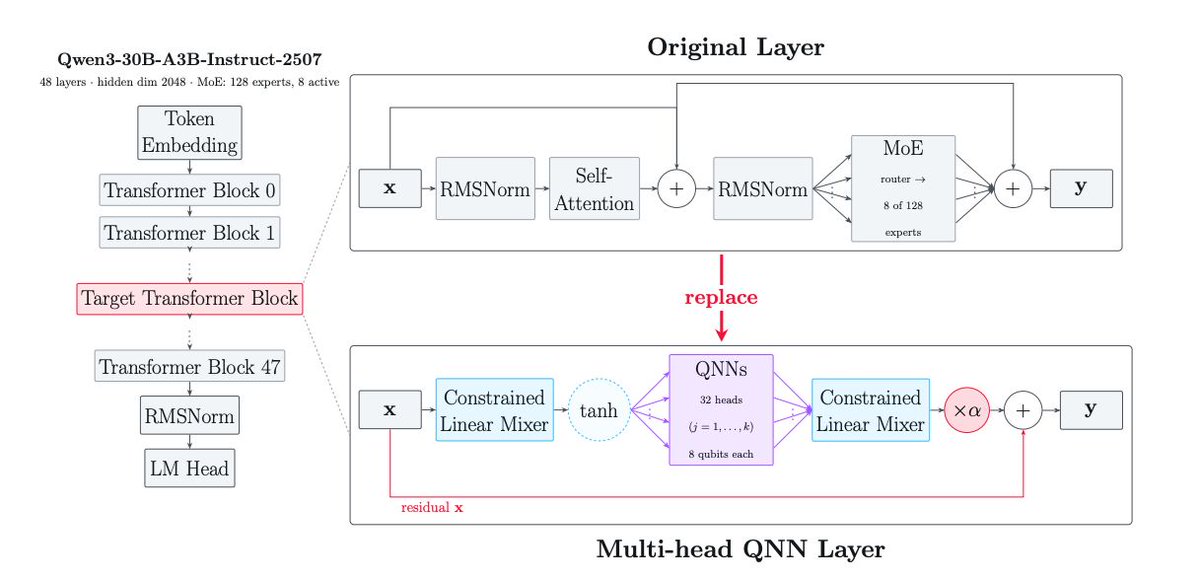
What happens if we add some quantum hardware to an LLM? Will it be faster, better, more efficient?
That is what the researchers in this study asked themselves. The result? It removes 16.33% of the model’s parameters, with roughly comparable next-token prediction performance.
I don't know enough about this to say whether we should celebrate it. But if you are into this, make sure to check out the paper 👇
Are there similarities between the cosmos and our brain?
Not really, but borrowing mathematical techniques from cosmology improved predictions of brain aging.
This paper applies mathematical models used to map the universe to human brain scans.
Researchers found that identifying web-like patterns in brain tissue improved the accuracy of predicting brain aging and detecting cognitive impairment compared to standard brain measurements.
Paper and summary👇
arXiv is not just about CS, Math, and AI. Did you know there is a category General Economics (https://t.co/1fTdyyQMYM)?
This paper showed up there in my Paperzilla feed: Global Trends and Heterogeneity in Modified Adjusted Net Savings
It tracks savings (how much is added to a country's wealth), but it subtracts some environmental factors: the use of natural resources.
As you can see, a lot changes over time, except maybe for the Nordics :)
Read it all 👀👇
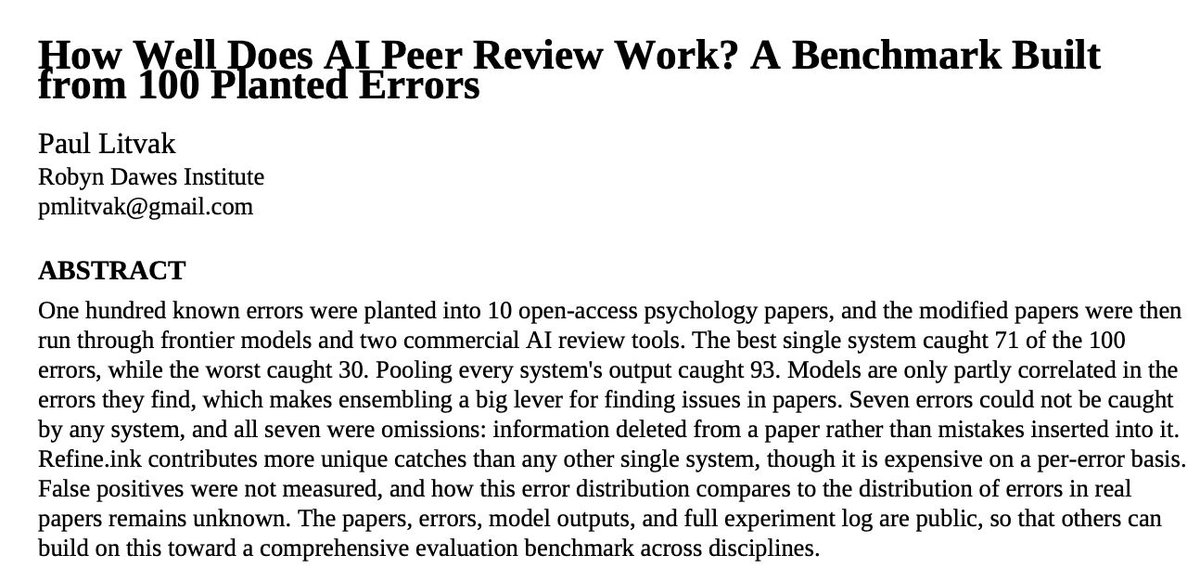
I found a very straightforward study this time: plant 100 errors across 10 papers and let different LLMs find them.
All LLMs combined found 93/100, so that is not too bad. The best-performing model, GPT-5.5 (high reasoning), scored 71%. Human peer review is still needed, it seems.
If anyone wants to try it with the latest frontier models, the benchmark is in the GitHub repo below.
Let me know how that went!
Paper source and summary 👀👇
Are you whispering to your agent? Here is something to take it a step further: no sound needed; just move your face as if you were speaking.
In this paper, the researchers tried to improve the decoding of the sensor signals by using an LLM.
Read the full paper or summary 👀👇
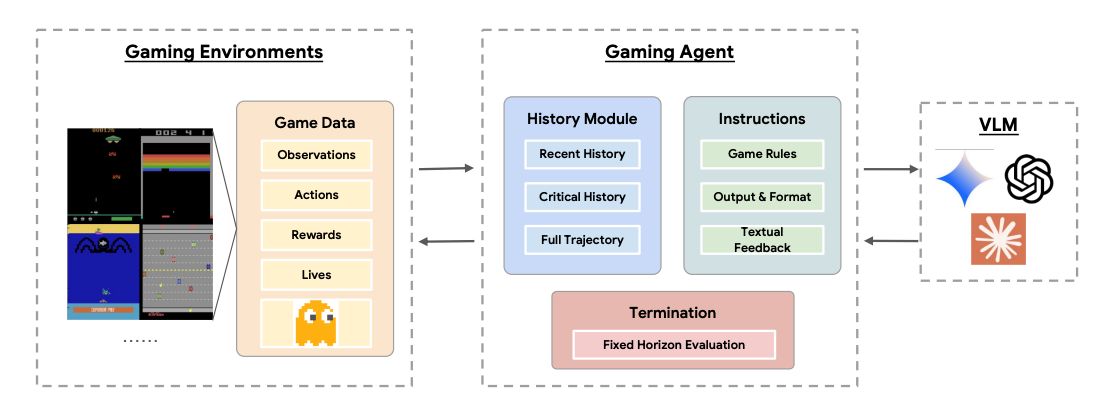
Can VLMs play Pac-Man? Or other Atari games? This paper describes AtariBench, a benchmark that evaluates how well VLMs track and understand changes in games.
If you know the story of @demishassabis, you might have guessed correctly that this paper is co-written by researchers at Google DeepMind. 👀👇
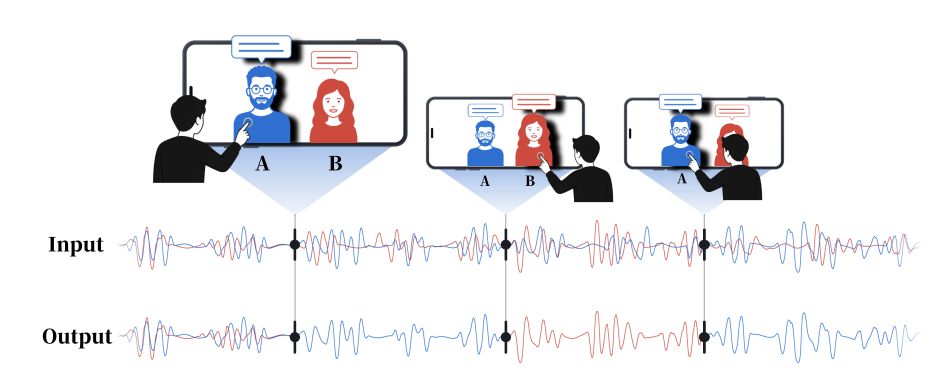
Imagine two people talking at the same time, but you want a clean audio signal from just the one you "select".
This paper describes a system that, after you select the desired speaker, extracts the correct audio using lip movements.
Not sure how useful this is, but pretty cool nonetheless. Read 👀👇
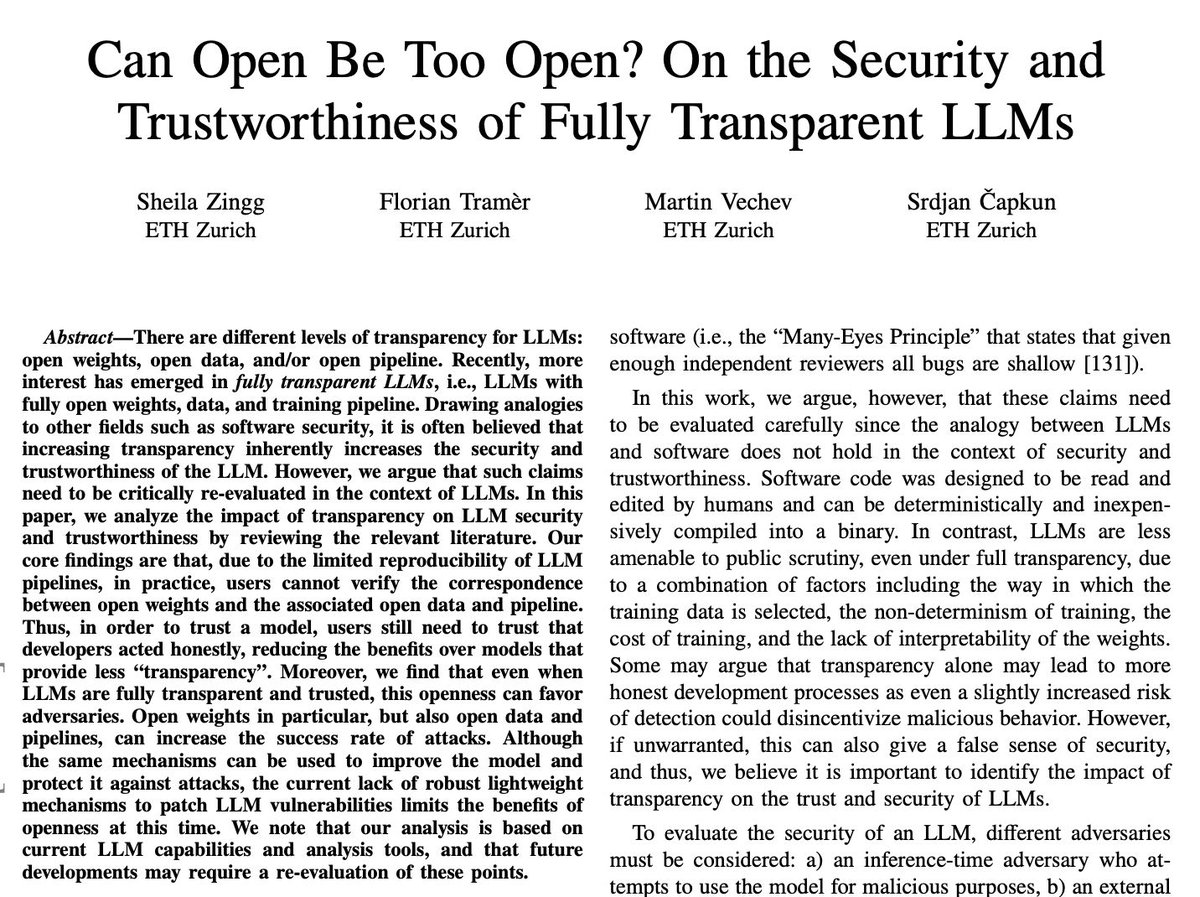
The good, bad and ugly of open-weight models:
Good: run it, study it, nobody can take it away.
Bad: attackers can fine-tune the guardrails away.
Ugly: LLMs are hard to patch and you can’t control downloaded copies.
That is the ultra-short takeaway of this fascinating paper. Link below 👇
Hey, look, preprint paper growth accelerates with the introduction of AI agents!
There is only one way to fight this: with your agent! The Paperzilla research brief exists just for that. Link in comment.
"Is the arXiv Apocalypse upon us? A break in preprint growth coincident with agentic AI"
That is the title of a new paper I found in my morning brief, so of course I had to have a closer look.
A couple of findings:
- Solo-authored papers increased by 70% in mathematics and 71% in condensed matter between 2025 and 2026.
- Submission volume in October 2026 reached 14% above the October 2025 total by the 23rd of the month.
- Preparation time for the study dropped from an estimated working week to 3.75 hours using agentic tools.
Link below 👇