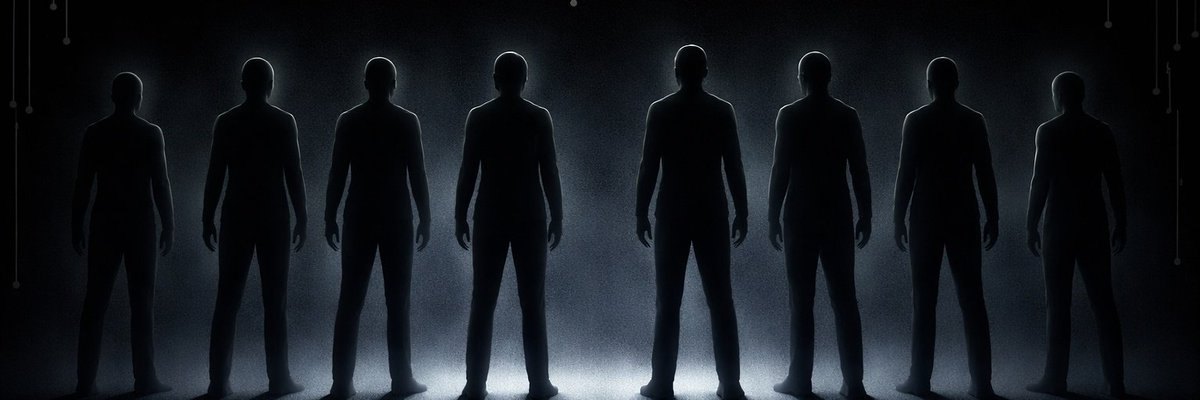
What if AI agents didn't work alone?
What if 8 of them attacked the same problem at once - in different languages, different architectures - and competed for the best solution?
So I built it.
8 parallel Grok agents. Real code. Real scoring. Real winner.
Then I thought... what if the agents could talk to each other?
So I added Swarm Chat - all 8 debate their solutions live.
Then I thought... what if you could CREATE your own agents?
So I added an Agent Tree - a neural network of custom agents that connect, communicate, and even FUSE together into hybrids.
Security + Performance = one agent that writes fast AND safe code.
This is what parallel AI looks like.
Not a pitch deck. Not a waitlist.
Live.
Everyone's talking about parallel agents.
OpenAI charges $200/mo for it.
Google teased it at I/O.
Anthropic is building towards it.
We just shipped it. Live. Right now.
→ 8 Grok agents solve your task simultaneously
→ Each writes real code: Rust, Python, Go, TS, C++, Kotlin
→ They compete. One wins. You get the best.
But we didn't stop there.
We built an Agent Tree — a living network where:
• PARALLEL is the core brain
• 8 arena agents orbit around it
• You create custom agents (Security, AI/ML, DevOps...)
• Agents FUSE together into hybrids
• Then they debate each other in a live Swarm Chat
This isn't a demo. This is the architecture of 2028.
Grok 4 Heavy utilizes a multi-agent system, deploying several independent agents in parallel to process tasks, then cross-evaluating their outputs for the most accurate and effective results.
$PARALLEL - deterministic benchmarking for generative intelligence
Submit a single prompt.
The system forks execution across 8 independent AI agents with different reasoning paths, sampling states, and optimization strategies.
Each agent produces a complete solution - not drafts, not suggestions, but executable output.
A scoring engine evaluates results using measurable criteria:
correctness
complexity
performance
token efficiency
structural quality
The evaluation layer ranks outputs and returns only the highest-scoring artifact.
No chat.
No averaging.
No subjective selection.
Parallel generation → objective evaluation → best result.
You don’t query a model.
You run a competition between minds.