Silly me, of course the badger is to blame for Btb. Whats wrong with cattle knee deep in shit, shit testing for herds, over crowding and spraying their shit far and wide across the fields. https://t.co/6bKB8r0jYN
#badgermonday
@NellyNoo8@thetimes Make sure all is in order re the will. My dad and stepmother both made wills when marrying in 1992. A later re-registering of the property in 2002 was signed by a solicitor who ticked 'joint tenants' instead of 'tenants in common'. I've lost my inheritance to her evil children.
@HedgehogCabin It's just so sad Pauly and so avoidable...😢...I can push my mower with one hand! It actually sails over the grass. I only have a small amount of grass and leave it long mostly but it isn't any more strenuous than an electric mower...😍...
Hedgehogs are solitary animals so are silent - they have no need to communicate so don't have a 'vocabulary'. Even when in pain or fear they usually suffer in silence. The only time you'll really hear them vocalise is this time of year - mating season.
And it's only the girls who talk.😁
The male approaches the female and circles her, trying to mount.
The female turns to face him, keeping her nether regions out of his reach, and makes a chuff-chuff sound, telling him she's not interested.
She'll keep this up for hours, sometimes days, until she whittles down which of her suitors is the strongest, has the most endurance and energy, is the fittest and healthiest and most determined.
She wants only the very best to be the father of her precious babies.
Only when he's proved himself to be worthy, does the female crouch down and lay her spines flat, and allow him to mate.
Inexperienced males often need to use their mouth to hold on and get into position, so this time of year you may see females with a small wound on their back. There can be more than one winner, and she'll allow other males who have made the grade to mate with her also.
So the resulting litter can be hoglets with several different fathers, producing a truly diverse and healthy gene pool.
This genetic diversity within a population allows it to adapt to changing environments and resist diseases. Just one of the reasons our humble little hedgehog has survived for over 15 million years!🥰
We all love baby animals, don't we?
They're so cute, we'd pay to see them.
That makes them a precious commodity to some.
And I mean 'commodity' - just an object that is bought and sold; used while it has worth, and discarded when they grow out of the 'cute' baby stage.
Please NEVER pay to see baby animals, anywhere.
By doing so you will be funding and encouraging behind the scenes horrific cruelty and abuse.
And when you see them online just think to yourself: Where are the mums?
How does taking baby animals from their mothers and displaying them, truthfully help 'conservation'?
This applies to all animals, but as I specialise in hedgehogs, I'll show you a prime, realtime example.
I get emails and calls every week, all along the same lines,
"My six year old just adores hedgehogs and has them on his bedding and everywhere, but we've never seen a real live one. Can we come and visit? Of course we'll give you a good donation."
So there is the market.
I always reply saying this is a hospital for sick and injured animals. They are wild, and they are nocturnal. So in their best interests the days are kept super quiet and human contact is kept to the bare minimum required to administer drugs.
So no visitors.
Then I explain what that mother could do in her own garden to truly help the hedgehogs her child is so fond of, while teaching him respect for wildlife.
9 out of 10 I never hear from again.
But there are unscrupulous people who see that market and want to take advantage of it.
They all have one thing in common - a big showy professional looking website and outwardly good reputations.
That's all part of the act.
Please don't fall for it.
If they are selling access to baby animals, however that is dressed up, they are cruel profiteers.
Below is a typical email I get, from these immoral hustlers, and my reply.
I'm posting this not only to warn good kind people who may not realise what they are supporting, but also to warn inexperienced rescues who may get similar requests.
@HedgehogCabin Happy bank holiday Pauly...🌞...Hope you manage to get at least a small amount of relax time. Always fresh water out here for any wildlife that needs it...sadly no hedgehogs...🙄...
🌻🦋🥰🦋🌻
Britain has lost around half its hedgerows since the Second World War. The wildlife that depended on them has followed a similar trajectory. 🌿
The old field boundary — a strip of blackthorn, hawthorn, dog rose, and elder two to five metres wide between cultivated ground — was not wasted agricultural space. It was a functioning ecological system that maintained pollinators, pest predators, and farmland birds across centuries of working land.
Each hedgerow is a nesting corridor for grey partridge and skylark, a foraging habitat for brown hares and hedgehogs, a site for solitary bee colonies, and a windbreak for the crops alongside it.
The field cultivated to its very edge gives the maximum return this season. It removes the populations of beneficial insects, farmland birds, and small mammals on which stable long-term production depended.
The field with a hedgerow yields a few percent less per cultivated hectare — but remains productive across decades without compensatory chemical inputs. The documented declines in grey partridge, lapwing, and skylark across the British agricultural landscape since the 1970s are directly linked to field consolidation and hedgerow removal.
Practical equivalents for the garden or smallholding:
- A strip of wildflower meadow at least one metre wide at the plot boundary
- A clump of nettles in a shaded corner as a habitat base for red admiral, small tortoiseshell, and peacock butterflies
- A native mixed hedge of blackthorn and hawthorn in place of post-and-wire fencing
- A section of uncut grass between rows of fruit trees
#HedgerowHabitat #FarmlandWildlife #NativeHedge #GardenWildlife
@HedgehogCabin That's fantastic Pauly!...😍...You absolutely deserve it!...
🌹🥰🌹... Sorry for my delayed responses to your posts. I don't always get notifications so I get behind...🥴...But I'm always here supporting you from a distance and spreading the word...🦋😘🦋
Foxes may be seen more frequently in our gardens now as mum fox, who has been confined to her den feeding her cubs round the clock for weeks, and relying on dad and other family members to bring her food, is finally free to go out and forage herself.
Foxes are true omnivores, so as well as small rodents and insects, their diverse diet includes fruits and berries.
So mum fox will eat varied foods, as well as taking some home to her babies in the den, so they experience a wide choice of nutrients and tastes.
Just as we wean our babies by putting the food we eat in a food processor, to break it down and liquify it, so she will chew up and swallow the food she collects for them.
When mum arrives home the excited cubs will lick at her lips, encouraging her to regurgitate her liquified meal for them.
Here you can see these mums are enjoying some halved apples I put out for them (yes, you know those ones we all have in the fridge, bought in a spurt of 'healthy eating' shopping and have sat there ever since).
One mum even prefers the apples to the Bonio biscuit!
Apples and pears are good occasionally, but dry cat or dog food is a great staple food to leave out as it's a safe balanced meal for every garden visitor, and will help stop hungry mums raiding the hedgehog feeders.🥰
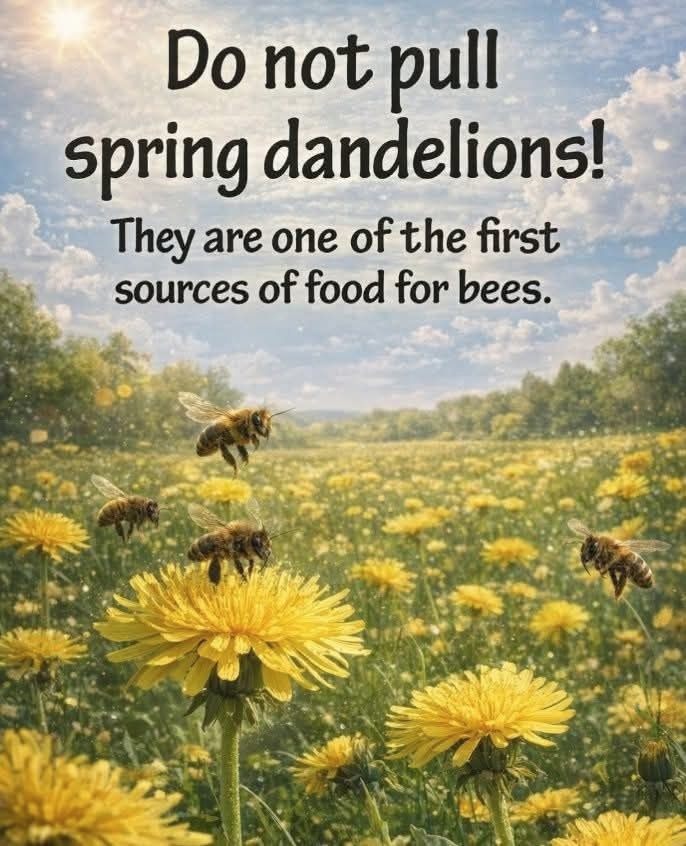
Ah, dandelions. 🌼
If only they were rare, fragile, and hard to cultivate.
Then we'd treasure them.
But because they are hardy and successful and forgiving and adaptable, we disparage them.
Consider them unworthy of our respect.
Even though they are the perfect plant - providing green all year round and cheerful flowers in the spring, are edible and highly nutritious, containing vitamins A, C, and K, along with minerals like calcium and iron, and are our precious pollinator's lifeline.
Please find a little love for these hard working flowers and leave them undisturbed, this month at least.
Please NEVER feed a daytime wildlife casualty.
I know, it's so hard not to.
When we see a suffering animal we feel a strong, innate impulse to help, and a desire to provide immediate tangible comfort; equating food with survival and care.
Feeding feels like a direct, immediate and nurturing action to alleviate suffering.
Yet it is the most catastrophically harmful thing you could ever do.
Especially hedgehogs out in the day, who will be hypothermic.
It takes a lot of energy to digest food, energy these compromised animals just don't have spare.
Every last bit of their energy is being used to maintain vital bodily functions - to keep the heart beating, to oxygenate the organs.
Forcing energy away from these critical functions for something as non-critical as digesting food will be a death sentence.
It won't be immediate, it may take hours, or a couple of days, but eventually, no matter what the experienced rescue you later take them to tries, the animal is already on the unstoppable journey into shock, aspiration, organ failure and death.
So please help in the right way.
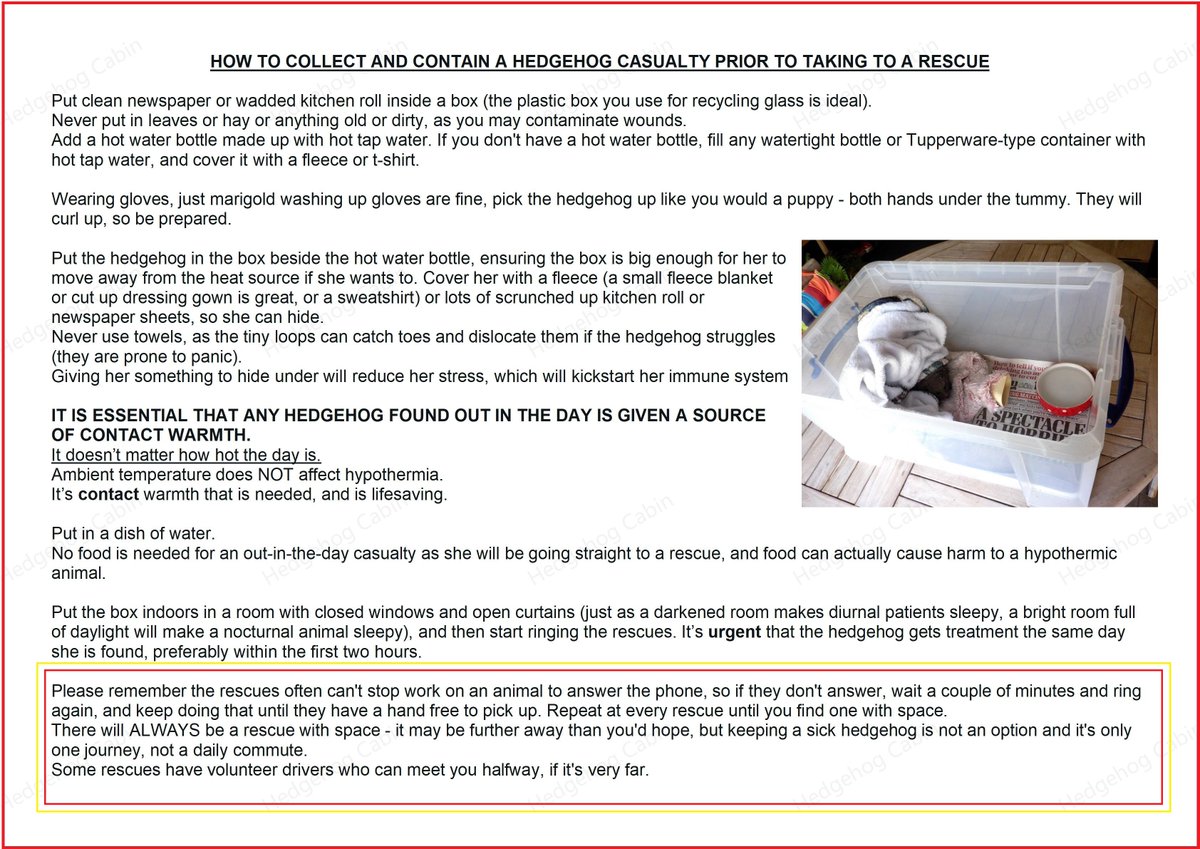
An out in the day hedgehog needs *contact* warmth, a safe indoor space away from flies, and cover to reduce their stress (please see advice below).
They are not going to die of starvation in the couple of hours between you finding them, and getting them to a rescue.😊
And please remember - any website that gives you DIY information on caring for or feeding injured or orphaned wildlife is, by default, wrong.
The ONLY right action is to get them to a good rescue (never a vet) where their complex needs can be met.
Even if you have seen this vital information before and understand it, feeding wildlife casualties is a powerful compulsion because it directly activates human instincts of empathy and compassion, often overriding the scientific advice against it.
So please remember this warning and spread it as far as you can.
Helping a wildlife casualty get to the expert treatment they need is an incredibly kind, altruistic act of great humanity. Just remember to provide them with what they need, not what you need.🥰
Baby season is upon us and sadly, once again, these poor little animals are being kept by the finders instead of being brought into a rescue to get the life saving treatment they need.
Yes they look cute, but they need an expert eye and experienced hands, not your curiosity.
PLEASE NEVER KEEP ANY WILDLIFE YOU FIND.
You aren't helping, you are just causing more suffering.
Hedgehogs are delicate little animals with very special needs, and are all too easy to kill with enthusiasm and goodwill.
Their very lives depend on you doing the right thing.
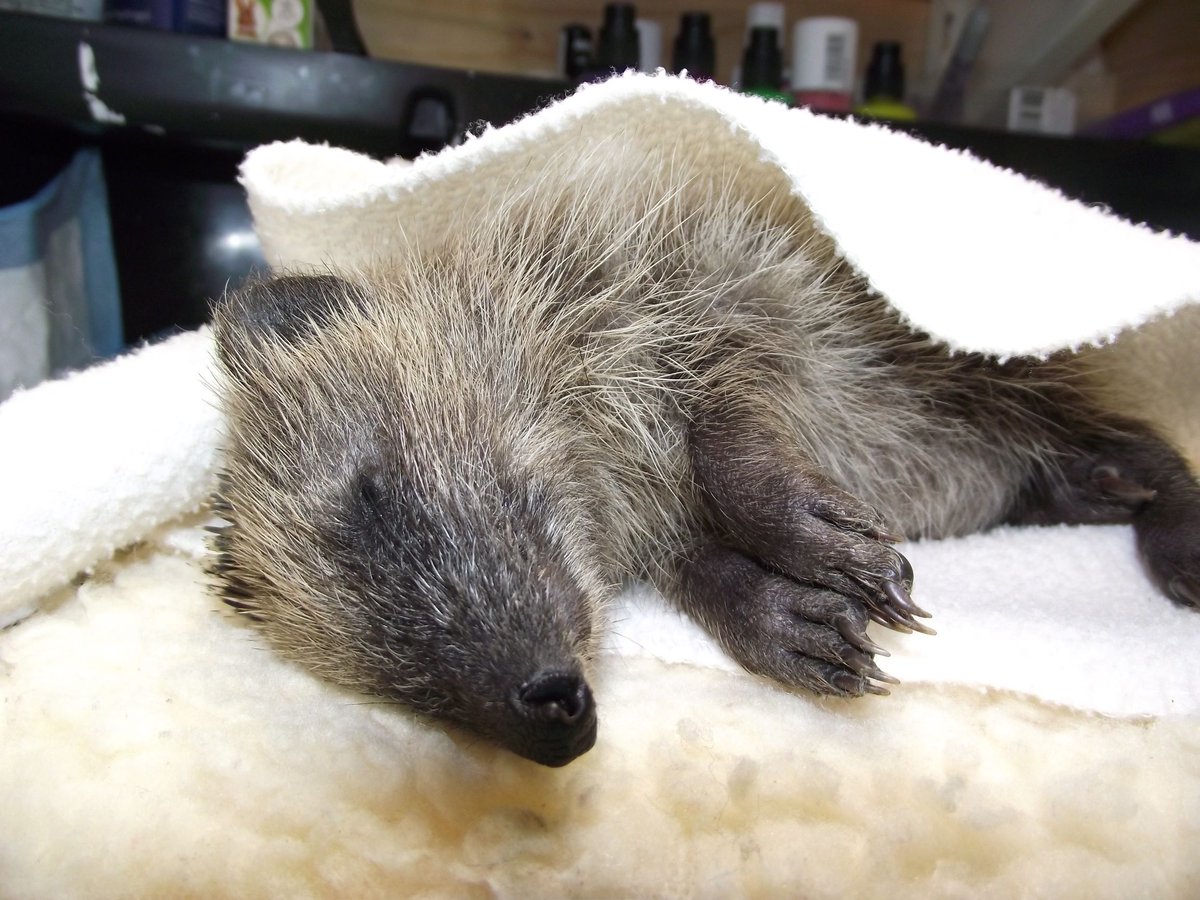
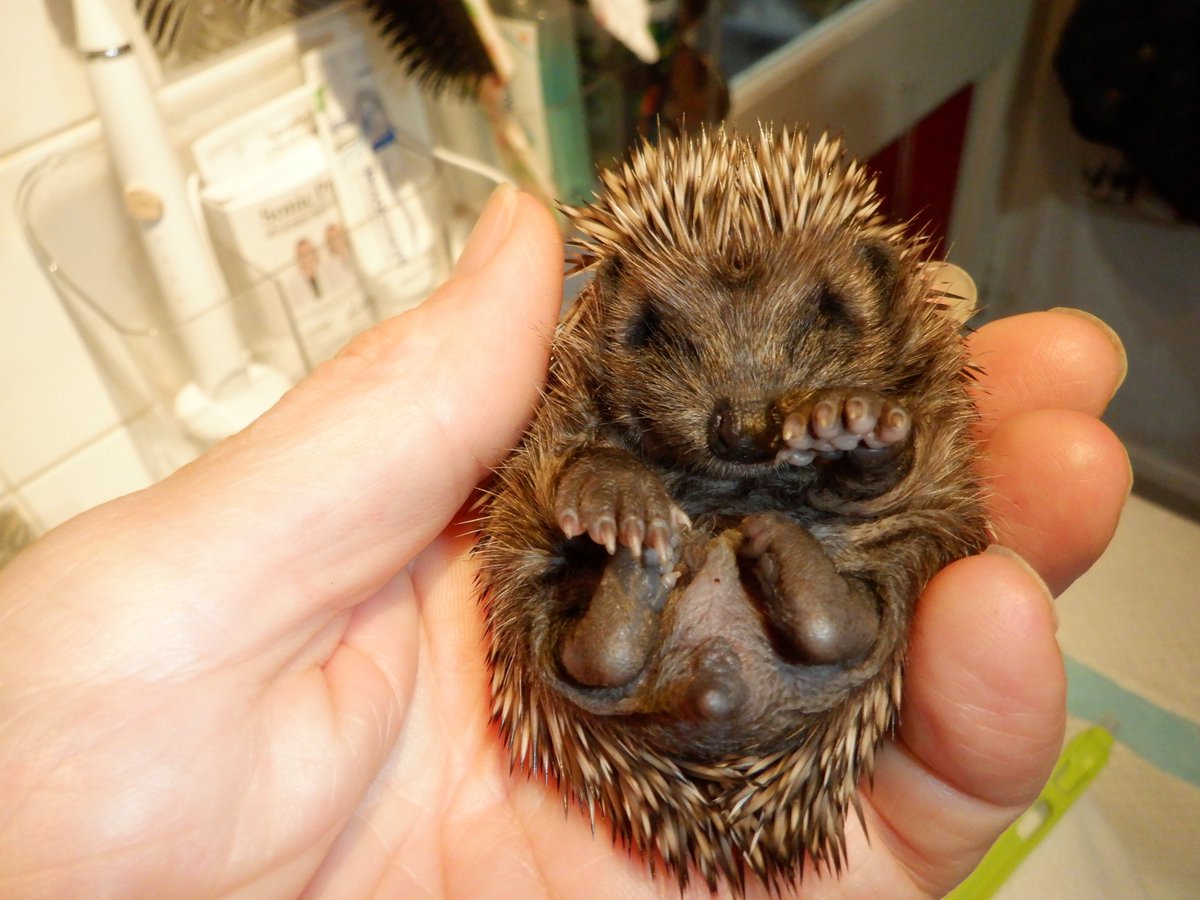
Below are images of the same hoglet, taken 10 minutes apart.
This baby and her siblings had been found crying, cold, and covered in fly eggs.
The finder proudly told me he had removed the fly eggs, and my heart dropped.
That delay, without warmth and fluids, could be fatal.
Thankfully he then brought them in before trying to feed them (and likely killing them outright).
The image on the left looks like a perfectly healthy little baby hedgehog, doesn't it?
You'd never suspect anything was wrong.
The video on the right was taken 10 minutes later, after I'd applied a substance that irritates maggots and makes them come out from where they have burrowed inside their victim.
The substance is very toxic and must be very carefully and sparingly applied by a knowledgeable and experienced rescue.
Although the finder had removed the fly eggs he could see, he had no idea there were eggs which had already hatched into maggots and had burrowed inside the poor baby's every orifice and tiny wound, out of sight.
This is just one of the many, many reasons you must never keep any wild animal you find.
They are not a DIY project, they are a precious little life that you can save, but only by doing the right thing.
Baby Izzy here and Ryder, one of her brothers, survived, and were successfully raised by the lovely Prickle Lodge, where they both still happily live today.
Tragically it was too late for her other brother.
The delay in bringing them in meant he suffered more damage, and he died shortly after arriving here.
Please put your own desires to one side and take any wildlife casualty you find straight to a rescue (never a vet).
That's what rescuing an animal really means.🥰