🧵 سایت «ایرمان زبان پارسیگ» آغاز به کار کرد. هدف این گروه آموزش و گسترش پارسیگ (فارسی میانۀ) زنده، ارائۀ عمومی متون پارسیگ با آوانویسی و ترجمهٔ استاندارد، نشر و گسترش جُنگ ادبیات پارسیگ و پژوهش بر ادب و سنن ایرانیست.
https://t.co/2XueNIX0cE
Tahmurap ud Ahrmen, ud dārišn ī ōy ī Gennāg Mēnōg ped bāragīh ped sīh sāl drahnāy. (az Jāmāspīg, VI)
تهمورس و اهرمن، و بهبارگیداشتن ِ گنامینو در درازای سی سال (از جاماسپی، ۶)
- فارسی:
تهمورس زیناوند (هوشیار) بود، که بر هفت کشور دهیوبدی (فرمانروایی) کرد. سی سال اهرمن ِ گجسته (ملعون) را همچون باره به زیر ران داشت. سی سال [اهرمن] هیچ گناه نتوانست بکند (آسیبی نتوانست بزند). [تهمورس] بسی دیو و پری زد (کشت)؛ و دیوان را از همرسشی (دیدار) و همنشینی با مردمان جدا کرد.
- Pārsīg:
Tahmurap būd zēnāvand kē-š kird dahyubedīh abar haft kišvar. sīh sāl ˟guzastag Ahrmen ped bārag humānāg azēr rān dāšt; ud sīh sāl ēc vināh nē tuvānist kirdan. u-š vas zad dēv ud perīg, u-š dēv az hamrasišnīh ud hamnišastīh ī mardōmān judāg kird.
- English:
Taxma Urupi was watchful who ruled over the seven continents (of the earth), and for thirty years he kept Aṇgra Mainyu the accursed as his steed under his thighs; and for thirty years (that fiend) could not commit any sin (wrong). He smashed the Daēva and Pairikā a lot; and he separated the Daēva from meeting and keeping company with men.
- Audio & video: Vahid
- Illustrations: @rasoulipour
- From Jāmāspīg, edited by Raham Asha.
Read it from here:
https://t.co/JuB0qnPZN8
yazem fravahr-ruvān ī Alī ī ahlav.
< پیشکش به یاد علی خمامی، به پاس مهر او به پارسیگ و دوستی او با ایرمان. >
متن نامهٔ بهرام چوبین به خسروی هرمزدان (پرویز) و پاسخ خسرو به آن، در کتاب چهارم از «تواریخ» تئوفیلاکتوس، تاریخنویس رومی (بیزانسی)، به زبان یونانی ترجمه شده. ما در ایرمان متن یونانی را به پارسیگ (پهلوی ساسانی) بازترجمه کرده، و به همراه فارسی آن در اینجا به دست میدهیم.
***
— Vahrām ō Husrav
— بهرام به خسرو
az Vahrām, yazdānfrī, vānīdār, xvarrahumand, sāstārān dušmen, vazurgān šahrab, spāhsālār ī Ērānšahr, xradīg, pādixšāy, yazdānperist, anikōh, āzād, farrox, zīr, arzumand, rāyēnīdār, dūrmenišn, carb, mardōmdōst
ō Husrav ī Ohrmazdān:
hān cē az tō nihang ud āhōgumand xrad nibišt ēstād ō dast ī man rasīd; u-m hān-z ī-t vistār-kunišnīhā abāg frestīd ēstād, nē pedīrift. cē nē fravardag ī šāhagān ud nē-z dāšnīhā ī-t frestīd hend, andar amāh nē sazāg, nāmcištīhādar ēd rāy cē-t vizīnišn ī abar xvadāyīh ī Ērānšahr anēvēnīhā [būd ēsted], ud nē vazurgān nē-z āmādagān jādag ī tō vizīr kird, [ud] ō avēšān anešnāsān ud vīsān nē peyvast hend.
ēg, dā kū andar bann ī anāgīh ī-t pidar mā ōftāy, dīdēm abar abēzag gāh bē hil, ud az gāh ī xvadāyīh bē ānām!
ud avēšān kē abāg tō hamdādestān ud aōn ceōn tō ayārvand, ōh abāz ō bann bē kunišn!
cē tū nē pādixšāy kū anākkirdārān adādestānīhā az pādifrāh ī-šān dādīdā sazed, višādan.
pas az hān ī-t ēdōn kird, pēš amāh āy dā andar zamān ō pāygōs-ē ī ped Ērānšahr šahrab bavāy.
ped drūd, hān cē-t sūdumand rāy ušiyārān bē handēš; ka juttar, ceōn-t niyāgān anast bavāy.
***
از بهرام، یزدانفری (محبوبِ ایزدان)، وانیدار (فاتح)، فرهمند، دشمنِ ساستاران (جباران)، شهربِ بزرگان، سالارِ سپاهِ ایرانشهر، آگاه، پادشای، یزدانپرست، اَنِکوه (سرزنشناپذیر)، آزاد، فرخ، زیر، ارجمند، رایانیدار (مدیر/سیّاس)، دوراندیش، نرمخو، مردمدوست،
به خسرو پسر هرمزد؛
آنچه از خِرد آهومند (ناقص) و خُرد تو نوشته شد به دست من رسید؛ و آنچه با سبکسرانگی تو فرستاده شد (–یعنی هدایا–) نپذیرفتم. چرا که نه نامههای شاهانه و نه پیشکشهای تو در کار ما سزاوار نبود، خاصه که گزینش تو بر خدایی (شاهی) ایرانشهر به راهی آشفته انجام شده است، و بزرگان و نامداران در رای دادن به تو شرکت نجسته، و به ویسان (عوام) و بیگوهران نپیوستند.
اینچنین، تا در بندِ اناگی (مخاطرات) پدرت نیفتی، دیهیم را در جایگاهان مقدس بهل و از جایگاهان شاهانه بیرون شو.
و آنان که در این گناه همداستانِ تو شدند و همچون تو گستاخی کردند، باید دوباره در بند افکنده شوند.
زیرا در نیروی تو اختیار آن نیست که بدکاران را بدون داوری از پادِفراهی که قوانین برایشان مقرر کرده رها کنی.
پس از آنکه چنین کردی نزد ما آی، تا بیدرنگ مرزبان گوشهای از ایرانشهر شوی.
بدرود، بیاندیش که چه سودمند است. و گر نه، همچون نیاکانت نابود گردی.
***
Baram, beloved of the gods, conqueror, pre-eminent, enemy of tyrants, satrap of grandees, leader of the Persian force, prudent, commanding, god-fearing, irreproachable, noble, fortunate, shrewd, venerable, politic, provident, gentle, humane,
to Chosroes the son of Hormisdas.
I have received what was written by your defective and minimal intelligence and I have not accepted what was dispatched by your brazen enterprise: for you should not have used either royal letters or gifts in dealing with us, especially since your election has come upon the Persian state in such an irregular way and the noble and distinguished did not take part in the voting along with the unranked and lower-born. So, lest you encounter your father's dangers, lay down the crown in the holy places and withdraw from the royal places, while those caught in the transgression, whose daring has been like your own, must again be put away in prison. For it is not a prerogative of your power to release without investigation malefactors from the punishment appropriate to them under the laws. When you have done this, come to us and you will at once become a regional commander of the Persian state. Farewell and think wisely of what is advantageous. Otherwise perish like your ancestor.'
*****
— pesox ī Husrav ō Vahrām
— پاسخ خسرو به بهرام
az Husrav, šāhān šāh, šahriyārān sālār, dehān xvadāy, rāmšahr, mardōmbōzāg, andar yazdān mard-ē ī ahlav ud anōšag, ud andar mardān yazd-ē ī hupēdāg, xvarrahumand, hamē pērōzgar, xvaršēd ham-āsān ud šabān cašm baxšīdār, vizīdag cihr, šāh ī kuxšišn-pahrēz ī abaxšāyišnīg, ahlavān kārframān ud Ērānšahr puštebān,
ō Vahrām ī ērān-spāhbed, amāh dōst,
amāh nišān-ē az ašmāh dūrnāmīg nēvīh vindād, u-mān ceōn ka-tān tandrustīh dānist, hušnūd būd hem. soxan ēcand andar fravardag būd hend kē az tō menišn abar madan nē tuvān. šāyed kū fravardag dibīr, ka mastōg az may ud ped būšāsp griftār, xvamn-ē ī abēkār ud halag sāxt hē.
bē, az ēd cē nūn draxtān brahm frāmuxt ēsted ud xvamnīhā abādixšāy, višēg nē būd hem.
amāh gāh ī xvadāyīh dādīhā pedīrift hem, u-mān ēvēn ī ērān-xvadāyīh nē višuft; u-mān avēšān kē az bann višād hend, abāz ō bann nē kunem, cē dāšn ī xvadāyān rāy nē sazed abzōrīhistan.
ud nūn amāh abar abāz-nē-hilišnīh ī dīdēm ēdōn ōstīgān hem kū, ka anī oxān-z bavend, ēg-imān xvadāyīh abar hān šahrān-z rāy xvāhišn baved.
amāh aōn ceōn ka xvadāyān rāy sazed nazd ō tō āyem dā-t ped soxan ayāb ped zēn hunsand kunem.
ka bahrumandīh kāmē, bē handēš abar hān cē abāyišnīg.
drūd-at bavād, kū-mān pahlum ayyār bavāy.
***
از خسرو، شاهان شاه، سالار خاندانهای شهریاری، دهانخدای، رامشهر، مردمبوختار (ناجی مردمان)، در میان ایزدان مردی اهلو و انوشه، در میان مردان ایزدی هوپیدا، فرّهمند، همی پیروزگر، آنکه با خورشید برخیزد و بر شب چشم افکند، گزیدهچهر (از تخمهٔ برگزیده)، شاهِ کوششپرهیز (بیزار از جنگ) بخشاینده، کارفرمانِ اهلوان و پشتیبان ایرانشهر،
به بهرام ایرانسپاهبد، دوست ما؛
نشانهای از دلیریِ پرآوازهتان به دستمان رسید، و چون تندرستیتان را دانستیم، شاد بودیم. یکچند سخن در نامه بود که از دل تو برنیامدهاند. شاید که دبیر نامهنویس، مست از می و گرفتار در بوشاسپ (خواب ژرف)، رویایی ناقص و یاوه برساخته باشد.
ولی، از آنجا که اکنون درختان جامه فرو افکنده و آن خوابها نامعتبر اند، ناراحت نشدیم.
ما بطور قانونی خدایی (شاهی) را پذیرفتیم و آیین ایرانخدایی (سنت شاهی ایر) را نیاشفتیم، و آنان که از بند رهانیدیم را باز به زندان نیافکنیم، زیرا که داشن (هدیه) شاهان را نسزد تضعیف و بیاعتبار کردن.
کنون چنان بر باز نهلیدن دیهیم استوار هستیم که اگر جهانهای دیگری باشند، امیدوار به شاهی بر آنان نیز هستیم.
ما چنان که شاهان را سزد نزد تو میآییم، تا به سخن یا به سلاح خرسندت (قانع) کنیم.
اگر بالیدن خواهی، بیاندیش که چه بایسته است.
درودت باد که بهترین یار ما خواهی بود.
***
Chosroes, king of kings, master of dynasts, lord of nations, prince of peace, saviour for mankind, among the gods a righteous immortal man, a god most manifest among men, exceedingly glorious, victorious, who rises with the sun and bestows eyes on the night, distinguished in his ancestry, a king who hates war, bounteous, who employs the Asones[?] and preserves the monarchy for Persians, to
Baram general of Persians and our friend.
We have received a reminder of your far-famed courage and were gladdened to know that you are in health. In your letter were set out certain words which did not spring from your heart. It was perhaps the drafter of the letter who, drunk on much wine and enfolded by unmeasured sleep, composed vain absurd dreams. But since at the present time the trees have shed their raiment and dreams are powerless, therefore we were not perturbed. We received the royal throne rightfully, we did not overturn Persian customs, and we do not attempt to imprison again those saved from prison; for it is not fitting for a king's gift to be deprived of force. Now, we are so firmly confident of not relinquishing the diadem that, even if there are other worlds, we expect to rule over those as well. We approach you as befits a king, either persuading with words or subjugating with arms. If you wish to prosper, take thought for what is needful. Good health to you who will be our best ally.'
– handarz-ē az Dēnkird ī šašum
– A counsel from Dēnkird VI
– اندرزی از دینکرد ششم
– Pārsīg:
vāzag ō ōy gōbišn kē:
vīr aōn kū frāz gīred;
ud uš aōn kū bē jōyed;
ud xrad aōn kū ōy ī did veh tuvān kirdan.
vīr kār ēd: tis xvāstan.
ud uš kār ēd: ganzvarīh kirdan ud tis ī vīr xvāhed, nigāh dāštan.
ud xrad kār ēd: vizīdārīh kirdan, ud veh ud vattar šnāxtan, hān ī veh griftan ud hān ī vattar hištan.
– English:
Speak words to one whose wit is so that accepts it;
whose intelligence is so that seeks it;
and wisdom so that they can do good to another fellow.
The work of wit is this: to want things.
The work of intelligence is this: to protect and keep the things that the wit wanted.
The work of wisdom is this: to discern, and to know good and bad, to accept the good and let go of the bad.
– فارسی:
سخن با آنکس بگو که:
بیرش چنان باشد که آن را فراز گیرد؛
و هوشش چنان که آن را بجوید؛
و خردش چنان که به دیگر کس نیکی تواند کردن.
کارِ بیر این است: چیز خواستن.
کار هوش این: گنجبانی و نگهداری کردن از آن چیز که بیر میخواهد.
و کار خرد این: گزینندگی کردن و خوب و بد را شناختن، آنِ خوب را برگرفتن و آنِ بد را هِشتن.
– nibištag ī Šābuhr ī Ardaxšērān ped sē uzvān:
pārsīg-pahlavānīg-yōnāyīg
– The Trilingual Inscription of Šābuhr (“Ka’aba i Zardušt” (ŠKZ)):
Pārsīg-Pahlavānīg (Parthian)-Greek
– سنگنبشتهی شاپور اردشیران (کعبه زردشت) به سه زبان:
پارسیگ-پهلوانیگ-یونانی
★ first passage recited in Pārsīg and Greek
———
Texts:
– Pārsīg:
an mazdesn bay Šābuhr šāhān šāh ērān ud anērān kē cihr az yazdān, pus mazdesn bay Ardaxšēr šāhān šāh ērān kē cihr az yazdān, nab bay Pābag šāh, Ērānšahr xvadāy ham.
– Pahlavānīg (Parthian):
az mazdesn baγ Šābuhr šāhān šāh aryān ud anaryān kē žihr až yazdān puhr mazdesn baγ Ardaxšēr šāhān šāh aryān kē žihr až yazdān puhrēpuhr baγ Pābag šāh, Aryānxšahr xvadāy ahem.
– Yōnāyīg (Greek):
ΕΓΩ ΜΑCΔΑΑCΝΗC ΘΕΟC CΑΠΩΡΗC ΒΑCΙΛΕΥC ΒΑCΙΛΕΩΝ ΑΡΙΑΝΩΝ Κ[Α]Ι ΑΝΑΡΙΑΝΩ[Ν] [ΕΚ] [ΓΕ]ΝΟΥC ΘΕΩ[Ν] ΥΙΟC Μ[ΑCΔΑ]ΑCΝΟΥ ΘΕΟΥ ΑΡΤΑΞΑΡΟΥ ΒΑCΙΛΕΥC ΒΑCΙΛΕΩΝ ΑΡΙΑΝΩΝ ΕΚ ΓΕΝΟΥC ΘΕΩΝ ΕΓΓΟΝΟC ΘΕΟΥ ΠΑΠΑΚΟΥ ΒΑCΙΛΕΩC ΤΟΥ ΑΡΙΑΝΩΝ ΕΘΝΟΥC ΔΕCΠΟΤΗC ΕΙΜΙ
– English:
I, the Mazdayasnian Majesty Šābuhr, king of kings of Aryans and non-Aryans, who is of the ciθra of the Yazata, son of the Mazdayasnian Majesty Ardašēr, king of kings of the Aryans, who is of the ciθra of the Yazata, grandson of (His) Majesty Pābag, king, am lord of Ērānšahr.
— فارسی:
من، بغِ مزدسن شاپور شاهان شاه ایران و انیران کی چهر از یزدان، پسرِ بغِ مزدسن اردشیر شاهان شاه ایران کی چهر از یزدان، نوهٔ بغ بابک شاه، خدای (فرمانروا) ایرانشهر ام.
— Voice & Video by Vahid.
— Read the full text here:
https://t.co/NXfYpvBbi0
«بشنِ سروانِ روانم نی همی آمد به چشم»
– گزارش یک فهلوی از «سفینهٔ تبریز» به پارسیگ با اندکی تغییر (از ایرمان)
- فهلوی:
وی ته گیانا گهانم نامه دَ چشم
مانگ و خور ژَ آسمانم نامه دَ چشم
ور دَ باغی شدین وی ته وهاران
بش سرو روانم نامه دَ چشم
اج خوشیها کِمن وی دیم ته ویند
ویش ژَ آو روانم نامه دَ چشم
آوانویسی:
wē te gyānā gehān-am nāma da cašm
māng u xʷar ža āsmān-am nāma da cašm
war da bāγ-ē šudīn wē te wahārān
buš i sarw i rawān-am nāma da cašm
aj xʷašīhā kē man wē dēm i te wēnd
wēš ža āw i rawān-am nāma da cašm
Safīna-ye Tabrīz, fol. 261r
(نک. محمدی، میثم. “دو فهلوی از سفینۀ تبریز”، زبانها و گویشهای ایرانی 9، آذر 1397، 59-69)
- Pārsīg (vizārišn):
gyān-ā abē tō gēhān-am nē hamē āmad ō cašm
māh ud xvar-z ī andar asmān nē hamē āmad ō cašm
ka abē tō an vahārān šud ham ō bāv ud gulistān
bašn ī sarvān ī ravān-am nē hamē āmad ō cašm
az xvašīhā ī-m vas vas man abē dēm ī tō dīd
vēš az āb ī ravān-am nē hamē āmad ō cašm
- پارسی:
جانا، بی تو جهانم نیامد در چشم
ماه و خورشیدِ آسمانم نیامد در چشم
گر بهاران بی تو در باغی شدم
بشنِ (=قامتِ) سرو روانم نیامد در چشم
از خوشیهایی که من بی دیم (=روی) تو دیدم
بیش از آب روانم نیامد در چشم
بنگرید:
https://t.co/Nq4xrRMyS5…
– abar pahlum ī xvadāyān
– On the best of kings
– دربارهٔ بهترین شاهان
az Dk iii 179 (M 193)
pahlum ī xvadāyān ped “jamīgīh” ud “vištāspīgīh” ī ōy ī xvadāy baved.
ped jamīgīh ēn kū baved hān ī xvadāy xvaršēd-nigerišnīgdum az mardōmān, hucašmdum abar hamāg kē-š ēr hend az veh dahišnān, ceōn Jamšēd.
ud ped vištāspīgīh ēd kū dōsttum ud pedīriftārdum pediš āstavāndum ravāgēnāgdum ī dēn māzdesn, ceōn Kay Vištāsp baved.
---
بهترین شاهان از پیِ ویژگی ”جمشیدی“ و ویژگی ”گشتاسپی“ خود چنین اند.
به واسطهٔ ویژگی جمشیدی، از آن رو که شاه در میان مردمان بیش از همه از جنبهٔ خورشید بهرهمند است؛ یعنی همچون جمشید بیشترین توجه و مراقبت را نسبت به همهٔ آفریدگان نیک در میان زیردستان خود دارد.
به واسطهٔ ویژگی گشتاسپی، از آن رو که او دوستترین و پذیراترین و آستَوانترینِ (مؤمنترین) کسان است نسبت به دین مزدیسنی و بیش از همه در رواج آن میکوشد، همچون کی گشتاسپ.
---
The best of kings are so by their Yimian quality and by their Vīštāspian quality.
By the Yimian quality, in that the king possesses the most of the aspect of the sun among men, (i.e.) he has the best regard for all the good creatures among his subjects like Yima Xšaēta.
By the Vīštāspian quality, in that he is the most friendly and welcoming towards the daēnā māzdayasni and propagates it the most, like Kavi Vīštāspa.
– āzend ī gurbag ud varāg
– داستان گربه و کلاغ
- Pārsīg:
xēšmēn gurbag-ē vāng kird, u-š ō varāg ī-š nazdīk mad būd guft kū:
“vin bēh az mānišn ī man, tū gēg-ē ī duššarm!”
varāg, kē pih ī gurbag appurd būd, cābukīhā kāmist virixtan. pas ka ēcand gām dūrdar nišast, ō gurbag āhistag ēdōn peyvāxt kū:
“carb ud huēvāz bāš ē gurbag ī nēv! tō rāy kas-iz frahang-hamuxtār nē būd ēsted? ēvēn ī soxan ā-t az kē hamuxt?!”
gurbag vas škeft sahist, u-š sar frāz burd ud guft kū:
“cē škefttum rōzgār-ē! ōy kē appurdār, ham ōy baved cāšīdār!”
frēftār varāg bālān jumbēnīd <hend> parvāzīdan ud šudan ō anī bāv rāy. bē, hamzamān, nēpayōsānīhā pih ī-š appurd būd az ōy cōng frōd kaft ud pēš pāy ī gurbag ōftād.
gurbag rōzīg ī xvēš, ruzdīhā hamē xvard dā sagr būd.
varāg-iz bištagīhā dūr šud.
ēdar, ēd ī amā āzend ō sar rasīd, bē appurdār varāg ī anāg ō xānag-iš nē rasīd!
- فارسی:
گربهای خشمگین بانگ کرد و به کلاغی که نزدیکش آمده بود گفت که:
«گم شو از خانهٔ من، تو ای دزد بیشرم!»
کلاغ که خوراک گربه را ربوده بود، به چابکی خواست که بگریزد. پس از آنکه چند گام دورتر نشست، آهسته به گربه چنین پاسخ داد که:
«چرب (ملایم، مودب) و خوشگفتار باش ای گربهٔ خوب! تو را کسی آموزگارِ فرهنگ نبوده است؟ آیین سخن از که آموختی؟!»
گربه را بسی شگفت در نظر آمد و سر فرا برد و گفت:
«چه شگفتآورترین روزگاری است! او که میرباید، همو آموزنده باشد!» (≈ همو که میرباید، از اخلاق و ادب میگوید!)
کلاغ فریفتار بالها را جنبانید برای پرواز کردن و رفتن به باغی دیگر. ولی، همزمان، به ناگهان خوراکی که ربوده بود از منقارش پیش پای گربه فرو افتاد.
گربه روزیِ خویش را حریصانه خورد تا سیر شد.
کلاغ نیز با ناراحتی دور شد.
اینجا، این داستان ما به سر رسید، ولی کلاغِ دزدِ شرور به خانهاش نرسید!
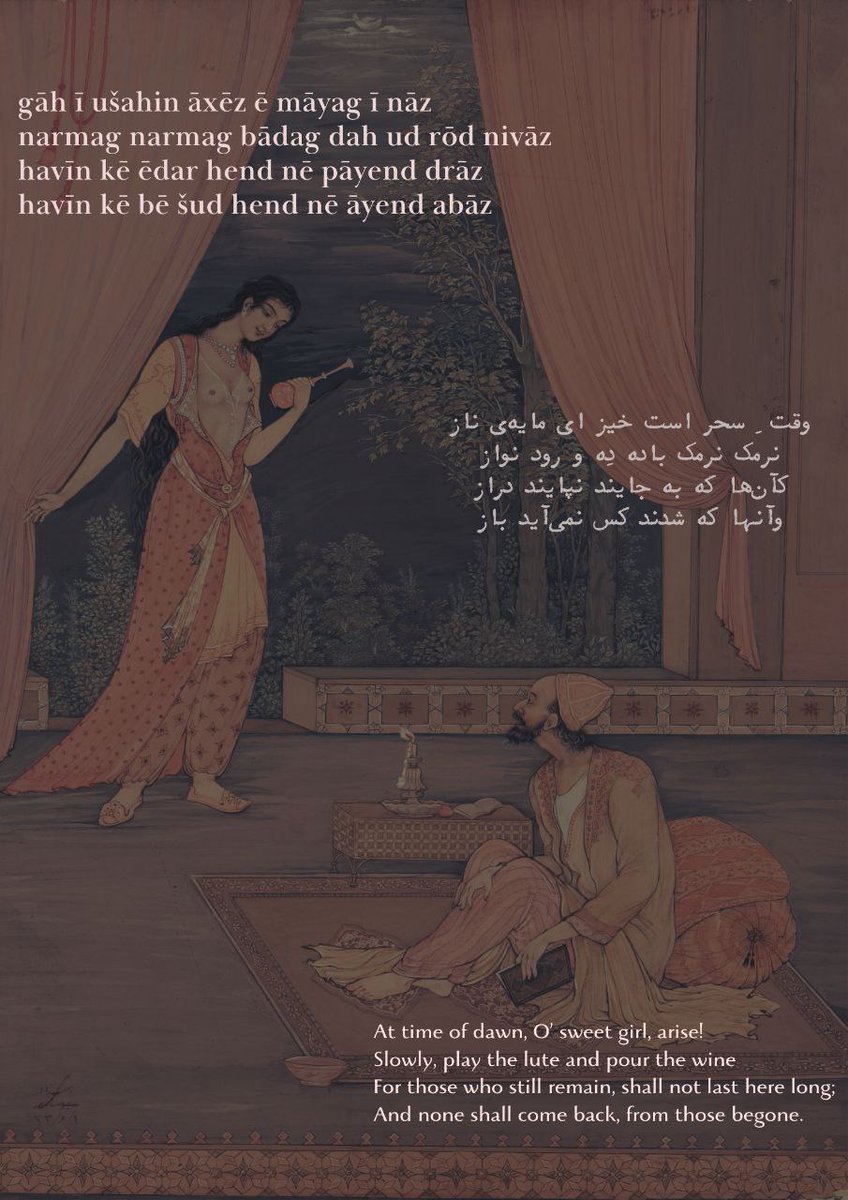
خیام به پارسیگ
”وقت سحر است خیز ای مایهٔ ناز
نرمک نرمک باده ده و رود نواز
کآنها که به جای اند، نپایند دراز
وآنها که شدند، کس نمیآید باز“
“gāh ī ušahin āxēz ē māyag ī nāz
narmag narmag bādag dah ud rōd nivāz
havīn kē ēdar hend nē pāyend drāz
havīn kē bē šud hend nē āyend abāz”
“At time of dawn, O' sweet girl, arise!
Slowly, play the lute and pour the wine
For those who still remain, shall not last here long;
And none shall come back, from those begone.”
نمونههای دیگر را اینجا مییابید:
https://t.co/YfXn6QUugI
۲۰- کارگزار دانای خوب گماردن:
چه [حاکم] به میانجی کارگزار دانا به جهانیان میپیوندد و بدین وسیله توزیع لایقانۀ آبادی و نیکی و سود ناشی از حاکمان رخ میدهد.
۲۱- با دانایی خویشتن را به پرستیدن ایزدان سپردن:
چه از آگاهانه سپردن حاکم خویشتن را به پرستش ایزدان و [مشاهدۀ] صادقانۀ پرستش توسط جهانیان، نیرومندی حکمرانی و اجرای فرمان و قانون حاکمان بر جهان، و منفعت عالی همه مخلوقات، ناشی شود.
– abar abardar-sūdīh ī az hunarān ka ped xvadāyān baved.
– On the supreme benefit of virtues when they reside in kings.
– دربارهٔ سود بزرگ ناشی از هنرها (فضایل)، هنگامی که در شاهان یافت شوند. (از دینکرد سوم)
– Dēnkird III, 133 (M 133-136)
hād. kirbag vaxšišn az hunar, hunar hān kirbag vaxšēnīdārdar ud gēhān sūttar ka abar xvadāyīh baved. ceōn cašmag ī āb ī abar kōfān sar ō daštān zeryōnīh ī xvārēnāgīh rased, ud ātaš ī abar bālist vaxšed dūr dādār peyrōgīh. ud ast az hunarān vīst-ēk ī ka ped ōy ī dahyubed baved, nēkīh ī pāyram rasišnīgdar aziš.
1- ēk huxvadāyīh;
cē dahyubedān xvarrah az huxvadāyīh ī gēhān vinārišn abar hān ī xvadāyān xvarrah.
2- ud ēk huxēmīh;
cē az frārōnxēmīh ī dahyubedān zōr vardīhed hān ī amaragānīg xēm ō frārōnīh.
3- ēk hudēnīh;
cē az hān ī dahebedān hudēnīh baved ī amaragān ō dēn ī veh.
4- ēk huxradīh;
cē az hān ī dahebedān huxradīh xūb rāyēnīdārīh ud rāyēnišnīgīh baved ī bannagān.
5- ēk huoxīh;
cē dahebedān amāvandīh abērdar az huoxīh, ud az amāvandīh ī dahebedān samīhend dušmen, pānagīhed gēhān.
6- ēk xvābarīh;
cē az xvābarīh ī xvadāyān abar bannagān dōstīh baved ī bannagān ō xvadāyān, ud ēkānagīh ī-šān andar framān kār ī xvadāyān, drust raftan ī xvadāyīh abar gēhān sūd ī dāmān aziš.
7- ēk humihrīh;
cē az humihrīh ī xvadāyān vistāxīhend dušmen ō zēnhār ud apparag ō āmurzišn, burrīhed āšōb az gēhān, cannag az xvadāyīh, bīm az mardōm.
8- ēk frāxmenišnīh;
cē az frāxmenišnīh ī dahebedān kunīhed hām-dahišn, astān bavedān, mehsūdegar.
9- ēk urvāhm-oxīh;
cē ped urvāhm ī dahebedān peyvast ēsted abardum-būzišnīh ī āvām.
10- ēk bāstānīh ayādagīh ī frasāvand-xvadāyīh;
cē az frasāvandxvadāyīh ayādīh ī ōy ī dahebed amōšišnīh baved ī dānāg dahyubed, ped bahr ī frasāvandxvadāyīh, ō xvēšīh ī afrasāvand ruvān āvurd ī az frāx ābādīh pāyramīg ud vazurg šnōm ī abar gēhān ī ōy dahebed šāyed būd.
11- ēk burzēnīdan ī hunarān;
cē az burzēnīdan ī hunarān az ōy ī dahebed, hunarān ī andar dāmān hān ī pēdāg vaxšed, hān ī abēdāg nērōgīhed pēdāgīhed, pediš gēhān virāyīhed peyrāyīhed.
12- ēk xrōhišn ī āhōgān;
cē az xrōhišn ī āhōgān az ōy ī dahyubed, āhōgān ī andar mardōmān hān ī pēdāg nirfsīhed, hān ī abēdāg zad nērōg bast baved, ud gēhān az āhōg yōšdāhrīhed.
13- ēk hamkāmagīh;
cē dahyubed ped hamkāmagīh šahr ī axvāst xvāhed, hān ī xvāst tarvēned, šnōmagān ī vazurg framāyed, ud šahr ī nōg fragāned; ud ābādīh ī hām gēhān, ud kār kišvar sūd, ud dāmān frayād, ud frašegird peyvāhišnīg kuned; ud frāzīh abar abārīg kišvar xvadāyān pēdāg būd rāy ō vazurg ud kišvarīg xīr ārāstan, ud rādīh ī hām dahišn kirdan pardazed.
14- ēk xūbframānīh;
cē gēhān vinārišn abar dād, ud dād zāyišn az huframānīh ī dahyubedān.
15- ēk ēvēnīg višāddarīh ud kišvarīg nišast kirdan;
cē az ēvēnīg višāddarīh ud kišvarīg nišast kirdan ī dahyubedān abāz pafšīrēnīh baved vināh-āhangān az vināh, ud bastagīh ī stahmagān az abādyāvandān xīr ud vizārd mustīh mustumandān, emēdvārīh ī ābādīh ī arzānīgān škōy <ī> kārframānān, ud xūb raftan ī kārīhā, ud pānagīh ī driyušān, vazurg sūd ī xvadāyīh ud gēhān ōy ī dahyubedān.
16- ēk rādīh;
cē ceōn āb urvar vaxšēnīdār, ēdōn vaxšēnīdār ī hamāg gētīg dahišn hān ī dahebedān frāx rādīh.
17- ēk bast-āzīh;
cē dahyubedān ped hān ī xvad bastāzīh tuvān āz ī amaragān gurgān ī gēhān az marnzēnīdan ī gēhān abāz dāštan.
18- ēk bīm abāz dāštan ī az xvēš, hān-z ī gēhānīgān ēk az did;
cē andar purbīmīh <ī> dām pettūdan nē šāyed.
19- ēk nivāxtan ud nazdīgēnīdan ud frāzēnīdan ī vehān;
cē az frāzīh ud abrāz ī vehān az ōy ī dahyubed, abāzīh nirfsišn ī harv vattarīh, vaxšišn abrāz ī hamāg vehīh.
20- ēk abdistan kārframān ī nēk gumārdan;
cē ped abdistan kārframān ī nēk, [dahyubed] frōd ō gēhānīgān peyvannīhed, u-š pediš sazāg baxtārīh baved ī ābādīh ud nēkīh ud sūd ī az dahebedān.
21- ēk dānāgīhā tan ō yazdānperistīh dādan;
cē az dānāgīhā tan ō peristišn ī yazdān dādan ī dahebed, ēkānagīhā peristīdan ī gēhānīgān, ō ōy ī dahebed ōz ī xvadāyīh, ud framānravāgīh, ud ravāgdādīh ī dahebedān abar gēhān, abardar sūd ī dāmān.
هاد! افزایش کرفه از هنرها (فضایل) بر میخیزد، و هنگامی که این هنرها در خدایان (شاهان، حاکمان) یافت شوند، کرفه را بیش از پیش تقویت میکند و بهطور فزایندهای به جهان سود میرساند. همانگونه که چشمهٔ آبی که بر سر کوه است، دشتها را سیراب و زنده نگه میدارد، و آتشی که بر فراز قله افروخته شده، فروغ خود را به دوردستها میتاباند.
در میان هنرها، بیستویکی هستند که هنگامی که در دهیوبد (حاکم) سرزمین حضور داشته باشند، خیر و نیکیشان در میان پایرَم (ملت، شهروندان) بسیار گستردهتر میشود.
۱- نیکخدایی (پادشاهی نیک):
زیرا فرّ دهیوبدان (حاکمان) از نیکخدایی ناشی میشود، و بنیاد جهان بر فرّ پادشاهان استوار است.
۲- نیکخیمی:
از پی راستخیمی دهیوبدان، خیم همهٔ مردم به نیکی و راستی میگراید.
۳- نیکدینی:
در پرتو نیکدینی دهیوبدان، همگان بهسوی دین بهی میگرایند.
۴- نیکخردی:
با نیکخردیِ دهیوبدان، رایانیداری (اداره) درست مردمان و تمایلشان به پذیرش حکومت فراهم میآید.
۵-نیکوجانی (نیک-اُخی مرتبط با جهان مینو، اوستا -havaŋvha):
اماوندی (زورمندی) دهیوبدان عمدتاً از نیکوجانی سرچشمه میگیرد، و دشمنان را اماوندی دهیوبد میترساند، و جهان پاس داشته میشود.
۶- بخشندگی و مهربانی (خوابری):
بخشندگی و مهربانی پادشاهان بر مردمان، مایهٔ دوستی مردمان با پادشاهان، یگانگی (وفاداری) آنها به فرمانهای پادشاهان، درست کار کردن خدایی (حکومت) در جهان و سود رساندن به دامان (آفریدگان) میگردد.
۷- خوبمهری (پایبندی به پیمان):
هنگامی که پادشاه به پیمانها و وعدههای خود وفادار بماند، دشمنان به زنهار او اعتماد میکنند و دزدان به بخشایش او دل میبندند. اینگونه آشوب از جهان، لرزه از حکومت و بیم در میان مردم بریده و قطع میگردد.
۸- تیزاندیشی (فراخمنشی، اوستا -ravō.manah):
از فراخمنشی دهیوبدان، همهٔ خلقت، چه در اکنون و چه آینده، بسیار سودمند میگردد.
۹- دلشادی (شاد-اُخی):
شادی دهیوبدان با شادی برتر دوران (≈ اوستا -baoxšnah) پیوند دارد.
۱۰- یادآوری پیوستهٔ ناپایداری و مستعجل بودن حکومت:
چه یادآوری مستعجل بودن حکمرانی از سوی حاکم باعث میشود تا حاکم دانا، به خاطر موقت بودن حکومتش، و برای روح جاودانش، از فراهم کردن رضایت همگانیِ ناشی از آبادانی فراوان، که او میتواند در جهان به وجود آورد، غافل نشود.
۱۱- بُرزیدن هنرها (گرامیداشت فضایل):
هنگامی که حاکم کشور فضایل را ارج مینهد، فضایل آشکار در میان آفریدگان افزایش مییابد، فضایل نهان نیرومندتر شده آشکار میشوند، و با آنها جهان ویراسته و پیراسته میگردد.
۱۲- نکوهش آهوها (عیوب):
هنگامی که حاکم عیوب را نکوهش کند، عیوب آشکار در میان مردمان کاهش مییابد، عیوب پنهان نیروی خود را از دست میدهند و بازداشته میشوند و جهان از <این> عیوب پاک میگردد.
۱۳- همکامگی (پیروی از خواست نیک):
با همکامگی، دهیوبد سرزمین بهدست نیامده را میجوید و آنچه را میجوید به دست میآورد؛ رضایت بزرگ به ارمغان میآورد، شهرهای نو بنیاد مینهد؛ کل جهان را آبادی میبخشد، کارهایی سودمند برای سراسر کشور انجام میدهد، به دامان (آفریدگان) یاری میرساند و فرشگرد (نوسازی) جهان را ممکن میسازد. برای نشان دادن برتری خود بر حاکمان دیگر ممالک، کارهای عمومی بزرگ سازمان میدهد و همهٔ خلقت از رادی و بخشندگی او بهرهمند میگردد.
۱۴- خوبفرمانی:
استوار ساختن جهان وابسته به داد (قانون) است و داد از نیکفرمانی حاکمان کشور سرچشمه میگیرد.
۱۵- ضیافت آیینی و نشست کشوری برگزار کردن:
بهواسطهٔ مهماننوازی آیینی و نشست کشوری ترتیب دادن حاکمان، گناهآهنگان (کسانی که به سوی گناه گرایش دارند) شرمنده میشوند، ستمگران از آزار ضعیفان بازداشته میشوند، شکایتهای ستمدیدگان شنیده و برطرف میگردد، برای شایستگان امید به سعادت، و برای کارگزاران کرامت به وجود میآید. کارها بهخوبی پیش میرود، درویشان (فقرا) پاس داشته میشوند، و حکومت و جهان و دهیوبدان به سود بسیار میرسند.
۱۶- رادی (بخشندگی):
همانگونه که آب گیاهان را میپرود، رادی گستردهٔ دهیوبدان همهٔ مخلوقان در گیتی را تغذیه کرده و رشد میبخشد.
۱۷- بستآزی (مهار حرص):
با مهار آز خود، حاکمان میتوانند آزِ همهٔ گرگان جهان را مهار کنند تا جهان را نابود نسازند.
۱۸- برطرف کردن بیم مردم از خود (حاکم)، و همچنین بیم مردمان از یکدیگر:
چرا که تحمل بیم بزرگ دام (آفریدگان) ممکن نیست.
۱۹- نواختن، نزدیک کردن و برجسته کردن نیکان:
زیرا با برجسته کردن و بالا بردن نیکان به دست دهیوبد، هرگونه شرارت عقب نشسته و کاهش مییابد، و همهٔ نیکیها افزایش یافته و بالا میروند.
soxan ī Freiman ped pārsīg andar jašn ī hazārsālagīh ī Firdōsī (1303 Y.)
خطابهٔ الکساندر فریمان در جشن هزارهٔ فردوسی (۱۳۰۳ یزدگردی (۱۳۱۳ هجری))
Alexander Freiman's speech in Pārsīg on the occasion of the Ferdowsi millenial celebrations (1934 A.D.)
– Pārsīg:
ped uzvān ī pārsīg ī imrōzīg soxan guftan ō man āsān nēst ud xvāhišn kunam kū-m framāyend kū ped uzvān ī pahlavīg soxan ēcand bē gōbam.
amāh xvarāsān-šnās ī zamīg ī Pondīg az Leningrād ud Moskō ud Tefilīs āmad hem dā Ērānšahr, dā andar Ērānšahr ped yazišn ī hazār-sālagīh ī Pardēsīg bavem.
u-mān imrōz abāg bay ī xvadāy Rezā šāh Pahlavīg šāhān šāh ī Ērānšahr ud dastvarān ud vazurgān ī dōlat ud nimāyendagān ī mardōmān ī Ērānšahr ud vas xvarāsān-šnāsān kē az haft kišvar āmad hend, ō xāk ud nām ī pāk ī Pardēsīg namāz burd ud drūd ud āfrīn guft.
anōšag bavād ruvān ud nām ī pāk ī Pardēsīg jāyēdān!
ēdon bavād, ēdōndar bavād!
- فارسی
به زبان پارسی امروزی سخن گفتن برای من آسان نیست و خواهش میکنم مرا بفرمایند که به زبان پهلوی (پارسیگ) چندی سخن بگویم.
ما شرقشناسان سرزمین پُنتُس (کرانههای دریای سیاه) از لنینگراد و مسکو و تفلیس به ایرانشهر آمدهایم تا در ایرانشهر در جشنِ هزار سالگی فردوسی <حاضر> باشیم.
امروز ما همراه بغ خدایگان رضا شاه پهلوی، شاهان شاه ایرانشهر (ایران) و دستوران و بزرگان دولت و نمایندگان مردم ایرانشهر و بسیاری شرقشناسان که از هفت کشور (سراسر جهان) آمدهاند، به خاک و نام پاک فردوسی نماز برده و درود و آفرین گفتیم.
انوشه باد روان و نام پاک فردوسی <تا> جاودان!
ایدون باد، ایدونتر باد!
– English:
It is not easy for me to speak modern Persian, and I ask that you allow me to say a few words in the Pahlavi (Pārsīg) language.
We orientalists of the lands of the Black Sea, have come to Ērānšahr from Leningrad, Moscow and Tbilisi to attend the Ferdowsi millenial celebration in Ērānšahr.
Today with His Majesty Reza Shah Pahlavi, the king of kings of Ērānšahr (Iran), and the ministers and dignitaries of the government and the representatives of the people of Ērānšahr, and many orientalists who have come from the seven climes, we saluted the pure soil and name of Ferdowsi and made praise and greetings.
May the soul and name of Ferdowsi be immortal forever!
May it be so, May it be more so!
——
Recitation: Parsa
Video: Unknown
- abar ebgad ī tāzīgān, az Bundahišn
- On the onslaught of the Arabs (Muslims), from Bundahišn
- دربارهٔ ابگد تازیان (مسلمین)، از بندهش
– Bd. 33.25-27 (/Bd. 216)
ud ka xvadāyīh ō Yazdegird mad vīst sāl xvadāyīh kird, ēg tāzīgān ped vas-maragīh ō Ērānšahr dvārist hend. Yazdegird ped kārezār abāg avēšān nē škēbīd, ō Xvarāsān ud Turkestān šud, asp ud mard ud ayyārīh xvāst, u-šān ānōh ōzad.
pus ī Yazdegird ō Hindūgān šud ud spāh ud gund āvurd, [bē] pēš az āmad ī ō Xvarāsān uzīd. hān spāh ud gund višuft ud Ērānšahr ped tāzīgān mānd. u-šān hān ī xvēš dād ī agdēnīh ravāgēnīd, ud vas ēvēn ī pēšēnagān višōbēnīd, ud dēn ī mazdēsnān nizārēnīd, ud nasā-šōyišnīh ud nasā-nigānīh ud nasā-xvarišnīh ped kird nihād.
az bundahišn dā im rōz anāgīh az ēn grāndar nē mad; cē duškunišnīh avēšān rāy hēz ud avīrānīh ud must-kunišnīh ud vad-dādīh, ud vad-dēnīh rāy sīz ud hēz ud abārīg anāgīh mehmānīh kird ēsted.
چون شاهی به یزدگرد رسید بیست سال فرمانروایی کرد، پس تازیان (مسلمان) به شمار بسیار به ایرانشهر یورش آوردند. یزدگرد به کارزار با ایشان نشکیبید، به خراسان و ترکستان رفت، اسب و مرد و یاری خواست، و آنجا کشتندش.
پسر یزدگرد به هندوستان رفت و سپاه و گُند گرد آورد، [ولی] پیش از آمدن به خراسان درگذشت. آن سپاه و گُند آشفت و ایرانشهر بدست تازیان ماند. ایشان آئین بددینی خویش را رواج دادند، و بسیار آئین پیشینیان را آشفتند، و دین مزدیسنان را نزار کرده، و نَساشویی (مردهشویی) و نَسانِگانی (تدفین) و نَساخوری (مردهخوری) را صواب کردند.
از بندهش (آغاز خلقت) تا امروز، مصیبتی از این گرانتر نیامده است؛ چرا که بخاطر بدکرداری ایشان، خشکسالی و ویرانی و استبداد و بیداد، و بخاطر بددینیشان، سیج (بلا) و خشکسالی و بسی مصیبت دیگر در جهان مهمان شده است.
- English:
It is fitting to proffer gifts to the king on (the feasts of) Mihragān and Nōgrōz, for these two mark the seasons of the year. Mihragān marks the coming of winter and the cold season; and Nōgrōz announces the coming of summer and the hot season. But for Nōgrōz there are properties that Mihragān lacks, such as welcoming the (new) year, releasing the tax, appointment and substitution of the employees, coining the drachma and denarius (coins), cleaning the fire-temples, sprinkling of water, consecrating sacrifices, founding of houses, and other things of this kind. For this, Nōgrōz is superior to Mihragān.
It is fitting that the king takes gifts from the nobility and the general people. And their custom was that if someone had a high position, they would gift whatever of their possessions that they loved most. If they loved (deer’s) musk, they would gift musk and not anything else; if they loved amber, they would gift amber. If they were a possessor of dresses and garbs, they would gift dress and clothing. If they were one of the brave and cavalrymen, according to custom, they’d gift a horse, or a lance, or a sword. If they were a bowman, according to custom, they’d gift an arrow (and quiver). If they were rich, according to custom, they’d gift gold or silver. If they were an employee of the king, and they had remaining tax from last year, they’d gather that tax, put it in a bag of Chinese royal silk, with silver string and silk bind and amber sealing, and would send it to him. And between the employees (of the court) they’d do so if they wished to decorate their expenses with virtue, or their good actions with virtue, or repay a debt.
The poet gifts poems, the orator the sermon, the confidant an expensive and rare gifts and first-fruit.
The queens of the king and their servants proffer what they love and esteem the most – as was told of men above.
Between the queens of the king, if there is one who had a servant and knew that the king desires her and would be soothed with her, then she’d be gifted to him in the perfect manner, best regalia and finest garment. If she’d do so, it is fitting that the king esteems her between the queens, gives her a high rank and increases her respect, for the king must know that (the queen) placed the king before herself, and gave to him something that would not have been generosity if she kept for herself, and generously gave him what not many women, but few amongst them, would give willingly.
The worth of the gifts given to the king by courtiers and nobles were justly measured. If their gift was worth more than a thousand (drachma) it would be recorded in the Special Archive. If the owner (/giver) of that gift would desire a favor, or goes toward profit, and needed wealth in case of an incident, or began building a house, or wished to throw a party, or host the matrimony of their son, or send their daughter to her husband’s house, their gift would be observed as was recorded in the Archive -There was a man employed who authenticated and kept such and alike cases; so if the gift was worth a thousand (drachmas), then two thousand (drachma) was given to them so they’d use it for the needs.
If a man had gifted an arrow, or one drachma, or an apple, or a citron, that gift would also be recorded in the archive, and the king would be alerted if one day an accident befalls that man, thus the king must help him. Whether he was a cavalryman, a courtier or a preacher, then the king would be sent a message that the man had an arrow, a drachma, a citron or an apple recorded in the archive. The king would order the citron to be carefully taken and filled with denarius coins and be sent to him, and the same (he would say) be given to an apple-giver as a citron-giver. But for the arrow-giver, the arrow –with his name on it- would be taken out of the treasury, put in the ground, and around it be put garments of the king and other dresses until it reached exactly the arrow’s tip, then the owner would be summoned and all those garments were given to him.
Whoever gifts something to the king on Nōgrōz and Mihragān, small or big, little or much, and does not find rewards from the king, either for remedying misfortune, or exercising obligations, must go to the king’s archive and note himself for negligence of keeping alive custom and preserving the connection of law (and religion), and if he had been negligent incidentally, or abandoned it deliberately, then according to the king’s custom he’d be deprived of his income for six months, and if he had an enemy, it would be given to him. So that no harm is done to the king, nor any ruin to kingship.
Ardašēr son of Pābag and Vahrām Gōr and Husrō Anōšagruvān ordered that on Mihragān and Nōgrōz every garment in the treasury be brought out and distributed between the king’s relatives and nobles, also between the other people, according to their rank.
And they said thus: In winter the king is needless of summer garment, and in summer of winter garment. And hiding clothes in the cabinet is not the character of rulers, if no they would be equal to the masses in behavior.
On the day of Mihragān, the king wears a new dress made of marten fur and silk of Vaš, and woven with two woofs (with silk warp and cotton woof). And then he distributes the summer garments as said above.
When it’s Nōgrōz, he wears a light and soft dress, and orders to distribute the winter garments.
— dāšnīhā ī Mihragān ud Nōgrōz (az Tāgnāmag)
— The Gifts of Mihragān & Nōgrōz (From Kitāb al-Tāj)
— داشنها (هدایا) مهرگان و نوروز (از کتاب التاج، منسوب به جاحظ، خود برگرفته از متنی پارسیگ)
در «کتاب التاج» که به دست یک دبیر پارسی در سدهٔ هشتم میلادی نوشته شده (و به اشتباه به جاحظ منسوب است)، گزارشی درباره پیشکش داشنها (هدایا) به شاه در روز جشنهای مهرگان و نوروز مییابیم. این متن عربی خود ترجمهای از متنی پارسیگ از زمان ساسانیان است.
در اینجا بازترجمهٔ آن به پارسیگ (از رهام اشه) و نیز ترجمهٔ فارسی و انگلیسی را میبینید.
پیدیاف کل کار را، به همراه متن عربی، در لینک زیر مییابید.
به امید نوروزی بسیار پیروز برای ایران و ایرانی!
https://t.co/S5u9aGXUv8
- Pārsīg:
ped Mihragān ud Nōgrōz sazed ō šāh (xvadāy/išxan) dāšn frāz burdan, cē ē do, do āvām ī sāl daxšagēnend. Mihragān nimāyed abarrasišnīh ī zimestān ud āvām ī sard; ud Nōgrōz nivēyened frāzāyišnīh ī (hāmin ud) āvām ī garm. bē Nōgrōz rāy kār ud dādestān andcand ast ī Mihragān rāy nēst, ēdōn ceōn pedīriftārīh kirdan ī sāl, ud višādan ī harāg, ud gumārdan ī kirdārān ud guhrīg kirdan, ud zadan ī drahm ud dēnār, ud pākīzag kirdan ī ādurān, ud peššixtan ī āb, ud pārag yaštan, ud bun abgandan ī xān ud mān, ud abārīg ī az ēn šōn. ēd rāy Nōgrōz abar az Mihragān.
sazed kū šāh dāšn stāned az vāspuhrān ud amaragān. u-šān ēvēn ēd kū harv kas hān xvāstag ī xvēš frāz bared ī-š vēš dōšed ka-š gāh abarīg baved. ka mušk dōšed mušk frāz bared ud nē anī tis; ud ka ambar dōšed, ambar frāz bared; ud ka peymōzan ud jāmagdār, peymōg ud vastarg frāz bared; ud ka mard-ē ast andar gurdān ud asvārān, ped ēvēn asp frāz bared ayāb nēzag ayāb šamšēr; ud ka kamāndār, ped ēvēn tigr ud kantigr frāz bared; ud ka xvāstagumand, ped ēvēn zarr ayāb asēm frāz bared; ud ka ēk az kirdārān ī išxan, u-š māndag ī pārsāl pardaxtan abāyed, māndag gird kirdan ud andar hambān ī parniyān cīnīg kirdan ped bann ī asēmēn ud vannag ī abrēšumēn ud muhr ī ambarēn, ā-š aviš frestīdan. andar kirdārān ōy kē kāmed xvad ped hunar ī-š hu-uzēnagīh peyrāstan ayāb ped hunar ī-š hu-kirdārīh ayāb tōzišn ī-š zēn, ēdōn hamē kuned.
srōdbar srōd frāz bared, ud soxangar soxan, ud hamnišast dāšn grān ud nē-dīdag ud zeryōn ī nōgbar.
bānūgān ī šāh ud peristārān ī ōy ō šāh hān frāz barišn ī-š vēš dōšend u-š vehdar dārend –hān ceōn azabar abar mardān guft. zan-ē andar bānūgān ī šāh ka-š peristār-ē ast ud dāned kū xvadāy rāy abar ōy ārzōg ast ud pediš rāmišnīg baved, ēg-iš ped bavandag dīdišn ud abardum peyrāyag ud pahlum brahmag aviš frāz barišn. ka ēdōn kuned, sazed kū-š xvadāy andar bānūgān frāzdar dāred, u-š gāh vāspuhragān dahed, u-š burzišn abzāyed, cē xvadāy abāyed dānistan kū hān zan xvadāy rāy az xvad vidašt, u-š baxt hān ī pediš xvēštan rād nē, u-š ped rādīh dād hān ī bē andak zanān enyā ped kām nē dahend.
darīgān ud vāspuhrān ka dāšn ō šāh frāz barend vahāg-išān ped peymān arzēnend. ka dāšn cand arz bēvar vahāg arzed ped dīvān ī vāspuhragān nibēgēnend. ud agar xvēšdār (ī hān dāšn) rāy cašm ō āyaft baved, ayāb ped pay ī sūd burdan baved, pas agar-š ō xvāstag niyāz ōftād hān ī ka-š pedyārag-ē bē jahed, ayāb ka-š xān ud mān-ē dištan ped dast gīred, ayāb ka-š kāmād sūr-ē virāstan, ayāb ka-š abāyād myazd ī kadagxvadāyīh ī pusar ī xvēš rāyēnīdan ayāb duxt ī vayūdag ō mān ī šūy vazēnīdan, ēg xvāstag ī ōy ped dīvān andar nigerānd —kas gumārd ēsted kē ēn ud hāvand hamāg vizurd nibēsed ud dāred—; pas agar vahāg ī dāšn bēvar arzed, ā do bēvar ō ōy bē dahend kū dā ped kār ī-š niyāz zaned.
ka mard-ē tigr-ē frāz burd būd, ayāb drahm-ē, ayāb sēb-ē, ayāb vādrang-ē, ud ē-z rāy frāz burd būd cē-š ped dīvān nibīgēnīd hād ud xvadāy āgāhēnīd hād rōz-ē rāy ka-š pedyārag-ē jast baved. pas xvadāy abāyed frayādēnīdan, agar ōy asvār, ayāb darīg, ayāb viyāxan, ā ō xvadāy peygām barend kū ōy rāy andar dīvān tigr-ē ast ayāb drahm-ē ayāb vādrang-ē ayāb sēb-ē. xvadāy framāyed hān vādrang abar griftan u-š ped dēnār virāstag āgandan u-š ō ōy frestīdan; hamēdōn ō sēbdār ham cand framāyed dādan kū ō vādrangdār. bē tigrdār rāy tigr az ganz bē āvurdan —ud abar hān ī tigr nām ī ōy—, ud tigr abar zamīg nišāstan, u-š kanār jāmagīhā ī xvadāy ud abārīg peymōg cīdan. ud ka ul āyend dā drust ō tēg ī tigr, ēg-iš xvēšdār frāz xvandan, ud jāmagīhā hamāg ō ōy dādan.
kē ped Nōgrōz ud Mihragān dāšn ō šāh frāz bared, xvard ayāb stabr, vas ayāb andak, ud az xvadāy tis-iz pādāšn nē vinded, cē ped cārag kirdan ī anāgīh, cē ped varzīdan ī frēzvānīh, abāyed kū ō dīvān ī šāh šaved ud xvad āyāsēned vistār nē būdan ped zīndag dāštan ī ēvēn ud peyvann ī dād (ud dēn) dāštan. ud agar vistār baved ped jastag, ayāb hiled ped nigerišn, ā ped ēvēn ī šāh rōzīg ī ōy šaš māh bē zinend ud ō dušmen ī ōy bē dahend —agar ōy rāy dušmen-ē bed—, kū hambun-z vizend ō šāh mā rasād, nē-z tabāhīh andar šahriyārīh.
Ardašēr ī Pābagān ud Vahrām Gōr ud Husrav Anōšervān framūd ped Mihragān ud Nōgrōz harv peymōg ī andar ganz bē āvurdan, ud hamāg andar nazdīkān ī šāh ud vāspuhragān baxtan, anīz andar abārīg mardōmān pedisāy cē-šān pāyag.
u-šān guft kū: ped zimestān šāh az jāmag ī hāminīg abēniyāz, ud ped hāmin az jāmag ī zimestānīg. ud peymōg andar ganz nihuftan nē xēm ī xvadāyān, agar nē ped kunišn hāvand ī amaragān bavend.
ped rōz ī Mihragān, xvadāy jāmag ī nōg peymōzed kirdag az xaz ud vašīg ud vaftag do-pūd (ped tār ī abrēšum ud pūd ī nax). pas jāmagīhā ī hāminīg baxšed ceōn azabar ayād kird.
ka rōz ī Nōgrōz baved, jāmag ī sabuk ud namrag peymōzed, ud framāyed jāmagīhā ī zimestānīg baxtan.
- فارسی:
شایسته است که در (جشنهای) مهرگان و نوروز به شاه داشنهایی (هدایایی) فرا برده (تقدیم) شود، چرا که این دو، نشانگر آوام (فصلهای) سال هستند. مهرگان نشانگر فرا رسیدن زمستان و فصل سرد است؛ و نوروز نویدبخش آمدن تابستان و فصل گرم. اما نوروز را ویژگیهایی است که مهرگان را نیست، مانند آغاز سال نو، بخشش مالیات، انتصاب و جایگزینی کارگزاران، زدن (ضرب) درهم و دینار، پاکسازی آتشکدهها، پاشیدن آب، یشتن (تقدیس) قربانیها، بنا نهادن خانهها و چیزهای دیگری از این دست. از این رو، نوروز بر مهرگان برتری دارد.
سزاوار است که شاه از واسپوران (اشراف) و توده مردم هدایایی بپذیرد. آیین (رسم) آنان چنین بود که اگر کسی گاهی (مقامی) والا داشت، از داراییهای خود آنچه را که بیش از همه دوست میداشت، هدیه میداد. اگر مُشک (آهو) دوست داشت، مشک هدیه میکرد و نه چیزی دیگر؛ اگر کهربا (عنبر) دوست داشت، کهربا میبخشید. اگر جامه و لباس داشت، جامه و پوشاک هدیه میداد. اگر از گُردان و سوارکاران بود، به آیین (طبق رسم)، اسب یا نیزه یا شمشیری هدیه میکرد. اگر تیرانداز بود، به آیین، تیر (و تیردان) میداد. اگر ثروتمند بود، به آیین، زر یا سیم پیشکش میکرد. اگر کارگزار شاه بود و از مالیات سال گذشته چیزی نزد او مانده بود، آن مالیات را گرد کرده و در کیسهای از دیبای چینی، با بند سیمین و قیطان ابریشمی و مُهر کهربا قرار میداد و برای او میفرستاد. در میان کارگزاران (دربار) نیز اگر میخواستند هزینههای خود را به فضیلت، یا کارهای نیکشان را به کرامت بیارایند، یا دینی را ادا کنند، چنین میکردند.
شاعر، شعر هدیه میدهد و سخنور، سخن (خطابه)؛ و نزدیکان شاه، هدایای گرانبها و کمیاب و نوبرانهها را پیشکش میکنند.
همسران شاه و پرستاران (خدمتکاران) ایشان نیز آنچه را که بیشتر دوست دارند و ارجمند میشمارند، تقدیم میکنند؛ همانگونه که بالاتر دربارهٔ مردان گفته شد.
در میان همسران شاه، اگر کسی کنیزی داشت و میدانست که پادشاه به او مایل است و با او آرام میگیرد، آن کنیز با برترین پیرایه و بهترین جامه به او هدیه میشد. اگر (آن همسر) چنین میکرد، شایسته بود که شاه او را در میان همسران ارجمندتر بدارد، و مقامی والا به او بخشد و بُرزش (احترام) او را افزون کند؛ چرا که شاه باید بداند که آن زن، بخاطر شاه از خود گذشت و چیزی به او بخشید که اگر برای خود نگاه میداشت، بخشندگی محسوب نمیشد، و با رادی (سخاوت) چیزی به او داده که جز اندکی از زنان با رضایت خاطر نمیدهند.
ارزش هدایایی که درباریان و اشراف به شاه میدادند، به دقت سنجیده میشد. اگر ارزش هدیهشان بیش از هزار درهم بود، در «بایگانی خاص» ثبت میشد. اگر خویشدار (صاحب) آن هدیه خواهان عنایتی بود، یا به دنبال سودی میگشت، یا در پی حادثهای اگر به مال نیاز پیدا میکرد، یا ساختن خانهای را آغاز میکرد، یا میخواست جشنی برپا کند، یا جشن ازدواج پسرش را برگزار کند، یا دخترش را به خانهٔ شوهر بفرستد، به هدیهاش آنگونه که در بایگانی ثبت شده بود، نگریسته میشد. کسی گماشته شده بود که اینگونه امور را تصدیق و نگهداری میکرد؛ پس اگر ارزش هدیه هزار درهم بود، دو هزار درهم به او داده میشد تا به کاری که نیاز دارد بزند.
اگر مردی یک تیر، یا یک درهم، یا یک سیب، یا یک ترنج هدیه داده بود، آن هدیه نیز در بایگانی ثبت میشد و اگر روزی حادثهای برای آن مرد رخ میداد، به شاه اطلاع داده میشد تا به او یاری رساند. چه او سوارکار بود، چه درباری یا سخنور، پیامی به پادشاه فرستاده میشد که برای این مرد یک تیر، یک درهم، یک ترنج یا یک سیب در بایگانی ثبت شده است. پادشاه دستور میداد که ترنج را با دقت بیاورند، آن را با سکههای دینار پر کنند و برای او بفرستند؛ و (میگفت) همانند آنچه به دهنده ترنج داده شد، به دهنده سیب نیز داده شود. اما برای دهنده تیر، آن تیر را که نامش بر آن بود، از خزانه بیرون میآوردند، در زمین مینشاندند و کنار آن را چندان جامه و پوشاک پادشاه میچیدند تا درست به نوک تیر برسد؛ سپس صاحب تیر را فرا میخواندند و همهٔ آن جامهها را به او میبخشیدند.
هر کس در نوروز و مهرگان چیزی به شاه هدیه دهد، کوچک یا بزرگ، بسیار یا اندک، و از سوی پادشاه پاداشی نیابد (خواه برای جبران تیرهبختی باشد یا انجام وظایف)، باید به بایگانی شاه برود و خود را به دلیل غفلت در زنده نگه داشتن رسم و حفظ پیوند قانون (و دین) معرفی و ثبت کند. و اگر او به طور اتفاقی غفلت کرده یا عمداً آن را رها کرده بود، طبق رسم شاه برای شش ماه از درآمدش محروم میشد و آن درآمد به دشمنش داده میشد، البته اگر دشمنی داشته باشد؛ تا نه گزندی به شاه برسد و نه تباهی به شهریاری.
اردشیر بابکان، بهرام گور و خسرو انوشیروان دستور دادند که در مهرگان و نوروز، هر چه جامه در گنج (خزانه) است بیرون آورده شود و میان خویشان شاه، اشراف و نیز دیگر مردمان بر پایهٔ مرتبهشان، تقسیم گردد.
و چنین گفتند: در زمستان شاه به جامهٔ تابستانی نیاز ندارد و در تابستان به جامهٔ زمستانی. و پنهان کردن جامه در گنج (خزانه) منشِ خدایان (شاهان، حاکمان) نیست؛ اگر چنین کنند، در عمل با توده مردم یکسان خواهند بود.
در روز مهرگان، شاه جامهای نو از خز و دیبای «وش» میپوشد که با دو پود (تار ابریشمی و پود پنبهای) بافته شده است. و سپس جامههای تابستانی را همانگونه که در بالا گفته شد، میبخشد.
چون روز نوروز فرا میرسد، او جامهای سبک و نرم میپوشد و دستور میدهد که جامههای زمستانی را ببخشند.
– bahr-ē az srōd ī “šāh Vahrām ī varzāvand”
– An excerpt from the poem “Vahrām the marvellous king”
- بهری از سرود «بهرام ورجاوند» به پارسیگ
- Pārsīg:
“az amāh bē āyed hān šāh Vahrām
ī varzāvand az dūdag ī Kayān:
bē āvarem kēn ī Tāzīgān
ceōn Rustahm āvurd sad kēn ī Syāvaxšān!
mazgidīhā frōd hilem, bē nišāyem ātaxšān!
uzdēszārīhā bē abganem ud pāk kunem az gēhān
dā vinī šavend druz višūdagān az ēn gēhān!”
- فارسی:
از سوی ما بیاید آن شاه بهرام ورجاوند از دودهٔ کیان:
بیاوریم کین تازیان،
چون رستم آورد سد کیان سیاوخشان!
مسجدها را فرو هِلیم (نابود کنیم) و بنشانیم (مستقر کنیم) آتشان (مقدس)؛
بتکدههاشان را بیافکنیم (نابود کنیم)و پاک کنیم از این جهان،
تا گم و گور شوند تخمهوترکهٔ دروج از این جهان!
- English:
“From us shall come that king Vahrām,
Of the marvellous power, from the Kavi line:
We will take revenge from the Tāzīs (Muslim Arabs)
As Rustahm brought a hundred revenge for Syāvaršan!
Their mosques we will cast down, we will set up Fire(-temples)!
Their idol-temples we will dig down and wipe out from the world,
So that shall get lost the spawn of the Lie from this world!”
– See here:
https://t.co/dBSHl5MhMl
– do bahr az Ēvēnnāmag – (az θa'ālibī)
– Two Passages from Ēvēnnāmag – (from Al-Thaʿâlibî)
– دو بهر از کتاب آییننامه (اصل پارسیگ) – (ترجمه شده به عربی، از ثعالبی)
و
– تکملهای از آذرکیوان
***
1. Al-Thaʿâlibî, Histoire des rois des Perses, H. Zotenberg, Paris, 1900: 14-15.
وفي كتاب الآئين ان مراتب الناس کانت فی ايّام جم علی الاسنان فکان [اعلاهم سنا] اعلاهم مجلسا ثم کانت فی ايّام الضحاك علی الغنی والثروة ثم کانت فی ملك افريذون علی الغناء (العناء؟) والسابقة ثم کانت فی ايّام منوجهر علی الاصول والقدم ثم کانت فی ايّام کيکاوس علی العقل والحکمة ثم کانت فی ايّام کيخسرة علی البأس والنجدة ثم کانت فی ايّام فی ايّام لهراسف علی الدين والعفة ثم کانت فی ملک الملوك بعده علی الاحساب ثم کانت فی ايّام انوشروان علی اجتماع هذه الخصال المذکورة الا الغنی والثروة فانه کان لا يعتد بهما.
در کتاب آییننامه اینگونه نوشته شده که:
در زمان [خدایی (حکومت)] جم، گاه و پایهٔ مردمان به سنوسال بود، و هر کی پیرتر بودی، به گاه بَرتر نشستی؛
در زمان [خدایی] ضحاک، به ثروت و خواسته بود؛
در زمان [خدایی] فریدون، به کفایت و پیشینه؛
در زمان [خدایی] منوچهر، به گوهر و مهتری؛
در زمان [خدایی] کاووس، به خرد و دانایی؛
در زمان [خدایی] کیخسرو، به دلیری و اروندی؛
در زمان [خدایی] لهراسپ، به دین و پرهیزگاری؛
در زمان خدایی خدایان (شاهان) پسینتر، به کنش نیک بود؛
و در زمان [خدایی] خسرو انوشیروان، به همهٔ ویژگیهای پیشتر گفته شده بود بجز ثروت و خواسته، چرا که این دو برای او ارزش نداشتند.
> Pārsīg rendering (by R. Asha)
ped Ēvēnnāmag nibišt ēsted kū:
gāh ud pāyag ī mardōmān andar zamānag ī Jim ped dād būd, harv kē-š dād mehdar būd hē ped gyāg ī azabardar nišast hē;
ud ped āvām ī xvadāyīh ī Az ī Dahāk ped tuvānīgīh ud xvāstag būd;
ud andar xvadāyīh ī Frēdōn ped abzār ud pēšēnag;
ud andar xvadāyīh ī Manušcihr ped bun gōhr ud mehdarīh;
ud andar xvadāyīh ī Kayus ped xrad ud dānāgīh;
ud andar xvadāyīh ī Kay Husrav ped dilīrīh ud arvandīh;
ud andar xvadāyīh ī Luhrāsp ped dēn ud pahrēzumandīh;
ud andar xvadāyīh ī abārīg xvadāyān ī pas az ōy ped hukunišnīh;
ud andar xvadāyīh ī Husrav Anōšervān ped hāmōyēn hunarān ī azabar [guft] bē az hān ī hangadīh ud xvāstag, cē-š xīr ī gētīg vahāg nē burd.
***
2. Al-Thaʿâlibî, Histoire des rois des Perses, H. Zotenberg, Paris, 1900, 15.
وکان يقال ان رأفة جم برعيته کانت کرأفة الوالد بولده وکان +صنيع الضحاك بالرعية صنيع الضرة بالضرة وکان افريذون لرعيِته کالاخ لاخيه وکان افراسياب للرعيِة کالعد و للعد و وکان بشتاسف للرعية کالمؤدب للصبيان.
مهربانی جم بر بندگان خویش چون پدر بود بر فرزند؛
رفتار ضحاک بندگانش را چون هوو بود با هوو؛
فریدون بندگانش را چون برادر بود با برادر؛
افراسیاب بندگانش را چون دشمن بود پذیرهٔ (علیه) دشمن؛
گشتاسپ بندگانش را چون فرهنگبد (آموزگار) بود دانشآموزان را.
> Pārsīg rendering (by R. Asha)
Jam mihrbānīh abar bannag ī xvēš aōn būd ceōn hān ī pidar abar frazend;
ud kunišn ī Az ī Dahāk ō bannag ī xvēš rōn ceōn hān ī habōg būd ō habōg rōn;
Frēdōn bannag rāy ceōn brād būd brādar rāy;
Frāsyāb bannag rāy ceōn dušmen būd pedīrag dušmen;
Vīštāsp bannag rāy ceōn frahangbed būd rēdakān rāy.
***
– آذرکیوان، متفکر ایرانی سدهٔ ۱۶ میلادی، همین بهرهای آییننامه را در کتابی به فارسی (شارستان چارچمن) آورده و بهری دگر به آن میافزاید در نسبت حکام مسلمان با ایرانیان در زمانهٔ پس از تازش و ابگد (ایلغار) اسلام به ایرانشهر:
رابطهٔ ایشان با ایرانیان چون غالب با مغلوب، بل ظالم با مظلوم است.
— شارستان چارچمن
(Mulla Feroze Library, Mumbai, R VIII 50, fol. 140 / R VIII 51, (fol. 159 a).
حضرت ذوالعلوم میفرمود (میفرماید): سلوک ملوک عجم در داستان با رعایا تا سلطنت فریدون چون سر کردن پدر بود با پسر، و زندگانی فریدون با ایشان چون برادر با برادر، و این قاعده تا حکومت گشتاسپ بود؛ پس سیرت گشتاسپ با رعیت چون استاد بود با شاگرد، و این طریقه تا زمان نوشیروان باقی و مرعی بود. پس خصوصیت او با رعایا چون انباغ بود با انباغ، و این قاعده تا سلطنت یزدگرد که آخر ملوک عجم است رعایت کردندی. بعد از آن کردار اکثر حکام ماصدق (د. ماصدیق) چون معیشت غالب با مغلوب است بل ظالم با مظلوم.


![Parsig_language's tweet photo. - abar ebgad ī tāzīgān, az Bundahišn
- On the onslaught of the Arabs (Muslims), from Bundahišn
- دربارهٔ ابگد تازیان (مسلمین)، از بندهش
– Bd. 33.25-27 (/Bd. 216)
ud ka xvadāyīh ō Yazdegird mad vīst sāl xvadāyīh kird, ēg tāzīgān ped vas-maragīh ō Ērānšahr dvārist hend. Yazdegird ped kārezār abāg avēšān nē škēbīd, ō Xvarāsān ud Turkestān šud, asp ud mard ud ayyārīh xvāst, u-šān ānōh ōzad.
pus ī Yazdegird ō Hindūgān šud ud spāh ud gund āvurd, [bē] pēš az āmad ī ō Xvarāsān uzīd. hān spāh ud gund višuft ud Ērānšahr ped tāzīgān mānd. u-šān hān ī xvēš dād ī agdēnīh ravāgēnīd, ud vas ēvēn ī pēšēnagān višōbēnīd, ud dēn ī mazdēsnān nizārēnīd, ud nasā-šōyišnīh ud nasā-nigānīh ud nasā-xvarišnīh ped kird nihād.
az bundahišn dā im rōz anāgīh az ēn grāndar nē mad; cē duškunišnīh avēšān rāy hēz ud avīrānīh ud must-kunišnīh ud vad-dādīh, ud vad-dēnīh rāy sīz ud hēz ud abārīg anāgīh mehmānīh kird ēsted.
چون شاهی به یزدگرد رسید بیست سال فرمانروایی کرد، پس تازیان (مسلمان) به شمار بسیار به ایرانشهر یورش آوردند. یزدگرد به کارزار با ایشان نشکیبید، به خراسان و ترکستان رفت، اسب و مرد و یاری خواست، و آنجا کشتندش.
پسر یزدگرد به هندوستان رفت و سپاه و گُند گرد آورد، [ولی] پیش از آمدن به خراسان درگذشت. آن سپاه و گُند آشفت و ایرانشهر بدست تازیان ماند. ایشان آئین بددینی خویش را رواج دادند، و بسیار آئین پیشینیان را آشفتند، و دین مزدیسنان را نزار کرده، و نَساشویی (مردهشویی) و نَسانِگانی (تدفین) و نَساخوری (مردهخوری) را صواب کردند.
از بندهش (آغاز خلقت) تا امروز، مصیبتی از این گرانتر نیامده است؛ چرا که بخاطر بدکرداری ایشان، خشکسالی و ویرانی و استبداد و بیداد، و بخاطر بددینیشان، سیج (بلا) و خشکسالی و بسی مصیبت دیگر در جهان مهمان شده است.](https://pbs.twimg.com/media/G_yBKbxW8AAchqm.jpg)







![Parsig_language's tweet photo. – abar abardar-sūdīh ī az hunarān ka ped xvadāyān baved.
– On the supreme benefit of virtues when they reside in kings.
– دربارهٔ سود بزرگ ناشی از هنرها (فضایل)، هنگامی که در شاهان یافت شوند. (از دینکرد سوم)
– Dēnkird III, 133 (M 133-136)
hād. kirbag vaxšišn az hunar, hunar hān kirbag vaxšēnīdārdar ud gēhān sūttar ka abar xvadāyīh baved. ceōn cašmag ī āb ī abar kōfān sar ō daštān zeryōnīh ī xvārēnāgīh rased, ud ātaš ī abar bālist vaxšed dūr dādār peyrōgīh. ud ast az hunarān vīst-ēk ī ka ped ōy ī dahyubed baved, nēkīh ī pāyram rasišnīgdar aziš.
1- ēk huxvadāyīh;
cē dahyubedān xvarrah az huxvadāyīh ī gēhān vinārišn abar hān ī xvadāyān xvarrah.
2- ud ēk huxēmīh;
cē az frārōnxēmīh ī dahyubedān zōr vardīhed hān ī amaragānīg xēm ō frārōnīh.
3- ēk hudēnīh;
cē az hān ī dahebedān hudēnīh baved ī amaragān ō dēn ī veh.
4- ēk huxradīh;
cē az hān ī dahebedān huxradīh xūb rāyēnīdārīh ud rāyēnišnīgīh baved ī bannagān.
5- ēk huoxīh;
cē dahebedān amāvandīh abērdar az huoxīh, ud az amāvandīh ī dahebedān samīhend dušmen, pānagīhed gēhān.
6- ēk xvābarīh;
cē az xvābarīh ī xvadāyān abar bannagān dōstīh baved ī bannagān ō xvadāyān, ud ēkānagīh ī-šān andar framān kār ī xvadāyān, drust raftan ī xvadāyīh abar gēhān sūd ī dāmān aziš.
7- ēk humihrīh;
cē az humihrīh ī xvadāyān vistāxīhend dušmen ō zēnhār ud apparag ō āmurzišn, burrīhed āšōb az gēhān, cannag az xvadāyīh, bīm az mardōm.
8- ēk frāxmenišnīh;
cē az frāxmenišnīh ī dahebedān kunīhed hām-dahišn, astān bavedān, mehsūdegar.
9- ēk urvāhm-oxīh;
cē ped urvāhm ī dahebedān peyvast ēsted abardum-būzišnīh ī āvām.
10- ēk bāstānīh ayādagīh ī frasāvand-xvadāyīh;
cē az frasāvandxvadāyīh ayādīh ī ōy ī dahebed amōšišnīh baved ī dānāg dahyubed, ped bahr ī frasāvandxvadāyīh, ō xvēšīh ī afrasāvand ruvān āvurd ī az frāx ābādīh pāyramīg ud vazurg šnōm ī abar gēhān ī ōy dahebed šāyed būd.
11- ēk burzēnīdan ī hunarān;
cē az burzēnīdan ī hunarān az ōy ī dahebed, hunarān ī andar dāmān hān ī pēdāg vaxšed, hān ī abēdāg nērōgīhed pēdāgīhed, pediš gēhān virāyīhed peyrāyīhed.
12- ēk xrōhišn ī āhōgān;
cē az xrōhišn ī āhōgān az ōy ī dahyubed, āhōgān ī andar mardōmān hān ī pēdāg nirfsīhed, hān ī abēdāg zad nērōg bast baved, ud gēhān az āhōg yōšdāhrīhed.
13- ēk hamkāmagīh;
cē dahyubed ped hamkāmagīh šahr ī axvāst xvāhed, hān ī xvāst tarvēned, šnōmagān ī vazurg framāyed, ud šahr ī nōg fragāned; ud ābādīh ī hām gēhān, ud kār kišvar sūd, ud dāmān frayād, ud frašegird peyvāhišnīg kuned; ud frāzīh abar abārīg kišvar xvadāyān pēdāg būd rāy ō vazurg ud kišvarīg xīr ārāstan, ud rādīh ī hām dahišn kirdan pardazed.
14- ēk xūbframānīh;
cē gēhān vinārišn abar dād, ud dād zāyišn az huframānīh ī dahyubedān.
15- ēk ēvēnīg višāddarīh ud kišvarīg nišast kirdan;
cē az ēvēnīg višāddarīh ud kišvarīg nišast kirdan ī dahyubedān abāz pafšīrēnīh baved vināh-āhangān az vināh, ud bastagīh ī stahmagān az abādyāvandān xīr ud vizārd mustīh mustumandān, emēdvārīh ī ābādīh ī arzānīgān škōy <ī> kārframānān, ud xūb raftan ī kārīhā, ud pānagīh ī driyušān, vazurg sūd ī xvadāyīh ud gēhān ōy ī dahyubedān.
16- ēk rādīh;
cē ceōn āb urvar vaxšēnīdār, ēdōn vaxšēnīdār ī hamāg gētīg dahišn hān ī dahebedān frāx rādīh.
17- ēk bast-āzīh;
cē dahyubedān ped hān ī xvad bastāzīh tuvān āz ī amaragān gurgān ī gēhān az marnzēnīdan ī gēhān abāz dāštan.
18- ēk bīm abāz dāštan ī az xvēš, hān-z ī gēhānīgān ēk az did;
cē andar purbīmīh <ī> dām pettūdan nē šāyed.
19- ēk nivāxtan ud nazdīgēnīdan ud frāzēnīdan ī vehān;
cē az frāzīh ud abrāz ī vehān az ōy ī dahyubed, abāzīh nirfsišn ī harv vattarīh, vaxšišn abrāz ī hamāg vehīh.
20- ēk abdistan kārframān ī nēk gumārdan;
cē ped abdistan kārframān ī nēk, [dahyubed] frōd ō gēhānīgān peyvannīhed, u-š pediš sazāg baxtārīh baved ī ābādīh ud nēkīh ud sūd ī az dahebedān.
21- ēk dānāgīhā tan ō yazdānperistīh dādan;
cē az dānāgīhā tan ō peristišn ī yazdān dādan ī dahebed, ēkānagīhā peristīdan ī gēhānīgān, ō ōy ī dahebed ōz ī xvadāyīh, ud framānravāgīh, ud ravāgdādīh ī dahebedān abar gēhān, abardar sūd ī dāmān.](https://pbs.twimg.com/media/HIb-iKeXIAAhAQT.jpg)
![Parsig_language's tweet photo. - abar ebgad ī tāzīgān, az Bundahišn
- On the onslaught of the Arabs (Muslims), from Bundahišn
- دربارهٔ ابگد تازیان (مسلمین)، از بندهش
– Bd. 33.25-27 (/Bd. 216)
ud ka xvadāyīh ō Yazdegird mad vīst sāl xvadāyīh kird, ēg tāzīgān ped vas-maragīh ō Ērānšahr dvārist hend. Yazdegird ped kārezār abāg avēšān nē škēbīd, ō Xvarāsān ud Turkestān šud, asp ud mard ud ayyārīh xvāst, u-šān ānōh ōzad.
pus ī Yazdegird ō Hindūgān šud ud spāh ud gund āvurd, [bē] pēš az āmad ī ō Xvarāsān uzīd. hān spāh ud gund višuft ud Ērānšahr ped tāzīgān mānd. u-šān hān ī xvēš dād ī agdēnīh ravāgēnīd, ud vas ēvēn ī pēšēnagān višōbēnīd, ud dēn ī mazdēsnān nizārēnīd, ud nasā-šōyišnīh ud nasā-nigānīh ud nasā-xvarišnīh ped kird nihād.
az bundahišn dā im rōz anāgīh az ēn grāndar nē mad; cē duškunišnīh avēšān rāy hēz ud avīrānīh ud must-kunišnīh ud vad-dādīh, ud vad-dēnīh rāy sīz ud hēz ud abārīg anāgīh mehmānīh kird ēsted.
چون شاهی به یزدگرد رسید بیست سال فرمانروایی کرد، پس تازیان (مسلمان) به شمار بسیار به ایرانشهر یورش آوردند. یزدگرد به کارزار با ایشان نشکیبید، به خراسان و ترکستان رفت، اسب و مرد و یاری خواست، و آنجا کشتندش.
پسر یزدگرد به هندوستان رفت و سپاه و گُند گرد آورد، [ولی] پیش از آمدن به خراسان درگذشت. آن سپاه و گُند آشفت و ایرانشهر بدست تازیان ماند. ایشان آئین بددینی خویش را رواج دادند، و بسیار آئین پیشینیان را آشفتند، و دین مزدیسنان را نزار کرده، و نَساشویی (مردهشویی) و نَسانِگانی (تدفین) و نَساخوری (مردهخوری) را صواب کردند.
از بندهش (آغاز خلقت) تا امروز، مصیبتی از این گرانتر نیامده است؛ چرا که بخاطر بدکرداری ایشان، خشکسالی و ویرانی و استبداد و بیداد، و بخاطر بددینیشان، سیج (بلا) و خشکسالی و بسی مصیبت دیگر در جهان مهمان شده است.](https://pbs.twimg.com/media/G_yBKb0WEAA4pb4.jpg)


![Parsig_language's tweet photo. – do bahr az Ēvēnnāmag – (az θa'ālibī)
– Two Passages from Ēvēnnāmag – (from Al-Thaʿâlibî)
– دو بهر از کتاب آییننامه (اصل پارسیگ) – (ترجمه شده به عربی، از ثعالبی)
و
– تکملهای از آذرکیوان
***
1. Al-Thaʿâlibî, Histoire des rois des Perses, H. Zotenberg, Paris, 1900: 14-15.
وفي كتاب الآئين ان مراتب الناس کانت فی ايّام جم علی الاسنان فکان [اعلاهم سنا] اعلاهم مجلسا ثم کانت فی ايّام الضحاك علی الغنی والثروة ثم کانت فی ملك افريذون علی الغناء (العناء؟) والسابقة ثم کانت فی ايّام منوجهر علی الاصول والقدم ثم کانت فی ايّام کيکاوس علی العقل والحکمة ثم کانت فی ايّام کيخسرة علی البأس والنجدة ثم کانت فی ايّام فی ايّام لهراسف علی الدين والعفة ثم کانت فی ملک الملوك بعده علی الاحساب ثم کانت فی ايّام انوشروان علی اجتماع هذه الخصال المذکورة الا الغنی والثروة فانه کان لا يعتد بهما.
در کتاب آییننامه اینگونه نوشته شده که:
در زمان [خدایی (حکومت)] جم، گاه و پایهٔ مردمان به سنوسال بود، و هر کی پیرتر بودی، به گاه بَرتر نشستی؛
در زمان [خدایی] ضحاک، به ثروت و خواسته بود؛
در زمان [خدایی] فریدون، به کفایت و پیشینه؛
در زمان [خدایی] منوچهر، به گوهر و مهتری؛
در زمان [خدایی] کاووس، به خرد و دانایی؛
در زمان [خدایی] کیخسرو، به دلیری و اروندی؛
در زمان [خدایی] لهراسپ، به دین و پرهیزگاری؛
در زمان خدایی خدایان (شاهان) پسینتر، به کنش نیک بود؛
و در زمان [خدایی] خسرو انوشیروان، به همهٔ ویژگیهای پیشتر گفته شده بود بجز ثروت و خواسته، چرا که این دو برای او ارزش نداشتند.
> Pārsīg rendering (by R. Asha)
ped Ēvēnnāmag nibišt ēsted kū:
gāh ud pāyag ī mardōmān andar zamānag ī Jim ped dād būd, harv kē-š dād mehdar būd hē ped gyāg ī azabardar nišast hē;
ud ped āvām ī xvadāyīh ī Az ī Dahāk ped tuvānīgīh ud xvāstag būd;
ud andar xvadāyīh ī Frēdōn ped abzār ud pēšēnag;
ud andar xvadāyīh ī Manušcihr ped bun gōhr ud mehdarīh;
ud andar xvadāyīh ī Kayus ped xrad ud dānāgīh;
ud andar xvadāyīh ī Kay Husrav ped dilīrīh ud arvandīh;
ud andar xvadāyīh ī Luhrāsp ped dēn ud pahrēzumandīh;
ud andar xvadāyīh ī abārīg xvadāyān ī pas az ōy ped hukunišnīh;
ud andar xvadāyīh ī Husrav Anōšervān ped hāmōyēn hunarān ī azabar [guft] bē az hān ī hangadīh ud xvāstag, cē-š xīr ī gētīg vahāg nē burd.
***
2. Al-Thaʿâlibî, Histoire des rois des Perses, H. Zotenberg, Paris, 1900, 15.
وکان يقال ان رأفة جم برعيته کانت کرأفة الوالد بولده وکان +صنيع الضحاك بالرعية صنيع الضرة بالضرة وکان افريذون لرعيِته کالاخ لاخيه وکان افراسياب للرعيِة کالعد و للعد و وکان بشتاسف للرعية کالمؤدب للصبيان.
مهربانی جم بر بندگان خویش چون پدر بود بر فرزند؛
رفتار ضحاک بندگانش را چون هوو بود با هوو؛
فریدون بندگانش را چون برادر بود با برادر؛
افراسیاب بندگانش را چون دشمن بود پذیرهٔ (علیه) دشمن؛
گشتاسپ بندگانش را چون فرهنگبد (آموزگار) بود دانشآموزان را.
> Pārsīg rendering (by R. Asha)
Jam mihrbānīh abar bannag ī xvēš aōn būd ceōn hān ī pidar abar frazend;
ud kunišn ī Az ī Dahāk ō bannag ī xvēš rōn ceōn hān ī habōg būd ō habōg rōn;
Frēdōn bannag rāy ceōn brād būd brādar rāy;
Frāsyāb bannag rāy ceōn dušmen būd pedīrag dušmen;
Vīštāsp bannag rāy ceōn frahangbed būd rēdakān rāy.
***
– آذرکیوان، متفکر ایرانی سدهٔ ۱۶ میلادی، همین بهرهای آییننامه را در کتابی به فارسی (شارستان چارچمن) آورده و بهری دگر به آن میافزاید در نسبت حکام مسلمان با ایرانیان در زمانهٔ پس از تازش و ابگد (ایلغار) اسلام به ایرانشهر:
رابطهٔ ایشان با ایرانیان چون غالب با مغلوب، بل ظالم با مظلوم است.
— شارستان چارچمن
(Mulla Feroze Library, Mumbai, R VIII 50, fol. 140 / R VIII 51, (fol. 159 a).
حضرت ذوالعلوم میفرمود (میفرماید): سلوک ملوک عجم در داستان با رعایا تا سلطنت فریدون چون سر کردن پدر بود با پسر، و زندگانی فریدون با ایشان چون برادر با برادر، و این قاعده تا حکومت گشتاسپ بود؛ پس سیرت گشتاسپ با رعیت چون استاد بود با شاگرد، و این طریقه تا زمان نوشیروان باقی و مرعی بود. پس خصوصیت او با رعایا چون انباغ بود با انباغ، و این قاعده تا سلطنت یزدگرد که آخر ملوک عجم است رعایت کردندی. بعد از آن کردار اکثر حکام ماصدق (د. ماصدیق) چون معیشت غالب با مغلوب است بل ظالم با مظلوم.](https://pbs.twimg.com/media/HAbnZU2WYAADT--.jpg)


