OMG the 3am #thunder and #lightning storm in #Dublin right now is biblical. The worst I have heard in years. No wonder the ancients thought the Gods were angry with them! ⚡️
🇮🇪 A football commentator in Australia would be hung and quartered for daring this. US, UK and many other nations too. All power to you Richard Sadlier 💚 #FreePalestine#BDS 🇵🇸
As a family directly impacted by early onset FTD I admire these lads so much! #dementia robs not only the person impacted of so much life but also devastates families trying to care for then.
Wonderful scenes in Dublin today as the FTD Brothers complete their 33rd marathon in 33 days
They've been running the length and breadth of Ireland in aid of dementia research
Such a powerful day and the crowds were out to cheer them home
There were plenty of people who told me to put Rocky out of his misery. To let him go. It was cruel on him to keep him suffering.
I even doubted my own decision to fight for his life at times. He just seemed so bad. The blood results and his general eyesight and functions were in such poor shape I worried I might be keeping him alive more out of false hope and for my own dreams. Luckily Rocky had other ideas too. He very much wanted to live and I could see the from day 1.
His eyesight if partially back and improving by the day. His bloods are getting better. He is packing on the pounds. Most of all Rocky feels loved and safe and he has lots of dog and human friends now. He belongs.
He sprinted into that water today and me and him forgot about all the hard days and the tough worrying nights.
He really is a very very special dog ❤️
The woman in this video is Caitriona Graham an Irish citizen.
This is how our citizens are being treated by Israel , having been abducted in international waters, trafficked to a third state and now experiencing humiliation, stress positions, aggression and violence.
A man spends 50 years teaching at MIT.
He knows his time is running out.
So he records one last lecture — everything he knows, distilled into a single hour.
He died 5 months later.
This is that lecture.
The most important hour you'll watch this week. 👇
Bookmark it for later
WHAT A WIN! 💪
Mark English (Finn Valley AC) opens his outdoor season with a win in the Men's 800m and 1:43.85 meeting record at the Shanghai/Keqiao Diamond League in China 💎
The time is the second fastest of the Donegal man's career 💥
Result ➡️ https://t.co/Cldlu84Fsn
#IrishAthletics
HISTORY MAKER! 😮💨
Mark English has became the first Irish male athlete to win a Diamond League race 💎
He joins Ciara Mageean, Rhasidat Adeleke and Sarah Healy who have won at the series.
📸 Marta Gorczyńska for Diamond League AG
#IrishAthletics
An eight-year-old girl from Kinvara, Co Galway, has completed her climb of Croagh Patrick to raise awareness and help fund research into the muscle wasting disease Duchenne Muscular Dystrophy
https://t.co/HlxJaWnBK3
Instead of watching an hour of Netflix, watch this 2 hour hour Stanford lecture will teach you more about how LLMs like ChatGPT and Claude are built than most people working at top AI companies learn in their entire careers.
Eu nunca fui de expor nossas dores aqui. Mas hoje eu preciso tentar.
Meu filho convive com dermatite atópica crônica desde que nasceu. Não é “uma alergiazinha”. É dor, feridas, pele machucada, sangramento de tanto coçar, noites sem dormir e um sofrimento diário que acompanha ele há anos.
Tem dias que ele chora de desespero por não conseguir parar de se coçar.
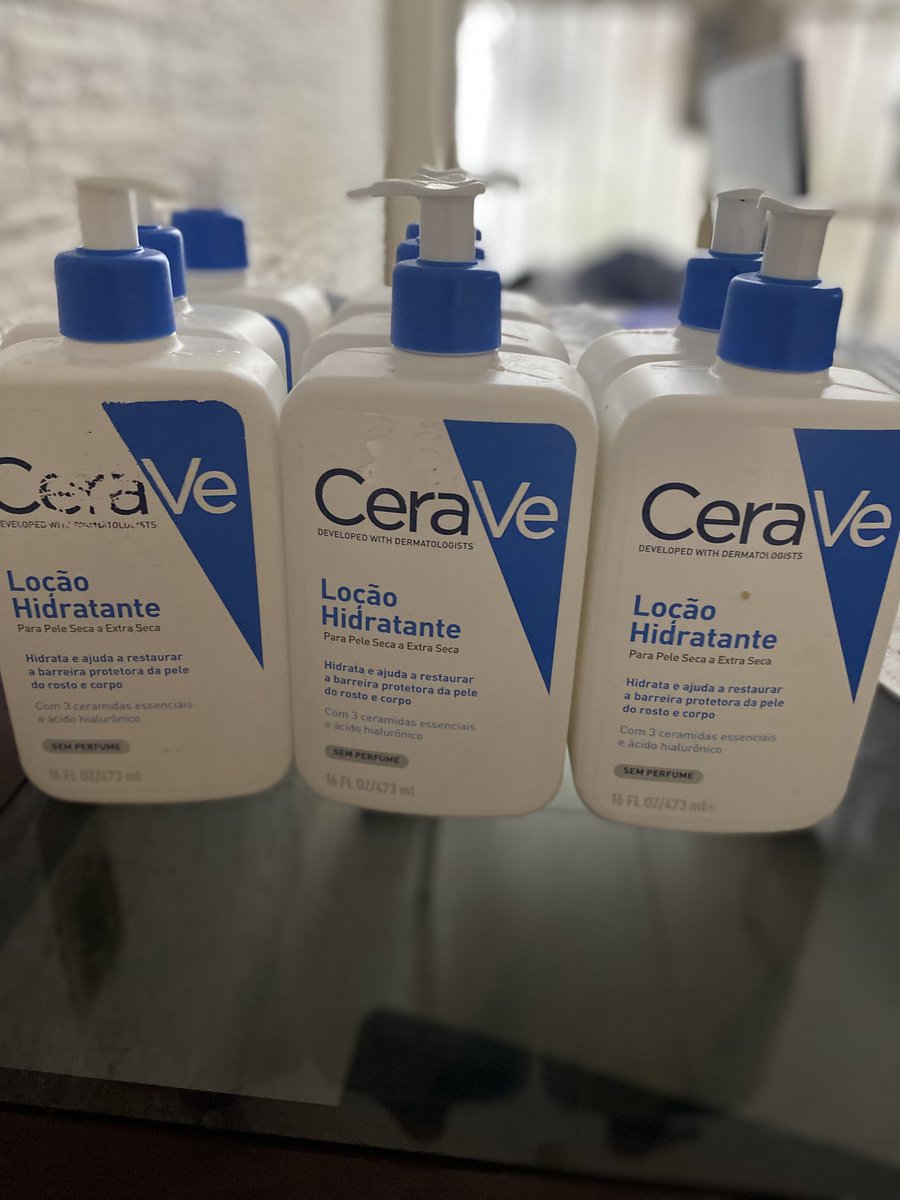
Pra manter a pele minimamente controlada, usamos cerca de 2 potes de CeraVe 473ml POR SEMANA. E mesmo assim, em muitas crises, precisamos recorrer aos hidratantes calmantes e especiais, que custam ainda mais caro.
Além disso, o uso excessivo de corticoides ao longo da vida trouxe consequências pesadas: meu filho desenvolveu catarata. Já passou por cirurgia em um olho e agora vai operar o outro. São remédios, colírios, consultas, tratamentos… e tudo vai acumulando.
Eu não estou fazendo esse post pra pedir dinheiro. De verdade.
Só queria pedir que vocês me ajudassem marcando a @CeraVeBrasil e @cerave , compartilhando e comentando nesse post. Talvez, com alcance, eles enxerguem a história do meu filho e possam ajudar com os hidratantes que são essenciais pra qualidade de vida dele.
Já tentamos contato antes, mas o processo era tão difícil que acabamos desistindo no meio do caminho.
Então hoje estou apelando pra internet. Pra empatia. Pra humanidade.
Porque às vezes o que parece “só um creme” pra algumas pessoas… é o que permite que meu filho consiga dormir sem dor.
Se puder compartilhar, eu vou ser eternamente grata. 🤍
So this 👇happened a year ago.
And today I finally received a phone call from HSE that they will be allocating 4hrs a week to help Jonatan with his needs.
Thanks to @TomClonan who advocated and represented us in order to get it.
❤️🩷❤️🩷
Katie McCabe leaves the pitch for the last time as an Arsenal player 💚
She captained the Gunners at Liverpool for her final appearance. The away end was littered with Irish flags 🇮🇪
She blew them a kiss as she was subbed off late on
What a journey!
A white-tailed eagle chick that fledged from a nest in the Glengarriff Nature Reserve in County Cork in 2025 has completed this amazing grand tour of Ireland in 48 days.
You can find out more here: https://t.co/FuI9EKrfyp
The silver/grey object is exactly what is implanted in my left breast and coupled with two titanium electrodes Im the basal ganglia of my brain very successfully controls my Parkinson’s tremors. Thanks to @eacp and @dni_neurology
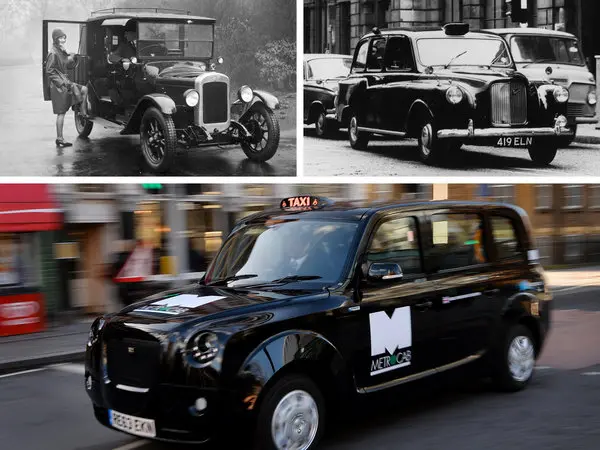
To get a license to drive a black cab in London, you have to memorize 25,000 streets, 20,000 landmarks, and the fastest route between any two points in a six-mile radius of Charing Cross. It takes most people three to four years.
A British neuroscientist asked the obvious question nobody had thought to ask. What does that actually do to a human brain?
Her name was Eleanor Maguire. The study changed neuroscience forever.
The exam is called The Knowledge. It was introduced in 1865, and the format has barely changed since.
Applicants ride a moped around London for years with a clipboard strapped to the handlebars, tracing every possible route between every possible pair of points in the city.
They get tested in person by an examiner who can ask them, on the spot, for the shortest legal route between any two addresses in a database of tens of thousands. Half the people who attempt it fail.
The ones who pass have spent an average of four years studying full time and have taken the test 12 times before getting through.
Maguire was watching a TV movie about it in 1995 when she had the idea. These were not ordinary people. They were people running one of the most extreme spatial memory training programs that exists anywhere on Earth.
If the human brain could be reshaped by experience, this was the cleanest natural experiment anyone was ever going to find.
She put 16 of them in an MRI machine.
Their posterior hippocampi were significantly larger than the brains of matched controls. The longer a driver had been working, the bigger the difference got.
A 40-year veteran had a measurably more developed hippocampus than a 5-year veteran, and both had more than someone who had never driven a cab.
Here is why that finding broke a century of consensus.
Until 2000, every neuroscience textbook in the world taught a version of the same idea. The adult brain is essentially fixed. You are born with a set number of neurons. Childhood is the window where the wiring gets laid down. After puberty, the structure freezes, and the rest of your life is just slow decline.
Maguire's study was one of the first pieces of human evidence that this was simply wrong. Adult brains physically remodel themselves in response to what you ask them to do. Not metaphorically. Structurally. With grey matter you can measure on a scan.
The skeptics had an obvious objection. Maybe people with bigger hippocampi were just more likely to become taxi drivers in the first place. The brains were not changing. The job was selecting for brains that already looked that way.
So Maguire ran the experiment again. Properly this time.
She recruited 79 trainees who were just starting to study for The Knowledge and 31 controls who were not. She scanned all of them at the start. Then she waited four years. Of the 79 trainees, 39 eventually passed the exam and 20 failed. She scanned them again.
The trainees who passed had grown larger posterior hippocampi over those four years. The trainees who failed had not. The controls who never studied had not. The brain change was not selection. It was construction.
The act of memorizing the city had physically rebuilt the part of the brain responsible for spatial memory, and the rebuild only happened in the people who actually did the work.
There is a quieter finding from this research that almost nobody quotes, and it is the one I cannot stop thinking about.
The drivers had a bigger posterior hippocampus, but they had a smaller anterior hippocampus. The brain had not magically expanded. It had reallocated. Tissue that was being used for one type of memory had been compressed to make room for another.
When Maguire ran follow-up cognitive tests, the cabbies were measurably worse than controls at certain visual memory tasks unrelated to navigation. They had paid for The Knowledge with something else. The trade was real.
She also ran a second control experiment that is the part of the story most people never hear. She scanned London bus drivers. Same hours behind the wheel. Same city. Same traffic. Same stress. The only difference was that bus drivers follow fixed routes. They do not have to navigate. Their hippocampi looked completely normal.
The cab drivers had not grown bigger hippocampi from driving. They had grown them from the constant, active, effortful retrieval of spatial information from memory.
That distinction is the entire study.
Then in 2020, McGill researchers ran the inverse experiment. They tracked 50 regular drivers and measured how often they used GPS. The participants who relied most heavily on turn-by-turn navigation had measurably weaker spatial memory. When the researchers retested a subset of them three years later, the heavier GPS users had declined fastest.
The hippocampus, the same region the cabbies had built up by ignoring shortcuts, was being slowly hollowed out in everyone else by accepting them.
The mechanism Maguire spent 25 years documenting works in both directions. Brains grow what you make them grow. They lose what you stop asking them to do.
The taxi drivers were running the most intense spatial memory training program on Earth. Most of the rest of us are running the opposite program without realizing it.
Maguire died in early 2025. UCL's tribute described the cabbie study as a stroke of creative genius. She had spent her entire career on a single question. What does it physically take to remember something, and what changes inside a person who remembers a lot of it.
The answer is the part that should change how you live.