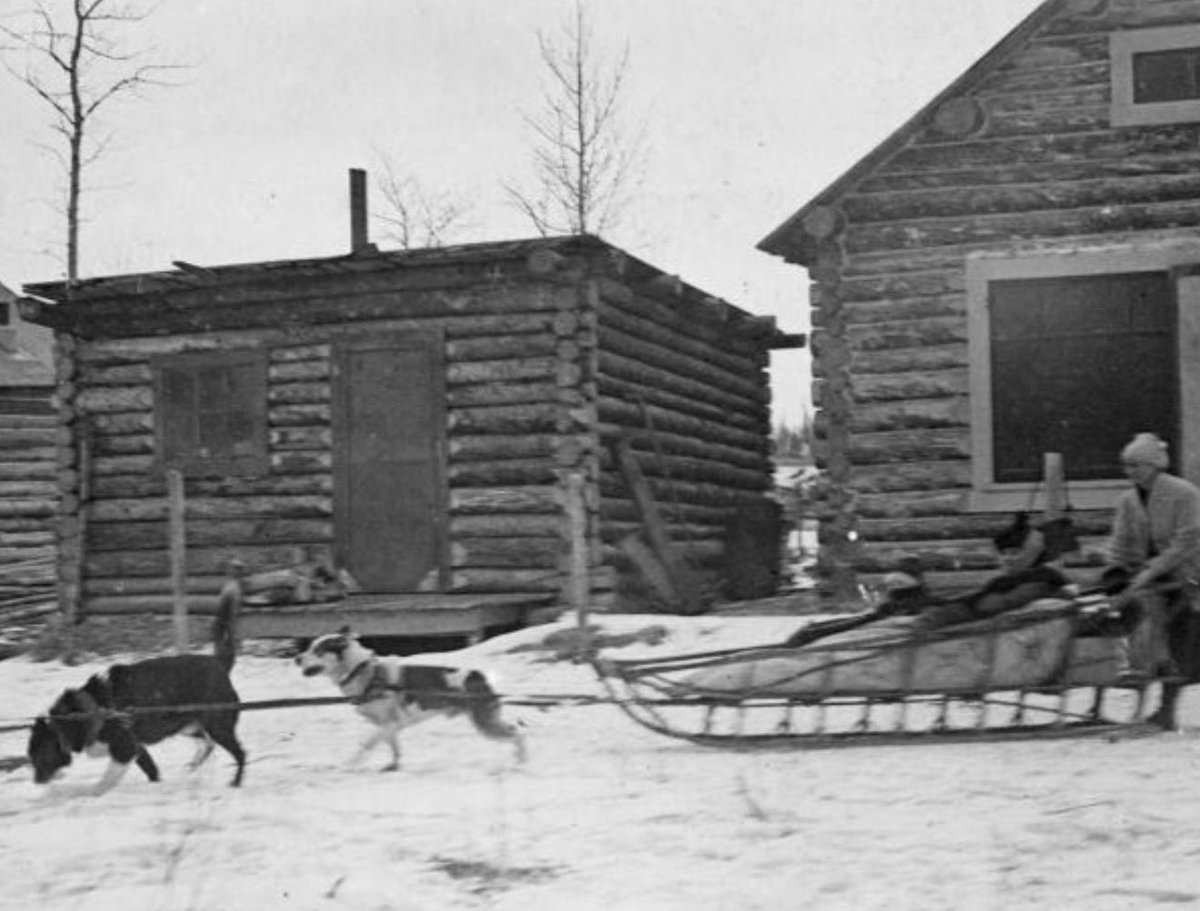
In reality, the rescue was the work of dozens of people and hundreds of dogs. The 1925 serum run remains one of the most remarkable emergency relief efforts in history, accomplished without roads, aircraft, or modern communication.
Balto became an international celebrity and was immortalized with a statue in New York City’s Central Park. For decades, many people assumed he was the sole hero of the mission.
The relay covered approximately 674 miles in just 5½ days—far faster than anyone thought possible. The serum arrived in time to help prevent what could have become a devastating epidemic.
The final leg into Nome was run by musher Gunnar Kaasen and his lead dog, Balto. Battling darkness and severe weather, they delivered the serum to the town in the early hours of February 2, 1925.
One of the most difficult stretches was completed by Leonhard Seppala and his lead dog, Togo. Together they covered the longest and most dangerous section of the journey, including a crossing of the unstable Norton Sound sea ice.
The relay pushed through whiteout conditions, frozen rivers, and hurricane-force winds. Several mushers suffered frostbite, while the dogs continued pulling through conditions that would have stopped most forms of transportation.
Twenty mushers and roughly 150 sled dogs took part in the mission. Working day and night, each team carried the antitoxin across a section of the route before passing it to the next team waiting ahead.
With temperatures plunging as low as -60°F (-51°C) and blizzards sweeping across Alaska, airplanes were ruled out. The only remaining option was a relay of dog sled teams carrying the serum through the wilderness.
The nearest usable serum was found nearly 700 miles away. It was shipped by train as far as the small town of Nenana, but from there the medicine still had to cross almost 700 miles of some of the harshest terrain in North America.
In January 1925, a deadly diphtheria outbreak threatened the isolated town of Nome, Alaska. The town’s supply of antitoxin had expired, and with winter cutting off most transportation routes, hundreds of lives were suddenly at risk.
In January 1925, a deadly diphtheria outbreak threatened Nome, Alaska. With no planes, trains, or ships able to reach the ice-bound town, 20 mushers and about 150 sled dogs formed a historic relay. They transported lifesaving antitoxin across 674 miles of brutal wilderness in just 5.5 days to stop the epidemic.
In 1925, a serum needed to stop a deadly diphtheria outbreak was transported nearly 700 miles across Alaska by a relay of dog sled teams in brutal winter conditions. The mission succeeded with only days to spare and inspired the annual Iditarod race.
In 1945, Japanese diplomat Chiune Sugihara continued issuing transit visas to Jewish refugees even after being ordered to stop. He reportedly spent his final hours in Lithuania signing documents from a train window as it departed the station.
In 1940, a 14-year-old French boy and his friends were chasing a dog through the woods when they stumbled upon the entrance to Lascaux Cave, one of the most important collections of prehistoric artwork ever discovered.
In 1888, newspaper reporter Nellie Bly convinced her editor to let her attempt to beat the fictional journey in Jules Verne’s Around the World in Eighty Days. She circled the globe in just 72 days and became one of the most famous journalists in America.
In 1965, 17-year-old high school student Randy Gardner stayed awake for 11 consecutive days as part of a science fair experiment. By the end, he was experiencing hallucinations, memory problems, and difficulty speaking, setting a sleep deprivation record that is still famous today.
In 1988, three gray whales became trapped beneath Arctic ice near Alaska. For two weeks, rescue teams, local residents, and eventually Soviet icebreakers worked together during the Cold War to free them in an operation watched around the world.
In 1917, French artist Marcel Duchamp submitted an ordinary porcelain urinal to a major art exhibition under a fake name. The resulting controversy helped redefine modern art and is still debated more than a century later.