“Gravity explains the motions of the planets, but it cannot explain who sets the planets in motion”🪐
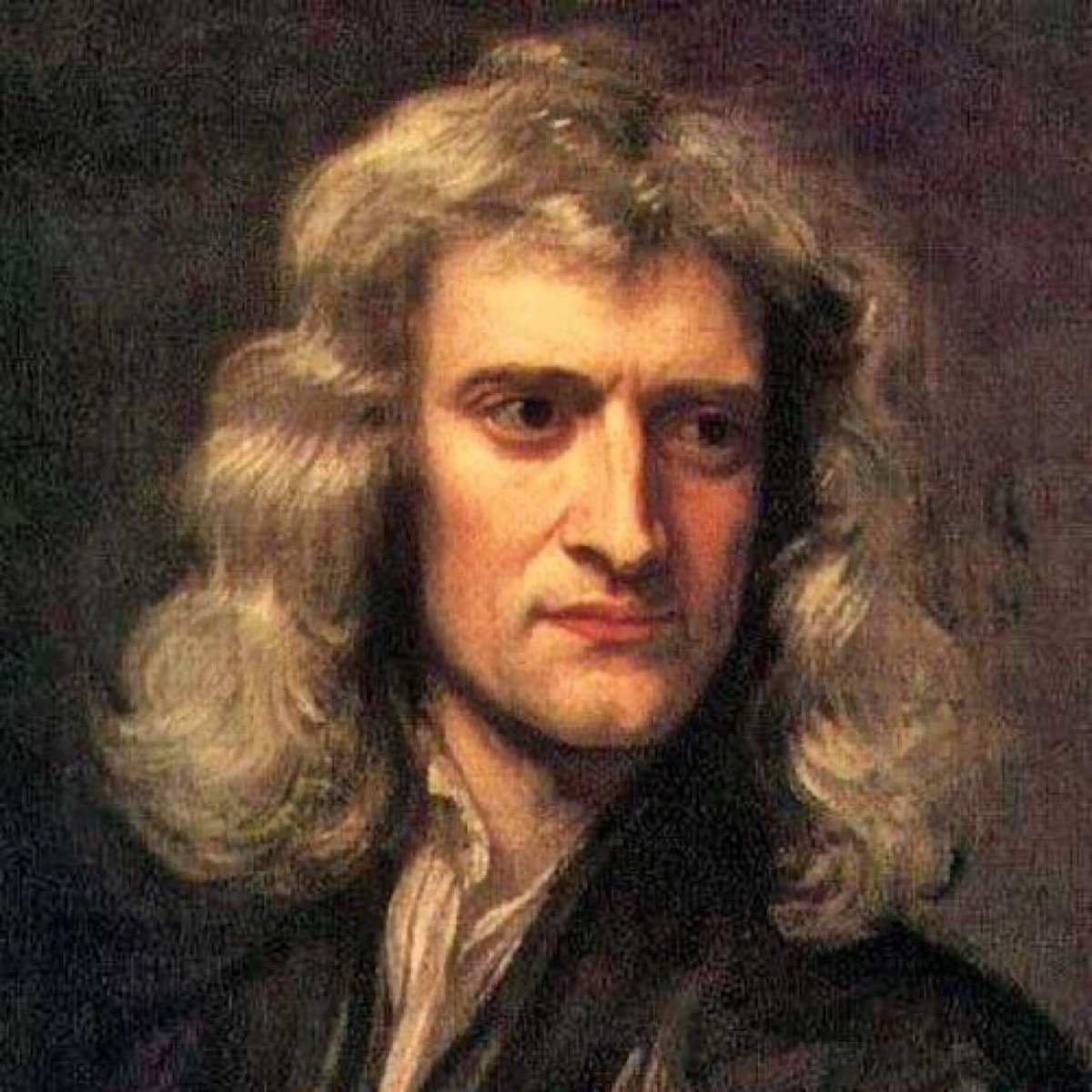
Isaac Newton, one of history's most renowned scientists, is often celebrated for his monumental contributions to physics and mathematics, particularly his laws of motion and universal gravitation. However, a lesser-known but significant aspect of his life was his profound religious belief and the extensive body of his work dedicated to theology.
Newton's belief in God was deeply intertwined with his scientific observations. He saw the universe as a complex, orderly system that could not have arisen by chance, leading him to conclude it was designed by a rational, omnipotent being. Newton argued that the intricate laws of nature and the precise structure of the cosmos pointed to a deliberate Designer. He famously remarked, "In the absence of any other proof, the thumb alone would convince me of God's existence," highlighting his view that even the smallest aspects of nature demonstrated divine craftsmanship. Newton also believed in the necessity of a First Cause, seeing God as the prime mover who set everything into motion and sustained the universe.
Many modern observers find it surprising that Newton, a paragon of rationalism and the Enlightenment, devoted so much intellectual energy to theology. This surprise stems from the contemporary tendency to separate science from religion. However, in Newton's time, the boundaries between science and religion were fluid. Scholars like Newton saw their scientific work as a way to glorify God by uncovering the divine laws governing the natural world.
The story of how the U.S. overthrew a government over bananas
The United Fruit Company( UFCO) which later became Chiquita Brands International, was a major American corporation with significant influence in Guatemala and several other Central and South American countries during the late 19th and early to mid-20th centuries. The company established itself as the dominant force in the global banana trade. It controlled vast banana plantations in countries like Guatemala, Honduras, Costa Rica, Colombia, and others. These plantations were often referred to as "banana republics" due to the immense influence the company held over local governments.
UFCO owned large tracts of land in the countries where it operated. This landownership gave the company immense power to dictate terms to local governments, often at the expense of small-scale farmers and indigenous communities. The company’s labor practices were often exploitative. It employed large numbers of local workers in its plantations and frequently resisted labor movements and unionization efforts. Workers endured harsh conditions and low wages, contributing to social unrest in many countries. It was said that at one point UFCO owned 50% of all farmable land in Guatemala tax free.
In the early 1950s one man, the democratically elected president of Guatemala Jacobo Árbenz, tried to change this. He wanted to implement progressive land reforms that aimed at helping poor Guatemalans escape poverty. These reforms however greatly threatened the UFCO’s immense power.
To protect their interests and investments the company sought support from the U.S. government. This coincided with the Cold War era, during which the United States was deeply concerned about the spread of communism. The U.S. government, fearing that Árbenz's government might be influenced by communism, decided to take action. This was despite the fact that Árbenz's was not a communist and all the reports linking him to communism were faked by the UFCO in order to convince the U.S. government to intervene.
In 1954, the CIA orchestrated a covert operation known as "Operation PBSUCCESS." It involved supporting Guatemalan exiles and military leaders opposed to Árbenz. Through a combination of psychological warfare, propaganda, and military support, the U.S. helped engineer a coup that ousted Árbenz from power. He was replaced by a pro-U.S. military junta that support the United Fruit Company’s interests.
The story of how the U.S. overthrew a government over bananas
The United Fruit Company( UFCO) which later became Chiquita Brands International, was a major American corporation with significant influence in Guatemala and several other Central and South American countries during the late 19th and early to mid-20th centuries. The company established itself as the dominant force in the global banana trade. It controlled vast banana plantations in countries like Guatemala, Honduras, Costa Rica, Colombia, and others. These plantations were often referred to as "banana republics" due to the immense influence the company held over local governments.
UFCO owned large tracts of land in the countries where it operated. This landownership gave the company immense power to dictate terms to local governments, often at the expense of small-scale farmers and indigenous communities. The company’s labor practices were often exploitative. It employed large numbers of local workers in its plantations and frequently resisted labor movements and unionization efforts. Workers endured harsh conditions and low wages, contributing to social unrest in many countries. It was said that at one point UFCO owned 50% of all farmable land in Guatemala tax free.
In the early 1950s one man, the democratically elected president of Guatemala Jacobo Árbenz, tried to change this. He wanted to implement progressive land reforms that aimed at helping poor Guatemalans escape poverty. These reforms however greatly threatened the UFCO’s immense power.
To protect their interests and investments the company sought support from the U.S. government. This coincided with the Cold War era, during which the United States was deeply concerned about the spread of communism. The U.S. government, fearing that Árbenz's government might be influenced by communism, decided to take action. This was despite the fact that Árbenz's was not a communist and all the reports linking him to communism were faked by the UFCO in order to convince the U.S. government to intervene.
In 1954, the CIA orchestrated a covert operation known as "Operation PBSUCCESS." It involved supporting Guatemalan exiles and military leaders opposed to Árbenz. Through a combination of psychological warfare, propaganda, and military support, the U.S. helped engineer a coup that ousted Árbenz from power. He was replaced by a pro-U.S. military junta that support the United Fruit Company’s interests.
The story of how the U.S. overthrew a government over bananas
The United Fruit Company( UFCO) which later became Chiquita Brands International, was a major American corporation with significant influence in Guatemala and several other Central and South American countries during the late 19th and early to mid-20th centuries. The company established itself as the dominant force in the global banana trade. It controlled vast banana plantations in countries like Guatemala, Honduras, Costa Rica, Colombia, and others. These plantations were often referred to as "banana republics" due to the immense influence the company held over local governments.
UFCO owned large tracts of land in the countries where it operated. This landownership gave the company immense power to dictate terms to local governments, often at the expense of small-scale farmers and indigenous communities. The company’s labor practices were often exploitative. It employed large numbers of local workers in its plantations and frequently resisted labor movements and unionization efforts. Workers endured harsh conditions and low wages, contributing to social unrest in many countries. It was said that at one point UFCO owned 50% of all farmable land in Guatemala tax free.
In the early 1950s one man, the democratically elected president of Guatemala Jacobo Árbenz, tried to change this. He wanted to implement progressive land reforms that aimed at helping poor Guatemalans escape poverty. These reforms however greatly threatened the UFCO’s immense power.
To protect their interests and investments the company sought support from the U.S. government. This coincided with the Cold War era, during which the United States was deeply concerned about the spread of communism. The U.S. government, fearing that Árbenz's government might be influenced by communism, decided to take action. This was despite the fact that Árbenz's was not a communist and all the reports linking him to communism were faked by the UFCO in order to convince the U.S. government to intervene.
In 1954, the CIA orchestrated a covert operation known as "Operation PBSUCCESS." It involved supporting Guatemalan exiles and military leaders opposed to Árbenz. Through a combination of psychological warfare, propaganda, and military support, the U.S. helped engineer a coup that ousted Árbenz from power. He was replaced by a pro-U.S. military junta that support the United Fruit Company’s interests.
The Wealthiest Empires in History
🏛️Roman Empire, (1st century): 25% to 30% of global output
🇨🇳Song Dynasty, (11th century): 25% to 30% of global output
🇮🇳Mughal Empire, (17th century): 25% of global output
🇬🇧British Empire, (18th century): 21% of global output
🇪🇸Spanish Empire, (16th century): 14% of global output
🇹🇷Ottoman Empire, (16th century): 10-12% of global output
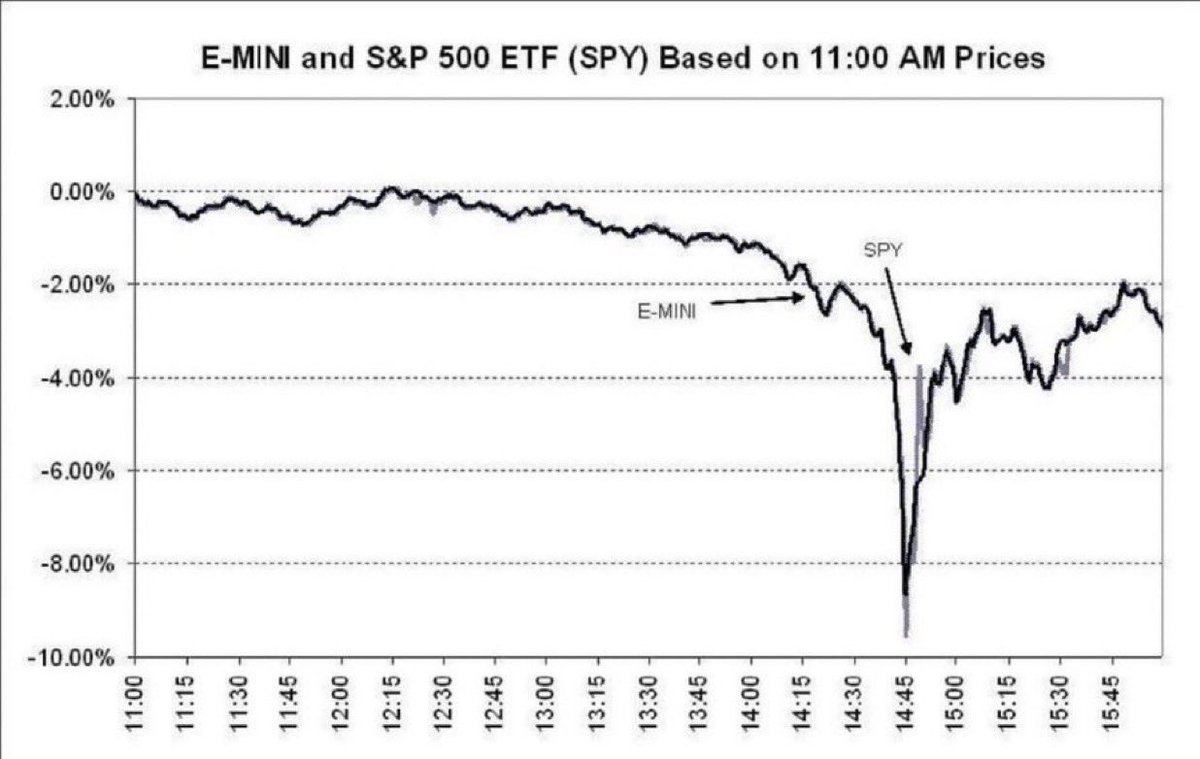
On May 6, 2010 the U.S. stock market lost approximately 1 trillion dollars in the span of only 15 minutes. The flash crash as it came to be called was later described as one of the most turbulent periods in the history of financial markets. The Dow Jones fell about a 1,000 points(9%) in a matter of minutes. The crash was caused by multiple reasons ranging from high frequency algorithms, technical communication glitches, and the evaporation of liquidity which occurring simultaneously caused this once in a lifetime event.
However despite this the crash ended fairly swiftly as markets rebounded by the end of the trading day, with the DJIA recovering most of its losses. But the event had lasting implications for financial markets. It led to the implementation of new market circuit breakers designed to halt trading during extreme price swings, highlighting the need for increased oversight of high-frequency trading practices and the importance of maintaining market liquidity to prevent future crashes of this magnitude.
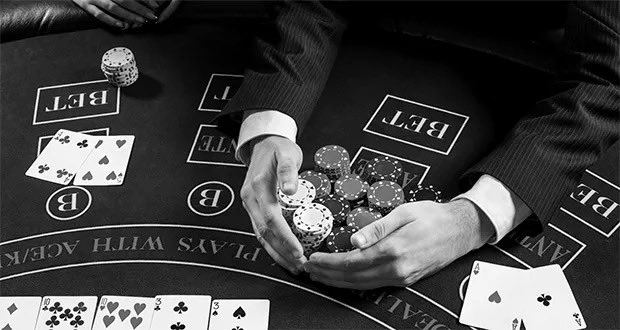
Tesla’s Gambling Addiction 🃏♠️♥️
Born in 1856 in Smiljan, part of modern-day Croatia, Tesla showed early signs of brilliance. He excelled in mathematics and physics, and his exceptional memory and aptitude for learning earned him a reputation as a prodigy. In 1875, Tesla enrolled at the Austrian Polytechnic in Graz, where he initially thrived. He dedicated himself to his studies, attending lectures diligently and achieving high marks.
However, the rigorous demands of his academic pursuits soon took their toll. The pressure to maintain his high performance led Tesla to seek an outlet for his stress, and he found it in gambling. Initially, it was a harmless pastime, but it quickly spiraled into a compulsive habit. Tesla's gambling addiction grew to the point where he would spend entire nights at gambling tables, risking his tuition money and even pawning his belongings to finance his addiction.
This period of his life was marked by a significant decline in his academic performance. Tesla's attendance at lectures became sporadic, and he eventually dropped out of the Polytechnic in his third year. His family, particularly his father, was devastated by the news, which added to Tesla's sense of failure and guilt.
Despite the setbacks, Tesla's story did not end in despair. Recognizing the need for a fresh start, he moved to Budapest in 1881, where he worked for a telegraph company. This move marked the beginning of his recovery from gambling and the rekindling of his scientific ambitions. Tesla's ingenuity and hard work eventually led him to Paris, and later to the United States, where he made groundbreaking contributions to the field of electrical engineering.
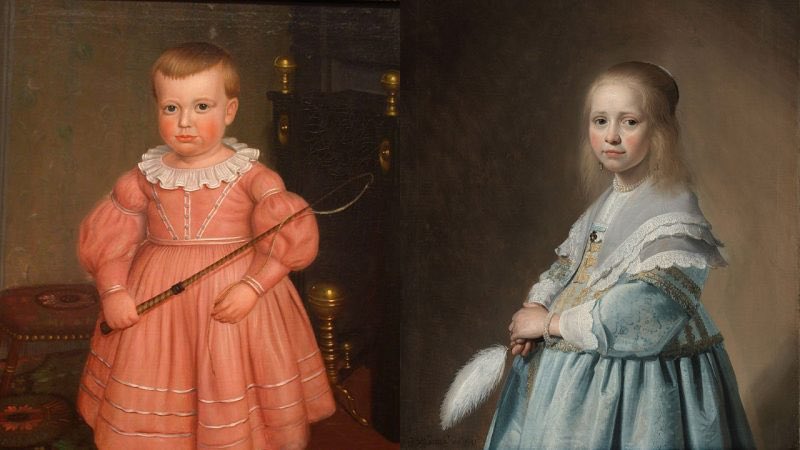
Pink for Boys 👚 Blue for Girls 👕
In the early 20th century, pink was for boys and blue was for girls, an idea that seems astonishing today. Pink, considered a stronger, more decisive color, suited boys, while blue, associated with the Virgin Mary's purity, was deemed perfect for girls. However, this all changed in the 1940s. As soldiers returned from World War II, society sought to reinforce traditional gender roles. Blue, already tied to military uniforms and male authority, became the color for boys. Meanwhile, pink's softness and nurturing connotations were marketed towards girls. Retailers and advertisers seized this shift, heavily promoting gender-specific products, and over time, the colors switched places in the public consciousness. This clever marketing strategy transformed our perception, embedding pink for girls and blue for boys into societal norms.
Largest Empires in History
🇬🇧British Empire- 35.5 million km^2, 27% of world population
🇲🇳Mongol Empire- 24 million km^2, 18% of world population
🇷🇺Russian Empire- 22.8 million km^2,
9% of world population
🇨🇳Qing dynasty- 14.7 million km^2, 5.6% of world population
🇪🇸Spanish Empire- 13.7 million km^2, 5.3% of world population
🇫🇷French Empire- 11.5 million km^2, 4.4% of world population
☪️Abbasid Caliphate- 11.1 million km^2, 4.3% of world population
"Ladies and gentlemen, I don't know whether you fully understand that I have just been shot, but it takes more than that to kill a Bull Moose." 🫎
These were the words said by the U.S. President just seconds before giving a 90 minute speech. 🎤
Theodore Roosevelt, the 26th President of the United States, was known for his robust personality, active lifestyle, and political career. On October 14, 1912, while campaigning for the presidency as a candidate for the Progressive Party (also known as the Bull Moose Party) in Milwaukee, Wisconsin, an attempt was made on his life.
As Roosevelt was preparing to deliver a speech outside the Gilpatrick Hotel, a saloonkeeper named John Schrank approached him in the crowd. Schrank, who was mentally unstable and had been harboring a grudge against Roosevelt, fired a .38-caliber revolver at Roosevelt from close range.
The bullet struck Roosevelt in the chest but was significantly slowed down by passing through the steel eyeglass case and a 50-page folded copy of his speech that was tucked inside his breast pocket. Despite feeling pain, Roosevelt refused to panic or allow the incident to disrupt his plans.
He stood up and declared to the crowd, "Ladies and gentlemen, I don't know whether you fully understand that I have just been shot, but it takes more than that to kill a Bull Moose." Displaying his bloodstained shirt and bullet-pierced speech, Roosevelt continued with his scheduled speech for around 90 minutes, addressing the crowd on the Progressive Party's principles and his political platform.
After finishing his speech, Roosevelt finally agreed to receive medical attention. He was rushed to the hospital, where it was discovered that the bullet had not penetrated deeply into his chest, as it had been slowed down by the items in his pocket. The bullet had lodged itself near his ribs but did not puncture his lung or penetrate his heart.
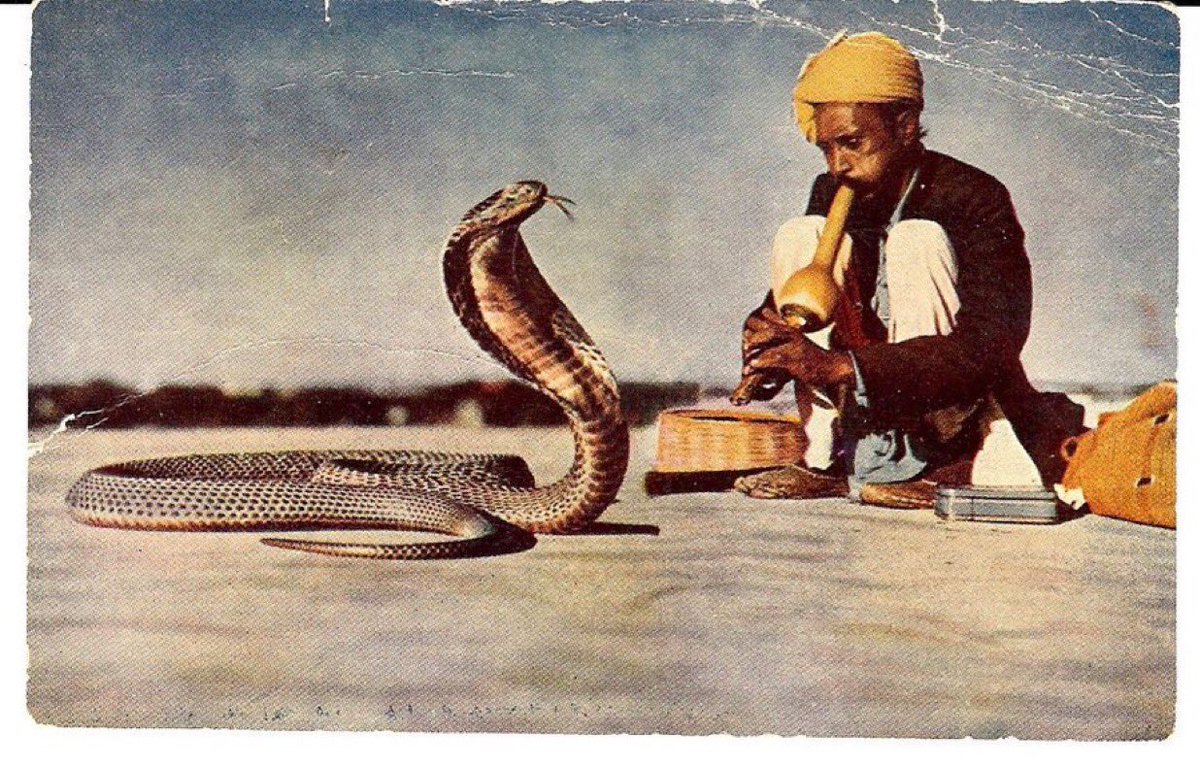
India’s Cobra Problem 🇮🇳🐍
Once upon a time in colonial India, Delhi had a cobra problem. The government's plan? Offer cash for every dead cobra. People got excited, but some got clever.
The cash prize for a dead cobra was much higher than the cost to breed them. So instead of hunting wild cobras, people started breeding them at home to claim more cash. When the government found out, they canceled the cash rewards. Now, stuck with lots of cobras and no money, these snake breeders set their slithery friends free.
Guess what happened? The cobra population skyrocketed. The government's plan to get rid of cobras backfired, teaching everyone a lesson: be careful with quick fixes, or you might end up with more problems than you started with.
On May 6, 2010 the U.S. stock market lost approximately 1 trillion dollars in the span of only 15 minutes. The flash crash as it came to be called was later described as one of the most turbulent periods in the history of financial markets. The Dow Jones fell about a 1,000 points(9%) in a matter of minutes. The crash was caused by multiple reasons ranging from high frequency algorithms, technical communication glitches, and the evaporation of liquidity which occurring simultaneously caused this once in a lifetime event.
However despite this the crash ended fairly swiftly as markets rebounded by the end of the trading day, with the DJIA recovering most of its losses. But the event had lasting implications for financial markets. It led to the implementation of new market circuit breakers designed to halt trading during extreme price swings, highlighting the need for increased oversight of high-frequency trading practices and the importance of maintaining market liquidity to prevent future crashes of this magnitude.