Karl Stefanovic being sacked for platforming Tommy Robinson this week isn’t completely about who he interviewed — it’s about how. Robinson is a former British National Party member turned white supremacist agitator who pushes “Remigration” — the forced removal of non-white people — in coded language. Stefanovic never raised any of it. He told Robinson he admired his “tenacity and courage,” agreed when Robinson talked about whipping up anger to “cause an earthquake” — “why not, this is a great country and it’s so lost” — and asked him how the right could “take power” here within three years. He posted himself with his arm around Robinson, the two laughing together. That’s not investigative journalism. That’s normalising an extremist.
There’s nothing new about journalists interviewing extremists — done properly, it’s some of the most important journalism there is. When BBC’s Question Time put BNP leader Nick Griffin in front of 8 million viewers in 2009, the panel tore into his Holocaust denial and links to extremist groups on live television. When Vice News embedded with white nationalists in Charlottesville in 2017, the resulting documentary won a Peabody and four Emmys — for capturing them in their own words, threats included, with nothing softened. Hard questions, no flattery, the extremist exposed rather than humanised. Stefanovic did the opposite.
This is the same Stefanovic who once praised multiculturalism on air and told his own immigrant grandparents’ story. His podcast now runs on the opposite frame entirely — Hanson as his debut guest in January, back again in May, a Robinson interview landing six days after Hanson told the National Press Club “we must be monocultural.” No explanation was ever given for his complete ideological about-face. The timing lines up with one thing only: his move from network TV, where this would never be allowed to air, to an unaccountable, monetised podcast where it can.
Why? Money. Kyle Sandilands took a $12 million payout from his old network and is now openly “sharpening” Hanson’s messaging on a new show. Multiple high-profile broadcasters landing on the identical politics in the identical commercial window isn’t conviction. It’s a market — and sadly platforming white supremacists and normalising them is what’s currently selling.
“There is more than a whiff of the hubristic swagger of 2003 that augurs badly for any war” — @PatPorter76 makes the case against war in Iran
https://t.co/D528A5TK68
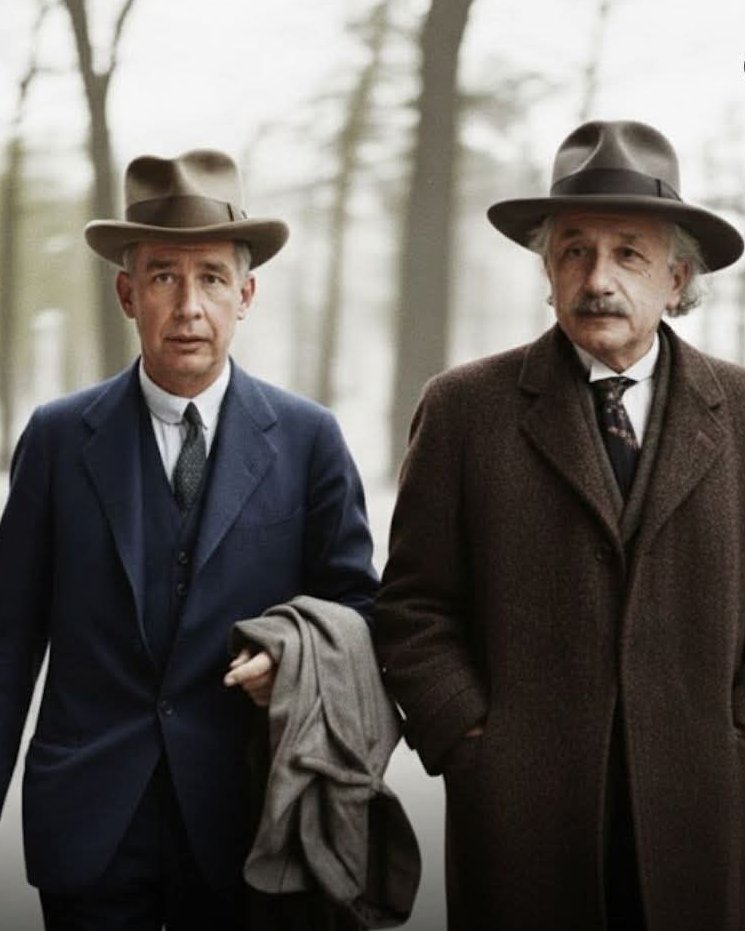
The clash between Albert Einstein and the pioneers of quantum mechanics was one of the most electrifying intellectual battles in scientific history.Einstein, the architect of relativity, could not accept the role of pure randomness at the heart of nature. When Werner Heisenberg unveiled his Uncertainty Principle in 1927—revealing that certain pairs of properties, like position and momentum, cannot be known simultaneously with perfect precision—Einstein pushed back hard. To him, the universe operated by deep, hidden deterministic laws waiting to be uncovered. Chance? It felt like an incomplete theory, a puzzle with missing pieces.His famous retort—“God does not play dice”—wasn't about religion; it was a passionate defense of an orderly, predictable cosmos.
Heisenberg's principle wasn't a limitation of our tools—it was baked into the fabric of reality itself. The more precisely you pin down a particle's position, the more its momentum blurs into uncertainty...
Niels Bohr, the champion of the Copenhagen interpretation, stood firm against Einstein's objections. Their exchanges—sharp, personal, and brilliant—reached iconic status during the famous Solvay Conferences, especially in 1927 and 1930, where the greatest minds of physics gathered.
Bohr's legendary comeback to Einstein? “Stop telling God what to do.” For Bohr, nature had no obligation to conform to human intuitions of certainty—probability was fundamental.The debate raged for years, forcing physics to confront profound questions: Is reality deterministic beneath the quantum haze, or does chance rule at the deepest level? Countless experiments since—from Bell tests to quantum entanglement demonstrations—have repeatedly confirmed the “weird” predictions of quantum mechanics, upholding uncertainty and non-locality.Yet the true power of this story lies beyond equations. It shows that even titans like Einstein can wrestle passionately with uncomfortable truths. Scientific progress often springs from fierce disagreement, from the courage to question everything. The universe didn't bend to their arguments—but our grasp of it deepened forever because of them.A timeless reminder: sometimes the greatest insights emerge not from tidy certainty, but from bold, unrelenting doubt.
Retired U.S. Marine colonel who led forces in battle in Iraq: IDF practices in Gaza "amount to a breakdown in the application of distinction and proportionality as those principles are normally understood and enforced in modern Western militaries."
https://t.co/YUliiaQkUA
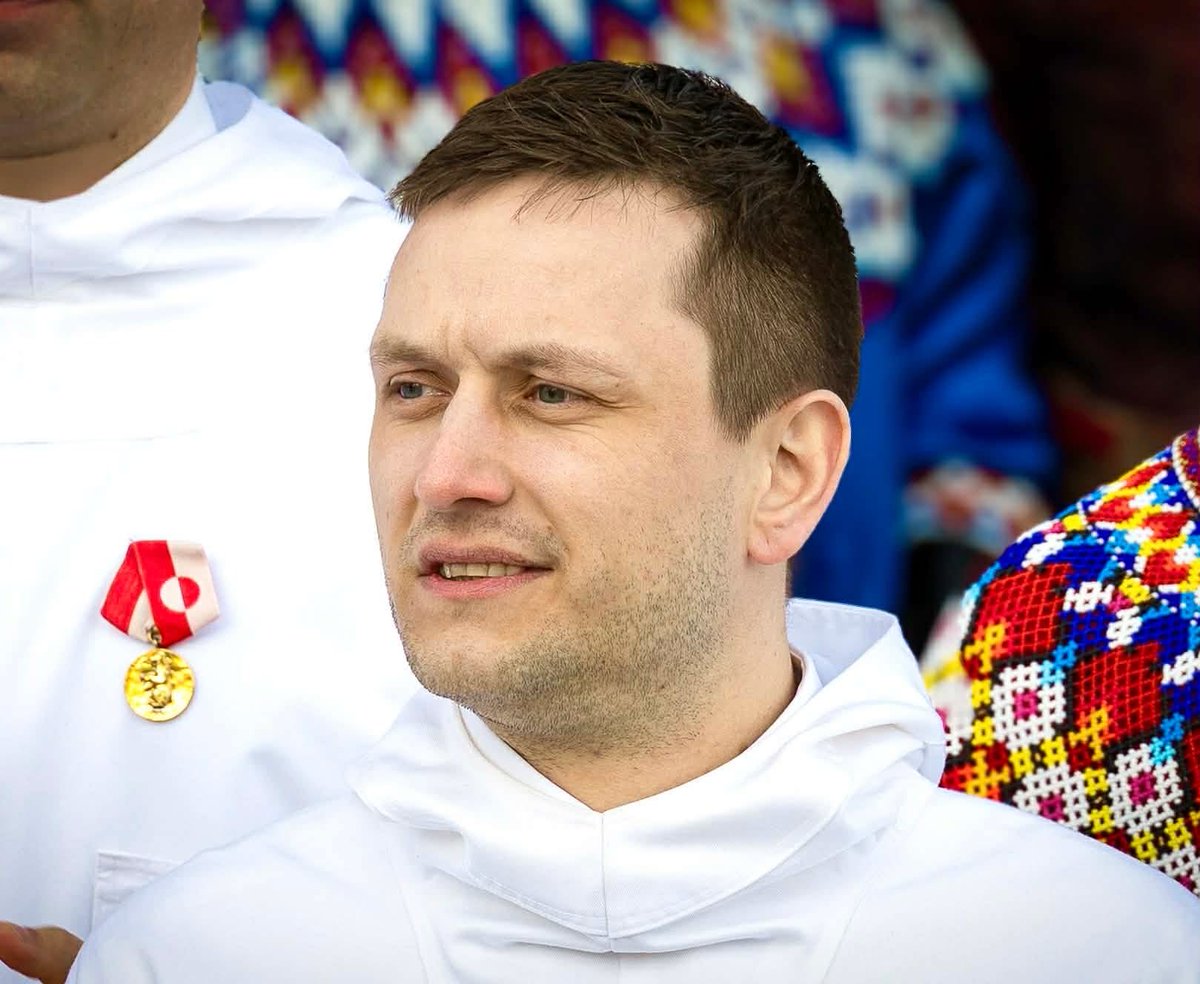
Statement from the Premier of Greenland 🇬🇱
6:55pm local time:
“🇬🇱 We have been a close and loyal friend of the United States for generations. We have stood shoulder to shoulder in difficult times. We have taken responsibility for security in the North Atlantic — and not least for North America. That is what true friends do.
Precisely for that reason, the current and repeated rhetoric coming from the United States is entirely unacceptable.
When the President of the United States speaks of “needing Greenland” and links us to Venezuela and military intervention, it is not only wrong. It is disrespectful.
Our country is not an object in great-power rhetoric. We are a people. A country. A democracy. That must be respected — especially by close and loyal friends.
We are part of NATO, and we are fully aware of our country’s strategic location. We also understand that our security depends on good friends and strong alliances. In that context, a respectful and loyal relationship with the United States is very important. That has been the case for decades.
But alliances are built on trust. And trust requires respect.
Threats, pressure, and talk of annexation have no place between friends. That is not how one speaks to a people who have repeatedly demonstrated responsibility, stability, and loyalty.
Enough is enough.
No more pressure.
No more insinuations.
No more fantasies of annexation.
We are open to dialogue. We are open to conversations. But they must take place through the proper channels and in full respect of international law. And the proper channels are not random and disrespectful posts on social media.
Greenland is our home and our territory.
And it will remain so. 🇬🇱”
Powerful opinion piece by my partner Sami Shah on the Bondi terror attack.
"If you cannot mourn murdered Jews in Australia without immediately pivoting to Israel, then you are not doing solidarity. You are doing a performance. And the people you’re stepping on to reach the stage are dead."
https://t.co/ZBroKEWrxX
Weaning ourselves off fossil fuels is glacially slow – isn't it? This pessimistic narrative doesn't stack up against evidence of very rapid change in the real world. @peternewmanCUSP@ProfRayWills@CurtinUni@uwanews https://t.co/bgIX1cO2Ld
Universities should indeed offer "value for money" - but how do we measure the value of education? Every test that comes from government is crassly econometric. We need to recapture a higher vision of what the university is for - and of what it means to be human. [THREAD]
@TheShovel Racist graffiti is probably not the ideal subject matter for a light-hearted gag. Particularly when the community to whom it is directed is subject to ongoing, and alarming, levels of hate speech, threats of violence, and actual violence. The Shovel shouldn’t need reminding.
"Her internal system has around 20 system members, or different identities, who are known as alters, some of whom will give the evidence in this trial," [Crown Prosecutor Kristy Mulley] said.”: https://t.co/wfa8eFMk8H
@DominicVillaSC I’ve always found the NSW approach artificial, in the sense that it encourages a pretence that witnesses remember exact phrases. My scepticism has persisted so long as I’ve never been to answer for myself the question: what is indirect speech?