Hi Dave, I'm never happy about government lying and I spend a fair bit of my time exposing it when it occurs in foreign policy. I am simply making three points.
First, if we had to go to the polls each time a government lies about or reverses policy we would be voting every weekend. They all do it and there is an opportunity to punish them every 3 years - one of the shortest electoral cycles in the world. Why is a lie about tax more significant - and worthy of an election - than say a broken promise about public housing or the NDIS?
Secondly, all taxes discourage innovation and incentives. It's the nature of the beast. But those who complain about tax appear to rather like Medicare, the PBS, subsidised private schools, good roads, public transport, subsidised private health insurance, negative gearing, imputation credits, tax deductions, social welfare and all the other benefits of state capitalism. These are the same people who cheered on Mr Frydenberg's COVID bailout to private businesses, privately-owned "risk-taking companies" which weren't even required to repay the money if they didn't need or use it?
The money has to come from somewhere - what about a minimum tax rate for individuals and companies? Why do the wealthy have access to expensive tax minimisation advice that lowers their tax bills when the average wage earner doesn't? I have always found it strange that the middle class (of which we are now both members) want public expenditure on services they use - and more I haven't mentioned - but want others to pay for them.
Thirdly, if you are seriously concerned about incentive-killing taxes your targets should be boondoggles like AUKUS (a minimum of $370 billion if the subs ever arrive), and tax avoidance schemes by wealthy companies and individuals which rip billions out of government revenue. That doesn't mean Albanese and Chalmers get off the hook, but it does mean that their lies add small change to the budget's revenue when compared with tax rorting and unnecessary military spending.
It is strange that there is no popular Instagram-driven movement to get transnationals like Google, Meta and News Corporation to pay their fair share of tax. Or is it? If they, and the upper percentiles of wealthy Australians did there would be no need for a CGT at all. Problem solved.
🏆 CHAMPIONS AGAIN!
Celtic are crowned Champions of Scotland for the fourth season in a row!
Huge congratulations to Brendan Rodgers and the Bhoys 👏
#FOURItsAGrandOldTeam | #CelticFC🍀🏆
Europe,
The world will forever be grateful if you stepped up to support Ukraine right now. The US is not a leader anymore. Go around us and defend democracy.
Sincerely,
All patriotic Americans
After interest this generated, I wrote in-depth at Bounces about Shelton's remarks, the examples he cited, on-court interviews as an artform, and where it's been going wrong at this #AusOpen:
This one is free to read for all, but please do subscribe!
https://t.co/HyAtnq8hmV
"The biggest users of the gas we [Australia] produce is the gas industry – to produce gas for export.
Households are only responsible for about 3%." #auspol
Some more hard-hitting facts from @pollyjhemming on ABC's The Drum 👊
@madeofstone71 My dad spent time as a Kiap. Occasionally gets a shout out in one of James Sinclair’s books. Agree, it’s a fascinating part of Aus / PNG history
The 'collector' Percival David who donated his Chinese ceramic collection to the British Museum was a heir to the Opium trading fortune of Sassoon family.
His grandfather Elias David Sassoon pioneered Sassoon family's Opium trade business in China from Hong Kong and Shanghai right after the 1st Opium War
Ken Henry, fmr Treasury secretary says the mining boom hollowed out Australian manufacturing leading to:
-abysmal productivity
-lower wages
-Lower living standards
-damaged Australia’s egalitarianism -worse intergenerational inequity
1/8 Great quotes🧵👇
https://t.co/dYOsyIsnuA
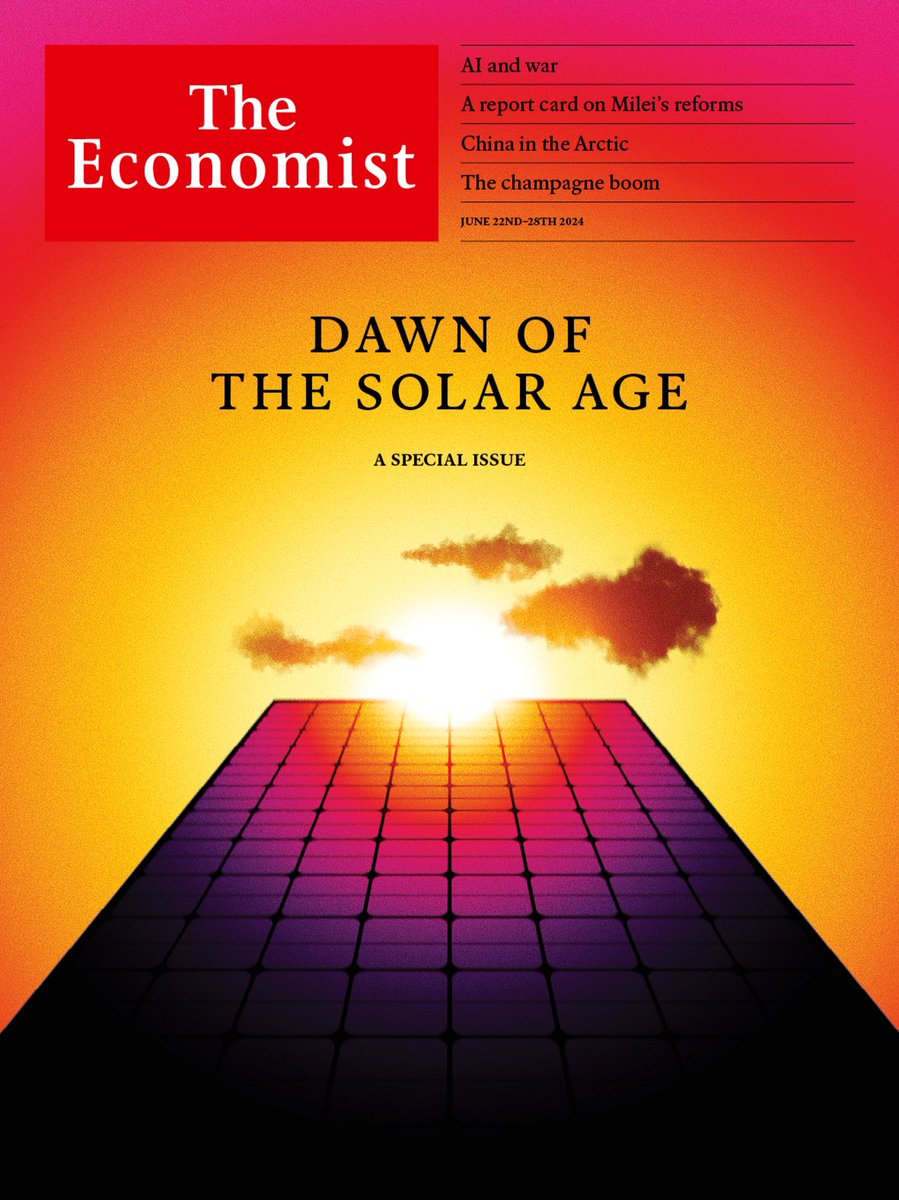
Bold take from @TheEconomist in last issue:
“Solar cells will in all likelihood be the single biggest source of electrical power on the planet by the mid 2030s.”
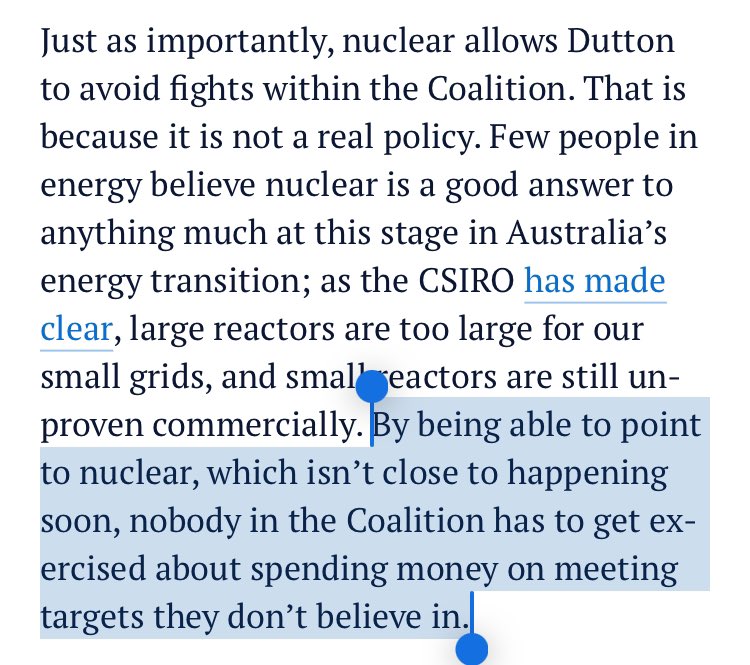
This is what I wrote 3 months ago about the nuclear policy. imo this is still the most important context. I think most people reporting on this realise it - am interested to see what role it plays in reports.
Can skilled refugees meet regional Australia's worker needs? Pioneering new research to shape win-win solutions that help address regional Australia’s chronic skill shortages and ensure skilled refugees find jobs. #RefugeeweekAu@RegionalAus@TBBforTalent https://t.co/hP7ctTdPz1