Lest I be misconstrued, I'm not a fan of chaos, crisis or wars. Only write about the financial risk side of the story.
Neither I'm I attached to any region, religion,entity, group or political alignments.
My posts are purposely to build my brand in the investment profession.
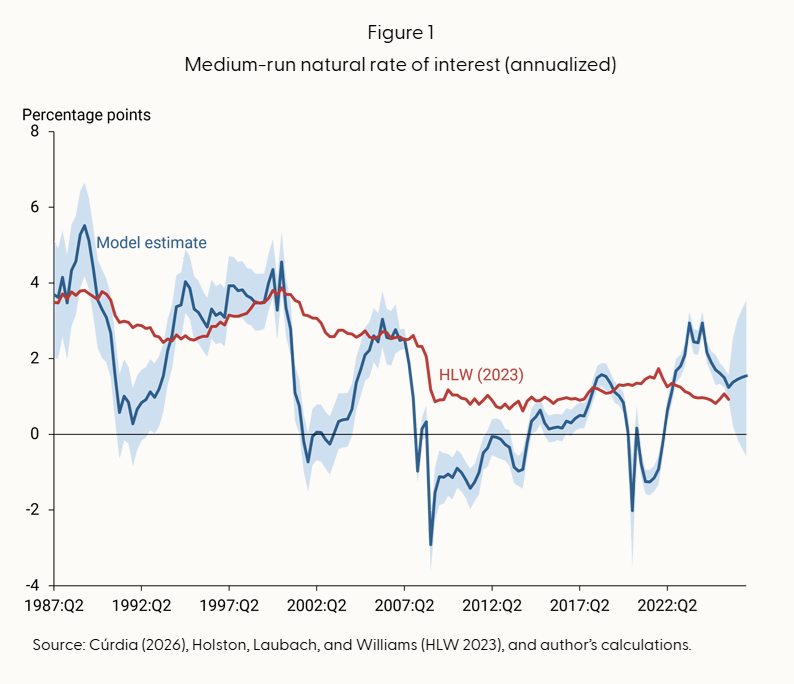
A new estimate of the medium-run neutral rate by an economist at the SF Fed suggests it is around 1.5% (with a wide uncertainty band). If you assume underlying inflation of at least 2.5%, this suggests current monetary policy is accommodative.
https://t.co/EcKuW9ZP10
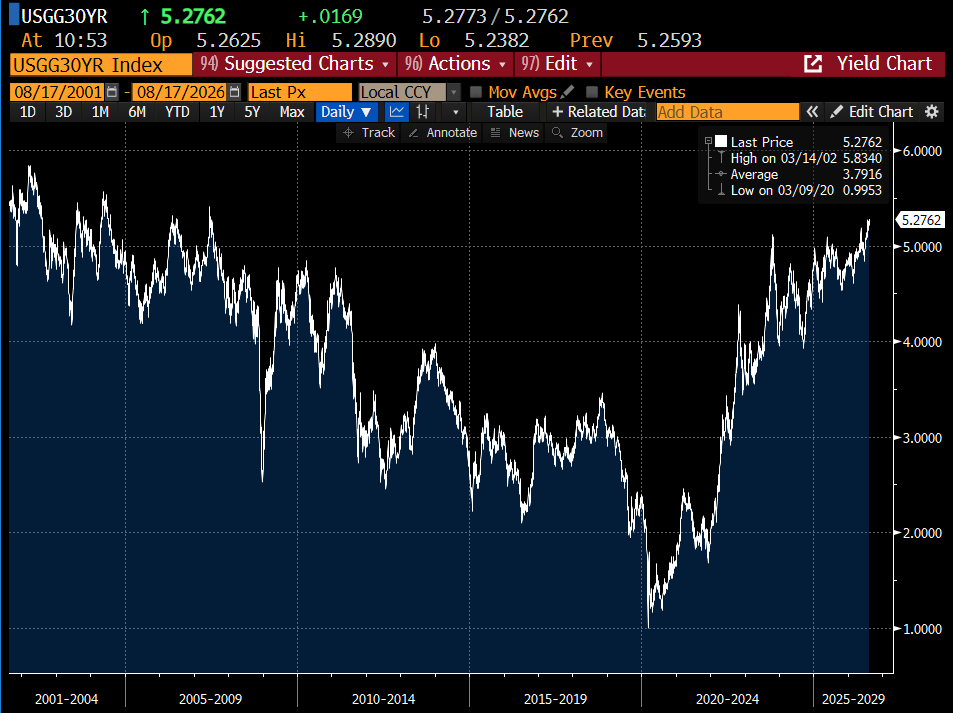
Slowly and steadily, the 30-year US Treasury yield is heading toward 5.30%, a level the economy -- and the housing market in particular-- has not seen in decades.
(Bloomberg chart below.)
#economy#housing#markets#bonds
@Myrmikan If they bailout the hyperscalers, they'll have to bail out CRE, private equity, and by extension the pensions, and hedge funds. But before that happens those same hedge funds will sell UST to fill the gaps from their losses. What does that look like? https://t.co/0t1t2LqZjc
In around 40 countries, EVs accounted for 10% or more of new cars sold in 2025.
Many markets that adopted EVs more recently are seeing rapid growth, supported by the affordability and availability of Chinese-made models.
More in Global EV Outlook 2026 👉 https://t.co/XkGzHaDMtZ
Hegemon saying I cannot keep the world safe.
Lad Maro aapas main .. and hence every country will have to up its defense spending without cutting welfare…
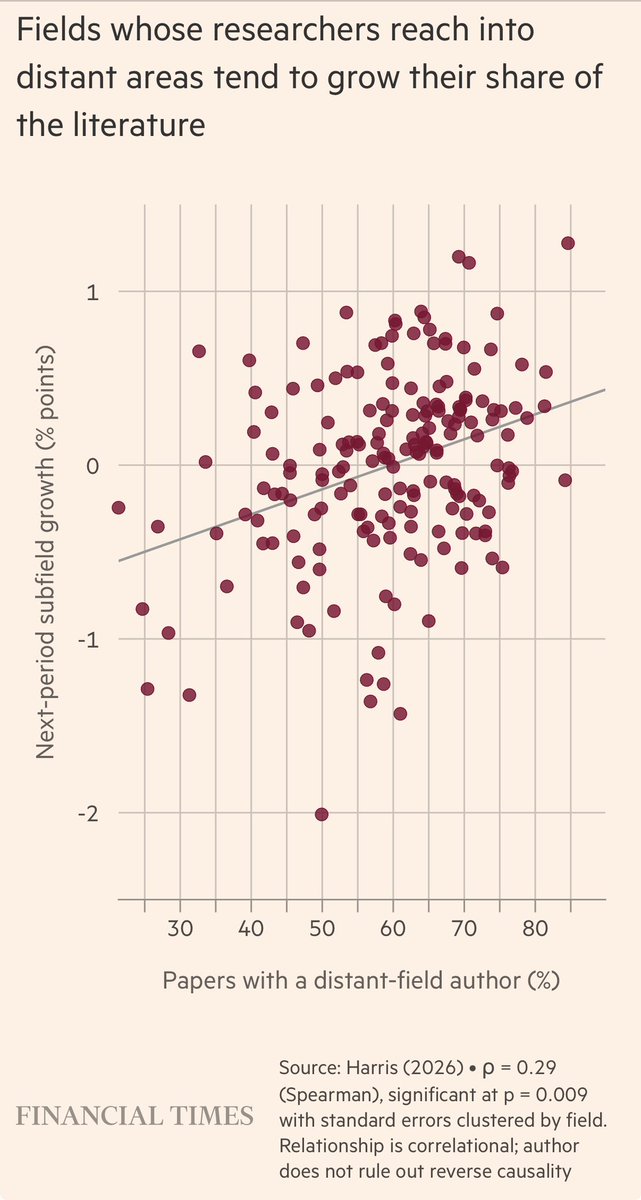
From @nriapia’s FT column, “How economics is changing:”
“Modern-day economics is a Cambrian explosion of new methodology and research subfields. Thousands of papers in the subject are published each year, many of which weave in insights about human behaviour and social norms. Indeed, it is now the fifth most popular A-level in England. And researchers in the field are increasingly stretching into more exotic areas and collaborating across boundaries.”
#economics @ft
“… When considered against the nightmare scenarios contemplated at the war’s outset, oil prices have remained low […] The global economy has so far avoided the kind of recession that many past energy shocks produced…”
@JasonBordoff@OSullivanMeghan
https://t.co/nQPuZwBFV1
This is a very dangerous trend.
But this was bound to happen when the govt is fixated with rising stock prices and suppressed wages.
You have world”s trillionaire and my “Next door” neighbourhood app ( Calgary) is filled with people asking for odd jobs and loans till they get paid in next few days.
I would strongly advice India to learn from this and not allow too much wealth inequality created via asset valuations enriching only asset owners at expense of income earners.
The fragmentation of the global order is not a threat to fear. It is a signal to act.
In Episode 1 of ‘AAM2026: In Conversation’, Ambassador Albert Muchanga (@AmbMuchanga), Former Commissioner for Economic Development, Trade, Tourism, Industry and Minerals at the African Union Commission, makes the case for why Africa's response to a shifting world must be deeper unity, stronger integration and a continent that trades, builds and grows on its own terms.
This is the conversation #AAM2026 was built for. And it didn't stop.
Watch the full episode now on YouTube - https://t.co/QuNjf18bdm
#AAM2026InConversation #AAM2026 #Afreximbank #IntraAfricanTrade #AfCFTA #EconomicSovereignty
Saudi Aramco estimates the world lost 2.6 billion barrels of oil since the US-Iran conflict began, erasing about 25 days of pre-war global consumption https://t.co/IzAP2go5ZJ
From Kigali to Bugesera, Rwanda is building the foundations for a new generation of African industry.
Afreximbank President and Chairman of the Board of Directors, Dr. @GeorgeElombi, led a delegation to Rwanda to deepen engagement around industrialisation, innovation and sustainable growth.
In Kigali, the delegation visited SPIRO’s electric mobility operations, including its motorcycle assembly plant, battery-swapping network and command centre. The visit highlighted the opportunity to expand local manufacturing across the electric mobility value chain, from assembling motorcycles to producing batteries and components in Africa.
The mission continued to the Bugesera Special Economic Zone (BSEZ), a 335-hectare industrial ecosystem being developed through a partnership between the Government of Rwanda and @ARISEIIP. With US$100 million in committed investment, BSEZ is designed to support local processing, manufacturing, logistics and exports, while strengthening Rwanda’s position as a competitive regional production hub.
Together, these investments demonstrate the potential of combining industrial infrastructure, technology and local production to create jobs, strengthen value chains and expand Africa’s manufacturing capacity.
#Afreximbank #Rwanda #Kigali #Bugesera #Industrialisation #Manufacturing #ElectricMobility #ValueAddition
Indonesia is sending another orthodox signal, eyeing a smaller budget deficit (2.4% GDP in 2027 vs 2.85% in 2026) and focusing on structural transformation to drive growth. Investors like to ride reform waves, but many argue that they’ve seen this movie before (=execution is key)
the worst part of this articles hyper obsession with Marx as the standard bearer of analysis is that a person reading this as their first liaison into the field will assume that Marx’ empirical claims and predictions were actually correct, which couldn’t be further from the truth
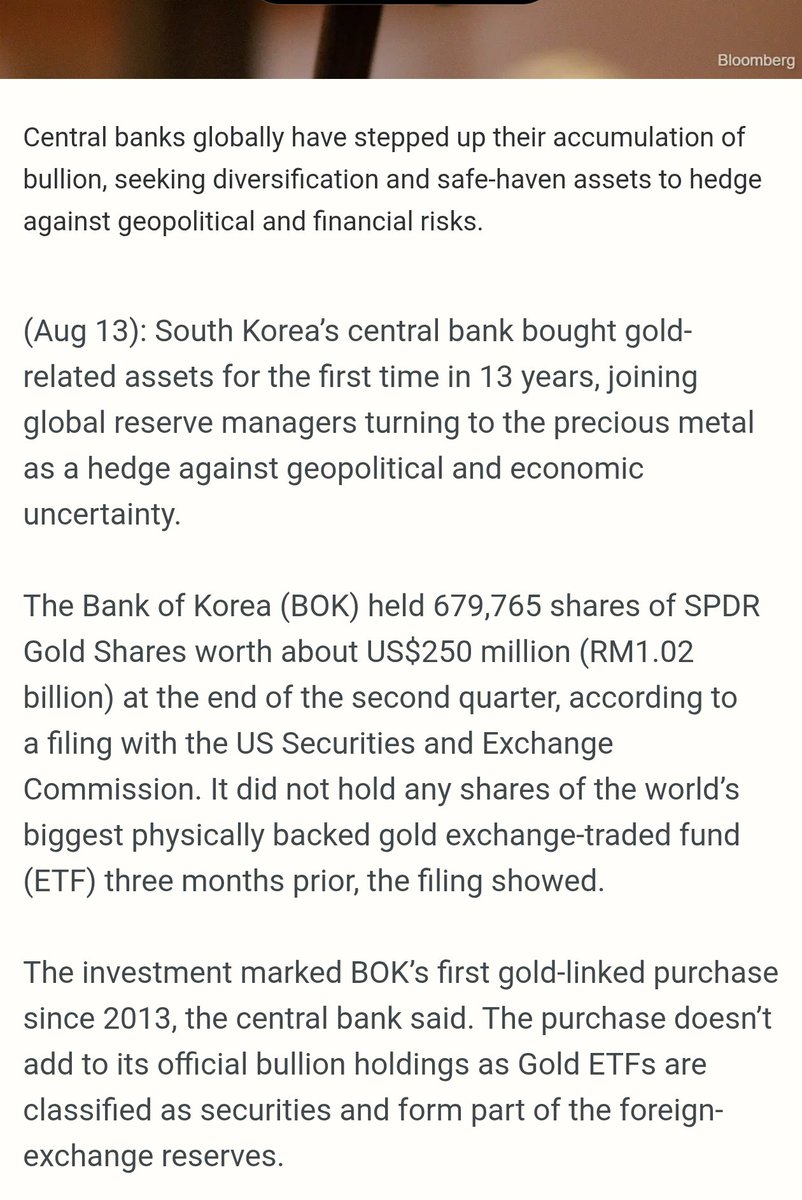
South Korea’s central bank just bought roughly $250 MILLION of GLD, the US-listed,Gold ETF.
That is a very interesting signal.
After staying effectively inactive in Gold for 13 years, the Bank of Korea has suddenly started rebuilding exposure.
But look at how they are doing it.
Instead of aggressively dumping dollar assets and openly challenging the existing reserve system, they first bought Gold exposure through GLD.
At the same time, they are creating a separate channel to make small direct purchases of domestically produced physical Gold.
That tells us something.
Countries like South Korea may not be in a position to openly defy the dollar-based reserve system.
So they are taking the quieter route:
Keep the existing reserve architecture.
Add liquid Gold exposure through GLD.
Slowly accumulate physical Gold domestically.
This is what gradual reserve diversification actually looks like.
Not every country is going to dump Treasuries overnight and announce that it is abandoning the dollar.
Most will probably hedge the risk from inside the existing system first, while gradually building physical reserves outside it.
And South Korea is particularly interesting because roughly 70% of its reserves remain dollar-denominated.
The $250 million itself is not the story.
The change in behaviour is.
For more than a decade, Gold was essentially dormant on the BOK balance sheet.
Now they are actively finding multiple ways to increase exposure.
To me, the message is becoming increasingly clear:
Gold is becoming the hedge against the coming sovereign-debt problem.
Central banks may not be ready,or able—to abandon sovereign bonds.
But they can hedge them.
And the sovereign-debt crisis may not begin with central banks dumping bonds.
It may begin much more quietly:
They keep the bonds… and steadily buy the asset that protects them when those bonds eventually become the problem.
Most of what young people blame on “capitalism” is actually the result of statism: big government; monetary debasement; regulation that blocks housing supply; taxes that punish work and investment; and political privilege that protects insiders.
Young people are not victims of free markets. They are victims of a big government system in which political spending rules, central banks subsidize debt instead of promoting price stability, savings, and prudent investment, and bureaucrats decide who gets opportunities.
More government will not solve any of it.
https://t.co/FD5eABY8Yl
Forget about what Warsh says; pay attention to what the Fed does. The Fed's balance sheet expanded by $11.388 billion last week. If the Fed was serious about its 2% target, it would be shrinking its balance sheet. While Warsh talks about fighting inflation the Fed is creating it.
#Forbes Middle East’s sixth annual Top 100 CEOs 2026 list spotlights executives shaping businesses while contributing to the region’s economic resilience and development.
Egyptians rank second by nationality on the list, with 15 CEOs featured, highlighting the country’s strong representation among the region’s leading business executives.
#Egypt
For More Details: https://t.co/gEFmGMQpuN
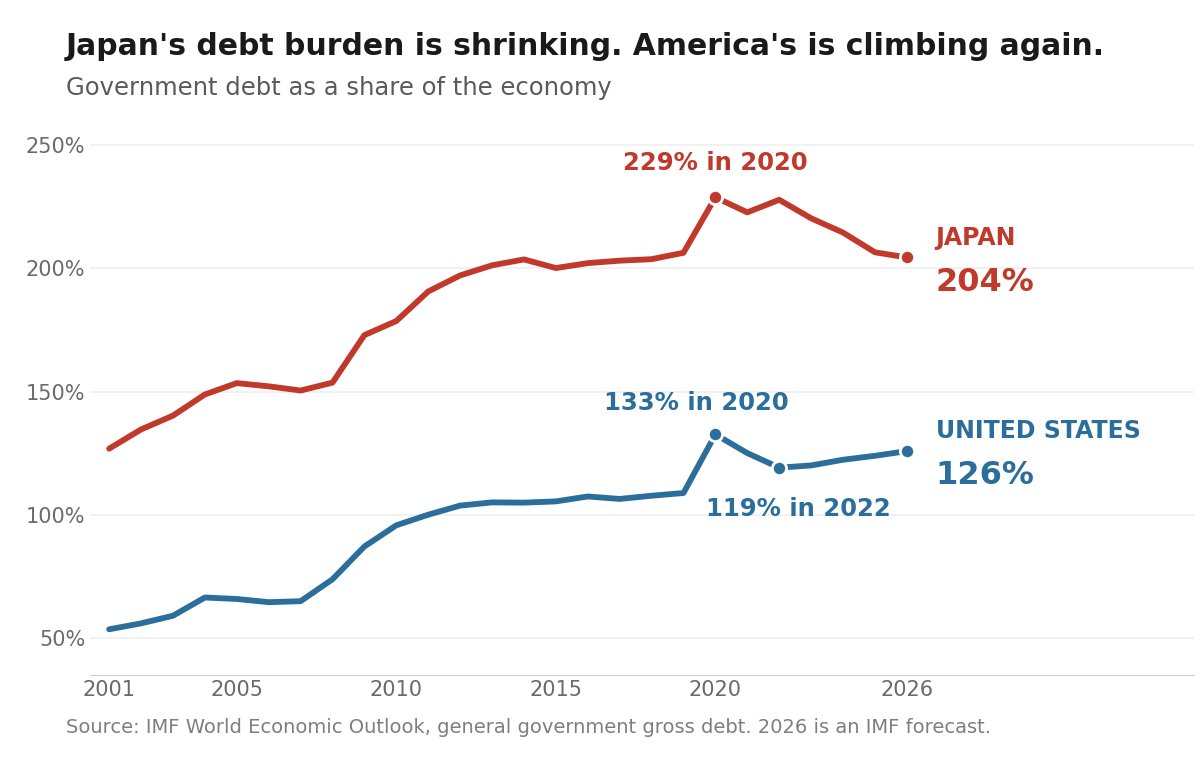
Japan has done something no other big economy has managed. Its debt-to-GDP ratio is falling — from a peak of 229% to 204% — and it didn't repay a thing. Its debt actually rose 11% over those five years.
The method has a name most people never hear: financial repression.
The idea is simple. Keep interest rates below inflation. That's the entire policy.
Think about what a government earns and what it pays. It earns taxes. Taxes are a slice of everything bought, sold and earned in the country, so when inflation pushes up prices and wages, collections rise automatically. Same tax rates, bigger numbers.
What it pays is interest on old debt. If the central bank pins rates down while inflation runs, that cost barely moves.
So the government's income climbs year after year while its debt bill stays flat. Hold that gap open long enough and the ratio has to come down. No spending cuts, no repayment. Just time.
Japan ran exactly this. In 2023, inflation was 3.3% and the Bank of Japan's policy rate was still negative — below zero. Over five years the economy in yen terms grew 20% while debt grew 11%. The ratio fell on its own.
There is a loser, and it isn't foreigners. It's the Japanese saver, whose deposit earned nothing while prices rose 3% a year. The gap between what savers should have earned and what they got is precisely what the government kept. A tax nobody voted on.
Now the catch. This only works if you control your creditors.
Japan does. The Bank of Japan holds 48% of its government's bonds; Japanese banks, insurers and pension funds hold most of the rest. Foreigners hold 8%. When Tokyo suppresses rates, its own institutions absorb the loss. And they stay.
America can't. Foreigners own 31% of US public debt — $9.2 trillion. When Washington let inflation run in 2021-22, the trick began working there too: debt fell from 133% of GDP to 119%. Then the foreign holders did what captive ones can't. They sold, and demanded more to stay. The 10-year yield crossed 5% in October 2023, the highest since 2007. Higher rates on every new bond wiped out the gains, which defeats the entire purpose. The ratio is back at 126% and climbing.
So the one number that decides who can run this play isn't debt-to-GDP at all. It's the net international investment position — what a country owns abroad minus what foreigners own of it. Japan: plus ¥562 trillion, the savings of decades. America: minus $21 trillion. The first country owes itself. The second owes the world.
Views are personal. Not investment advice.
One of the most important macro charts right now - inflation and labor surprises leading the tone of “Fed Speak.” I’m in the hold for longer camp and believe we’ve seen the peak in Fed hawkishness.