@UrbanQhoul@wakkodoodle (remember what Delta told us about what happens when dream dust is used for immoral purposes...?)
Go watch the "Welcome to Rem" video if you haven't already.
you'll understand what I mean.
@UrbanQhoul@wakkodoodle ...!! ...Dreamdust perhaps? Oh dear... ...If what we've seen of Dreamscope thus far is anything to go by, then and Mel is collecting tapes to gather dreamdust... then whatever they need that dreamdust for cannot be good... to be quite likely used for "immoral purposes"
@LovableLilyLeah I personally find the fact that Nekomatas don't have human ears extraordinarily validating to actually see it in Media and that fact be made Canon, after years of me suspecting as much.
Colugos are arboreal gliding mammals that are native to Southeast Asia.
A fur-covered membrane, called a patagium, connects to the face, paws, and tail, giving them an unusual body shape.
This insect is a true bug nymph (order Hemiptera), most likely belonging to the family Pentatomidae (commonly known as a stink bug nymph or shield bug nymph) or a related flat-headed hemipteran bug in an early developmental stage.
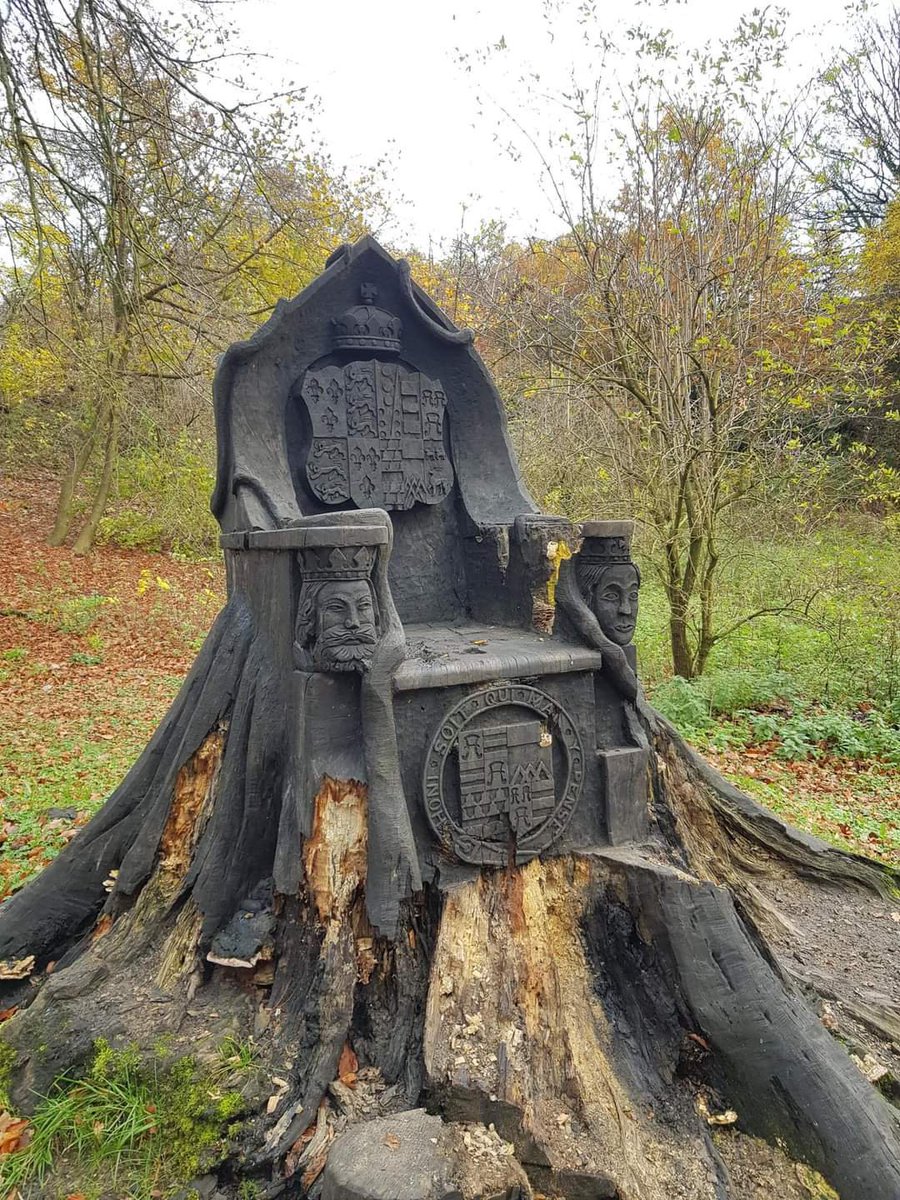
In Kendal, England 🏴🇬🇧, a unique throne carved into a tree trunk stands as a fascinating blend of nature and craftsmanship... ...
A throne carved into a tree trunk in Fletcher Park, Kendal, England; created in 2012 by artist Andy Levy. Intricate details represent Parr family, including coat of arms of Sir William Parr, who lived at Kendal Castle in 16th Century AD. Coat of arms of Catherine, who became the 6th and last queen consort of Henry VIII. Faces on throne are copies of stone sculptures of king and queen found in Kendal Parish Church, where remains of William Parr rest in a black marble tomb.
This unusual piece of furniture, created by skillfully shaping a solid tree trunk, evokes a sense of ancient artistry, where the raw beauty of the natural world is combined with human ingenuity. The tree trunk throne is not only a testament to the craftsmanship of the carver but also reflects a deep connection between the people of Kendal and the surrounding natural landscape.
The throne itself is a striking piece, with the rough texture of the wood contrasting with the smoothness of its carved seat and armrests. The intricate details of the carving bring out the natural grain of the wood, emphasizing the organic flow of the material. It suggests a time when furniture was designed with a reverence for nature, and the use of local resources was central to the creation of everyday objects. The throne may have once had ceremonial or symbolic importance, adding another layer of historical intrigue to its existence.
Today, the throne carved from a tree trunk serves as a reminder of the region's deep-rooted connection to its environment and traditions. It stands as both a work of art and a functional object, showcasing how ancient craftsman integrated their surroundings into their creations. Whether viewed as a relic from a bygone era or a modern piece of cultural heritage, the throne in Kendal remains a powerful symbol of the intersection between nature, history, and human creativity.
#archaeohistories