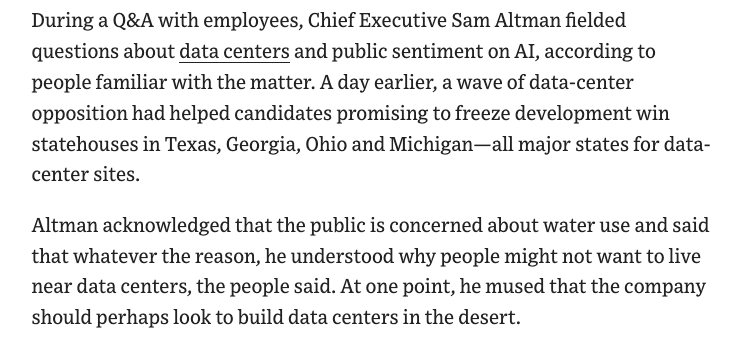
SCOOP: During a Q&A with employees Wednesday, Sam Altman said he understood why people might not want to live near data centers and at one point mused that OpenAI should put data centers in the *desert*, according to people familiar with the matter.
Quite a quote:
“X has not been injured by a restraint on competition; instead, it faced competition and lost. Advertisers choosing to purchase what they considered to be a better product..does not reflect a breakdown of the competitive process”
https://t.co/v9n2SS0kSB
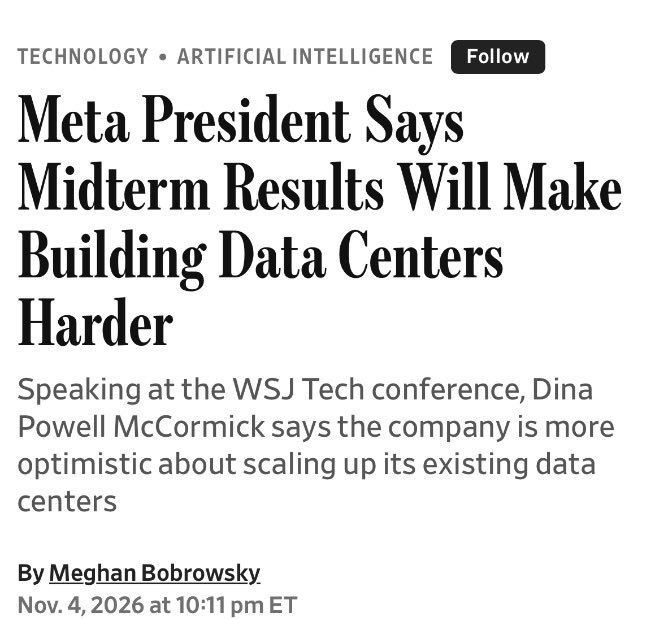
“.. McCormick said she expects there is ‘going to be a lot more review’ of new projects. ‘What I mean by that is to start new data center build-outs today in the United States will be very challenging.’”
@WSJ $META
https://t.co/f9Z5yVxEhL
Today we’re launching the first AI modeling agency 💅 right inside Glif.
Cast hundreds of real AI models, drop your product, idea or brief and let Glif create super compelling content for you end to end.
If you still think AI models aren’t ready for real work, watch this 👇
Big-budget car ads are slowly disappearing from your TV… even during NFL games.
That means more ozempic, more liberty biberty and more Sydney Sweeney. Yay??
https://t.co/C8AzBDNYko
Just learned the 15k bird toy store owner is also the author of “Dragons Love Tacos” and everything clicked into place for me, I sank through the earth’s crust to the bubbling lava core of loathesome millennial cringe bullshit and it whispered my name. Woke up drenched in sweat
Where are brands putting their big money tariff refunds?
Many say MARKETING.
But these announcements might reveal more about investor relations strategies than holiday campaigns.
https://t.co/JUTLhPekuK
@9Number9@Ryanbarwick I do remember the sales parties where I took a beer right back to my desk, because someone had to make sure there was enough blog content for a Friday!
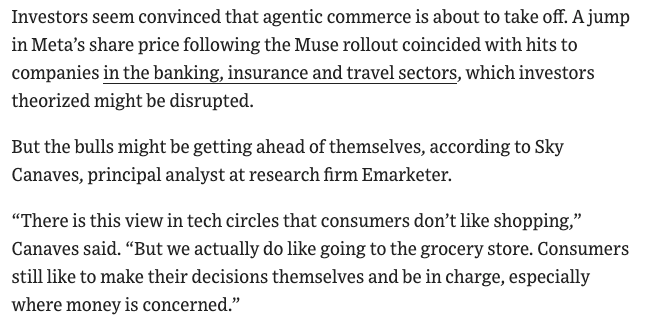
The most interesting part of the AI shopping hype is tech expectations versus reality.
Some brands are proactively sending their catalogs to AI companies. Meta's share price jumped following the Muse rollout.
But only 3% of adults would trust AI to complete purchases.