The main purpose of a Senior IT Leader is to turn kWh into $$$'s. Period.
I'm not sure why so many miss that.
I've been through several technology waves, and that history gives us something to draw from.
The PC, the web, mobile. Each one arrived with novelty, then hype, then a split: those that wanted to build cool tech vs. the business asking how to get a multiple on their invested tech dollars.
AI is no different.
What surprises me is how few technical leaders can make the conversion. They can explain reinforcement learning or get wide-eyed on Agentic Architectures, but they can't cite the bottom-line economics.
The kWh is not the point. The dollar is the point.
The businesses that won prior platform shifts were not the ones with the best technology. They were the ones that figured out, fastest, how to turn infrastructure into income.
That work is still the job.
#AI #ITLeadership #EBITDA #ValueCreation #AIStrategy
The doctor gave their IT program 18 months to live. The patient didn't want to hear it. They never do.
The Weight Problem
Unmanaged consultants are empty calories. The organization gets a spike: a deliverable, a deck, a workshop. Then they leave. The weight stays. Nobody owns the outcome. The scale keeps moving in the wrong direction.
The Poor Diet
Platforms that never integrate are five drive-throughs calling itself a meal plan. Every system was a good decision in isolation. Together: redundant costs, brittle pipelines, teams managing interfaces instead of delivering value.
Healthy architecture has a food pyramid. Core platforms that nourish. Integrations that digest cleanly. A footprint that moves without carrying dead weight.
The Smoking Habit
Technical debt is smoking. Everyone knows it's killing them. It feels manageable today. It isn't. Every sprint that adds debt without retiring it is another pack. The checkout counter always comes. It arrives as a failed audit, a security incident, or an 18-month warning from someone who finally read the chart .
The Sedentary Lifestyle
Organizations that never exercise their change muscle lose it. Teams that haven't shipped meaningful change in 18 months don't suddenly sprint when the board demands it. Deploy. Iterate. Retire. Replace. When that stops, everything calcifies.
The Intervention
Good technology leaders are diagnosticians first. Read the vitals. Deliver the news without drama. The prescription is rarely exciting: rationalize the portfolio, align spend to EBITDA, and build habits that compound.
The patient rarely wants to hear it. The ones who do are the ones who survive.
The University of Florida - Warrington College of Business didn't just give me an MBA. It gave me a sharper version of myself.
When I enrolled, I came in with years of experience, a clear professional identity, and what I thought was a solid command of my strengths. What I didn't expect was how directly the program would confront what I didn't know. The coursework was rigorous, relevant, and deliberately designed to close gaps. Not the comfortable kind of learning that confirms what you already believe. The kind that exposes blind spots and forces you to rebuild your thinking from the ground up.
The faculty and staff made that process work. Their professionalism was consistent. Their guidance was substantive. Their commitment to student success wasn't performative. It showed up in how they structured the curriculum, how they engaged with students, and how they built something rare in a graduate program: a genuine sense of community. The residency weekends were the engine of that. Masterfully curated, they compressed months of relationship-building into focused, high-intensity experiences that made a cohort feel like a team.
That environment was amplified by cohort president Chris Taylor, MBA. His leadership demonstrated the Warrington way, ensuring the class navigated the program with a shared focus and an uncompromising standard of excellence.
And then there was my immediate team. Adam, David, and Taylor were there from the beginning. The late nights, the weekend case studies, the deadlines that didn't care about anyone's schedule. What made it work wasn't just that everyone was capable. It was that everyone was committed. They flexed around each other's lives without complaint and brought their best to every deliverable. Their dedication to doing excellent work set a standard that pushed all of us.
To the UF Warrington program, thank you. To the faculty and staff who poured into this experience, thank you. Martin Iragorri, MBA , thank you for delivering when it counted. To Adam Geesey-Chaouki, MBA , David Padron, MBA , and Taylor Pittman , it was an honor. The standard you held, the flexibility you showed, and the work you produced made this journey one I will always look back on with pride.
There's one final thing I must share. It's quietly satisfying being in a foreign country, wearing a University of Florida hat, and hearing a stranger yell "Go Gators!" from across the street. The network isn't a bullet point on a brochure. It's real, it's global, and it shows up when you least expect it.
It's a great day to be a Florida Gator!
#UFWarrington #GatorNation #GoGators #Leadership #ProfessionalDevelopment #WarringtonMBA
Most PE firms price enterprise data as infrastructure. That is the wrong column on the balance sheet.
Proprietary data is inventory -
It compounds.
It has exclusivity.
It has buyers in adjacent markets willing to pay for access.
Once it is structured and contractually clean, it is the hardest moat in the portfolio to replicate.
Competitors can copy a product. They can poach a team. They can match a price. They cannot retroactively generate ten years of claims data, sensor telemetry, or transaction history they never collected.
The mispricing is consistent -
Diligence models expense the data platform.
Value creation plans modernize it.
Exit decks rarely monetize it.
The revenue sits locked in the warehouse, classified as a cost center.
Firms that price data assets during diligence will win auctions their competitors think they are overpaying for. Firms that build monetization into the hold period will exit at multiples their competitors cannot model.
A few ways to approach the exercise:
Calculate Replacement Cost: Multiply the organic CAC per record by total volume to establish the absolute valuation floor.
Model Syndication Yield: Calculate the NPV of licensing anonymized, structured datasets to external buyers in adjacent markets.
Measure EBITDA Impact: Quantify the internal margin expansion driven by the data, then apply your target exit multiple to those savings.
Data is not overhead.
It is an Asset.
It is the moat.
#PrivateEquity #TechnicalDueDiligence #ValueCreation
She told me her CEO had not made a real decision in eleven months.
Eleven months. I made her repeat it.
I was at an alumni event talking with a fellow UF MBA grad, now three years into a CFO seat at a mid-market 3PL player. Revenue flat. Headcount creeping. Two VPs running parallel strategies because the CEO would not pick one. Every exec meeting ended the same way: "Let's circle back next week." Next week became next quarter. Next quarter became a board deck full of dreams lacking deliverables or accountability.
She said the worst part was not the indecision itself. It was watching good people leave. The head of ops took a role at a competitor. Her own team started interviewing. Her best PM told her, "I did not sign up to run a book club."
Meanwhile the CEO was hosting offsites. Commissioning culture surveys. Hiring a second chief of staff. Doing everything except the job.
She pointed me to the McKinsey piece, "Decision making in the age of urgency." The data is clear. Only 20% of executives say their organizations excel at decision making. Most blame process. Most blame alignment. Most blame the board. Almost nobody blames the person at the top who confused consensus with leadership.
The data says something uncomfortable. Speed and rigor are not opposites. Winning organizations empower employees to make delegated calls, coach them through it, and give them space to fail safely. Doing both makes the odds of being a winning organization 3.9 times greater. The leaders who run to the pain, make the call, and own the outcome produce better decisions than the ones who workshop every choice to death.
Empowerment is the tell. Great operators segment their decisions. They push delegated calls down, trust their people to execute, and reserve their own bandwidth for the infrequent, high-stakes moves that actually shift enterprise value. Weak ones invert it. They micromanage the small stuff and freeze on the big stuff. They confuse being busy with being decisive.
I am posting this now because she just quit. Her now ex-CEO sent a company-wide email about her departure. It used the word "journey" three times. They had a "Cake Wake" in her honor.
The company she joined? Run by an operator who makes five hard calls before lunch and sleeps fine.
That is the job. Run to the pain. Make the call. Move.
#Leadership #PE #DecisionMaking
Many people think AI will take their jobs. I see the opposite. AI is giving you a promotion.
AI’s rapidly evolving capabilities draw big attention in the media. “AI will replace all your workers, layoffs abound, it’s coming for you.” Dramatic headlines sell engagement and advertising. The reality is different.
Let’s address the layoffs first. Many companies went on hiring binges during COVID, adding workers at a record pace. With the economics now hitting the balance sheet, we’re seeing staffing reductions to right-size organizations. The companies signaling layoffs “because of AI” are also incentivized by selling those very same AI solutions. Hyperscalers, investment banks, and enterprise software companies all have a significant interest in improving AI revenue and margins. Signaling to the market “Look what our AI tech did” is a great way to cut operating costs while driving growth.
When you discount the hype, what we’re seeing is a more subtle shift in workforce dynamics. The unquantifiable value of general chat and low-leverage busywork is being replaced by capabilities you can tie directly to improvements in operating costs.
Workers once tasked with adjusting GL entries, invoice matching, or assembling reports are being promoted to supervisors over the AI systems that adjudicate line items at scale.
Software developers are becoming architects and development managers as they orchestrate agents building new systems.
Legal professionals are shifting from routine redlines and research to oversight, validation, and risk management through digital workflows.
This new paradigm will evolve slower than the media suggests, but faster than the last waves of Internet 2.0 or mobile distribution. Workers who adapt will have a significant advantage in the labor market. People who can capitalize on AI skills will demand a premium over those resistant to change. Employers will see more value in workers who drive efficiency and output than in peers at the wrong end of the distribution.
#AI #ArtificialIntelligence #FutureOfWork
Tech progress isn't measured in deployments; it's measured in margins. If an AI application doesn't impact the bottom line, it's a hobby, not a strategy. While experimenting with the latest AI framework or cloud-native platform feels progressive, it’s meaningless if it doesn’t translate to EBITDA. The disconnect? Many engineers aren’t trained to quantify how technical decisions ripple through P&L statements.
Infrastructure costs are straightforward. The challenge lies in measuring the hidden drags like development hours lost to legacy integration, operational friction from fragmented data pipelines, or the compounding liability of unmaintainable code. When pressed to defend these choices, teams often default to defending their “art” rather than confronting the financial reality. Resistance flares when capabilities are scrutinized through an EBITDA lens, as if valuing efficiency equates to devaluing expertise.
To quickly orient on the true cost structure, pull and normalize the cloud and infrastructure spend against revenue benchmarks, run automated code scans to score technical debt and security liability, and map engineering headcount against actual output. Each track produces a dollar figure, not a technical opinion. Together they build a cost adjustment schedule that tells us where the real EBITDA drag is hiding.
Longer term, the fix is structural. It requires technologists to defend their budget in the language of the business and finance leaders to understand the "interest rate" on technical debt. We don't need more spreadsheets; we need a shared ledger where technical milestones are milestones for EBITDA. When a microservice is deployed, the success metric isn't "is it live?" It should be "has it reduced the cost of delivery?"
Yes, it’s messy. No two companies attribute value identically. But when technologists start seeing their stack as a lever, not a monument, the conversation shifts. Suddenly, “cool” becomes “cost-effective,” and “legacy” becomes “liability.” EBITDA isn’t the enemy of innovation; it’s the scorecard.
hashtag#EBITDA hashtag#ValueCreation
Tech progress isn't measured in deployments; it's measured in margins. If an AI application doesn't impact the bottom line, it isn't a strategy, it's a hobby. While experimenting with the latest AI framework or cloud-native platform feels progressive, it’s meaningless if it doesn’t translate to EBITDA. The disconnect? Many engineers aren’t trained to quantify how technical decisions ripple through P&L statements.
Infrastructure costs are straightforward. The challenge lies in measuring the hidden drags like development hours lost to legacy integration, operational friction from fragmented data pipelines, or the compounding liability of unmaintainable code. When pressed to defend these choices, teams often default to defending their “art” rather than confronting the financial reality. Resistance flares when capabilities are scrutinized through an EBITDA lens, as if valuing efficiency equates to devaluing expertise.
To quickly orient on the true cost structure, pull and normalize the cloud and infrastructure spend against revenue benchmarks, run automated code scans to score technical debt and security liability, and map engineering headcount against actual output. Each track produces a dollar figure, not a technical opinion. Together they build a cost adjustment schedule that tells us where the real EBITDA drag is hiding.
Longer term, the fix is structural. It requires technologists to defend their budget in the language of the business and finance leaders to understand the "interest rate" on technical debt. We don't need more spreadsheets; we need a shared ledger where technical milestones are milestones for EBITDA. When a microservice is deployed, the success metric isn't "is it live?" It should be "has it reduced the cost of delivery?"
Yes, it’s messy. No two companies attribute value identically. But when technologists start seeing their stack as a lever, not a monument, the conversation shifts. Suddenly, “cool” becomes “cost-effective,” and “legacy” becomes “liability.” EBITDA isn’t the enemy of innovation; it’s the scorecard.
#EBITDA #ValueCreation
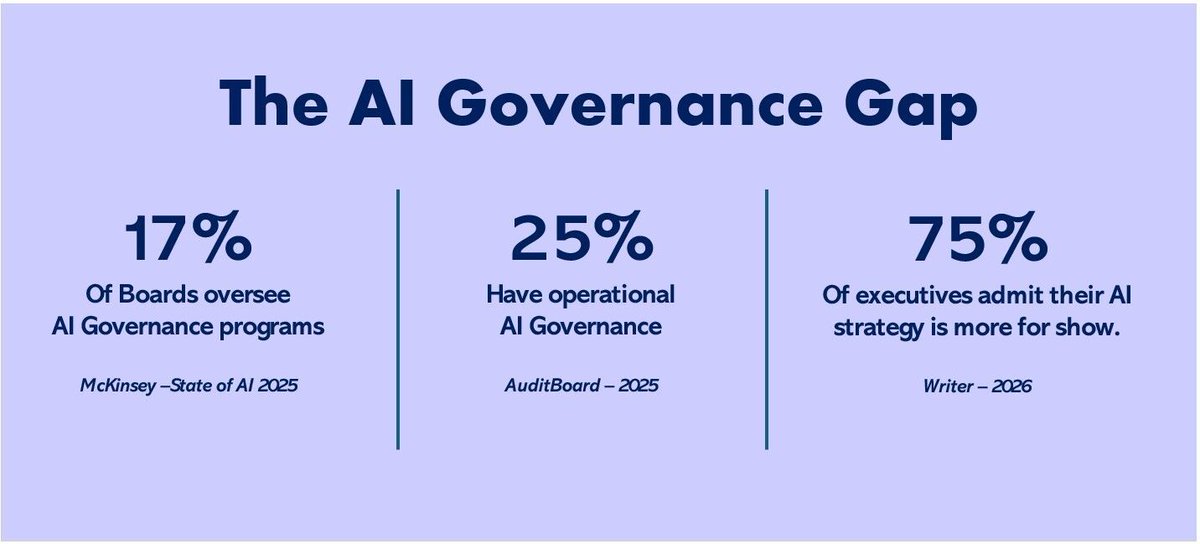
Driving AI value without strong governance is playing high-stakes poker with your shareholders’ money.
You can chase big wins with AI, but without strong governance, the game quickly turns dangerous.
Stakeholders agree on the need for risk management, yet they stall when it is time to implement. A written policy is not a technical control; turning executive intent into reliable, enforceable code is the hardest part of the journey.
Modern tools give you the power, but they still demand the steady hand of your security architects and infrastructure teams. You will need to experiment, stress-test your policy guardrails, and prove the tools actually work. Real-time telemetry and alerting deliver the visibility risk managers need to move from doubt to trust.
Vendors will happily pitch "silver bullets" to solve every organizational gap. I am skeptical the moment someone claims to know my firm's specific challenges. Every organization has unique processes and stakeholders; no application is going to arrive and magically align them.
I have found it far more effective to unite risk teams and technologists to solve these challenges; we must mature our capabilities together through iterative, shared feedback loops. Build that technical foundation, and skepticism turns into confidence. Confidence drives adoption. Adoption drives real economic value.
#AIGovernance
The Fastest Way to Kill a Post-Close Roadmap? Let the Tech Debate Get Personal. T.I.M.E. fixes that.
Every post-close integration and budget cycle has the same moment. Leadership asks which systems survive and which get cut. The room tenses up. Suddenly you are not talking about software. You are talking about someone's decision. Someone's budget. Someone's org chart. The pearl clutching begins.
That conversation costs you weeks you do not have and EBITDA you cannot afford to leave on the table.
Every technology asset in the portfolio gets one of four classifications: Tolerate, Invest, Migrate, or Eliminate. That is it. No judgment. No blame. Just a category tied directly to value.
Tolerate means it is stable and not worth disrupting during integration. Invest means it is a genuine value driver that deserves capital and attention. Migrate means a better path exists and we have a plan to get there. Eliminate means it is dead weight with a run-rate cost and no defensible return.
The real power is what comes next. Each classification carries an economic assignment. Invest assets get a capital allocation. Migrate assets get a transition cost and a timeline. Eliminate assets get a run-rate savings figure. Suddenly every system in the portfolio has a number attached to it, not an opinion. You are no longer debating which platform someone prefers. You are debating whether a $400K annual drag on EBITDA is worth keeping. That is a different conversation entirely.
When every asset has a classification and a number, the 100-day roadmap writes itself. You know where to protect margin, where to accelerate consolidation, and where to stop spending money on systems that were never going to survive the deal anyway.
In my experience across 70+ diligences and countless budget cycles, the organizations that struggle are rarely missing the right technology. They are missing a shared language that lets leadership make fast, objective calls without relitigating every vendor decision from the last five years.
T.I.M.E. is not a decision engine. It is a forcing function. It takes a room full of opinions and replaces them with a shared framework, a number, and a next step. The emotion does not disappear. It just stops running the meeting.
Change management looks simple in a deck. It gets hard as soon as the people show up.
Driving operating efficiency changes in PE-backed portfolio companies and large enterprises is not just a tooling or process exercise. It takes influence and behavioral change from people who often have different goals, incentives, and levels of risk tolerance. You are asking them to change how they work, while the pressure is rising, and the scoreboard is public for investors, boards, and sponsors.
From my experience in value-creation and transformation work, a few conditions matter most:
- Safe communication that allows real disagreement without turf wars.
- A clear mission that outranks individual agendas.
- Decision rights that are understood and respected.
- Honest baseline data so debates anchor on facts, not stories.
- Fast feedback loops that show whether the changes are working.
You feel it most in the room. The change starts to stall when people start protecting their lane, managing optics, or quietly resisting anything that threatens their position. Leaders have to make the meeting norms explicit: call out unhelpful behavior, reinforce the positive, and continue to signal that mission contributions matter more than personal agendas.
The hard part in a portfolio or enterprise setting is that you don't always get to replace the entrenched, value-killing actors. Sometimes the only real lever is making the expectations so clear, and the incentives so visible, that they either adapt to the new pattern or self-select out over time. My latest thinking on this, especially in value creation work, is that transformation is not won with consensus; it is won by making the new standard the only viable path forward.
The wait and see approach to generative AI in M&A is a deliberate choice to leak value.
A recent McKinsey report shows that forty percent of practitioners using generative AI see deal cycles that are thirty to fifty percent faster, with average cost reductions of roughly twenty percent. Yet most respondents are barely engaging with the technology.
The gap isn't the technology, it's the operating model.
The large majority of current users rely on commercially available chatbots, while high performing teams are deploying agents that run semantic search over internal and external data to score hundreds of targets per day against explicit investment theses.
Waiting for tools to mature is a failing strategy. The tools are already capable of summarizing virtual data rooms and extracting diligence insights. The bottleneck is internal. Teams lack expertise and their legacy data is still unstructured.
To capture this value, teams must stop treating AI as a novelty. They need to codify screening rules, red flags, and integration assumptions into a repeatable playbook and structure their proprietary data now. The firms that formalize their M&A playbooks today will dictate the pace of the next market cycle.
Speed follows conviction.
#PrivateEquity #MergersAndAcquisitions #ValueCreation #EBITDA
Stop chasing the AI Model of the week.
In a rapid release cycle, the model is a commodity. The way you judge it is your real intellectual property.
A golden data set scored against an enterprise rubric changes the evaluation game. When a new model drops, you do not need hype or vibe-based testing. You run the same test, the same way, every time. The assessment is fast. The improvements are visible. The pivot points for workloads stand out.
This is the line between experimentation and execution.
Experimentation is random prompts and a better feel.
Execution is scoring output against clear business requirements, latency targets, and cost-to-value.
When the infrastructure is ready, you do not fear the next release. You welcome it. You are not guessing about moving workloads. You have the numbers.
In a world of rapid model decay, the rubric is the only stable point of reference.
Stop chasing models. Build the framework that lets you swap them without apology.
Most enterprises don't lose control of AI all at once. It happens gradually. Sensitive data passed somewhere it shouldn't. Costs climbing with no one watching. An agent acting without approval. Each step feels small. Together they become a crisis. Governance isn't optional at enterprise scale. The AI Control Plane exists to prevent exactly that. Across nine capability domains, it establishes the infrastructure, policy, and oversight required to run AI securely, reliably, and at scale.
𝟭. 𝗦𝗲𝗰𝘂𝗿𝗲 𝗔𝗜 𝗔𝗰𝗰𝗲𝘀𝘀 & 𝗧𝗿𝗮𝗳𝗳𝗶𝗰 𝗠𝗲𝗱𝗶𝗮𝘁𝗶𝗼𝗻
A centralized AI Gateway serves as the single entry point for all AI requests, providing protocol translation across providers, rate limiting, failover resilience, and performance optimization through semantic caching. The result is reliability, portability, and consistent enforcement across every AI interaction.
𝟮. 𝗦𝗲𝗻𝘀𝗶𝘁𝗶𝘃𝗲 𝗗𝗮𝘁𝗮 𝗣𝗿𝗼𝘁𝗲𝗰𝘁𝗶𝗼𝗻 𝗯𝘆 𝗗𝗲𝘀𝗶𝗴𝗻
The control plane enforces prompt and response level data protection using format preserving encryption, stateless tokenization, and NER-based detection of PII, PCI, and PHI. Redaction and reversible detokenization allow models to operate safely without ever touching raw sensitive data.
𝟯. 𝗜𝗱𝗲𝗻𝘁𝗶𝘁𝘆, 𝗔𝗰𝗰𝗲𝘀𝘀 𝗖𝗼𝗻𝘁𝗿𝗼𝗹 & 𝗣𝗼𝗹𝗶𝗰𝘆 𝗘𝗻𝗳𝗼𝗿𝗰𝗲𝗺𝗲𝗻𝘁
Enterprise governance is achieved through federated identity, granular RBAC, and context aware ABAC. A centralized policy engine enforces deterministic guardrails before and after model execution, covering content restrictions, code analysis, and action controls. Policy-as-code workflows ensure auditability and consistency at scale.
𝟰. 𝗙𝘂𝗹𝗹 𝗢𝗯𝘀𝗲𝗿𝘃𝗮𝗯𝗶𝗹𝗶𝘁𝘆, 𝗔𝘂𝗱𝗶𝘁𝗮𝗯𝗶𝗹𝗶𝘁𝘆 & 𝗙𝗶𝗻𝗢𝗽𝘀
End-to-end visibility is delivered through standardized telemetry, LLM-specific metrics including latency, token usage, and cost, and immutable audit logs of every prompt and response. Integrated FinOps capabilities enable chargeback, budget controls, and anomaly detection to keep AI spend in check before it becomes a problem.
𝟱. 𝗠𝗼𝗱𝗲𝗹 𝗟𝗶𝗳𝗲𝗰𝘆𝗰𝗹𝗲 & 𝗤𝘂𝗮𝗹𝗶𝘁𝘆 𝗠𝗮𝗻𝗮𝗴𝗲𝗺𝗲𝗻𝘁
Approved models are managed through a secure registry with immutable versioning and metadata. Automated validation includes red teaming, regression testing, load testing, and continuous drift detection. Scorecards track safety, ethics, and performance metrics to ensure every model in production remains aligned with enterprise standards.
𝟲. 𝗖𝗼𝗻𝘁𝗶𝗻𝘂𝗼𝘂𝘀 𝗘𝘃𝗮𝗹𝘂𝗮𝘁𝗶𝗼𝗻 & 𝗦𝗮𝗳𝗲𝘁𝘆 𝗦𝗰𝗼𝗿𝗶𝗻𝗴
A sovereign, locally hosted judge model evaluates AI outputs against defined safety and quality rubrics, including hallucination detection and RAG citation verification. Structured scoring enables automated gating, alerts, and feedback loops without exposing data to external systems.
𝟳. 𝗔𝗴𝗲𝗻𝘁𝗶𝗰 𝗢𝗿𝗰𝗵𝗲𝘀𝘁𝗿𝗮𝘁𝗶𝗼𝗻 & 𝗧𝗼𝗼𝗹 𝗘𝘅𝗲𝗰𝘂𝘁𝗶𝗼𝗻
The control plane supports multi-step AI workflows through routing models, task decomposition, and a governed agent skill library. Tools are exposed via standardized APIs, executed in sandboxed environments, and connected through the Model Context Protocol for secure, stateful integration.
𝟴. 𝗗𝗮𝘁𝗮 𝗙𝗼𝘂𝗻𝗱𝗮𝘁𝗶𝗼𝗻 & 𝗛𝘂𝗺𝗮𝗻 𝗢𝘃𝗲𝗿𝘀𝗶𝗴𝗵𝘁
A curated semantic model of core enterprise constructs provides the contextual foundation for agentic skills and tools. Human-in-the-loop workflows enable approvals, feedback, and active learning for high-risk or low-confidence AI actions, ensuring accountability where automation alone is insufficient.
𝟵. 𝗘𝗺𝗲𝗿𝗴𝗲𝗻𝗰𝘆 𝗖𝗼𝗻𝘁𝗿𝗼𝗹𝘀 & 𝗞𝗶𝗹𝗹 𝗦𝘄𝗶𝘁𝗰𝗵𝗲𝘀
Immediate containment capabilities include API key revocation, network isolation, and targeted compute shutdown. These controls allow rapid response to incidents or policy violations anywhere across the AI ecosystem, because governance without enforcement is just documentation.
𝗧𝗵𝗲 𝗕𝗼𝘁𝘁𝗼𝗺 𝗟𝗶𝗻𝗲
AI is high velocity technology. But speed without structure isn't velocity, it's exposure. The practices that made enterprise software reliable, governed, and auditable didn't become less relevant when large language models arrived. They became more urgent. Wide lanes and high guardrails don't slow you down. They're what let you go faster.
How many strategic planning sessions have you sat through? Dozens? Hundreds?
I just finished an MBA course that surfaced something I've felt for a while now: Planning is essential, but the plans themselves usually aren't.
Think about how many of those plans actually survived to the end. It's like a great chess match. I always develop a plan against my opponents, but the game conditions usually change after the first few moves.
It's taken me time to get comfortable with that reality. For me, growth came from learning to stop chasing the “perfect” plan, putting something in motion, and trusting my judgment. That growth changed my perspective; I now recognize the “planning” trap for what it is; a rigid process that trades actual leadership for the comfort of a static document.
What I value now is not the work product, but the opportunity to build a team that can survive when things goes off track. Planning sessions are the best place to surface the blind spots we all have. They allow us to collaborate on challenges and recognize our collective weaknesses before the stakes are high.
When things inevitably change the plan may be dead, but the team's trust and understanding remain. That's the true value and what enables teams to successfully pivot.
As I look back on my most successful moments, they were always the result of a great team that built trust through the planning process. Not some great plan that the team created and blindly followed.
Now, when the plan fails, I just think, "Good." It's the moment to ditch the script and trust our judgment to pivot and build something better.
#GatorNation #LeadershipDevelopment #Startups
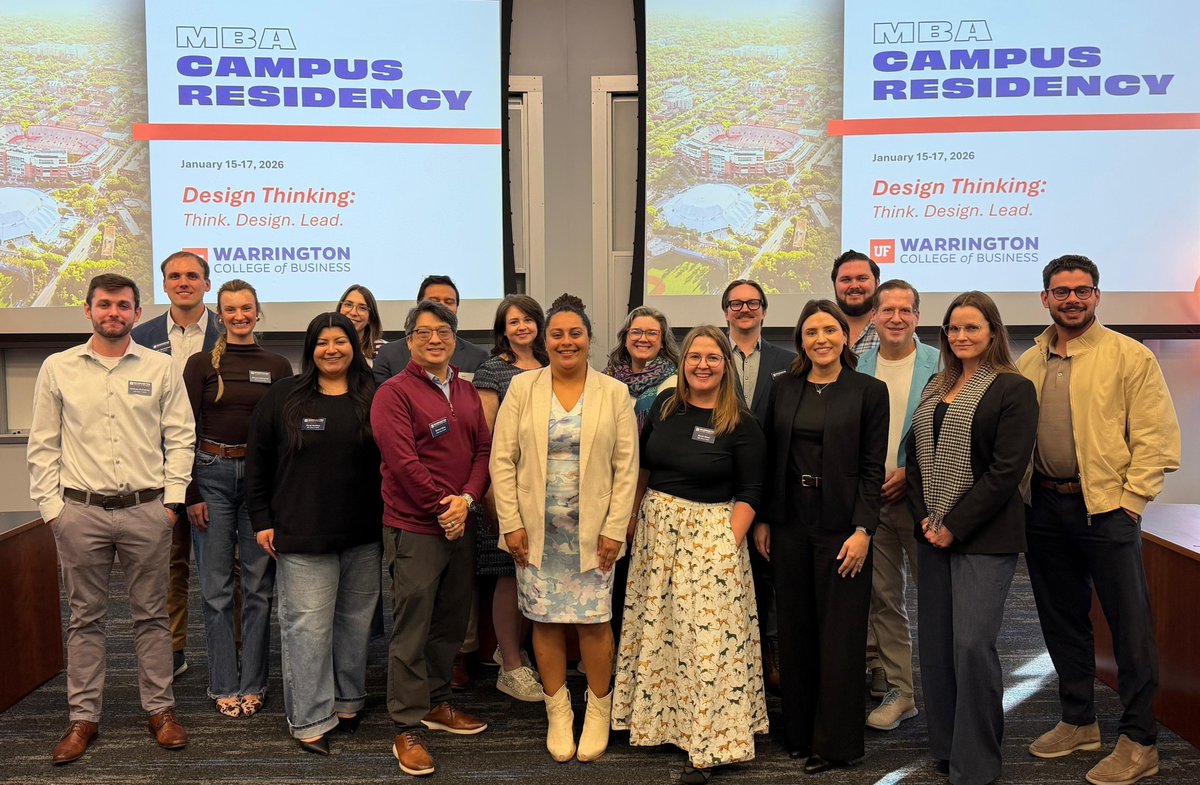
This past weekend marked my final MBA residency at the UF Warrington College of Business before spring graduation. Moments like these invite a certain level of reflection before the momentum of "what’s next" truly takes over.
What does a degree actually represent? Is it just a new badge for LinkedIn, a set of fresh skills, or a checkbox for self-improvement?
For me, it has been so much more. UF Warrington provided a stocked pantry of new ingredients, giving me everything I need to "cook up" whatever future I envision. I’m walking away with the business methods to tackle any challenge, the financial acumen to navigate complex deals, and the introspection required to turn my blind spots into strengths.
However, the most valuable additions to my pantry were the unexpected ones: the relationships and lifelong bonds formed along the way. Long after the books are closed and the frameworks are filed away, it’s the friendship and support that will remain.
I’m deeply thankful to the University of Florida for this opportunity, and even more so for the remarkable people who made this journey so meaningful.
#UFWarrington #GatorNation #DigitalTransformation #Consulting #Startups
Immokalee Readers is back—pairing high school mentors with elementary students to boost literacy and build futures. 97% of kids make gains. Tutors get paid. Everyone wins.
Workforce development starts in kindergarten. Let’s go. 💥
#ReadToLead#LiteracyIsLegacy#tutoring
@rohanpaul_ai That's really interesting. I work with a lot of people that want AI to write emails but when asked if they like reading AI generated emails the response is overwhelmingly no. I'm curious to see how society evolved in this topic.