I’m back everyone. I got locked out of my account but a year later I’m back and getting hyped up for our great nation’s 250th anniversary! 🇺🇸 Thank you for your support.
On this day in 1776, five men were handed an impossible assignment.
Write the document that would declare war on the most powerful empire on Earth.
They had 17 days.
The Committee of Five: John Adams, Benjamin Franklin, Thomas Jefferson, Robert Livingston, Roger Sherman.
They gave the job to Jefferson. He was 33 years old.
Adams later wrote that he pushed for Jefferson because Jefferson was a better writer and because Adams knew he himself had too many enemies in Congress.
Jefferson wrote the draft in about two weeks, alone, in a rented room in Philadelphia.
Congress then proceeded to argue about it for two days straight and cut roughly 25% of his original text. Jefferson sat in silence and watched them do it.
The part they cut the hardest? His condemnation of slavery.
The document we celebrate every July 4th is the edited version. Jefferson went to his grave preferring the original.
@ill_Scholar I wish we saw this type of pride everywhere. Even though leaders across the nation failed to create events worth celebrating, I will do my part and show my American pride 🇺🇸
A founding father signed the Declaration of Independence, watched the British seize his home for SEVEN years, lost his wife while living as a refugee, and then at age 69 walked away from it all to start over on the frontier. Meet William Floyd. Buckle up.
He never asked for any of this. His father died when he was a teenager, so Floyd dropped whatever education he might have had and took over the family farm on Long Island. He became wealthy, comfortable, established. His family had worked that same land for generations.
Then he was sent to the Continental Congress, and in July 1776 he became the first man of the New York delegation to sign the Declaration of Independence.
The punishment was almost immediate. Weeks later the British crushed the American army at the Battle of Long Island and took his entire estate. Then they did something extra: they turned his home into a barracks for their cavalry and occupied it for SEVEN straight years. His family fled across the water to Connecticut with essentially nothing.
For those seven years a wealthy landowner and his children lived as refugees, surviving on the charity of relatives and friends, while enemy soldiers ate his food and slept in his beds.
It got worse. In 1781, before the war was even won, his wife Hannah died in exile. She never saw home again.
When Floyd finally returned in 1783, the estate was wrecked. The home his family had held for generations was a ruin left behind by foreign cavalry.
Most men would have spent the rest of their lives quietly rebuilding what they lost. Floyd rebuilt it, remarried, served in the very first United States Congress, and then did the most surprising thing of all.
At nearly 70 years old, an age when most Founders were writing memoirs and posing for portraits, Floyd sold his comfortable life, packed up, and moved to raw frontier land near the headwaters of the Mohawk River in central New York. He cleared wilderness and built a new homestead from scratch.
He lived there until he died in 1821 at 87, a Founding Father who ended his life not in a mansion full of relics, but on the edge of the map, still building.
Some men signed the Declaration and lost everything. William Floyd lost everything, got it back, and then chose to start over anyway.
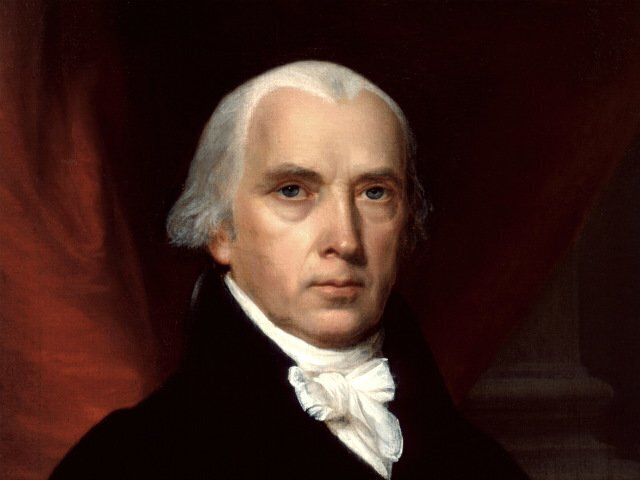
On this day in 1789, James Madison stood up in Congress and proposed the Bill of Rights.
What most people don't know: he thought it was a terrible idea.
Madison had spent years publicly arguing that a Bill of Rights was pointless, even dangerous. His logic was actually sharp. If you list specific rights, you imply those are the ONLY rights people have. What about the ones you forgot to write down?
So he didn't want to write it.
Then Patrick Henry ruined his life.
Henry was the most powerful political operator in Virginia and he despised Madison. He personally blocked Madison from the Senate. Then he redrew Madison's Congressional district to guarantee he'd lose that race too.
Madison was cornered. So during the brutal winter campaign of 1788-1789, he made a public promise: vote for me and I will personally deliver a Bill of Rights in the first Congress.
He won by 336 votes.
Here's the part that should blow your mind: Henry didn't even want a Bill of Rights. He thought it was too small. What Henry actually wanted was a second constitutional convention that would gut federal power entirely, strip Congress's ability to tax, claw back its war powers, fundamentally restructure the whole government.
So Madison wrote a Bill of Rights he didn't believe in, to defeat a man who didn't want it either.
Then Henry spent the next two years trying to block Virginia from ratifying the very amendments Madison had just written.
The First Amendment. The Fourth. The Fifth. The right against self-incrimination. The protection from unreasonable search and seizure.
All of it traces back to a petty political feud in 1788 Virginia.
History isn't made by visionaries with a plan. It's made by stubborn men backed into corners.