Educational consultant, author, blogger, lifelong learner, wife, and mom to 2 great kids! Passionate about reading, writing, and every child's right to learn.
🤖 AI can draft assessments, generate scaffolds, & suggest activities. What it cannot do is understand your students the way you do.
I created the REFINE framework to keep that expertise where it belongs: at the center of the design process: https://t.co/QNeFPfTxhr
#edtech
How to determine if a curriculum is really #knowledge_rich?
As @natwexler explains, in one curriculum:
"The brief articles all relate to the sky in some way, but they don’t refer to each other or build on one another. They don’t, for example, repeat key vocabulary words in a way that would enable children to retain them in long-term memory. Some texts have too little content, while others introduce too many concepts without adequate explanation."
Start your exploration here:
https://t.co/McM3BlJJ0e
10 Things You May Not Know About “Maslow Before Bloom”
After many years working as a teacher, principal, therapist, and professor, I kept noticing the same pattern: when students are struggling emotionally, academically, or behaviorally, the solution usually isn’t more pressure. It’s more support. That idea eventually became what many people now call Maslow Before Bloom.
Here are ten things many people don’t realize about this concept.
1. It’s not about lowering expectations.
One of the biggest misunderstandings is that Maslow Before Bloom means going easy on students. It doesn’t. It means meeting human needs first so students are actually able to reach high expectations.
2. It’s grounded in brain science.
When students feel unsafe, anxious, or overwhelmed, the brain shifts into survival mode. The emotional brain becomes louder and the thinking part of the brain becomes less active, which makes learning much harder.
3. Relationships are the most powerful intervention in schools.
Programs matter. Curriculum matters. But nothing changes a student faster than one adult who truly sees them and refuses to give up on them.
4. Behavior is communication.
What adults often call misbehavior is frequently stress, frustration, embarrassment, trauma, or a skill deficit showing up through behavior.
5. Safety includes emotional safety.
Students need to feel safe physically, but they also need to feel safe asking questions, making mistakes, and being themselves.
6. Many struggling students are not lazy. They are overwhelmed.
Anxiety, sleep deprivation, family stress, social pressure, and trauma all affect a student’s ability to focus and perform.
7. Adults need support too.
Teachers and school leaders carry tremendous emotional responsibility. When adults are exhausted or burned out, it becomes much harder to support students effectively.
8. Small moments can change a student’s life.
A greeting at the door, noticing effort, a quick check-in, or a moment of encouragement can have a bigger impact than we realize.
9. The concept works for adults too.
Maslow Before Bloom applies in workplaces, families, and leadership. People perform better when they feel safe, valued, and connected.
10. Hope fuels learning.
When students believe someone cares about them and believes in their future, their resilience and willingness to try again often increase dramatically.
After decades working in both education and mental health, I’ve come to believe something simple but powerful: When we take care of the human being, the learner has a much better chance to succeed.
Post by: Dr. Bryan Pearlman, author of the “Maslow Before Bloom” books
Join the “Maslow Before Bloom” Facebook group: https://t.co/015cLKjJ1m
All too often, research into #reading_comprehension makes emphatic claims based on a few studies.
@NateJoseph19 takes the opposite approach, looking for nuance in over 1500 studies.
His conclusion:
"There is no single [reading] comprehension pedagogy that works in all contexts."
More here:
https://t.co/JYnec6PelZ
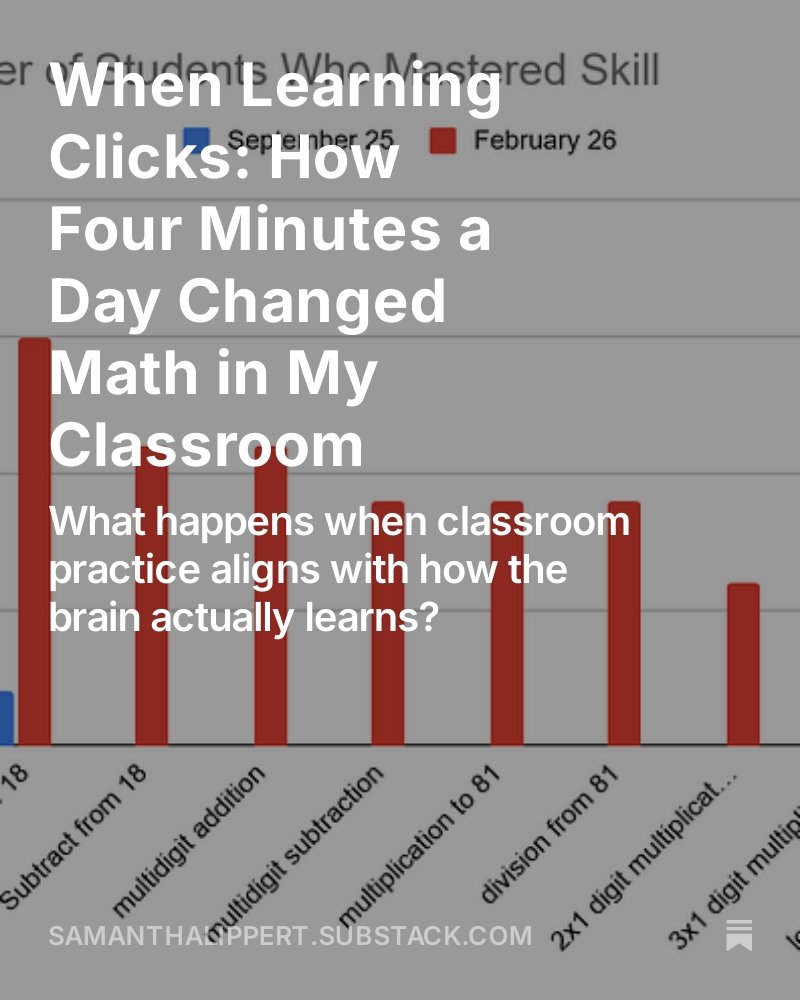
When instruction aligns with how the brain learns, success becomes predictable.
Automatically didn't replace thinking - it created space for it.
Check out my latest substack post!
https://t.co/9y14C9CtJY
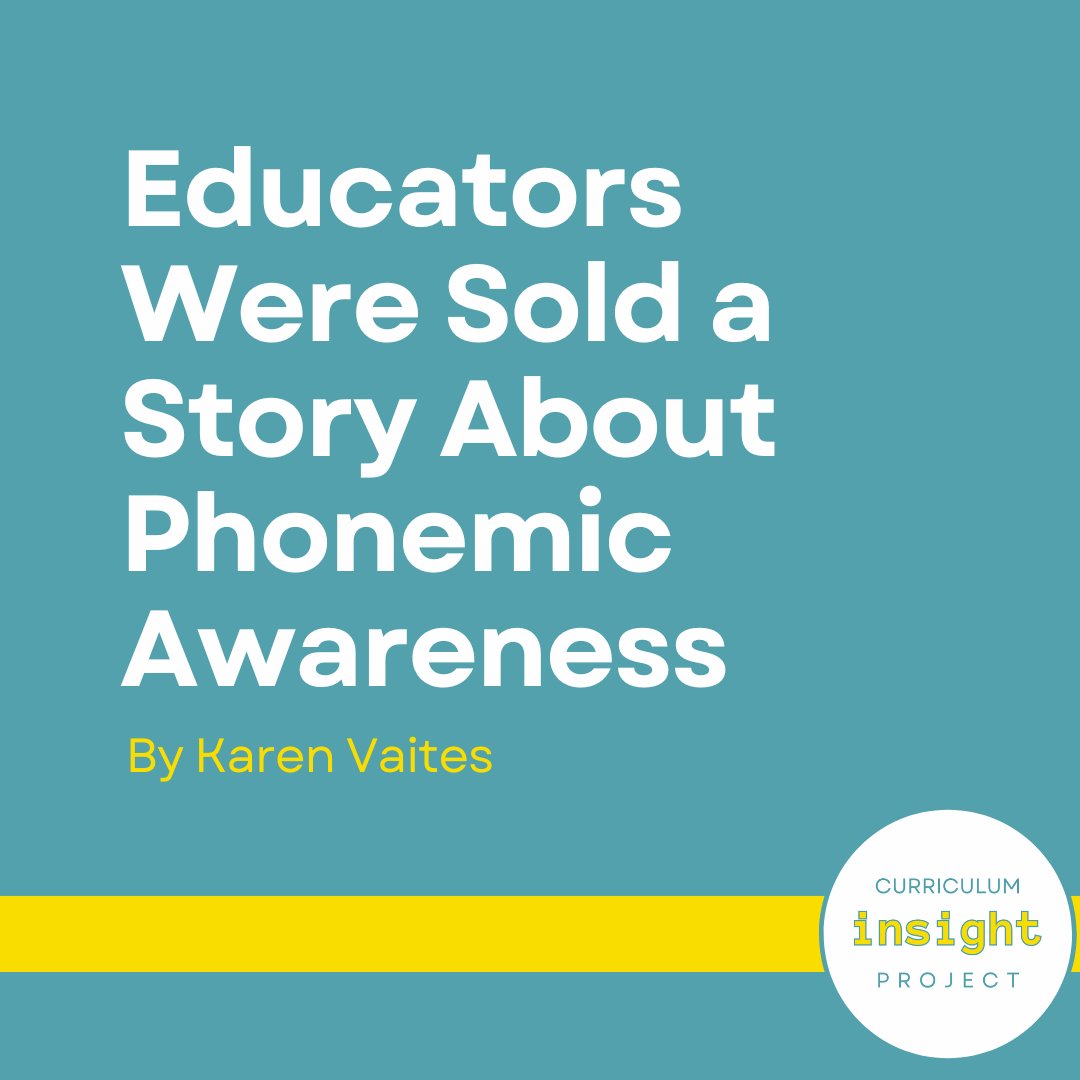
The rise (and pivot) of Heggerty did (and still does) represent an instance of overteaching foundational skills.
It swept the country even though it was based on theory, not evidence.
It's a cautionary tale.
https://t.co/AGVDqEVOA8
Your phone is a connection killer.
Even face-down.
Research shows phones reduce cognitive capacity and perceived engagement.
Attention is the currency. It’s the gift you give to others.
What is explicit instruction? Anita Archer, one of the world's leading experts on explicit instruction, explains it here.
Check out the full episode: https://t.co/tdxR3lSzJX
You've probably heard of "because, but, so" in English instruction.
Is there an equivalent for teaching #science?
In this post, @BenRogersEdu champions the use of "as, when, while" for understanding scientific thinking.
Check in out:
https://t.co/EWkqI3mRCp
The second edition of the ELL Teacher’s Toolbox is amazing! This is a resource I can’t recommend enough to educators of multilingual learners. @Larryferlazzo & @KHullSyp