Physician-scientist. Professor. Former Chief Immunology Officer of GSK. CEO of Candel Therapeutics ($CADL). Views expressed here are my own. Likes≠endorsement.
The newly published November 2026 American Cancer Society guidelines explicitly recommend individualized decision-making for men aged 70–74, while generally recommending against screening from age 75. The European Association of Urology guidelines support individualized, risk-adapted early detection in well-informed men with a life expectancy of at least 15 years.
While routine PSA screening in men over 70–75 is often discouraged, chronological age alone should not determine whether an individual should be screened. Life expectancy, overall health, individual risk and patient preferences are critical considerations.
Modern imaging, particularly multiparametric MRI, combined with improved histopathological risk assessment, increasingly allows us to distinguish indolent from clinically significant prostate cancer, reducing unnecessary biopsies and treatment.
Importantly, the potential harms of screening and treatment should be balanced against the consequences of undiagnosed, clinically significant disease. These include symptoms associated with local progression, metastatic disease, and the substantial loss of quality of life associated with subsequent anticancer therapies, particularly long-term androgen deprivation therapy.
With improved diagnostic tools, active surveillance strategies and therapeutic options, we should move away from a one-size-fits-all approach towards informed, shared decision-making between patients and their physicians.
The objective is not simply to reduce prostate cancer mortality, but also to prevent avoidable morbidity and preserve quality of life. Avoiding overtreatment should not come at the expense of preventable suffering from advanced disease.
1. PSA screening for prostate cancer after age 70–75: Routine screening is generally discouraged in older men because false positives & unnecessary treatment can cause harm.
2. Mammograms after age 75: Evidence is insufficient to recommend routine screening for everyone. Individual health and life expectancy matter.
3. Colonoscopy after age 75: Routine colorectal cancer screening is generally discouraged after 85 and individualized between 76 and 85.
4. Pap smear after age 65: Women with adequate previous normal screening & no high-risk history can usually stop cervical cancer screening.
5. Ovarian cancer screening: Routine screening in women without symptoms or high-risk genetic history is not recommended.
6. Whole-body CT scans: Routine scans in healthy people can expose them to radiation & lead to unnecessary procedures.
7. Repeated vitamin D blood tests: Routine testing in otherwise healthy adults is generally unnecessary unless there is a medical reason.
Important medical tests people over 60 should still consider
° Blood pressure checks.
° Diabetes screening.
° Cholesterol testing, depending on ° cardiovascular risk.
° Eye examinations.
° Hearing assessments.
° Bone density testing, particularly for women aged 65 and older.
° Colorectal cancer screening when appropriate.
° Kidney function tests when indicated.
When I started my career as a physician-scientist, I could never have imagined where the journey would take me, or how many extraordinary people I would have the privilege of working with along the way. Receiving two awards last week made me reflect on that journey with a deep sense of gratitude.
I am incredibly proud that Candel Therapeutics received the 2026 Citeline Biotech Award for Excellence in Oncology. This recognition belongs to our exceptional team, whose scientific rigor, resilience, creativity, and unwavering commitment to patients continue to drive our mission forward. To every Candel employee: thank you for your dedication, passion, and belief in what we are building together.
On a personal level, I am also deeply honored and grateful to have received the 2026 Achiever of the Year Award.
My professional journey began in academic medicine and as an entrepreneur, driven by scientific curiosity and the ambition to translate discoveries into better treatments for patients. Over the past 15 years, it has taken me into global business leadership roles in large pharma, where I had the privilege of helping lay the foundations for several medicines that were subsequently approved, and in biotechnology, as a co-founder, board director, Chair, and CEO.
Across these different environments, one conviction has remained constant: meaningful advances in medicine are never the achievement of one individual. They are the result of exceptional people working together, united by a shared purpose.
I am profoundly grateful to the many talented scientists, clinicians, colleagues, collaborators, investors, mentors, and teams I have had the privilege of working alongside throughout this journey. Their dedication, insights, and partnership have made these achievements possible.
My sincere thanks to the Citeline Biotech Awards jury for these two recognitions, and to all the employees and colleagues, past and present, who have contributed along the way.
Above all, these awards reinforce why we do what we do: to turn scientific innovation into meaningful improvements in patients' lives and create long-term value for patients, employees, investors, and society.
Over the past few days, I’ve been genuinely touched by the many people who have reached out, asked thoughtful questions, and expressed their appreciation for radical transparency. Your messages mean a great deal to me.
That is exactly why I’ve chosen to be more active here recently. I strongly believe in open, honest communication, especially when navigating challenges, while respecting the boundaries of a highly regulated environment.
Now it’s time for me to refocus fully on the work ahead, so I’ll be less active on social media for a while.
Throughout my career, I have been driven by one ambition: translating scientific discoveries into treatments that make a meaningful difference for patients.
That ambition is at the heart of what we are building at Candel Therapeutics.
I enjoyed joining The Business of Biotech podcast from Life Science Leader with Ben Comer to discuss our journey as we advance aglatimagene besadenovec toward potential regulatory approval and commercial launch.
We discussed the path from positive phase 3 results in localized prostate cancer to BLA submission, the importance of preparing for commercialization well before approval, and our broader vision for in situ immunization as a new therapeutic approach across solid tumors.
For me, this journey is about more than bringing a new medicine to market. It is about translating scientific innovation into meaningful improvements in patients' lives, while building an organization capable of delivering on that promise and creating long-term value.
Many thanks to the Life Science Leader team for the engaging conversation!
🎧 Watch the conversation here:
https://t.co/ypjp5bCSXR
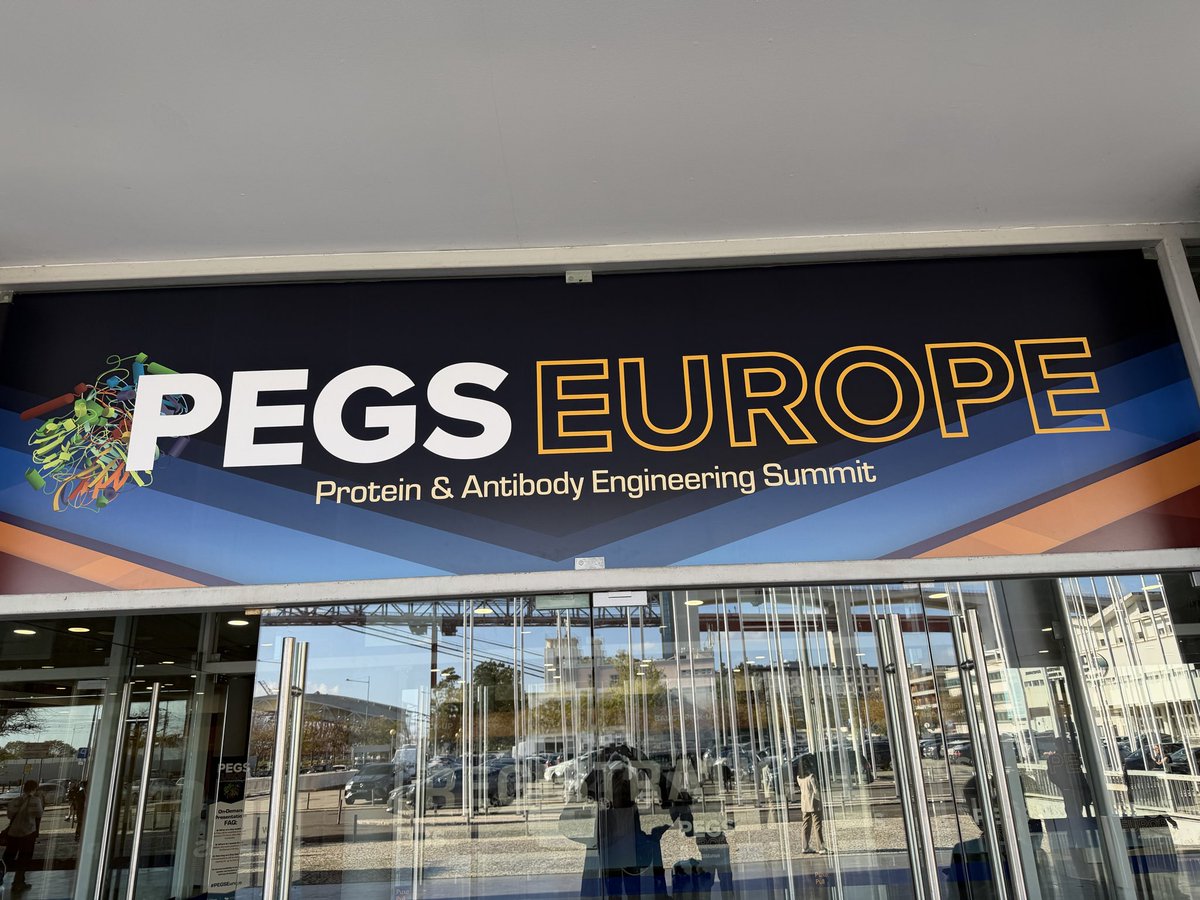
Great to be at PEGS Europe today! I’m looking forward to giving a presentation and joining a panel discussion with colleagues and experts from across the biotechnology industry.
For me, this event is particularly meaningful as Candel Therapeutics prepares to roll out our global phase 3 clinical trial of aglatimagene besadenovec in non-small cell lung cancer (NSCLC).
Our ambitions extend well beyond the US. We aim to bring this innovative viral immunotherapy to patients in Europe and around the world, after the US, subject to successful clinical development and regulatory approval.
Scientific innovation knows no borders. Neither should our ambition to bring meaningful new treatments to patients.
What do Jim Collins’ Hedgehog Principle and biological assay development have in common?
The discipline to stay focused on what matters most.
Collins argues that greatness comes from understanding your core purpose and pursuing it with relentless consistency, even when challenges arise.
Biology-based assays bring inherent variability and unpredictability. Success requires scientific rigor, persistence, and disciplined execution, not shortcuts.
The Hedgehog Principle reminds us to stay focused on the ultimate goal: robust, reliable, and reproducible results.
Biology may be unpredictable. Our commitment to quality must never be.
A great few days at the Jefferies London Healthcare Conference.
It was good to reconnect with colleagues and investors and have many thoughtful conversations about Candel Therapeutics, our progress, and the work ahead.
I also enjoyed my Fireside Chat with Maury Raycroft from @Jefferies. Thank you, Maury, for an engaging discussion.
We remain committed to communicating openly, transparently, and precisely with our stakeholders. We recently became aware that completion of the IU assay validation would impact the expected timing of our BLA completion by approximately 6 months. We moved swiftly to disclose the impact and define our mitigation strategy. The IU assay is now on the critical path, and we expect to complete the BLA submission in mid-2027, pending the outcome of our ongoing dialogue with the FDA.
I am particularly grateful to the @CandelTx team for the hard work, urgency, and focus they have brought to addressing this.
Thank you to the Jefferies team, and everyone who took the time to connect in London.
There’s a famous business principle (from Jim Collins' Good to Great) called the Hedgehog Concept, which is about doing one thing better than anyone else in the world. It implies focus and excellence.
We’re honored to be shortlisted in the Excellence in Oncology category at the @Citeline Biotech Awards 2026.
Thank you to Citeline for the recognition!
https://t.co/cBHhBRWf0i
CAN-2409 adenoviral gene therapy with radiotherapy in localized #ProstateCancer. @GlenGejermanMD@HMHNewJersey joins @PhillipKooMD@PCFnews discussing the CAN-2409 phase 3 trial, a double-blind placebo-controlled study of aglatimagene besadenovec plus valacyclovir added to radiotherapy in intermediate and selected high-risk localized prostate cancer. #WatchNow > https://t.co/LNuGH0znum
One Candel team at LUNGevity, one at LUGPA, another at SITC - all at the same time, telling the story of our viral immunotherapies to different audiences.
Last week, Candel joined LUNGevity’s Celebration of Hope and Progress in New York City.
Proud to support @lungevity.
Good to see @StermanDaniel, co-principal investigator of Candel’s phase 3 AURORA trial, and team from @NYULangone.
#LCAM#AnyoneWithLungs
It’s #Movember, a time to start conversations about men’s health.
We’re advancing an investigational viral immunotherapy for men with localized prostate cancer, and we’re grateful to the patients and families who make that work possible.
https://t.co/BFaFPDPawF
Can a local injection trigger a systemic anticancer immune response?
This is one of the most exciting questions in immuno-oncology today.
I enjoyed joining Lewis Bender, CEO of Intensity Therapeutics, for the latest episode of BioSpace’s Denatured podcast, where we discussed the emerging potential of intratumoral therapies.
The concept is compelling: turn the tumor into its own vaccine, stimulating an immune response that may extend well beyond the injected lesion.
At Candel Therapeutics, we are translating this concept into clinical development with our viral immunotherapy platform, supported by encouraging clinical and translational data across multiple solid tumors.
Intratumoral administration is not simply a different route of drug delivery. It offers an opportunity to fundamentally change how we engage the immune system in the fight against cancer.
Thank you to BioSpace for highlighting this rapidly evolving field!
🎧 Listen here: https://t.co/l5cq4FeAlj