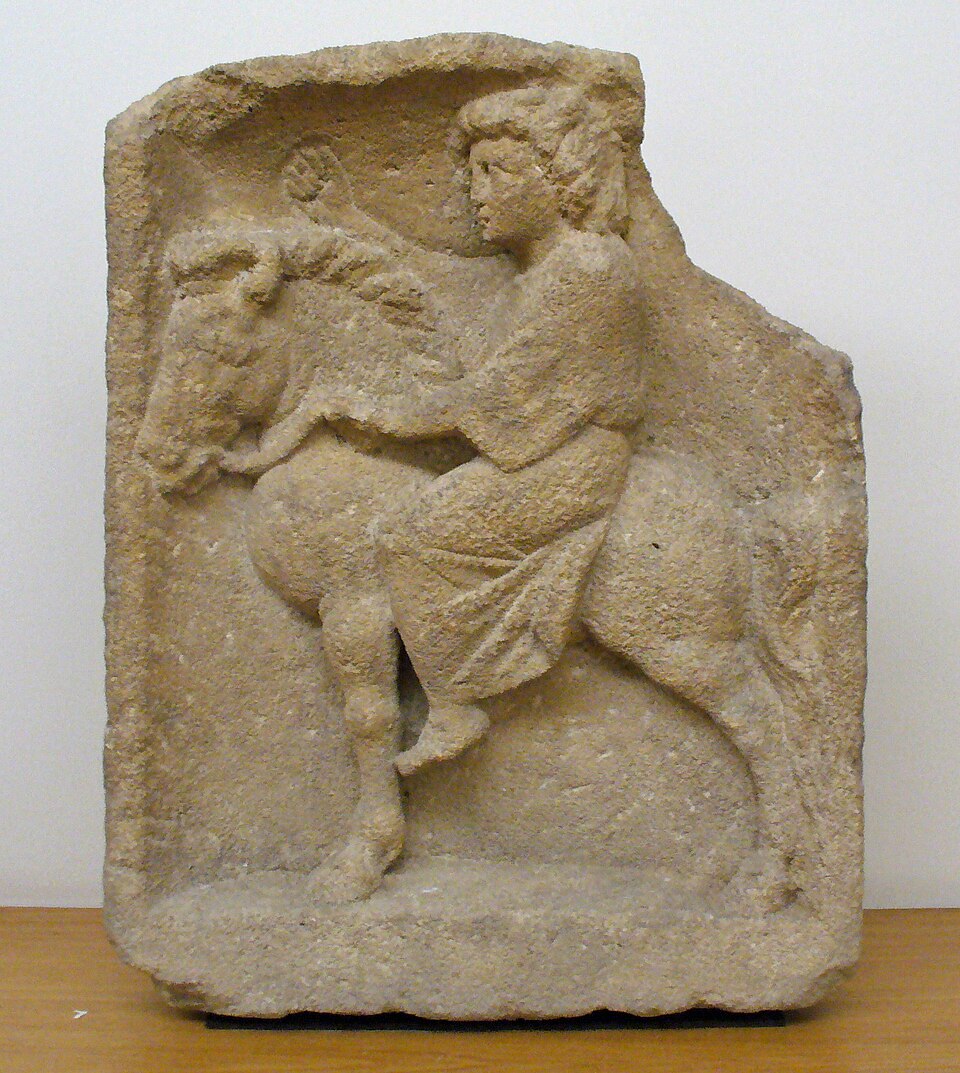
Circa 2nd or 3rd century stella depicting Epona astride a horse via Wikipedia. Epona was always depicted with one or more horses, sometimes holding grain, a cornucopia or a plate that was possibly a sun disk. #horses#Epona
Epona the Celtic horse goddess, was known on the Continent and in Britain. She may have originally been an Indo-European mare deity representing sovereignty and granting kingship through her favor, who took on attributes of local earth and sun goddesses as well. #FolkloreSunday
A man can sail in the forecastles of big ships all his life and never know what real sailing is ~ Jack London (Brigantine Cristina by Antonio Pettiluga) #quote#JackLondon#SeafaringSaturday
Margaret of Antioch, an early Christian martyr, is known as a dragon saint but unlike the male knights she does not harm the dragon that tried to eat her. In fact, she often appears to have tamed and befriended rather than executed evil. Quite a trick for a girl. #FolkloreSunday
Sainte Marguarite, alabaster statue with gilding from Toulouse, France c 1435. I also like this painting from the Peruvian School by Francisco Zurbaran, St Margaret the Shepherdess, both via Wikipedia #Saints#dragons
Medea casts a spell over a flaming cauldron, and suddenly a golden-fleeced lamb leaps out rejuvenated. Impressed by this, Pelias’s daughters are tricked into butchering their aging father to restore his youth, but in the end, Medea maliciously leaves him dead.
🎨Tales of the Greeks and Trojans (1963) illustrated by Giovanni Caselli.
The fishermen know that the sea is dangerous and the storm terrible, but they have never found these dangers sufficient reason to stay ashore ~ Vincent Van Gogh (Fishing Boat Arriving by Vincent Van Gogh) #fishermen#quote#vincentvangogh#SeafaringSaturday
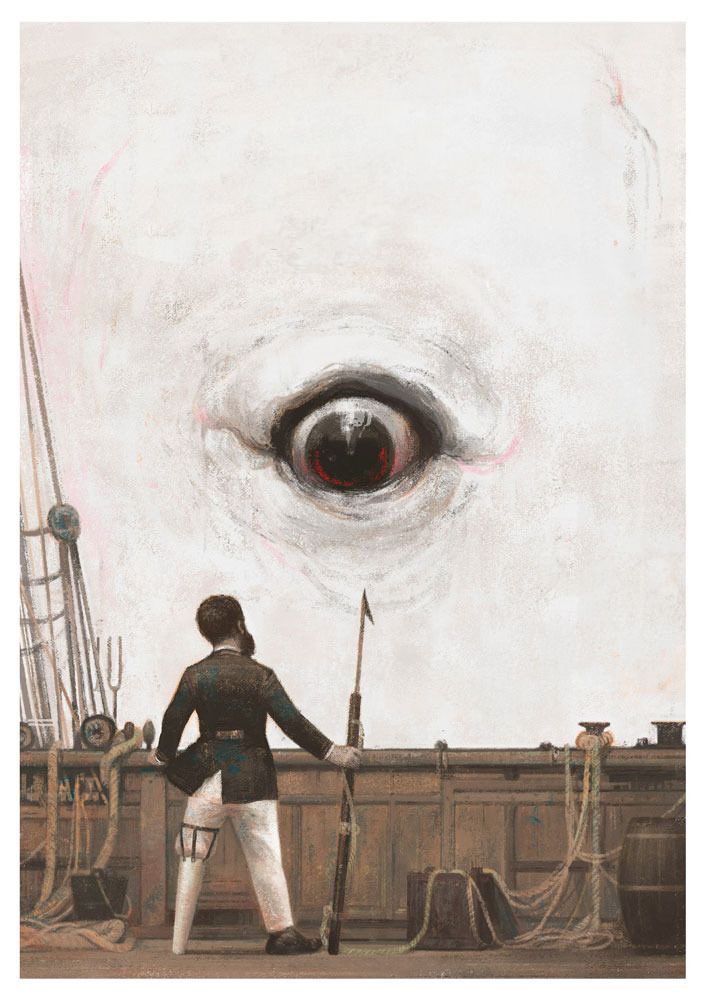
There is an open question in Arthurian canon as to what becomes of Galahad (or Percival in older traditions) when he obtained the Grail. Did he ascend with it to Heaven? Does he now defend it? Did he die? Different authors take different stances. #FairytaleTuesday
🖼: D.D. Crane
In 203 CE, a young noblewoman sat in a prison in Roman Carthage and wrote down what was happening to her. She was waiting to die.
Her name was Vibia Perpetua. Newly a mother, nursing an infant son, she had converted to Christianity at a time when the emperor Septimius Severus had issued an edict against new conversions. She was arrested. She knew she would not be released.
So she wrote.
What she left behind became known as "The Passion of Perpetua and Felicity." It is the earliest surviving text known to have been written, in part, by a Christian woman. Most of it is in her own first person. More than eighteen centuries after her death, we can still read exactly what she was thinking.
She describes her father coming to the prison and begging her to renounce her faith. He weeps. He calls her by name. She holds firm each time. She writes about her baby too, how frightened she was to lose him. A sympathetic guard brought the infant to her cell so she could nurse him.
The other figure in the story is a servant named Felicity.
Felicity was heavily pregnant when arrested. Roman law forbade executing a pregnant woman. She prayed to give birth before the execution date. According to the account, she did, delivering her daughter just days before the arena. A Christian woman from the crowd took the child.
On March 7, 203 CE, Perpetua and Felicity and several companions were brought into the amphitheater at Carthage.
The crowd expected sport. They got something different.
Perpetua was attacked by a wild heifer. She was thrown, fell, rose, and gathered her torn tunic around her. She helped another prisoner who had fallen. By the account that survives, she walked through the arena as though she was in a dream.
When the animals were done, the gladiators came. The gladiator assigned to Perpetua was a novice. His sword strike missed. She cried out. And then, by every account that survives, Vibia Perpetua reached up and guided his trembling hand to her own throat.
She had decided how this would end.
The diary survived because later writers copied and preserved it, convinced they were preserving the voice of a martyr. They preserved something else too: a record of a woman who, in the worst weeks of her life, chose to write down exactly what she saw and felt and refused.
Her words, written in a prison cell with a nursing infant beside her, read as personally as a letter to a friend.
She did not think of herself as making history. She was trying to explain what had happened to her, and why she would not change her mind.
That document exists today. She wrote it.
#archaeohistories
Malachite was favored in #AncientEgypt as an eye makeup. Ground and mixed with castor oil, it was swiped along the upper and lower lid. Protective from infection during intense heat, the glittery paste was also thought to help attract the love of a true heart #FolkloreSunday
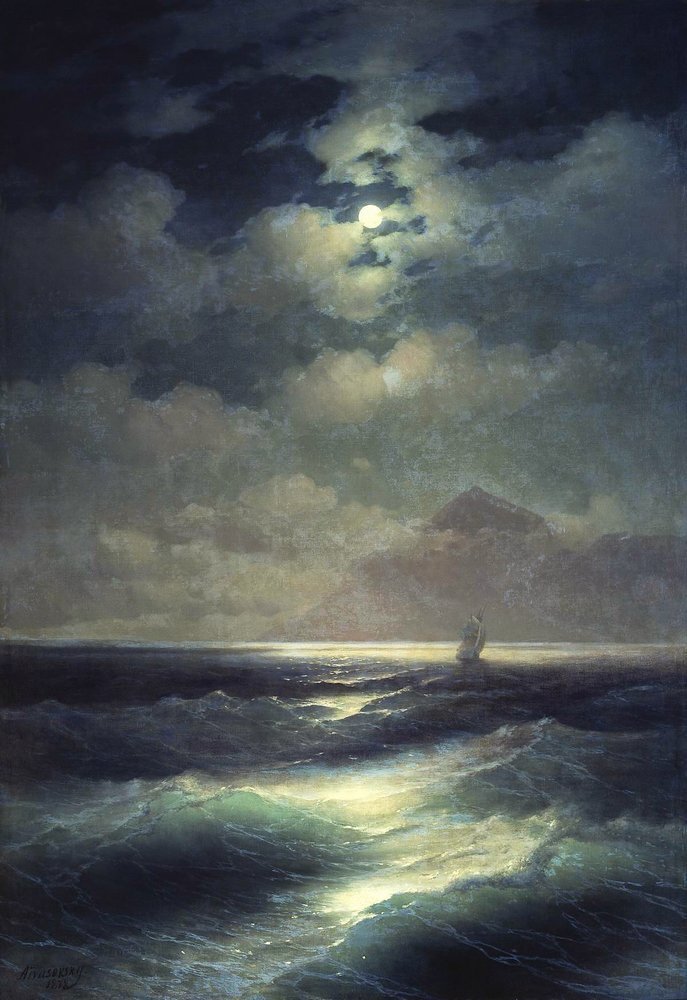
Of all those I have met with who have traveled on land or sea alone, not one has told me it was 'lonely' ~ John MacGregor (#painting by Ivan Aivazovsky) #quotes#SeafaringSaturday