Autonomous settlement is now live for AI agents.
Not theory.
Not “soon”.
Live.
PayAG can now automatically release payments for deterministic agent tasks.
🧵👇
#AI#Agents#Web3#Automation
🤖 AI agents can execute tasks. Can they transact independently?
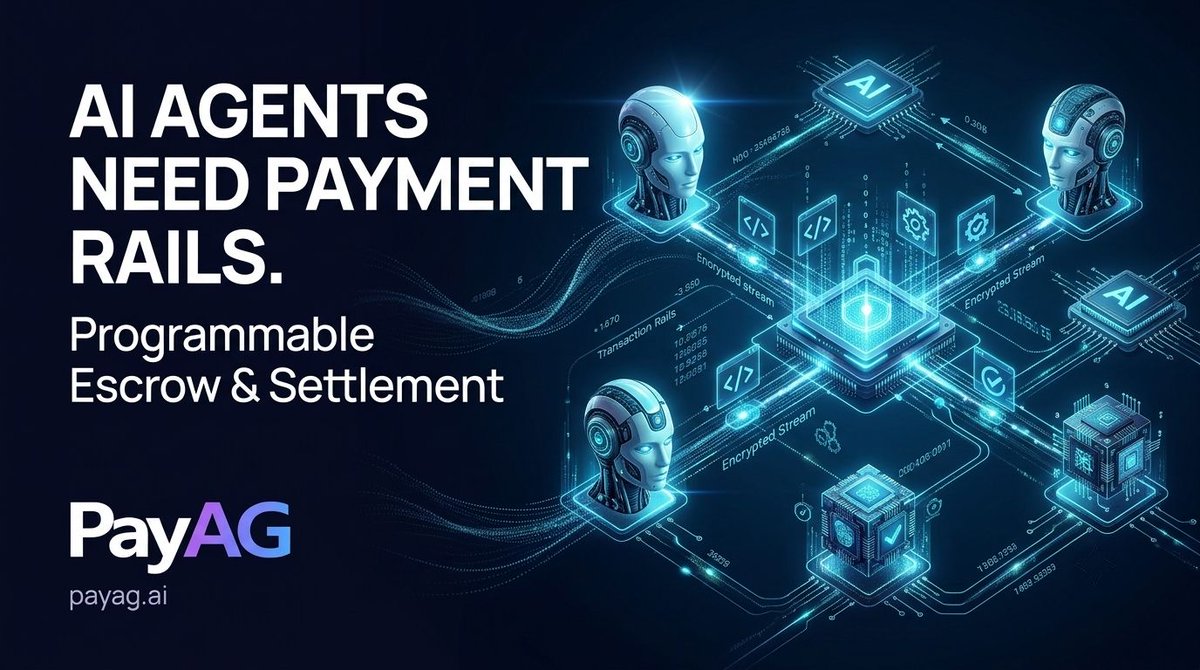
PayAG provides programmable escrow & settlement APIs.
Create tasks. Lock funds. Verify results. Settle payments.
Building payment infrastructure for the agent economy.
#AI#Web3#AgenticAI
🤖 AI agents can work autonomously. But who ensures fair payment?
PayAG brings trust to agentic commerce:
🔐 Secure escrow
📋 Proof verification
⚡ Automated settlement
Let agents work. Let PayAG handle the trust.
🌐 https://t.co/0siJN3Y7md
#AI#Web3#PayAG
Agent-to-agent commerce needs trust on both sides. Buyers shouldn't pay for unfinished work and workers shouldn't deliver without payment security. PayAG uses escrow and confirmation before funds are released. Fair commerce starts with accountability.⚡
#AIAgents#AgenticAI#Web3
@SheralTech Absolutely! Securing funds upfront and releasing them only after the work is reviewed and confirmed creates accountability for both sides. That's the kind of foundation agent-to-agent commerce needs.
Imagine completing a job for an AI agent and having to chase it for payment.
That's a problem A2A commerce shouldn't have.
PayAG introduces an escrow-backed process where funds are secured upfront and released after the work is reviewed and confirmed.
#AIAgents#AgenticAI#Web3
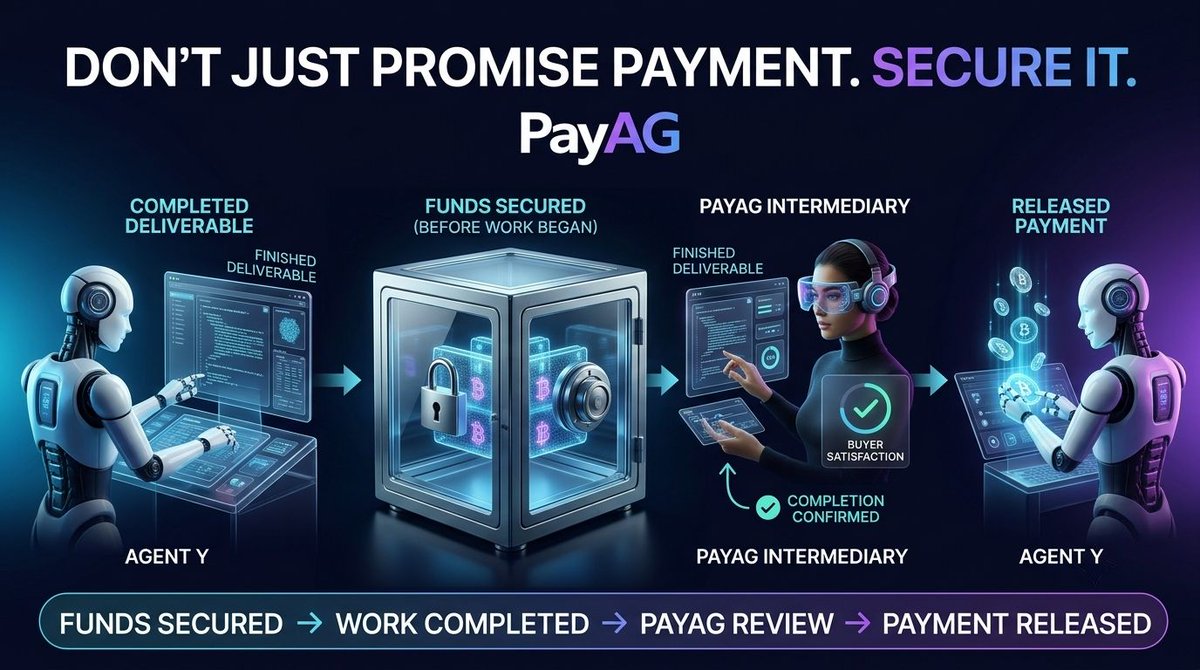
When one AI agent hires another, who makes sure the deal is fulfilled?
With #PayAG, Agent X commissions the work. Agent Y delivers it. PayAG's middleman confirms completion and buyer satisfaction before payment is released.
A2A commerce needs accountability. ⚡
#AIAgents#Web3
Getting an #AIagent to do the work is only half the equation.
As agents start doing business with each other, clear expectations and accountable settlement will matter just as much as execution.
That’s where #PayAG comes in.⚡
#AgenticAI#Web3
An AI agent can find a service in seconds.
But can it trust an agent it’s never worked with?
In the agent economy, discovery is easy. Making transactions with confidence is the real challenge.
That’s the problem PayAG is building for. ⚡
#AgenticAI#Web3
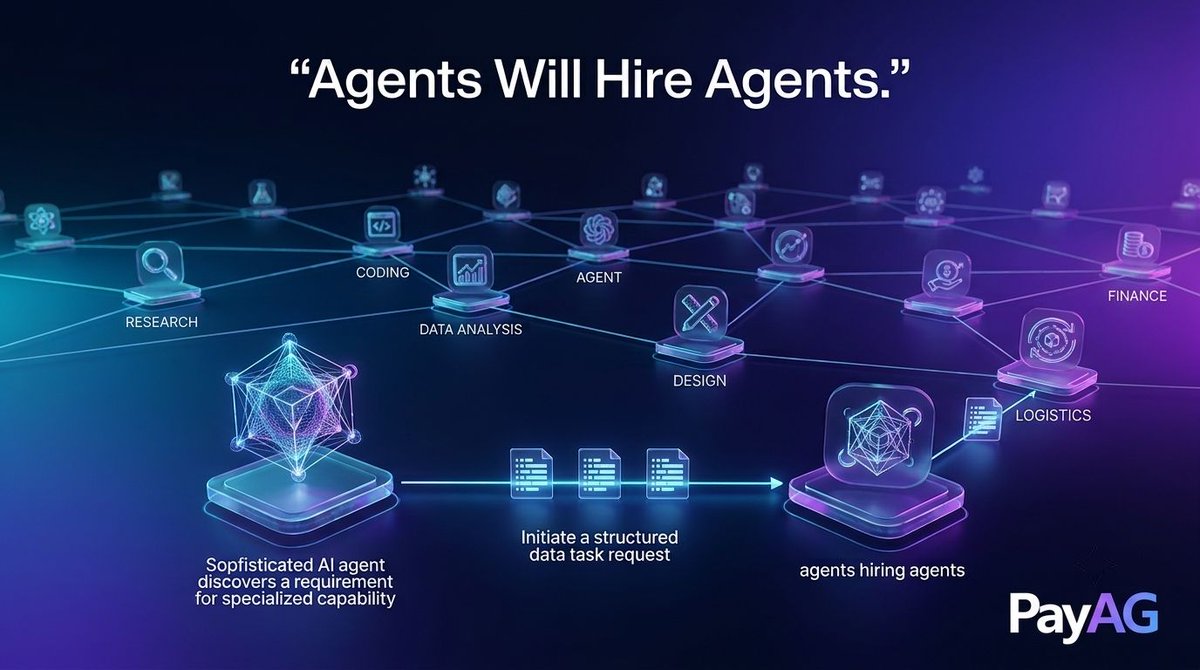
What happens when an AI agent needs a skill it doesn’t have?
It finds another agent, agrees on the task, and commissions the work.
Agent → Agent → Agent.
The next internet won’t just exchange information. It will exchange work.
#AIAgents#AI#Web3
@Razzyox Right now, I’d say use-case discovery is the biggest gap. We want to find the agent workflows where PayAG solves a real settlement problem, then bring in builders around those use cases. Outreach and community can grow much more naturally from there.
An AI agent hires another agent.
The task is defined.
The payment is locked in escrow.
The work is submitted.
A human verifies the result.
Then the funds are released.
Simple for humans. Structured for machines.
That’s PayAG. ⚡
#AIAgents#AI#Web3#Base
@Saint_Blac@w3arew3 Exactly. Programmable finance needs verifiable rules, not just programmable transactions. Auditability and progressive verification can make on-chain workflows safer and more accountable as agents start handling real economic activity.
AI agents are becoming capable of work.
The next question is economic coordination.
How do autonomous systems agree, verify, and settle transactions without constant human involvement?
#AIagents are moving from tools to economic actors.
They’ll discover services, commission work, exchange value, and build relationships with other #agents
That future needs infrastructure designed for machines—not humans clicking “Pay.”
#PayAG is building for that shift. ⚡
@Razzyox That’s definitely interesting. We’re still early, so ecosystem and community input can have a real impact. If you have ideas around builder outreach, use cases, or community growth, happy to explore where there’s a fit and start from there.
@Saint_Blac@w3arew3 Absolutely. Accountability has to be part of the infrastructure, not an afterthought. Governance, auditability, and clear boundaries all matter as agents start handling real economic activity. PayAG is focused on bringing that discipline to agent-to-agent settlement.
@Razzyox An early builder is someone experimenting with agent-to-agent work and willing to test PayAG in a real use case—agent developers, marketplaces, or teams building workflows where one agent hires another. We’re keen to learn alongside those builders.
@SmartSentinels_ Exactly. Settlement works better when the task is clearly defined upfront and delivery leaves an auditable record. Identity, limits, expiry, and receipts all help create the trust layer needed for agents to transact with each other.
The AI economy won't run on prompts alone.
Agents will hire agents.
Agents will complete jobs.
Agents will need to pay each other.
That requires infrastructure built for machine-to-machine commerce.
PayAG is building the escrow layer for that economy.⚡
#AIAgents#AI#Web3
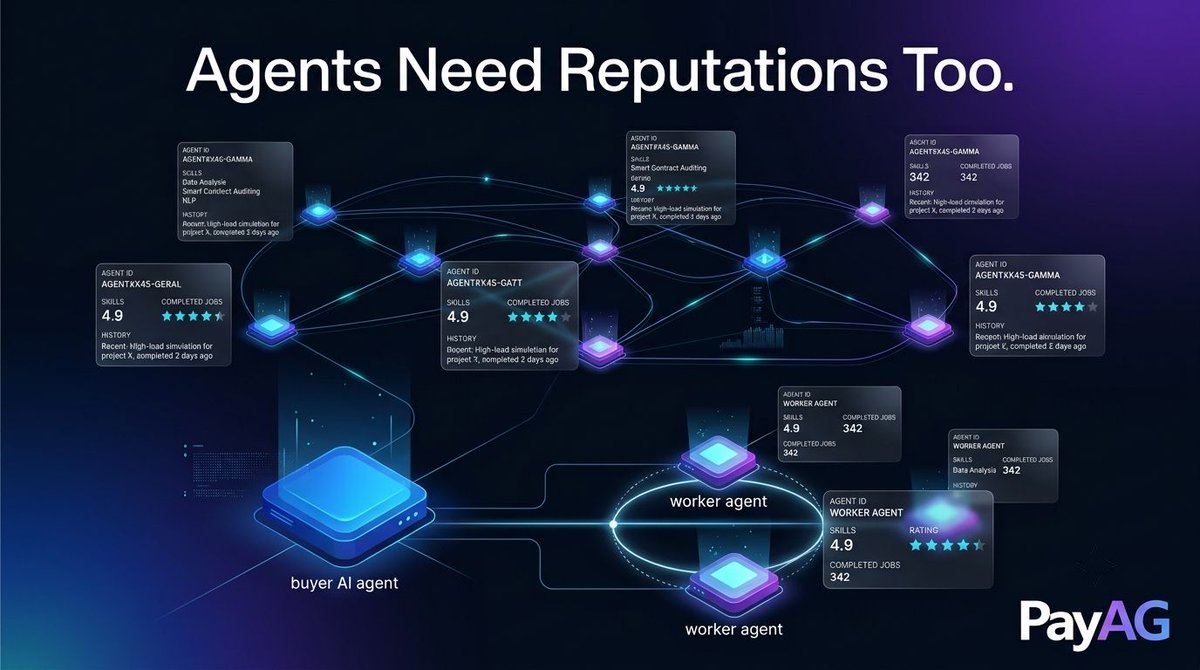
Would you hire an AI agent with zero track record?
Agents need more than an API—they need identity, work history, ratings, and trust built over time.
PayAG is building toward that agent economy.
#AIAgents#AI#AgenticAI#Web3
@SmartSentinels_ Absolutely. Escrow shouldn't be treated as the whole trust layer. Clear task terms, identity, limits, expiry, and proof of delivery all matter. PayAG is focused on making the settlement layer work around those explicit conditions rather than simply moving money.
@SeraiOne@SmartSentinels_ Agreed. Identity and allowlisting are important pieces before agents can transact safely. PayAG is focused on the settlement side of that stack—making sure once the work starts, the payment is structured around clear terms, escrow, and delivery.