Yeah, Messi has 5 goals so far this tournament, so the GOAT debate is loud again. But Ronaldo just made history at 41. Oldest player ever with a World Cup brace.
#FIFAWorldcup
2026 is phenomenal. I step into a Year of Influence & Affluence by the Spirit and a Year of Positioning by the Spirit. I am strategically placed, Spirit-led, and impact-driven. My voice carries weight. My obedience attracts increase.
2026 is phenomenal.
I step into a Year of Influence & Affluence by the Spirit and a Year of Positioning by the Spirit.
I am strategically placed, Spirit-led, and impact-driven.
My voice carries weight. My obedience attracts increase.
My Challenge so far:
Balancing my personal life, learning schedules, and mental energy has been tough.
My Motivation still:
But I keep going because I see the bigger picture — the opportunities, the skills, the confidence #RiseWithTechCrush@TechCrushHQ#LearningWithTechCrush
I’m not learning Data Analysis just to add another skill. I’m doing tech because I want to be part of the people shaping solutions, not waiting for them.
Tech is the new language of impact, and I’m choosing to speak it fluently.
Grateful for the journey with @TechCrushHQ
$PIGGY official Presale on Gempad
goes live on the 27th of May
Have your #sol ready in your wallets to scoop up $PIGGY early before we launch, #gempad will handle presale distribution after the presale.
Min buy : 0.1 #SOL
Max buy : 20 #SOL
https://t.co/vAtJNEeK3z
#presale
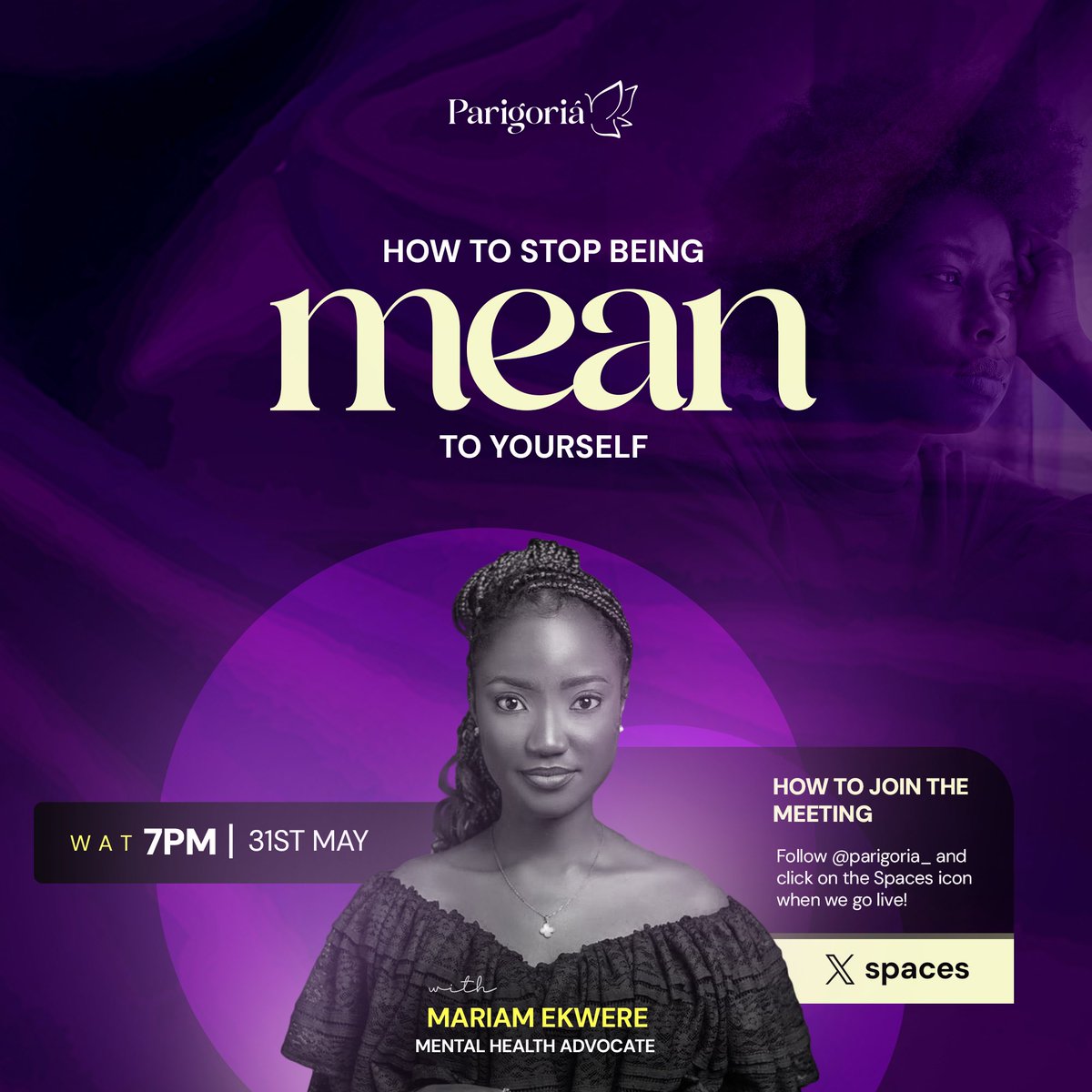
Feeling extra heavy lately? Ghosting friends, messing up schedules, or struggling at work? It's easy to be hard on ourselves when life gets tough.
Join us this Friday for 'How to Stop Being Mean to Yourself' and learn self-compassion. ✨
Details on the flyer. See you there! 🤗
🎚️ Alphabet on the spectrum
Sometimes, you want to defeat the certain letter/letters and you definitely hear that they stick out. But you don't know which frequency to look at.
The frequency range of human speech consists of a wide spectrum, generally from about 80 Hz to 14 kHz, with most of the intelligible content falling below 8 kHz. The sounds of different letters or phonemes in speech are characterized by their specific frequency components, which are crucial for speech intelligibility and recognition. Here's a basic overview of where different types of speech sounds generally fall within the frequency range:
Vowels (A, E, I, O, U) - Including variations
• Frequency Range: Fundamental frequencies from 80 to 300 Hz, with harmonics extending up to 4 kHz. Vowels carry the "power" of speech.
• Key Characteristics: Formant frequencies are crucial for distinguishing vowels and can vary significantly.
Voiced Consonants (B, D, G, J, M, N, NG, L, R, V, Z, and sometimes Y as in "yellow")
• Frequency Range: Fundamental frequencies similar to vowels. Additional frequency content, especially for voiced fricatives (V, Z), extends into the 2-3 kHz range.
• Key Characteristics: Voiced, using vocal cord vibration. Nasals (M, N, NG) and approximants (L, R) have distinct resonances.
Voiceless Consonants
• Fricatives (F, S, TH as in "think", SH, H): High frequency energy, crucial for clarity, extending from 2 kHz to 8 kHz or more.
• Plosives (P, T, K, and hard C as in "cat"): Characterized by bursts of energy across a wide frequency range, particularly noticeable in the 1-4 kHz range for the "attack" of the sound (can be lower for "P').
• Affricates (CH as in "church", J as in "judge"): Combine elements of plosives and fricatives, with significant energy in the 2-6 kHz range.
Liquids and Glides
• Liquids (L, R): Rich in lower frequencies but with important cues in the mid to high range for differentiation.
• Glides (W, Y as in "yes"): Transition smoothly from one position to another, with significant energy across a broad frequency spectrum but with a focus on mid frequencies.
Sibilants (S, Z, SH, CH)
• Frequency Range: Significant high-frequency energy, crucial for speech intelligibility, generally above 2 kHz and extending towards 8 kHz.
Unique Considerations
• Letters like "X" can produce sounds that reflect a combination of voiced or voiceless components (e.g., "ks", "gz"), depending on context.
• The letter "Q" typically represents a combination sound that includes a "k" sound followed by a "w" glide, thus spanning a broad frequency range.
• The letter "H" is often a voiceless breathy sound, primarily influencing the sound's onset, with its effect spanning a wide frequency range but less defined in terms of specific frequency content.
It's important to note that the exact frequency content and characteristics of these sounds can vary greatly depending on the speaker's accent, tone, and the context within which the letter is spoken. Additionally, the intelligibility of speech is highly dependent on the mid-frequency range (2-4 kHz), where many consonants have critical articulation points that help distinguish one phoneme from another.
@natemixing