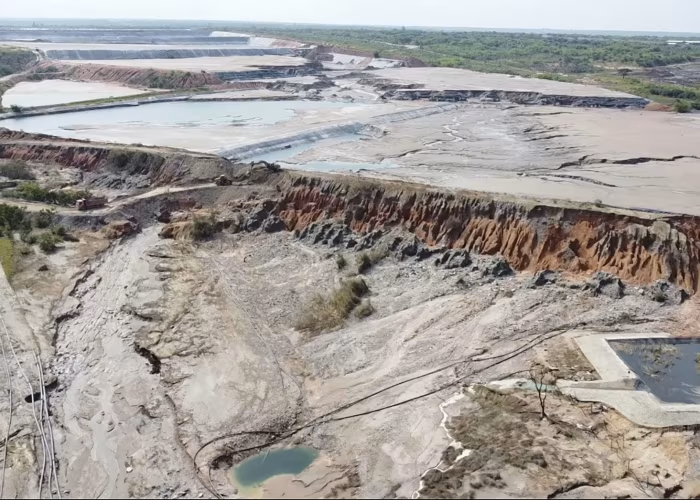
A Chinese state-owned mining company's dam collapsed in Zambia. Toxic waste poured into the river that millions of people drink from. Fish died. Crops burned. Hundreds lost access to clean water. Then Zambia's own government helped cover it up. Because it owes China $6.6 billion.
In February 2025, a tailings dam at Sino-Metals Leach Zambia, a subsidiary of China Nonferrous Metal Mining Group, a Chinese state-owned enterprise, collapsed and released tens of millions of liters of toxic waste containing heavy metals, cyanide, and arsenic into the Kafue River. The Kafue is one of Zambia's most critical waterways, relied on by millions for drinking water, fishing, and farming. Farmland along the river was scorched. Fish populations collapsed. Soil contamination spread across hundreds of acres. Local communities have filed lawsuits seeking $80 billion in damages.
The US House Select Committee on the CCP released its investigation on May 1, 2026, as part of a broader report titled "China's Minerals Mafia," documenting 14 global cases of Chinese mining operations linked to environmental destruction, corruption, and government capture. In Zambia's case, the committee found that the Zambian government actively helped downplay the scale of the disaster. The Chinese firm allegedly pressured affected locals with compensation deals containing non-disclosure clauses and deployed security to silence witnesses. Zambia's government, the committee concluded, sided with the mining company over its own citizens.
The reason is not hard to find. Zambia owes China approximately $6.6 billion. Chinese investment is central to Zambia's copper expansion strategy. A government that depends on Chinese capital to function is not in a position to hold a Chinese state-owned company accountable for poisoning its river.
This is the debt trap made visible. It does not always look like a seized port or a 99-year lease. Sometimes it looks like a government that cannot afford to tell the truth about what happened to its own water supply.
The Kafue River is still contaminated. The people who live along it are still there. And the company whose dam collapsed is a subsidiary of the Chinese state.
#China #CCP #Zambia #Mining #Environment #DebtTrap #Africa #BRI #Geopolitics
#MineralsMafia
https://t.co/0ECvqnyjO5 via @WSJ
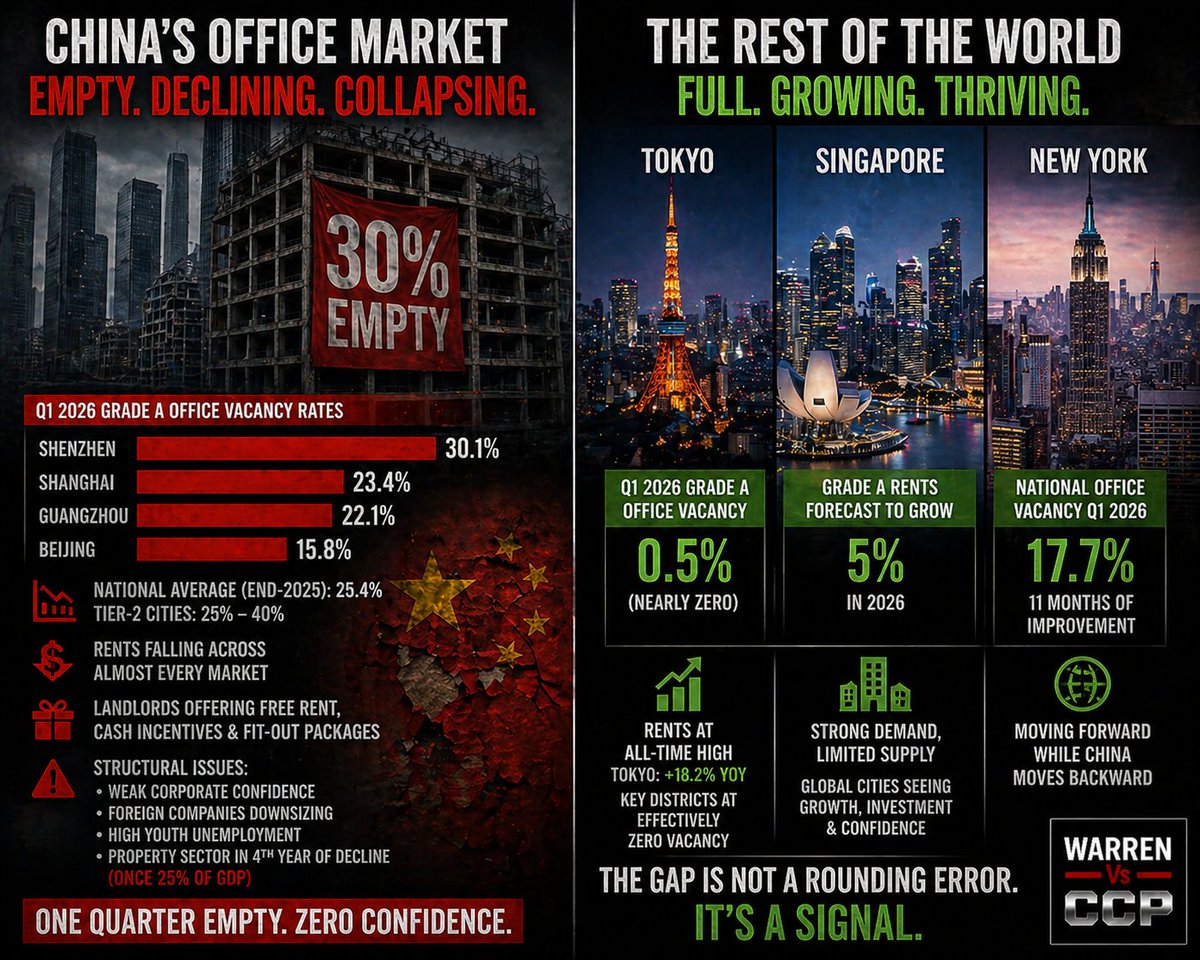
One in three office buildings in Shenzhen 🇨🇳 is empty.
🇨🇳 Shenzhen: 30% vacancy
🇨🇳 Shanghai: 23%
🇨🇳 Guangzhou: 22%
🇨🇳 Beijing: 16%
Meanwhile:
🇯🇵 Tokyo: ~0.5% (basically full)
Rents rising globally — falling across China
This isn’t a slowdown.
It’s structural decay.