If people genuinely believe Burnham won’t receive the exact same media onslaught, they’ve not been paying attention.
Starmer is not, objectively, bad. This idea that he is somehow the worst PM in British history is frankly laughable.
Liz truss lasted 49 days, crashed the pound and was laughed out of Downing Street.
Since Labour took office, Keir Starmer’s government has:
• Scrapped the two-child benefit limit, lifting hundreds of thousands of children out of poverty and putting money back into some of the hardest-pressed households in the country.
• Expanded free school meals, cutting costs for families and making sure more children get a proper meal during the school day.
• Expanded funded childcare, reducing one of the biggest monthly costs facing working parents and making it easier for people to stay in work.
• Raised the National Living Wage, increasing pay for millions of low-paid workers.
• Strengthened workers’ rights, giving people greater protection against insecure work and bad employers.
• Introduced statutory sick pay from the first day of illness, so workers are less likely to choose between their health and their wages.
• Ended no-fault evictions, giving renters more security in their homes.
• Brought rail operators back into public ownership, taking key services out of failed private hands and giving the public a stronger stake in how they are run.
• Cut NHS waiting lists from their post-pandemic peak, meaning more patients are being seen sooner.
• Raised the state pension through the triple lock, protecting pensioners’ incomes against rising costs.
• Scrapped the old non-dom tax regime, making some of the wealthiest people in the country pay more fairly.
• Added VAT to private school fees, raising money from those most able to contribute.
• Removed business rates relief from private schools, ending an unjustified tax break.
• Increased neighbourhood policing, putting more officers and PCSOs back into communities.
• Helped bring knife crime down, meaning fewer families face the devastation of serious violence.
• Recorded the lowest homicide rate since the 1970s, a material improvement in public safety.
• Created Great British Energy, giving Britain a publicly owned clean energy company.
• Created the National Wealth Fund, backing investment in industry, infrastructure and clean energy.
• Passed planning reforms aimed at getting homes and major projects built faster.
• Improved relations with the EU, reducing diplomatic hostility and rebuilding practical cooperation.
• Agreed a UK-EU security partnership, strengthening cooperation on defence and European security.
• Signed a long-term partnership with Ukraine, reinforcing Britain’s support against Putin’s invasion.
• Secured new trade agreements, opening up markets for British businesses.
• Helped restore seriousness to government after years of scandal, chaos and decline.
People do not have to like Starmer. They do not have to vote Labour. But pretending this is the record of the worst Prime Minister in British history is absurd.
A woman who flunked her way through every math and science course in high school enlisted in the United States Army the day after graduation because she had no other options.
She learned Russian. She translated on Soviet trawlers in the Bering Sea. She worked at the South Pole Station in Antarctica. Then in her mid-twenties she decided to go back and learn the exact subject that had defeated her. She earned a degree in electrical engineering, then a master's, then a PhD in systems engineering. She became a professor of engineering. Then she built the most enrolled online course in the history of the internet.
It is a course about how to learn.
Her name is Barbara Oakley.
Here is the story, because the person who taught more humans how to learn than anyone alive is someone who spent the first half of her life believing she could not.
Barbara was born on November 24, 1955 in Lodi, California. Her father Alfred was a bomber pilot in the US Army Air Corps during World War II. She grew up convinced she was not wired for math. She did not just struggle with it. She flunked it. She flunked her way through high school math and science courses and saw no path forward that required either.
She enlisted in the Army immediately after graduation. She rose from the rank of Private to Captain. She was recognized as a Distinguished Military Scholar. She leaned into the one thing she was good at, languages, and became fluent in Russian.
The Army sent her to places most people never see. She worked as a Russian translator on board Soviet trawlers on the Bering Sea during the final years of the Cold War. She worked as a communications expert at the South Pole Station in Antarctica. She thrived in extreme environments. But a thought kept following her. The world seemed to reward people who could do things she could not. Calculations. Technical reasoning. Systems design.
She began to wonder whether her problem with math was permanent or whether it was a problem with how she had tried to learn it.
In her mid-twenties she did something most people would never attempt. She went back to school to study the subjects she had failed at. She enrolled in mathematics and engineering courses and committed to learning them from the ground up. She was starting over at an age when most engineers were finishing their degrees.
She earned a bachelor's degree in electrical engineering. Then a master's degree. Then a PhD in systems engineering. She became a Professor of Engineering at Oakland University in Rochester, Michigan. The woman who had flunked high school math was now standing at a whiteboard teaching engineering to hundreds of students.
Then she asked a question nobody else in her position was asking. Why had she failed the first time, and what had changed the second time?
She spent years studying neuroscience and learning science. She collaborated with Terrence Sejnowski, the Francis Crick Professor at the Salk Institute, one of the most respected neuroscientists in the world. Together they built a free online course on Coursera called Learning How to Learn.
The course exploded. It became the most popular massive open online course ever created. Over two million students registered in the early years. The number has continued to grow. It teaches the mental tools experts use to master difficult subjects, chunking, spaced repetition, focused and diffuse thinking, and it is grounded in neuroscience rather than productivity hacks.
She wrote A Mind for Numbers, subtitled How to Excel at Math and Science Even If You Flunked Algebra. She wrote Mindshift. She wrote Uncommon Sense Teaching. She won the McGraw Prize, often called the Nobel Prize for Education. She won the Chester F. Carlson Award from the American Society of Engineering Education. She became a Fellow of IEEE. Her research was described as revolutionary by the Wall Street Journal. She published in the Proceedings of the National Academy of Sciences.
A woman who flunked high school math built the most enrolled course in the history of the internet about the thing she was worst at.
She did not overcome a limitation.
She studied the limitation itself, and turned it into a curriculum the entire world now learns from.
Good news! My heron photo was accepted by Utah State University for their local artist exhibition, June 30 - August 7. My first gallery exhibition. I’m so excited.
My husband bought her for me march last year, knowing (thinking) he had only a few more years left with me. Hesaid he would fill her up with cuddles so that when he was gone I'd have a cuddle every day. He only lived for another 8 months, she is my shadow. My heart. Bonnie ❤️🩹 🎀
According to Reporters Without Borders, Israel accounted for almost half of the world's journalist deaths this year. It says Israel has now been the deadliest country for journalists for three consecutive years.
BBC has examined trade volume data on several financial markets and matched them to some of president's most significant market-moving statements.
It found a consistent pattern of spikes just hrs, or sometimes mins, before a social media post or media interview was made public.
Stanley Spencer recorded in his 1938 Desk Diary that he began 'Magnolias,' in March of that year. On 5th April 1938, he wrote to his dealer Dudley Tooth saying that the painting was 'as good as anything I have done.'
This dog's name was Gunner. My uncle brought him back from WW2. He was raised and slept under my uncle's anti- aircraft gun. The gun crew shared their
rations to feed him. By the time he was 18 months old, my uncle said he would stand up and look at the sky. If he laid back down they knew all was ok. If he growled
and put his hackles up they got at the ready. He knew the sound of the German aircraft and my uncle said he
never got it wrong. He said Gunner was better than any early warning system. I'm probably the only one left in the family that knows that story now, so I thought I'd tell it before it's lost forever, like many stories must be from that time. Thanks for reading it.
War on Iran Update: There are 195 countries in the world. 1 of them was attacked. 2 of them are attacking it. Of the 192 remaining, ZERO are actively participating in the war. The UK is not an outlier.
OMG!! This is amazing. Court rules government's ban on Palestine Action is unlawful. This entire episode has been such a shameful stain on Keir Starmer's government.
https://t.co/d7hr9HBTqu
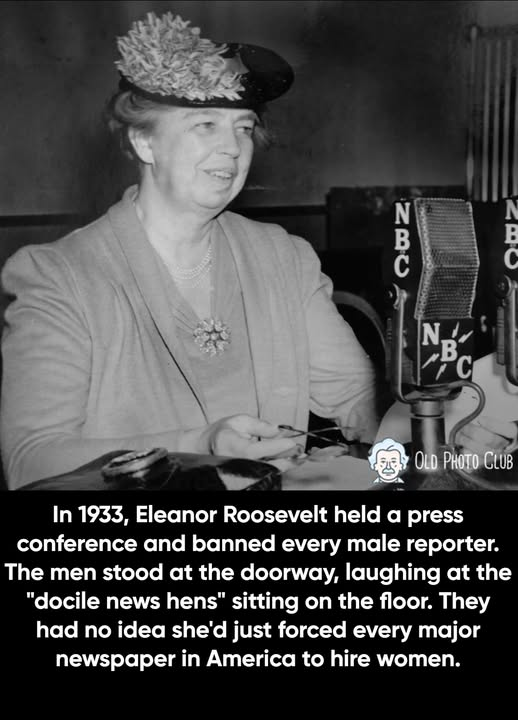
Thirty-five female journalists crowded into the White House Red Room that March day.
There weren't enough chairs. Many sat on the floor.
Male reporters watched from the doorway, smirking. The manager of the Associated Press said these gatherings wouldn't last six months.
Eleanor Roosevelt's strategy was brilliantly simple: If news organizations wanted access to the First Lady—if they wanted to know what was happening inside the White House—they would have to hire female reporters.
No exceptions.
At first, she covered household topics. But when Prohibition ended and reporters asked the President if beer would be served at the White House, FDR smiled and said two words:
"Ask Eleanor."
She announced the answer at her next women-only press conference.
Male reporters had to beg their female colleagues to tell them what the First Lady said.
Week after week, she made real news. She defended equal pay for equal work, low-cost housing, civil rights, and the minimum wage.
The tactic worked spectacularly.
The Associated Press brought on Bess Furman. United Press hired Ruby Black. The New York Herald Tribune sent Emma Bugbee for a few days—she stayed for months, her stories landing on the front page.
Over twelve years, Eleanor Roosevelt held 348 women-only press conferences.
Ruby Black called it "a New Deal for newswomen."
But Eleanor wasn't finished rewriting history.
After FDR's death in 1945, President Truman appointed her as a delegate to the United Nations.
Her male colleagues assigned her to a committee they considered unimportant—humanitarian and cultural concerns.
They assumed she'd do the least harm there.
They were wrong.
She was unanimously elected to chair the UN Commission on Human Rights.
For three years, she navigated Cold War politics and united 18 nations with competing interests to draft the Universal Declaration of Human Rights.
On December 10, 1948, the UN General Assembly voted.
Forty-eight nations in favor. Zero opposed.
When it passed, every delegate rose to give Eleanor Roosevelt a standing ovation.
She called it "an international Magna Carta for all mankind."
She considered it her greatest achievement.
And she was right.
From a woman who sat in a parlor with female reporters on the floor—to the architect of the document that defines human dignity for all humanity.
Eleanor Roosevelt didn't just break glass ceilings.
She built ladders so others could climb up after her.
Did you know that, thanks to @PLR_UK when you borrow a book from a UK library, the author gets 12.4p? PLR statements came today and I’m so grateful to libraries and their readers 😊
The Canterbury Society is rightly campaigning to prevent Kent County Council removing its wonderful historic street lights with modern rubbish. As usual, a tale of out-sourcing and indifference.
Support them 👏
@CanterburySoc
https://t.co/vWFtprFxbe
@DalgetySusan On a London - Glasgow train, the very cheerful announcer said that anyone who wanted to keep their bags beside them was welcome to do so if they paid a child fare. This would be payable when he came to check tickets - all they had to do was leave the bag on the seat 😆
🥁 **Top Ten Images of the Year · #3 of 10**
How lovely is this church?
Another from my *Pocketable Churches* series — All Saints', Billesley, Warwickshire.
Once at the heart of a medieval village, now standing solitary in a copse.
I have a couple of Belgian shepherds. Wonderful dogs if you have the time and energy. Brilliant running partners.
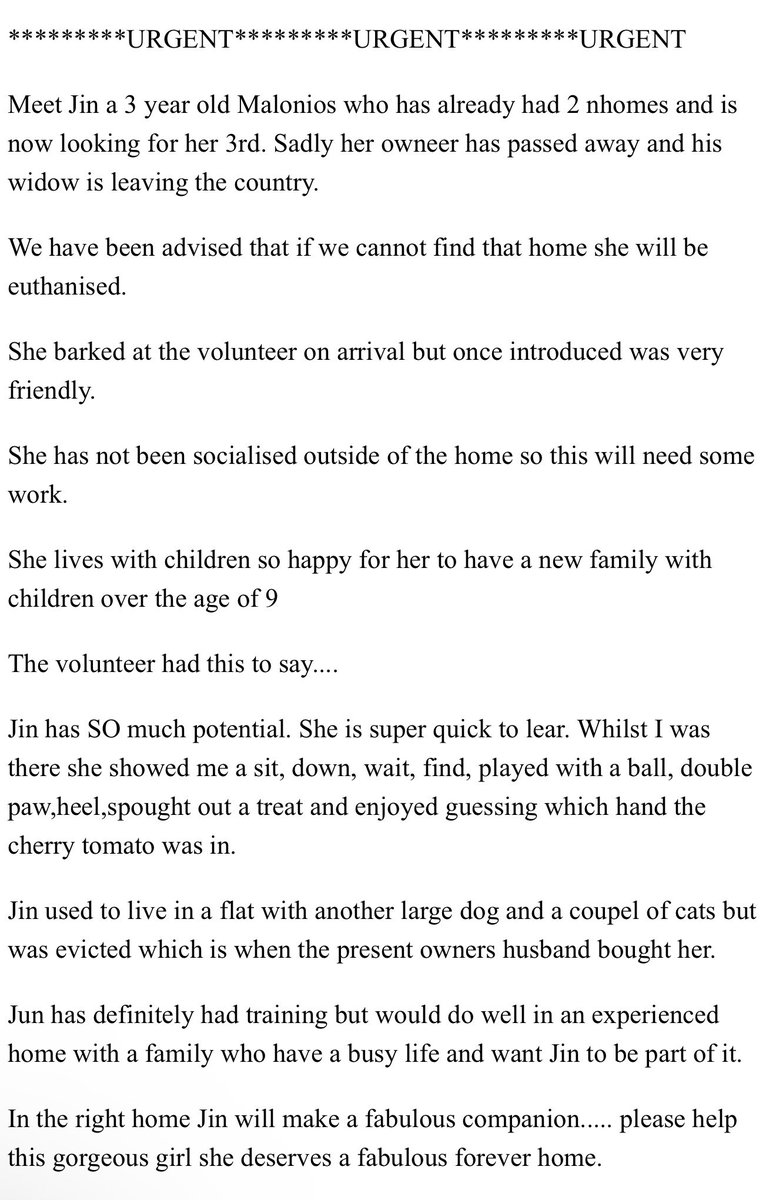
This poor girl is facing euthanasia if she can’t be rehomed after her owner died.
Sharing in case anyone wants to take her on.
https://t.co/3hmfVHP7XX