📢 Join us tomorrow for our Biology Seminar!
❄️ Prof. Arkadiusz Sołtysiak (University of Warsaw) will discuss a novel method for identifying short-term climate change using human tooth enamel.
📅 Tuesday, October 20
🕛 12 PM
📍 Room 8 Müller Lab
🦠🌎 Interested in microbial ecology, bioinformatics, and spatial analysis?
Explore Microbial Macroecology: Methods & Applications (BIOL 597), a graduate course combining microbiome datasets, GIS, and ecological theory to investigate large-scale microbial patterns.
💻 🍃 Bottom-up multiscale #modelling of guard cell walls reveals molecular mechanisms of stomatal biomechanics
by Hojae Yi and Charles Anderson @PennStateBio
https://t.co/WOiwHupJAU #PlantScience
Anne Pallozzi, a second-year student majoring in biology, participated in the Summer Undergraduate Internship Program at the University of Pennsylvania, where she conducted research in the Parker Institute for Cancer Immunotherapy.
#PennStateBio
📸: Anne Pallozzi
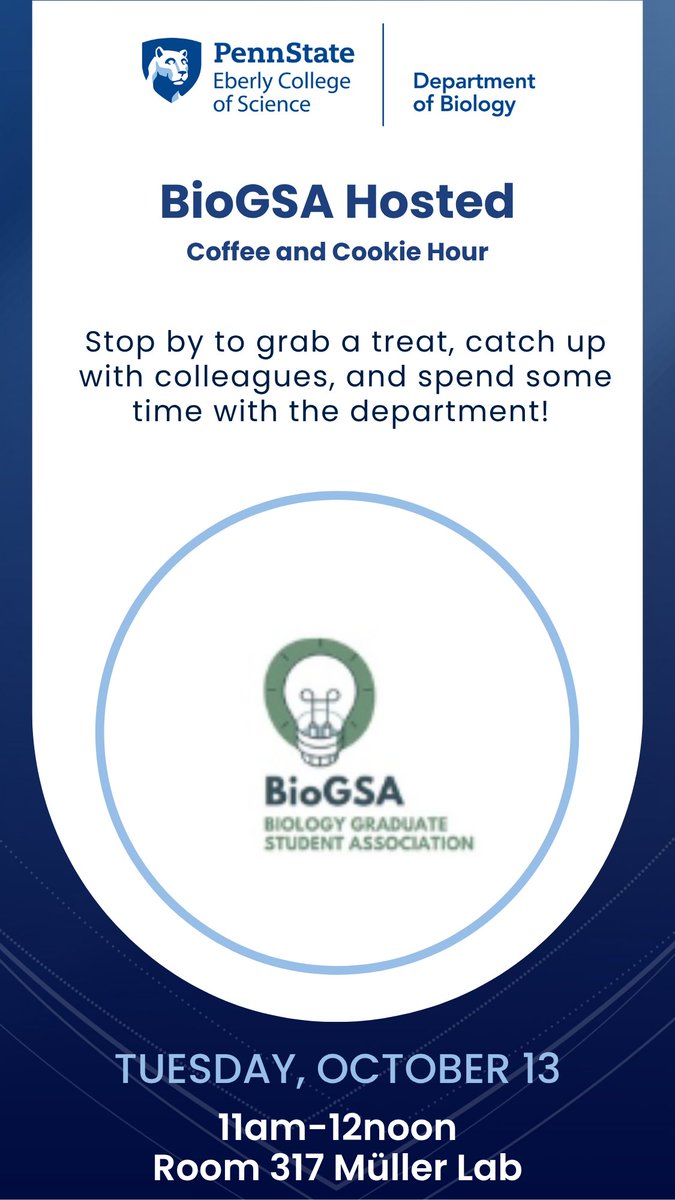
No BioGSA student seminar tomorrow, but coffee and cookies are still on! ☕🍪
Join us Tuesday, October 13, from 11 AM–12 PM in 317 Müller Lab to grab a treat and catch up with the Biology community!
New research from Gui Becker's lab shows how frog skin bacteria may help protect against chytrid fungus, highlighting the microbiome’s role in host defense.
Read more: https://t.co/kGZcRvpvvl
#Microbiome#Amphibians
Exciting to see Penn State Biology research featured in Popular Science! 🐸🦠
The story highlights new work from the Becker Lab on how skin bacteria can help protect frogs from fungal disease.
Read the feature:
https://t.co/IV455zKEEm
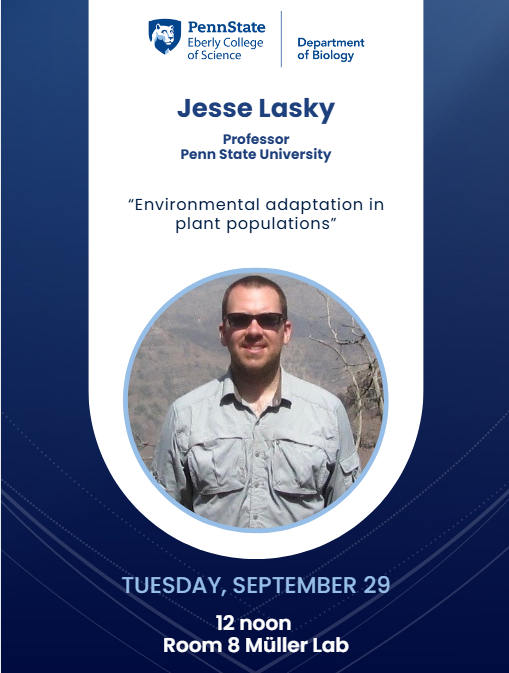
Join us tomorrow for our Biology Seminar
Come a little early to chat and enjoy coffee and cookies
🎙️ Speaker: Jesse Lasky, Professor, Penn State
🌿 Title: Environmental adaptation in plant populations
🕛 Time: 12:00–1:00 PM
📍 Location: 8 Müller Lab
We hope to see you there!
Our 2026 Award recipients are featured in a new Penn State News story! 🎉
Read more about this year’s honorees and the work being recognized across the One Health Microbiome Center.
https://t.co/6ZxB43Grhj
Join us tomorrow for our first Biology Seminar of the semester! 🎉
Come a little early to chat with colleagues and enjoy some coffee and cookies before the seminar. ☕🍪
We hope to see you there!
📅 Save the date, Biology community!
Our Biology Seminars are back this semester:
🗓️ Tuesdays
⏰ 12:00 PM
📍 Mueller Room 8
We’ll share reminders and seminar details here and by email each week.
Here’s our schedule so far — mark your calendars! 👇
What happens when different microbiomes come together? 🦠
New research from @luana_bresciani, @GCcontent, and Francisco Dini-Andreote explores how microbial communities change when they mix.
Read more: https://t.co/eSAUi17SFY
If you’ve been doing fieldwork, lab work, or other exciting research that we could highlight on the Department of Biology’s social media, please comment here or reach out to us.
We’d love to feature what our Biology community has been working on! 🐸🔬🌱
These sediment records may help reveal when Bd arrived, how it spread, and how amphibian communities changed through time.
A huge field effort made possible by an incredible research team! 🐸🧬🏔️
📸 All photos by Anton Sorokin @Anuranton 6/6
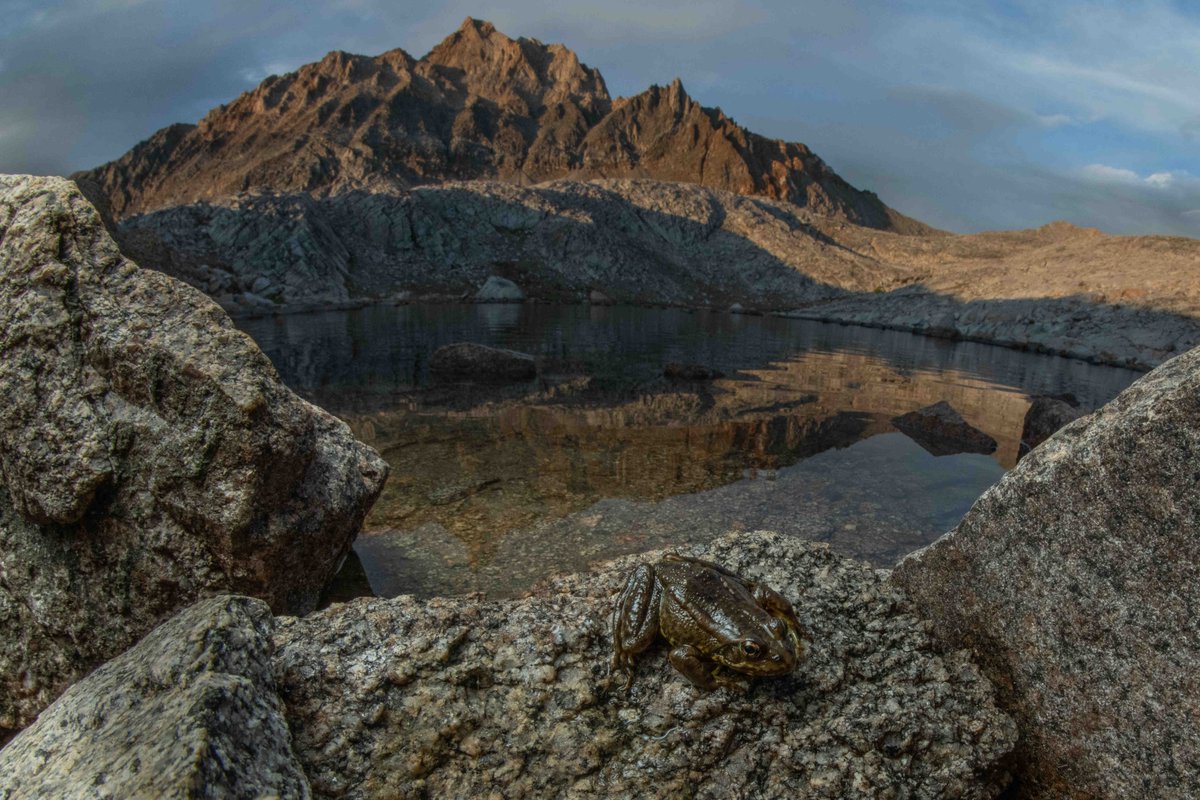
Fieldwork Highlight: From 4 AM starts to 50-lb backpacks, this team headed deep into California’s Sierra Nevada to uncover the hidden history of an amphibian pathogen. 🏔️🐸
Their destination? Backcountry lakes in Yosemite National Park and Sierra National Forest. 1/6
Why go to all that trouble?
Batrachochytrium dendrobatidis (Bd) is a fungal pathogen linked to more amphibian extinctions than any other known infectious disease.
But much of its early spread happened before scientists detected it. 5/6