Pepe Blue
$Pepe is back and on Base. This time he is more than just a meme. Uniting BaseHeads and degens alike; combining the love of memes with on-chain innovation.
0x52E996938472045200Fc3850bDE52beccf65bb07
https://t.co/DrcqkjU7Dy
https://t.co/p63HkOGxhL
Pepe Blue. Merging memes + utility.
The frog opens your PR like a senior reviewer, works through the changed code, flags what’s wrong, and tells you whether it’s safe to ship. Persona is in the verdict; the review itself is plain, useful engineering feedback.
$PEPE isn’t just scanning code, it’s operating on change sets.
By focusing on diffs instead of full repos, it reduces analysis scope while increasing relevance, surfacing only issues introduced by the PR.
That’s how you keep signal high at scale.
Pepe Blue - Whats next? 🐸
Day 2 is going to be all about expanding exposure.
The goal is to get Pepe Blue listed on every crypto, tech building site possible.
Pepe Blue is too pretty not to do big numbers. It will come.
$PEPE on #base treats GitHub PRs as event-driven compute.
Each trigger (PR open / @mention) spins an analysis pass over the diff + repo context, then writes results back into the same surface via structured comments.
Fully inline with developer workflow.
There’s an interesting DX tradeoff here:
centralized CI checks vs distributed, inline intelligence.
Pepeview pushes analysis to the point of review, colocated with the diff which reduces cognitive load and shortens feedback loops significantly.
Most PR tooling stops at syntax or lint layers.
Pepeview operates closer to semantic analysis, mapping changes to potential execution paths, identifying unsafe state transitions, and highlighting non-obvious regressions pre-merge.
That’s where real review value is. $PEPE #Base
$PEPE optimizes for signal density.
Instead of flooding PRs with lint-level noise, it surfaces high-impact issues:
logic flaws
security risks
performance regressions
Then exits with a clear, deterministic verdict.
$PEPE sits directly in the GitHub PR feedback loop.
No context switching, no external dashboards just diff-aware analysis, inline annotations, and a final verdict where engineers already work.
Low friction → higher review velocity.
Interesting problem:
How do you compress senior-reviewer intuition into a low-noise GitHub review pipeline without drowning developers in false positives?
$PEPE’s approach:
scoped repo ingestion
diff-aware analysis
inline contextual annotations
verdict-first review UX
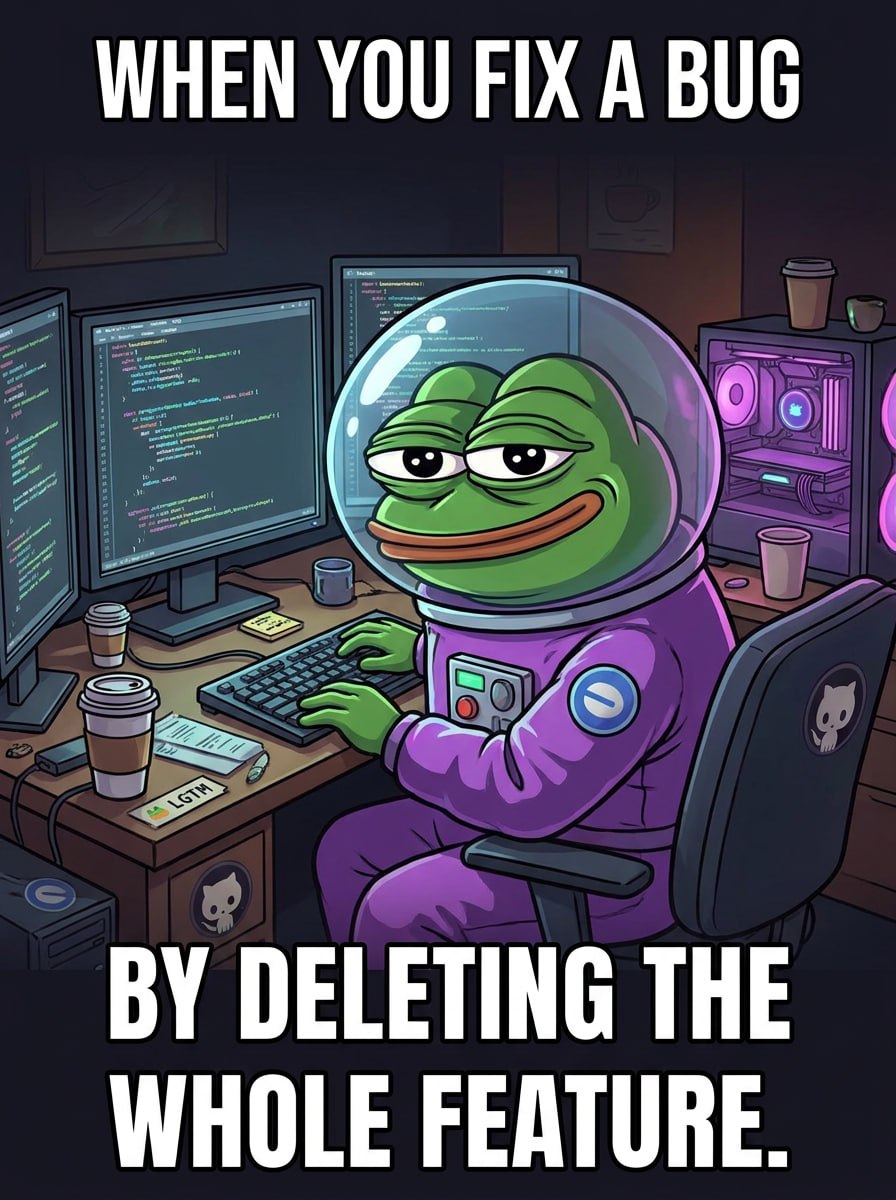
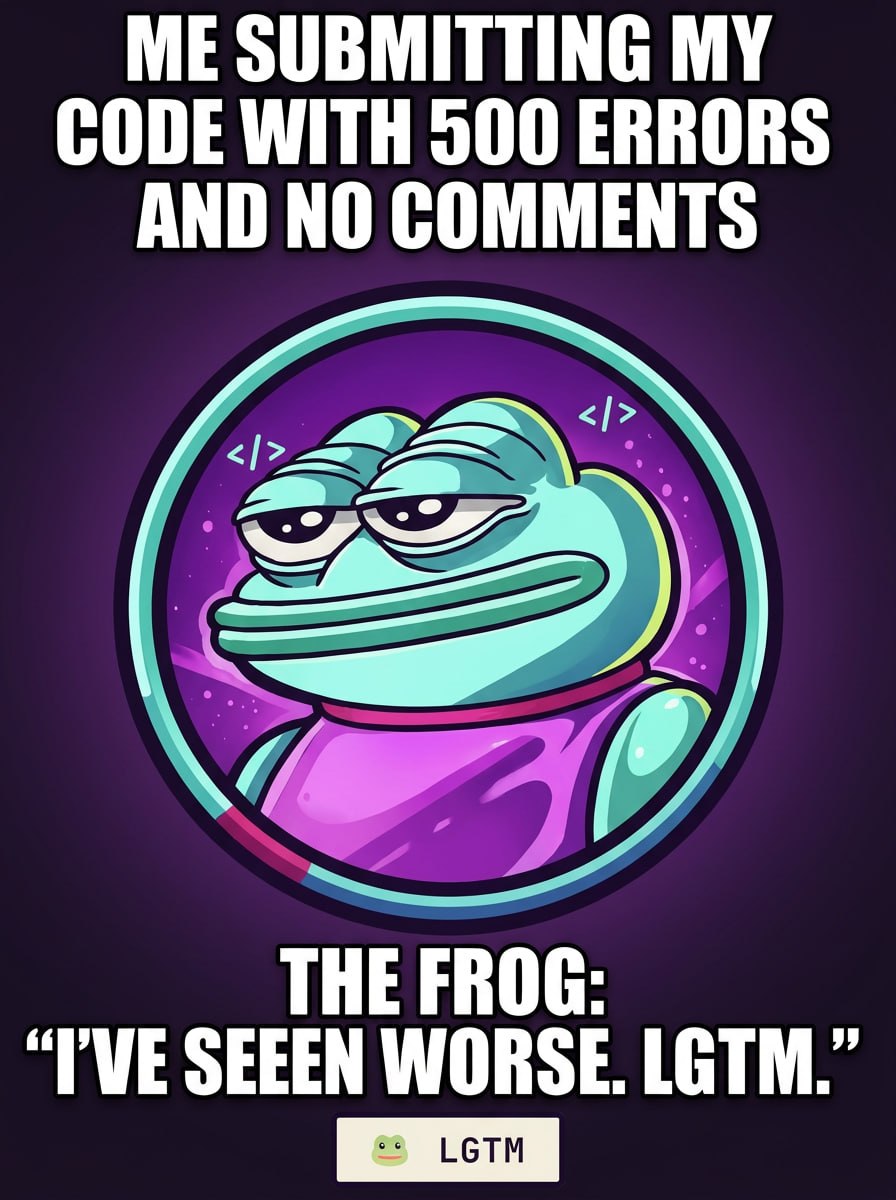
Create your best, your flyest, your freshest, your funniest Pepe Blue meme. Post it on Twitter and then drop it here in the chat.
Tonight when we open VC we'll announce a couple winners and giveaway more Pepe Blue!
Must be a holder to win. Must be following on X.
the frog is moving in. 🐸
Pepe Blue Bot landing in telegram soon. live buys, live scores, sharp PR verdicts, all in chat.
Build on @base with Pepe Blue.
0x52E996938472045200Fc3850bDE52beccf65bb07
Installed as a GitHub App with scoped repo permissions, $PEPE hooks directly into the PR lifecycle.
On diff events (@mention or PR open), it performs static analysis across code paths — flagging logic flaws, security anti-patterns, and performance regressions pre-merge.